Creatine Kinase and Statins: What You Need to Know About Muscle Damage and Blood Tests
When you take statins, cholesterol-lowering drugs prescribed to reduce heart attack and stroke risk. Also known as HMG-CoA reductase inhibitors, they help millions stay heart-healthy—but they can also trigger muscle-related side effects that show up in blood tests. One of the most important markers doctors watch is creatine kinase, an enzyme released when muscle tissue breaks down. Also known as CK or CPK, it’s a direct signal of muscle stress or damage. High creatine kinase levels don’t always mean serious harm, but they’re a red flag you shouldn’t ignore—especially if you’re on a statin.
Statins work by blocking a liver enzyme that makes cholesterol, but they can accidentally interfere with muscle cell energy production. That’s why some people on statins feel unexplained muscle pain, weakness, or cramps. If those symptoms show up, your doctor may check your creatine kinase levels. A normal CK range is 22 to 198 units per liter for men, and 15 to 120 for women. Levels five times higher than normal often signal statin-induced myopathy. In rare cases, it can lead to rhabdomyolysis—a dangerous condition where muscle fibers break down and flood your bloodstream, risking kidney failure. The risk is low, but it’s real. Older adults, people with kidney problems, or those taking statins with other drugs like fibrates or certain antibiotics are at higher risk.
Not every elevated CK means you need to stop your statin. Sometimes, intense exercise, injury, or even dehydration can raise levels. That’s why doctors look at symptoms, not just numbers. If you’re tired, sore, or notice dark urine (a sign of myoglobin in your blood), get tested. If your CK is high and you feel bad, your doctor might switch you to a different statin, lower the dose, or try a non-statin option like ezetimibe or PCSK9 inhibitors. The goal isn’t to avoid statins entirely—it’s to find the right balance between heart protection and muscle safety.
What you’ll find in the posts below are real, practical guides from people who’ve faced these exact issues. From how to interpret CK test results after starting a new statin, to what to do when muscle pain hits, and how other medications can make things worse—these aren’t theory pieces. They’re lived experiences and clinical insights you can use right now. No fluff. Just what works, what doesn’t, and what your doctor might not tell you unless you ask.
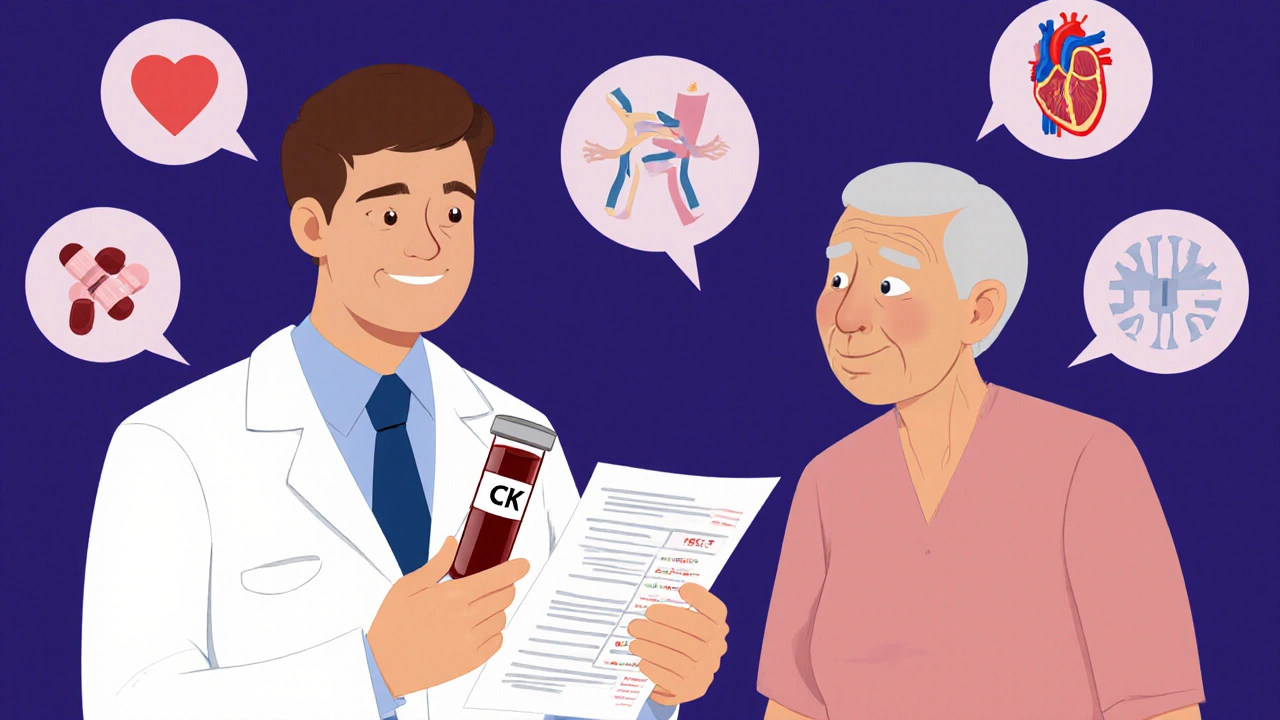
When to Test CK Before Starting Statins: A Practical Guide
Baseline CK testing before starting statins helps identify muscle risks and prevents unnecessary drug stoppages. Learn who needs it, what the numbers mean, and how to use the results wisely.
Read MoreRecent Posts
-

Online Reviews: How Patient Experiences Shape Trust in Generic Medications
-

Long-Term Antihistamine Use: Why Your Allergy Medication Might Stop Working
-

Packing Medications for Air Travel: Best Practices for Safety
-

OTC Gas and Bloating Remedies: Simethicone vs Enzyme Products Explained
-

Addressing Patient Concerns About Generic Medications: Common Questions Answered
