Antibiotic Overuse: How Misuse Fuels Resistance and C. difficile Infections
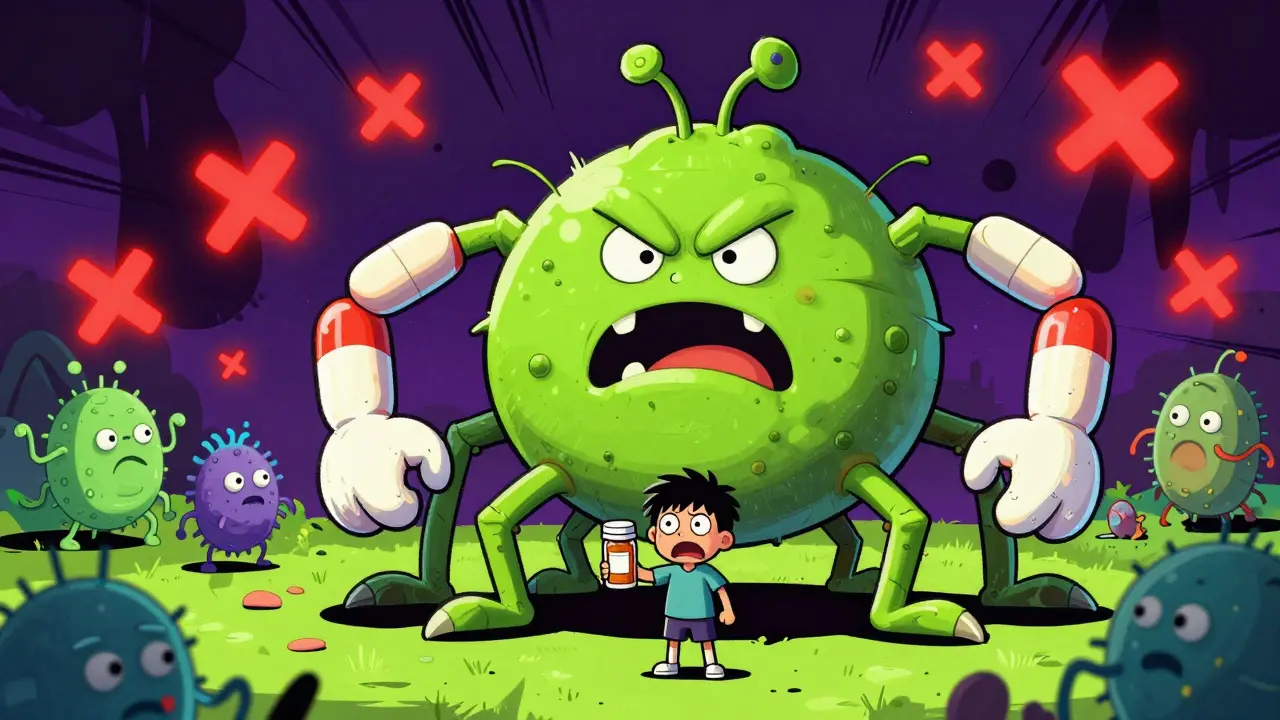
Every time you take an antibiotic when you don’t need it, you’re not just helping yourself-you’re helping bacteria become stronger. That’s the harsh truth behind the rise of antibiotic overuse and its deadly consequences: drug-resistant infections and Clostridioides difficile (C. difficile) outbreaks. This isn’t science fiction. It’s happening right now, in hospitals, nursing homes, and even in your own community.
What Happens When Antibiotics Don’t Work Anymore
Antibiotics were once miracles. A simple pill could cure a throat infection, a urinary tract infection, or a skin abscess. But now, one in six bacterial infections worldwide no longer respond to standard treatments. That’s not a guess-it’s from the World Health Organization’s 2025 global surveillance report. In places like South Asia and the Eastern Mediterranean, it’s even worse: one in three infections resist first-line drugs. This isn’t magic. Bacteria don’t wake up one day and decide to be tough. They evolve. When antibiotics are used too often-or incorrectly-they kill off the weak bacteria, leaving behind the ones that can survive. Those survivors multiply. Soon, you’ve got a whole population of superbugs that no drug can touch. The worst offenders? Escherichia coli, Klebsiella pneumoniae, and Staphylococcus aureus. Forty-two percent of E. coli infections are now resistant to third-generation cephalosporins. One in three S. aureus cases are methicillin-resistant (MRSA). And carbapenems-antibiotics we used to save for the worst cases-are losing their power. By 2035, resistance to these last-resort drugs could double compared to 2005 levels.C. difficile: The Hidden Cost of Antibiotics
Take an antibiotic, and you don’t just kill bad bacteria. You wipe out the good ones too-the ones living in your gut that keep things balanced. That’s when C. difficile sneaks in. It’s not a new germ. It’s been around for decades. But it’s only dangerous when your gut microbiome is wiped clean by antibiotics. In the U.S. alone, C. difficile caused nearly half a million infections in 2017. Around 29,000 people died that year. Those numbers aren’t outdated-they’re still the baseline. And since the pandemic, hospital infections from resistant bacteria, including C. difficile, jumped 20% compared to pre-COVID years. Why? More antibiotics were given out, often without testing. More people were in hospitals. More immune systems were weakened. C. difficile doesn’t just cause diarrhea. It can lead to toxic megacolon, sepsis, and death. Treatment? Often another round of antibiotics-which can make the problem worse. Fecal transplants are now used in severe cases, but they’re not a cure-all. The real fix? Stop giving antibiotics unless they’re absolutely necessary.Who’s to Blame? It’s Not Just Patients
You might think, “I only take antibiotics when I’m sick.” But you’re not the only one using them. In animal farming, antibiotics are fed to pigs, chickens, and cows-not to treat illness, but to make them grow faster. That’s a major driver of resistance. These drugs enter the food chain, the water supply, and the soil. Bacteria from farms can spread to humans through meat, dust, or runoff. In clinics, doctors sometimes prescribe antibiotics “just in case.” A sore throat? Probably viral. But patients expect a pill. Doctors give one to keep them happy. In low-resource settings, there’s no lab to confirm infection. So doctors guess-and guess wrong. Up to 70% of antibiotic prescriptions in some countries are unnecessary. Even in wealthy nations like the UK and the U.S., guidelines are ignored. A 2023 study in Oxford found that 38% of patients prescribed antibiotics for upper respiratory infections didn’t need them. That’s not care. That’s habit.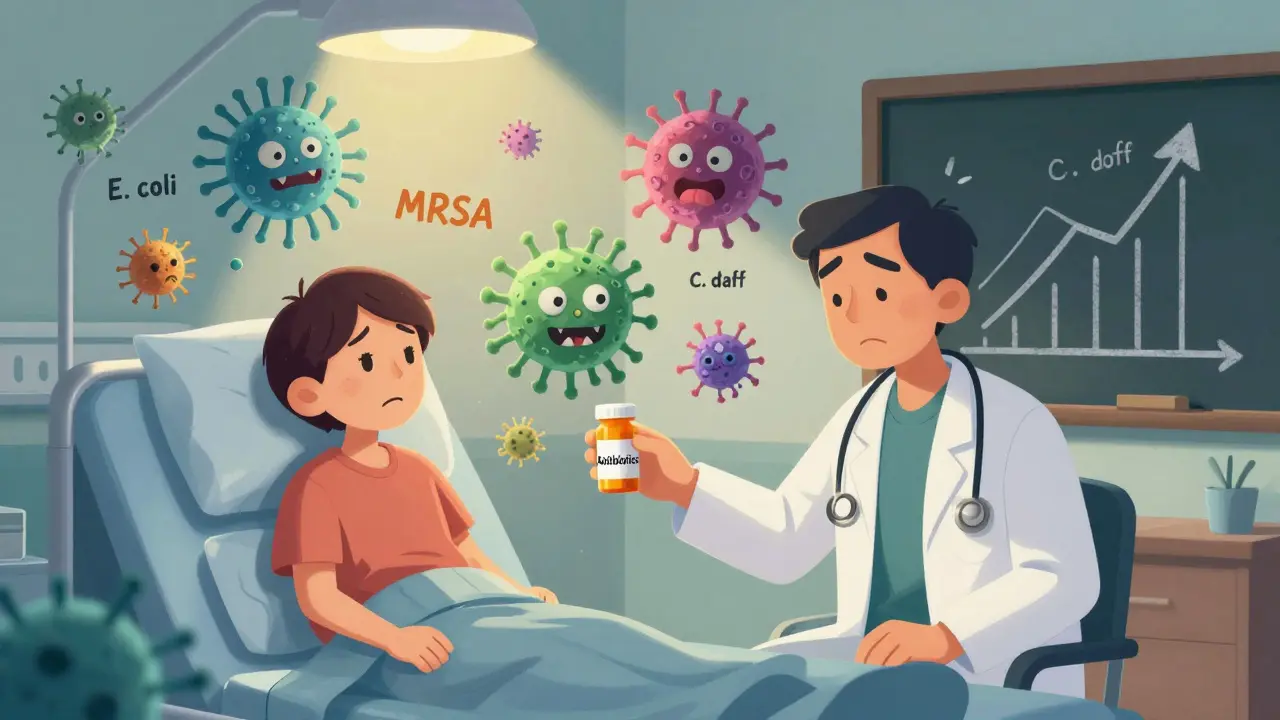
The Economic and Human Toll
Antibiotic resistance isn’t just a medical problem. It’s an economic disaster waiting to happen. In 2019, resistant infections directly killed 1.27 million people globally. Another 4.95 million deaths were linked to them. By 2050, if nothing changes, that number could hit 10 million a year-more than cancer. Healthcare costs are climbing. A simple urinary tract infection that used to cost $50 to treat now requires days in the hospital, IV drugs, and isolation. Surgeries become riskier. Chemotherapy becomes more dangerous. Even a broken bone could turn deadly if an infection can’t be controlled. The World Bank warns that by 2030, AMR could cost the global economy $3 trillion a year. That’s more than the entire GDP of Australia. And it’s not just rich countries. Low-income nations will suffer the most. They have fewer drugs, fewer labs, and fewer doctors to handle the fallout.What’s Being Done-and Why It’s Not Enough
There are efforts to fix this. CARB-X, a global partnership, has invested over $480 million into new antibiotic research since 2016. But here’s the problem: antibiotics aren’t profitable. A patient takes them for seven days. Then they’re done. Unlike drugs for diabetes or high blood pressure, you don’t take antibiotics for life. So big pharma doesn’t invest. The WHO’s Global Action Plan, signed by 194 countries in 2015, calls for better surveillance, stewardship, and research. But only a handful of countries have fully implemented it. In many places, there’s no system to track which drugs are being used, where resistance is spreading, or who’s getting infected. Antibiotic stewardship programs-where hospitals review every prescription-are proven to reduce resistance. But they need trained staff, time, and money. Most clinics don’t have them.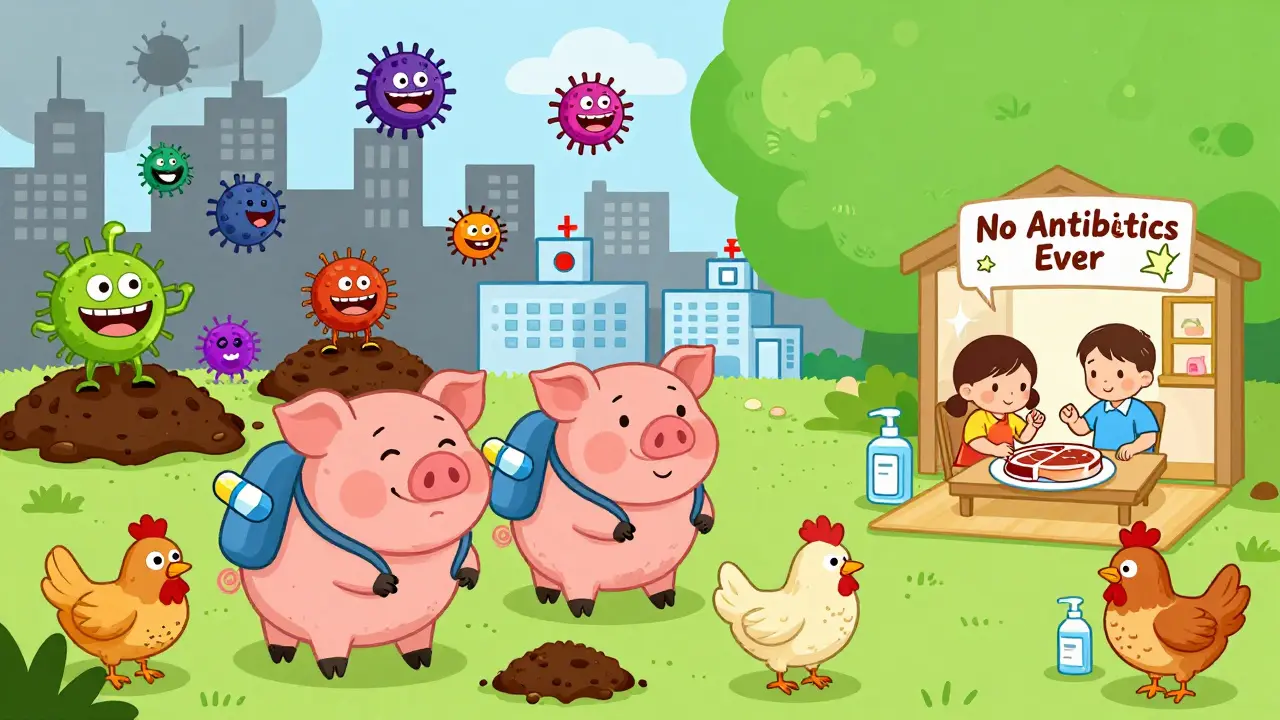
What You Can Do
You can’t fix this alone. But you’re not powerless.- Don’t ask for antibiotics. If your doctor says you have a virus, believe them. Viruses don’t respond to antibiotics. Antibiotics don’t cure colds, flu, or most sore throats.
- Take them exactly as prescribed. Never skip doses. Never save leftovers. Never give them to someone else.
- Ask if they’re really needed. “Is this infection bacterial?” “Are there other options?” These questions save lives.
- Choose meat raised without routine antibiotics. Look for labels like “no antibiotics ever” or “organic.”
- Wash your hands. Simple hygiene cuts transmission. It’s not glamorous, but it works.
The Future Is in Our Hands
We’re at a turning point. If we keep using antibiotics like candy, we’ll return to a time when a cut on your finger could kill you. When a C-section becomes a gamble. When pneumonia sends you to the ICU because nothing works. But if we change now-if doctors stop prescribing unnecessarily, if farmers stop using them as growth boosters, if patients stop demanding them-we can slow this down. We can buy time for new drugs to be developed. We can protect the ones we still have. The next time you’re handed a prescription for antibiotics, pause. Ask yourself: Do I really need this? The answer might save your life-or someone else’s.Can antibiotics cure a cold or the flu?
No. Colds and the flu are caused by viruses, not bacteria. Antibiotics only work against bacterial infections. Taking them for viral illnesses doesn’t help you recover faster-it only increases your risk of developing antibiotic-resistant infections later.
Why is C. difficile so dangerous after taking antibiotics?
Antibiotics kill off the good bacteria in your gut that normally keep harmful microbes like C. difficile in check. When those good bacteria are wiped out, C. difficile multiplies rapidly, producing toxins that damage the colon. This leads to severe diarrhea, fever, and in extreme cases, life-threatening inflammation of the colon.
Are there alternatives to antibiotics for minor infections?
For many mild infections-like sinusitis, ear infections, or bronchitis-watchful waiting is the best approach. The body’s immune system can often clear the infection on its own within a week. Pain relievers, hydration, and rest are usually enough. Antibiotics should only be used if symptoms worsen or last longer than 10 days.
Is antibiotic resistance getting worse?
Yes. Between 2018 and 2023, resistance increased in over 40% of monitored pathogen-antibiotic combinations worldwide. The WHO reports that multidrug-resistant infections are rising in every region, with the fastest growth seen in Gram-negative bacteria like E. coli and Klebsiella. The pandemic reversed years of progress, with hospital-acquired resistant infections spiking by 20%.
Can I avoid C. difficile by avoiding hospitals?
Not entirely. While hospitals are hotspots for C. difficile, the infection is now spreading in the community. People who’ve never been hospitalized are getting it after taking antibiotics at home. The key risk factor isn’t location-it’s antibiotic use. Avoiding unnecessary prescriptions is the best way to protect yourself.

15 Comments

Janette Martens
so like... antibiotics are bad?? wow. groundbreaking. next u gonna tell me water is wet or that air makes you breathe. my grandma knew this in 1972. why is this even a post? just give me the damn vaccine already.

Marie-Pierre Gonzalez
Thank you for this thoughtful, meticulously researched piece. It is imperative that we recognize the gravity of antimicrobial resistance-not merely as a medical concern, but as a profound ethical obligation to future generations. I have shared this with my entire book club, and we are now advocating for antibiotic stewardship workshops at our local library. 🙏

Louis Paré
Let’s be real. This is just Big Pharma’s way of making you feel guilty so they can sell you probiotics and $200 ‘immune-boosting’ teas. You think your grandma’s penicillin prescription was the problem? Nah. It’s the GMO corn and glyphosate in your cereal. The real superbugs are corporate lobbyists.

Nicole Beasley
OMG YES. I got antibiotics for a sinus infection last year and ended up with C. diff 😭 I didn’t even know it was a thing until I was puking in a hospital gown. Now I’m all about ‘wait and see’ 🙌 #antibioticsarenotcandy

Vu L
so u say dont take antibiotics but what if u got pneumonia? u gonna just breathe through it? lmao. this post is so woke it needs a therapist.

James Hilton
Y’all act like antibiotics are magic beans. Nah. They’re just tools. Like hammers. You don’t use a hammer to screw in a lightbulb. Stop blaming the tool. Blame the idiot holding it. 🤷♂️

Mimi Bos
i used to always ask for antibiotics for my colds till i got really sick once and realized i was just making it worse. now i drink tea and nap. it’s weird how simple it is. thanks for the reminder 😊

Sydney Lee
One cannot help but observe the tragic epistemological collapse of public health literacy. The very notion that a layperson-armed with TikTok wisdom and a Google search-should be permitted to adjudicate the necessity of a pharmaceutical intervention is not merely irresponsible; it is an affront to the Enlightenment. The erosion of medical authority is the prelude to societal disintegration. We are not merely losing antibiotics-we are losing reason.

oluwarotimi w alaka
antibiotics are a western plot to control african medicine. they dont want us to use herbs and roots. this is why c.diff is in usa only. they poison the water. i know this. my cousin saw it on youtube. they want us weak.

Hakim Bachiri
Let me be clear: this isn’t about ‘overuse.’ It’s about systemic failure. The FDA, the CDC, the AMA, the WHO-they’ve all been compromised. The meat industry? Owned. The pharma lobby? Unchallenged. And you? You’re just a pawn in a game you didn’t even know you were playing. Your ‘responsible antibiotic use’? A placebo. A distraction. The real solution? Defund the entire medical-industrial complex. Start over. From scratch. Or don’t. Just keep swallowing your pills and praying.

Celia McTighe
Thank you for writing this. I’m a nurse, and I see this every day. Patients get upset when we don’t prescribe, but when we explain why-it changes everything. I’ve had moms cry because they finally understood. This post? It’s a lifeline. 🌿❤️

ANA MARIE VALENZUELA
Wow. So you’re telling me that people who take antibiotics for a sore throat are dumb? That’s rich. Coming from someone who probably has a PhD in ‘I know better than your GP.’ I’ve had three kids. I know when they need help. You’re not the boss of my medicine.

Bradly Draper
i get it. dont take them unless you need them. but sometimes you just feel awful and you want to feel better. i dont blame people for asking. just wish doctors would talk more.

Gran Badshah
in india we dont even have antibiotics easy. you need prescription even for amoxicillin. but still people buy from street shops. no one cares. they think its normal. this problem is global but rich people write posts like this like they fixed it.

Ellen-Cathryn Nash
Every time I see someone take antibiotics for a sniffle, I want to scream. It’s not just selfish-it’s a quiet, slow-motion genocide. You’re not just risking your own health. You’re erasing the future for every child born after you. And you don’t even know it. That’s the scariest part.

Write a comment