How to Subscribe to FDA Drug Safety Alerts and Updates
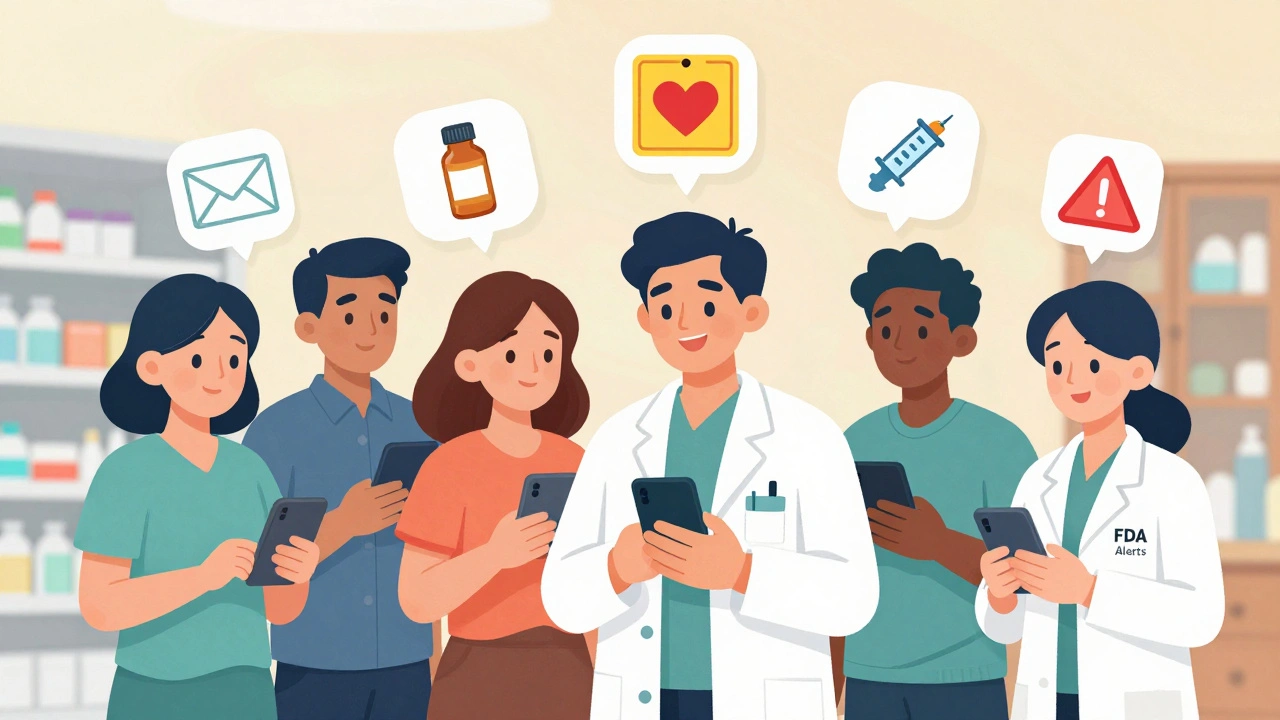
Every year, the FDA issues over 1,200 safety alerts about prescription drugs, over-the-counter medicines, and medical devices. These aren’t just bureaucratic notices-they can prevent serious harm, hospitalizations, or even deaths. If you’re a patient taking multiple medications, a pharmacist managing inventory, or a caregiver watching over someone with complex health needs, FDA drug safety alerts are one of the most reliable ways to stay ahead of dangerous changes.
What the FDA Alerts Actually Cover
The FDA doesn’t just warn about recalls. Their alerts cover a range of critical updates:
- Drug recalls due to contamination (like the 2018 valsartan incident with cancer-causing impurities)
- Label changes (new warnings about side effects, dosage adjustments, or interactions)
- Medication shortages that could affect treatment
- Manufacturing issues that impact quality or effectiveness
- New safety findings from post-market studies
For example, an alert might warn that a batch of insulin has been found to lose potency, or that a common painkiller carries a higher risk of liver damage in older adults. These aren’t hypothetical risks-they’re real, documented events that have already been confirmed by FDA investigators.
The Three Main Ways to Get Alerts
The FDA runs three separate alert systems, each with a different focus. Many people subscribe to just one-and miss critical information. Here’s how they differ:
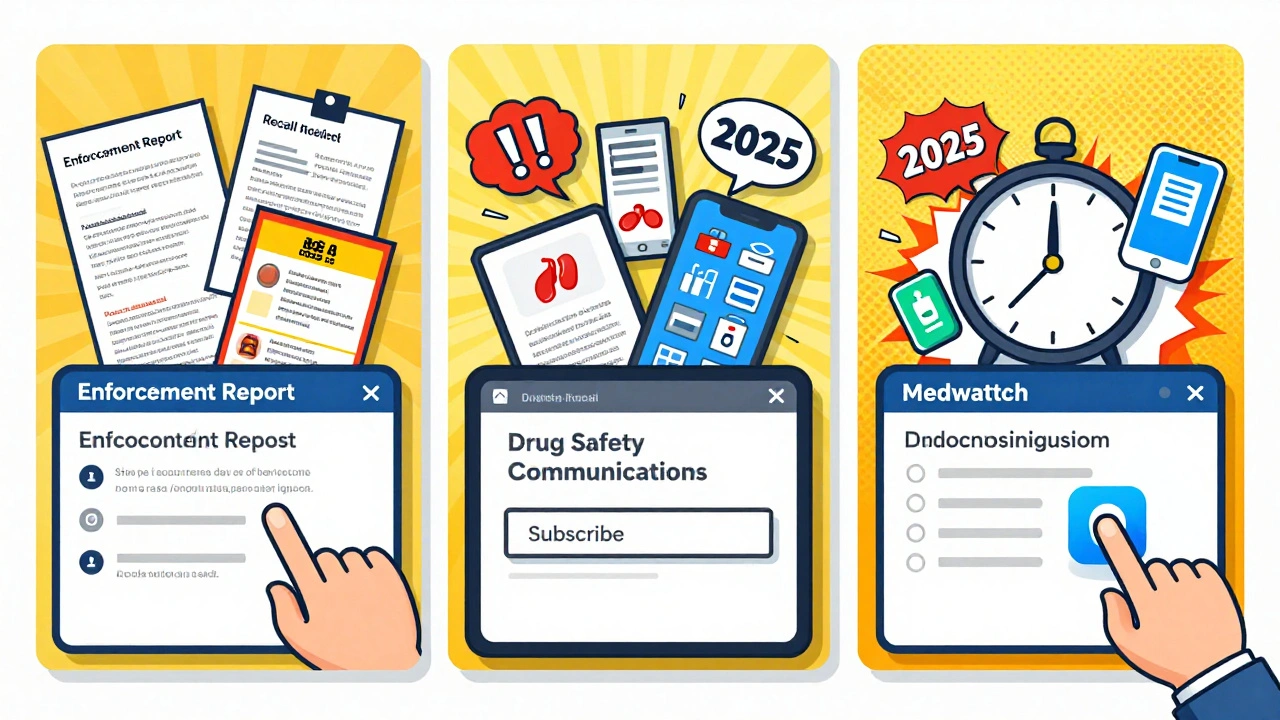
1. Enforcement Report Subscription Service
This is your go-to for recalls. Launched in 2021 and upgraded in 2022, it lets you get email notifications whenever the FDA announces a recall of drugs, medical devices, or other regulated products. You can pick specific categories (like “Drugs”) and set up to five custom keywords. If you’re on a medication like metformin or lisinopril, you can type those exact names into the keyword field. You’ll only get alerts about those drugs, not every recall issued.
Over 87% of new subscribers in 2023 chose “Drugs” as their category. It’s the most popular-and most useful-option for patients and pharmacists.
2. Drug Safety Communications
This system focuses on safety issues that don’t always involve a recall. Think: new warnings about heart rhythm problems linked to a common antibiotic, or a boxed warning added to an antidepressant after new data emerged. These alerts are written for healthcare professionals but are clear enough for informed patients to understand.
According to a 2022 AMA survey, 72% of physicians who received these alerts changed how they prescribed or monitored patients. That’s not just information-it’s action that saves lives.
3. MedWatch Safety Alerts
MedWatch has been around since 1993, but now you can subscribe via email, Twitter (@FDAMedWatch), or RSS. It covers everything: drugs, devices, vaccines, even dietary supplements. It’s the broadest feed, but also the most crowded. If you want only drug-related alerts, this isn’t the most efficient option.
It’s still worth signing up for if you want to catch the full picture. The Twitter feed has over 285,000 followers and often posts urgent alerts faster than email.
How to Subscribe-Step by Step
Signing up takes less than five minutes. Here’s how to do it right:
For Enforcement Reports (Recalls)
- Go to fda.gov/enforcement-report-subscription
- Enter your email address
- Check “Drugs” under Product Categories
- In the Keyword field, type one or more drug names (e.g., “insulin,” “warfarin,” “metformin”)-up to five total
- Choose Daily or Weekly delivery
- Click “Subscribe”
That’s it. You’ll get emails only when there’s a recall involving your specified drugs.
For Drug Safety Communications
- Visit fda.gov/drugs/drug-safety-and-availability/drug-safety-communications
- Scroll down and click “Sign up for email alerts”
- Enter your email
- Click “Submit”
You’ll start receiving these alerts weekly. No keywords here-you’ll get all of them. If you’re overwhelmed, you can unsubscribe later.
For MedWatch E-list
- Go to fda.gov/medwatch-email-list
- Fill out the form with your name and email
- Select “MedWatch Safety Alerts” as your subscription type
- Click “Submit”
You can also follow @FDAMedWatch on Twitter for real-time updates. No signup needed-just follow.
Why Most People Miss the Point
A 2022 GAO report found that only 38% of healthcare professionals knew about all three systems. Most people think: “If I get one alert, I’m covered.” That’s not true.
The Enforcement Report tells you about recalls. Drug Safety Communications tells you about new risks-even if the drug is still on the market. MedWatch gives you the full spectrum, including device failures and vaccine safety notices.
If you’re on blood thinners, diabetes meds, or heart medications, you need all three. One alert might warn you that your insulin batch was recalled. Another might tell you that your metformin now carries a new warning about vitamin B12 deficiency. You won’t get both from one system.
What the FDA Doesn’t Do-And What You Should Know
The FDA system is free, fast, and authoritative. But it’s not perfect.
- No mobile app (yet). The FDA plans to launch one in Q2 2025. Until then, rely on email or Twitter.
- No push notifications. You won’t get a beep on your phone unless you use a third-party tool.
- No risk scoring. Unlike paid services like First Databank, the FDA doesn’t rank alerts by severity. You have to judge that yourself.
- Alert fatigue is real. Many subscribers say they get too many emails. The FDA is testing machine learning to prioritize the most urgent alerts-and plans to roll it out by late 2025.
- Language gaps. Only 12% of alerts reach non-English speakers, even though over 20% of the U.S. population speaks a language other than English. Spanish-language alerts are coming in Q3 2025.
That said, no commercial service matches the FDA’s scope. Companies like MedWatcher charge $10/month and only cover prescription drugs. The FDA covers everything-from generic antibiotics to insulin pens to over-the-counter cough syrups.
Real Stories from Subscribers
A hospital pharmacist in Ohio told Reddit: “We got the alert about the recalled metformin batch two hours before our supplier shipped it. We held the entire order. Saved dozens of patients from potential kidney damage.”
A mother in Texas shared: “I have a child with a severe peanut allergy. I set ‘peanut’ as a keyword in the Enforcement Report. When a children’s liquid allergy med was found to have trace peanut oil, I got the alert. We didn’t give it to him. That’s peace of mind.”
On the flip side, a nurse in Florida wrote: “I get so many emails I delete them all. I don’t know which ones matter.” That’s why keyword filtering matters. Don’t subscribe blindly.
Who Should Subscribe?
You should sign up if you:
- Take three or more prescription medications
- Manage medications for a parent, child, or loved one
- Work in pharmacy, nursing, or healthcare administration
- Use over-the-counter drugs regularly (especially pain relievers, antacids, or supplements)
- Have allergies or chronic conditions that make you sensitive to drug changes
If you only take one medication once a week? Maybe skip it. But if you’re on anything that affects your heart, liver, kidneys, or brain-don’t wait for a crisis to find out.
What’s Next for FDA Alerts?
The FDA is making big changes:
- By December 2025: Keyword limit will increase from 5 to 10 per account
- By Q2 2025: Mobile app launching
- By Q3 2025: Spanish-language alerts going live
- By late 2025: All three alert systems merging into one unified platform
These updates are a direct response to user feedback. The agency is listening. But they can’t fix what people don’t use.
Final Checklist: Are You Covered?
Before you close this page, ask yourself:
- Have I subscribed to the Enforcement Report with my drug names as keywords?
- Have I signed up for Drug Safety Communications?
- Do I follow @FDAMedWatch on Twitter?
- Do I check the FDA website monthly if I’m on high-risk meds?
If you answered “no” to any of these, you’re leaving your safety to chance. The FDA doesn’t charge for this service. It doesn’t require a login. It doesn’t ask for your medical history. All it asks is that you care enough to sign up.
It’s not just about staying informed. It’s about staying alive.
Are FDA drug safety alerts free?
Yes. All FDA drug safety alert subscriptions-Enforcement Reports, Drug Safety Communications, and MedWatch-are completely free. You only need an email address. No credit card, no trial period, no hidden fees.
How often do FDA safety alerts come out?
The FDA issues between 1,200 and 1,500 safety notifications each year. That’s roughly 3-4 per week on average. Enforcement Report emails go out daily or weekly based on your preference. Drug Safety Communications are typically sent weekly. MedWatch updates can come anytime-especially during emergencies.
Can I get alerts in Spanish?
Not yet, but it’s coming. The FDA plans to launch Spanish-language versions of all three alert systems in Q3 2025. Until then, you can check translated summaries on the FDA’s website under the “Español” section.
What’s the difference between a recall and a safety alert?
A recall means the product is pulled from shelves because it’s unsafe, contaminated, or mislabeled. A safety alert means there’s a newly discovered risk-like a dangerous side effect or interaction-but the drug is still available. You may need to stop taking it, change your dose, or get tested. Both are urgent.
Do I need to sign up for all three systems?
If you’re on multiple medications or manage care for others, yes. Enforcement Reports cover recalls. Drug Safety Communications cover new risks. MedWatch gives you the full picture. Skipping one means missing critical updates. Start with Enforcement Reports and Drug Safety Communications-they cover 90% of what matters.
Can I unsubscribe later?
Yes. Every email from the FDA includes an unsubscribe link at the bottom. You can also manage your subscriptions directly on the FDA’s website by logging into your account using the same email you signed up with.
Are these alerts only for doctors?
No. While some alerts are written for professionals, they’re all written in plain language. Patients, caregivers, and even family members can-and should-subscribe. The FDA designed these systems for the public, not just healthcare workers.
What if I miss an alert? Can I look up past ones?
Yes. All past alerts are archived on the FDA website. For Enforcement Reports: go to fda.gov/enforcement-reports. For Drug Safety Communications: fda.gov/drugs/drug-safety-and-availability/drug-safety-communications. For MedWatch: fda.gov/medwatch. You can search by drug name, date, or alert type.
If you’re taking any medication-even a common one like ibuprofen or metformin-subscribing to FDA alerts is one of the simplest, most effective ways to protect yourself. It takes less time than checking your email. But the impact? It could be life-saving.

9 Comments

john damon
OMG THIS IS LIFE-SAVING 🚨 I just subscribed to all three and set my keywords for metformin and warfarin. My grandma’s on both and I’ve been terrified of missing something. Thank you for this 🙏❤️

matthew dendle
so youre telling me the fda actually does something useful? wild. i thought they just sat around approving candy as medicine. still 10/10 for not being total garbage for once

Jimmy Kärnfeldt
This is one of those posts that makes you pause and think-like, wow, we’ve been handed this tool and most people just ignore it. It’s not complicated, it’s free, and it doesn’t ask for anything but your attention. I used to think I was too busy to care, but now I realize not caring is the real cost. Thanks for putting this out there. You made someone feel less alone today.

Ariel Nichole
I signed up for the Enforcement Report last week after reading this and honestly? I feel so much better. I added my mom’s meds-lisinopril and atorvastatin-and got an alert about a recall within 48 hours. It’s crazy how simple this is and how few people know about it.

Monica Evan
i didnt know about the spanish alerts coming in q3 2025 thats huge my abuela takes 7 meds and she cant read english at all this is going to change so much for her and so many others 🤍

Taylor Dressler
The structure of this post is excellent-clear, actionable, and grounded in real data. Many people overlook the distinction between recalls and safety communications, but this breaks it down perfectly. I’ve shared it with my entire pharmacy team. Everyone should bookmark this.

Aidan Stacey
I used to delete these emails like spam. Then my cousin got hospitalized because of a drug interaction no one knew about. Now I have all three subscriptions, Twitter alerts, and a calendar reminder to check the FDA site every Sunday. I don’t care if I get 50 emails a week-I’d rather be annoyed than dead. This isn’t just info-it’s armor.

Jean Claude de La Ronde
so the fda is finally catching up to the 2020s huh? took em long enough. still, if you need a mobile app to remind you not to die from a pill, maybe you should’ve been paying attention earlier. but hey, better late than never. 🤷♂️

Jim Irish
I’ve been a nurse for 22 years. I never knew about the keyword feature in Enforcement Reports until now. This changes everything. I’m setting up alerts for my patients right now. Thank you.

Write a comment