Medication Safety and Mental Health: How to Coordinate Care to Prevent Harm
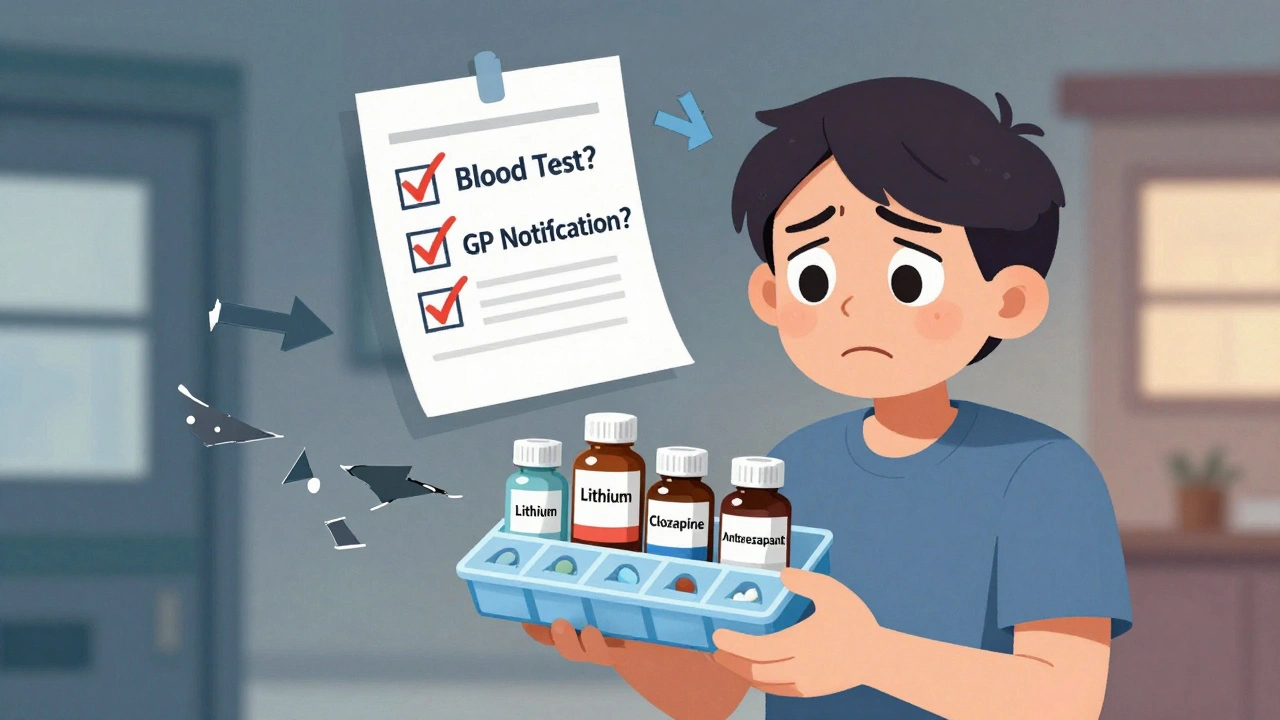
When someone is taking medication for depression, bipolar disorder, or schizophrenia, the risk of harm doesn’t just come from the illness-it comes from how the medicine is managed. In mental health care, a simple mistake like missing a dose, mixing the wrong drugs, or failing to monitor blood levels can lead to hospitalization, suicide, or even death. Yet, across the UK and beyond, these errors happen far too often. The problem isn’t that doctors don’t care. It’s that the system isn’t built to keep people safe.
Why Mental Health Medications Are Different
Psychotropic drugs aren’t like antibiotics or blood pressure pills. They affect the brain. A small change in dose can turn a calm patient into someone agitated or suicidal. Lithium, for example, works well for bipolar disorder-but only if the blood level stays between 0.6 and 1.0 mmol/L. Too low, and it doesn’t work. Too high, and it causes tremors, confusion, or kidney damage. NICE guidelines say lithium levels should be checked every three months. But in England, only 40% of patients get those checks. That’s not negligence-it’s a system failure. Clozapine, used for treatment-resistant schizophrenia, is even more dangerous. It can lower white blood cell counts, leaving patients vulnerable to infections. That’s why it requires weekly blood tests for the first six months. Yet, in prisons and community settings, these tests are often missed because no one is tracking them. Patients get discharged from hospital, handed a prescription, and told to see their GP. But GPs rarely have the training or time to manage complex psychiatric meds.The Hidden Risks: Polypharmacy and Diversion
Many people with mental illness are on five, six, or more medications. One for depression, one for anxiety, one for sleep, one for high blood pressure, maybe a painkiller, and a drug for diabetes. This is called polypharmacy. It’s common. And it’s deadly. The risk isn’t just side effects adding up. It’s interactions. A common sedative like mirtazapine, prescribed off-label for insomnia, can be diverted and misused. NHS England has warned against this practice because it increases the chance of overdose, especially when mixed with alcohol or opioids. In prisons, where mental illness rates are three times higher than the general population, medication diversion is a real problem. Pills are hoarded, traded, or crushed and snorted. Staff in secure units must watch patients swallow every pill-no exceptions. In community settings, patients might stop taking meds because they feel better-or because they’re afraid of side effects. Or they might take extra doses to feel calmer. Without regular check-ins, these behaviors go unnoticed until it’s too late.Medicines Reconciliation: The Lifeline Between Settings
The biggest gap in safety happens when patients move between care settings. From hospital to home. From prison to community clinic. From emergency room to psychiatrist’s office. Each time, the medication list changes. Someone forgets to mention a drug. A prescription gets lost. A pharmacist doesn’t know the patient’s full history. Medicines reconciliation is the fix. It means comparing the patient’s current meds with what’s being prescribed at each transition. It’s not just checking a list. It’s asking: Why is this drug here? Is it still needed? Has the dose changed? Is there a better alternative? New Zealand’s Health Quality & Safety Commission found that when reconciliation is done properly, medication errors drop by up to 60%. But it only works if it’s mandatory-and documented. In England, NHS guidelines say every transition must include a full review by a pharmacist or mental health nurse. But in practice, it’s often skipped during busy shifts or when records are disconnected.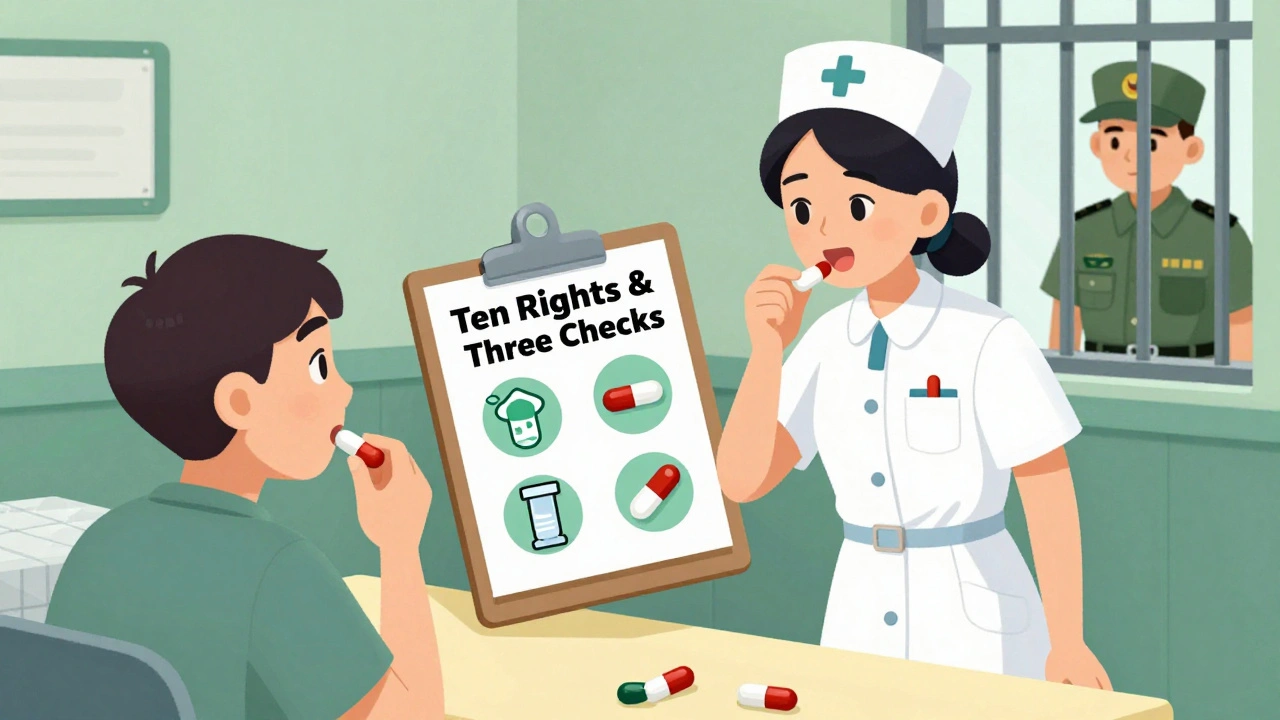
Technology Can Help-If It’s Used Right
Electronic prescribing systems cut prescribing errors by 55%. No more illegible handwriting. No more wrong doses. No more missed drugs. But technology alone won’t fix the problem. Many GP systems don’t talk to mental health hospital systems. A patient gets discharged from a psychiatric unit with a new medication. Their GP doesn’t see it. Two weeks later, they show up in A&E with confusion. Why? Because the new drug wasn’t added to their GP record. The solution isn’t just better software. It’s connected software. Systems need to share data securely across primary care, mental health teams, pharmacies, and prisons. Clinical pharmacists need real-time access to medication histories. And every patient should have a single, updated list-printed and digital-that travels with them.Who’s Responsible? The Team Approach
Medication safety in mental health can’t fall on one person. It needs a team. - Psychiatrists must document why each drug is prescribed and when it should be reviewed. - General practitioners need training in psychotropic meds-not just how to prescribe, but how to monitor. - Pharmacists should be part of every transition. They’re the last line of defense against errors. - Nurses and care workers must be trained in the ‘ten rights and three checks’: right patient, right drug, right dose, right route, right time, right documentation, right reason, right response, right to refuse, right education. And they must check each time, every time. In Saskatchewan, psychiatric nurses are required to watch patients swallow their meds. In New Zealand, care teams hold joint case conferences with GPs and psychiatrists every month. These aren’t luxuries-they’re safety nets.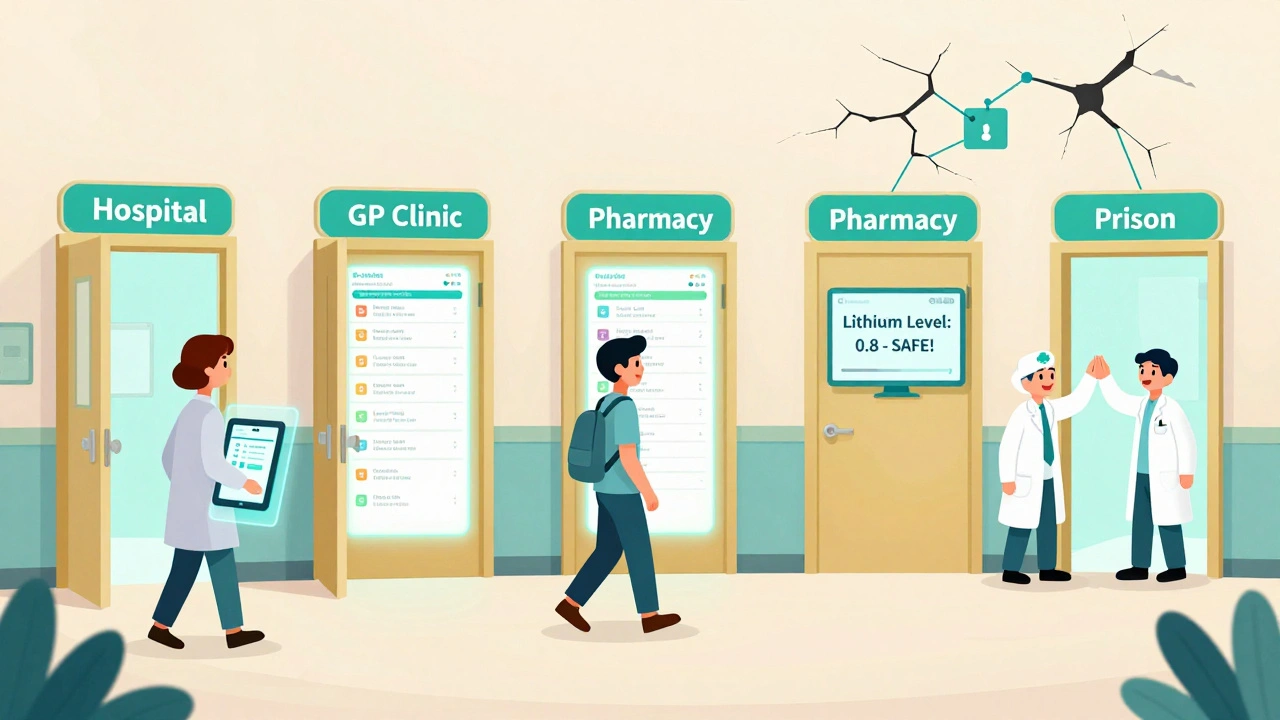
What Patients and Families Can Do
Patients shouldn’t have to fight the system to stay safe. But they can protect themselves. - Keep a written list of every medication, including doses and why they’re taken. - Ask: “What is this for? What happens if I stop it?” - Know the signs of overdose or toxicity: dizziness, slurred speech, confusion, irregular heartbeat. - If you’re being discharged, ask for a copy of your updated meds list-and confirm it’s sent to your GP. - If you’re taking lithium or clozapine, ask if your blood levels are being checked-and when the next test is due. Families can help by tracking changes in behavior. If someone suddenly becomes withdrawn, agitated, or confused after a med change, speak up. It could be a reaction, not just a mood swing.The Road Ahead: What Needs to Change
We know what works. We have guidelines from NICE, WHO, and NHS England. We have evidence that reconciliation, pharmacists, and electronic systems reduce harm. But implementation is patchy. The biggest barrier? Culture. Too many teams still treat medication safety as an afterthought. It’s seen as administrative, not clinical. But when a patient dies from a missed lithium check, it’s not administrative-it’s tragic. We need:- Mandatory medicines reconciliation at every transition-no exceptions.
- Training for all frontline staff on high-alert psychotropic drugs.
- Integrated digital records that follow the patient, no matter where they go.
- Pharmacists embedded in mental health teams-not just called in for emergencies.
- Regular audits to check if lithium and clozapine monitoring is happening.
Why are psychotropic medications more dangerous than other drugs?
Psychotropic drugs affect brain chemistry directly, so even small changes in dose or timing can cause big shifts in mood, behavior, or cognition. Drugs like lithium and clozapine have narrow therapeutic windows-meaning the difference between a helpful dose and a toxic one is very small. They also carry risks like organ damage, blood disorders, or severe withdrawal symptoms if stopped suddenly. Unlike antibiotics or painkillers, their effects aren’t always obvious, making monitoring harder.
What is medicines reconciliation and why does it matter?
Medicines reconciliation is the process of comparing a patient’s current medications with what’s being prescribed at each transition-like leaving hospital or changing GPs. It catches errors like missing drugs, wrong doses, or duplicate prescriptions. Studies show it reduces medication errors by up to 60%. Without it, patients are at high risk of harm, especially when moving between prison, community care, or emergency services.
Can electronic prescribing systems really reduce errors?
Yes. Evidence from New Zealand and the UK shows electronic prescribing reduces errors by 55%, especially for omissions, wrong doses, and illegible handwriting. But only if the system connects across different care settings. If a hospital’s system doesn’t talk to a GP’s system, the patient’s med list stays broken. Technology helps-but only when it’s integrated and used consistently.
Why do GPs struggle to manage mental health medications?
Many GPs receive little training in psychotropic drugs beyond basic prescribing. They may not know how to monitor lithium levels, recognize signs of clozapine toxicity, or handle polypharmacy risks. Mental health conditions also come with communication barriers, non-adherence, and complex social factors. Without support from psychiatrists or pharmacists, GPs often feel unprepared-and may avoid managing these meds altogether.
What should families do to help ensure medication safety?
Families should keep a written, up-to-date list of all medications, including doses and reasons. Ask the prescriber: “What is this for?” and “What happens if we stop it?” Watch for sudden changes in behavior, confusion, or physical symptoms like tremors or nausea. If a medication is changed, confirm the new list is sent to the GP. Never stop or change doses without consulting a professional-especially with drugs like lithium or antipsychotics.
Is polypharmacy always harmful?
No-but it’s risky. Some patients need multiple medications to manage complex symptoms. The danger comes when drugs are added without review, when interactions aren’t checked, or when one drug is prescribed to treat side effects of another. This creates a chain reaction. Experts recommend regularly reviewing all meds to see what’s still needed and what can be safely stopped.

11 Comments

Lawrence Armstrong
Lithium monitoring is such a mess. I work in psych and we literally have patients missing checks for 8+ months. No one’s getting fired, no one’s even flagged. Just... silent. 😔

Donna Anderson
my bro was on clozapine and his gp forgot to order bloodwork for 3 months. he got pneumonia and ended up in icu. it could’ve been avoided. this is insane. 🤯

Adam Everitt
the real issue isnt the meds its the metaphysical abandonment of the sick. we treat bodies like machines but minds like ghosts. when you outsource care to a system that cant even track pills, you're not failing policy-you're failing humanity. 🤔

wendy b
Actually, the data on polypharmacy is grossly overstated. Most studies show that when properly managed, multi-drug regimens are statistically safer than monotherapy in severe cases. Also, ‘diversion’ is a media buzzword-most patients aren’t hoarding meds, they’re just non-adherent due to stigma. 🤓

Rob Purvis
So many good points here. I’m a nurse in a community clinic, and we get discharged summaries with 3/10 meds listed. I’ve had to call 5 different hospitals to get a full list. It’s not laziness-it’s broken infrastructure. We need a national, real-time med tracker. Like, Apple Health but for psych meds. With alerts. And pharmacy integration. And mandatory reconciliation. Every. Single. Time.
And yes-GPs need training. But they also need backup. No one should be expected to manage clozapine without a pharmacist on speed dial.
Also-why aren’t we using AI to flag potential interactions? We have the tech. We just don’t fund it.
And families? They’re the unsung heroes. If you’re reading this and you’re a caregiver-thank you. You’re saving lives.
Let’s stop calling this ‘mental health care’ and start calling it ‘human care.’

Laura Weemering
Let’s be honest-this whole system is designed to fail. The pharmaceutical industry profits from polypharmacy. The NHS is underfunded on purpose. And the psychiatrists? They’re overworked and incentivized to prescribe, not to monitor. This isn’t negligence-it’s capitalism. 💀
And don’t get me started on how prisons are dumping mentally ill people into the community with no follow-up. It’s a death sentence wrapped in paperwork.

Audrey Crothers
My mom took lithium for 20 years. She had her blood drawn every 3 months like clockwork. Her doctor called her personally if it was off by 0.1. That’s care. That’s love. That’s what we need everywhere. ❤️
And families-you’re not being paranoid if you notice a change. Speak up. Even if they get mad. It could save their life.

Stacy Foster
THIS IS A GOVERNMENT COVER-UP. Lithium is banned in 3 countries because it causes kidney failure. They’re lying about the ‘safe range.’ The WHO is in bed with Big Pharma. They want you dependent. They want you docile. And they’re killing people quietly. 🔍
My cousin died. They said ‘accidental overdose.’ But his meds were never checked. And his GP had never even heard of clozapine. Coincidence? I think not.

Reshma Sinha
In India, we don’t have the infrastructure, but we have community health workers who visit homes. They bring meds, check adherence, and record vitals. Simple. Low-tech. High-impact. We don’t need fancy systems-we need people who care.

Levi Cooper
Why are we letting foreigners run our mental health system? In America, we used to take responsibility. Now we outsource to algorithms and nurses from India. This isn’t progress-it’s surrender.

sandeep sanigarapu
Medication reconciliation is not optional. It is the baseline. If a patient moves, the list moves. No excuses. No exceptions. This is not rocket science. This is basic safety.

Write a comment