How to Handle Insurance Requirements for Generic Substitution

When your doctor prescribes a brand-name medication, you might expect to get exactly that. But more often than not, the pharmacist hands you a different pill - same active ingredient, different name, and a much lower price. That’s generic substitution in action. It’s not a mistake. It’s policy. And if you don’t understand how it works, you could end up paying more, feeling worse, or worse - getting a drug that doesn’t work for you.
What Exactly Is Generic Substitution?
Generic substitution means your pharmacist replaces the brand-name drug your doctor wrote on the prescription with a cheaper, FDA-approved version that contains the same active ingredient, strength, and dosage form. The FDA requires generics to be bioequivalent - meaning they deliver the same amount of medicine into your bloodstream at the same rate as the brand. For most drugs, that’s true. But not all drugs are created equal. The system was built to save money. In 2023, generics made up 90% of all prescriptions filled in the U.S., but only 18% of total drug spending. That’s a $373 billion annual savings for the healthcare system. Insurance companies love it. So do patients who pay out-of-pocket. But the savings come with rules - and sometimes, roadblocks.How Insurance Companies Force Generic Substitution
Private insurers like Blue Cross, Aetna, and UnitedHealthcare don’t just encourage generics - they require them. Their formularies (lists of covered drugs) often list only the generic version. If you ask for the brand, you pay the difference. That’s called a mandatory generic program. Here’s how it works in practice: Your doctor writes a prescription for Lipitor. Your insurance plan covers atorvastatin (the generic) at a $5 copay. But if you want Lipitor, you pay $50 - the full price difference. Some plans go further: they won’t cover the brand at all unless your doctor writes “Dispense as Written” or “Brand Medically Necessary” directly on the prescription. In Canada, companies like Sun Life Financial and Great West Life started mandatory substitution in 2011-2012. Their data showed brand-name drugs cost $72 on average per claim. Generics? $27. That’s a 62.5% drop. No wonder insurers push it.State Laws Vary - A Lot
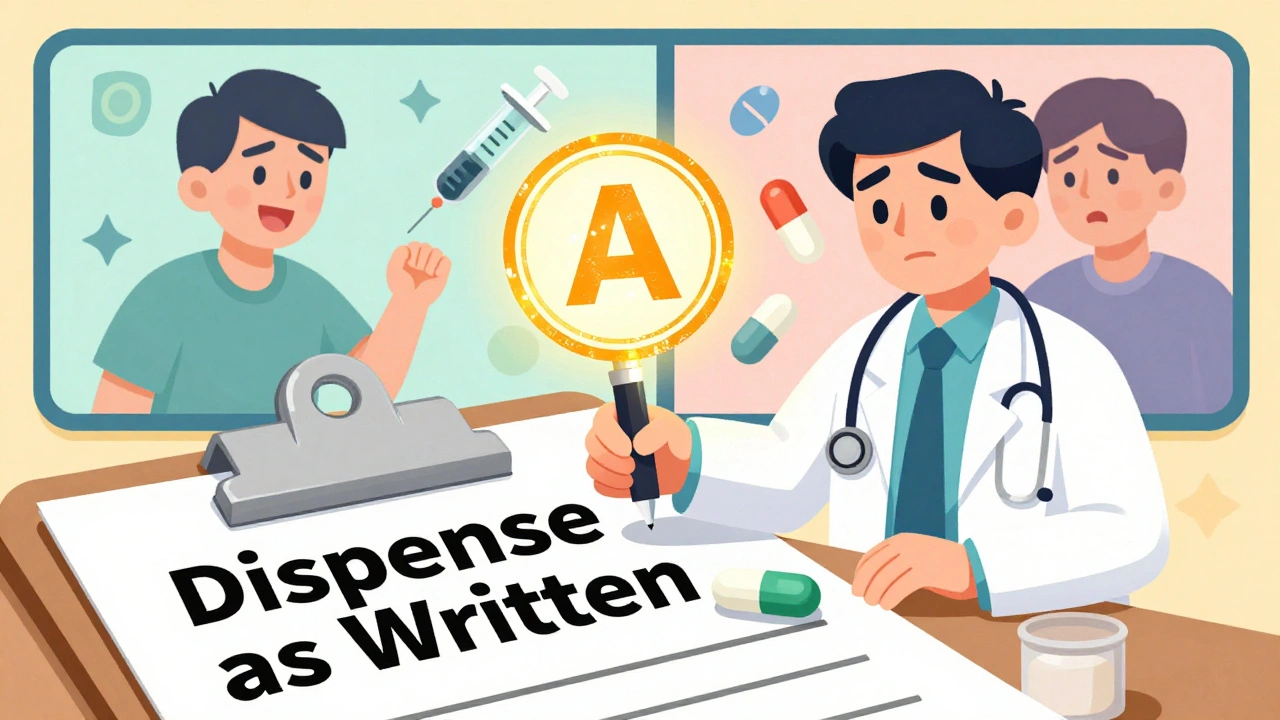
This isn’t federal law. It’s a patchwork of 50 state rules. In 19 states, pharmacists must substitute generics unless the doctor says otherwise. In 7 states and Washington, D.C., they need your written consent before swapping. In 31 states, they have to tell you they’re switching - even if you don’t ask. Texas has some of the strictest rules. For substitution to happen, three things must be true:- The generic must cost you less than the brand.
- You can’t say no.
- Your doctor didn’t write “Brand Medically Necessary” on the script.
When You Can (and Should) Fight Back
Not every drug is safe to swap. For medications with a narrow therapeutic index - where tiny changes in blood levels can cause harm - substitution can be risky. That includes:- Warfarin (blood thinner)
- Lithium (for bipolar disorder)
- Levothyroxine (for hypothyroidism)
- Some anti-seizure drugs like phenytoin
How to Get a Brand-Name Drug Approved
If your doctor agrees you need the brand, here’s how to get it covered:- Get the right note on the prescription. “Dispense as Written” or “Brand Medically Necessary” must be handwritten or typed clearly. Electronic prescriptions sometimes don’t carry this note - check with your pharmacy.
- Submit prior authorization. Most insurers require this. Your doctor must provide documentation: lab results, failed trials with generics, or a history of adverse reactions. Blue Cross Blue Shield of Michigan approves 78% of these requests when properly documented.
- Know your insurer’s rules. Aetna wants three clinical reasons. UnitedHealthcare wants five. Merck Manual says you can insist on the brand even if your doctor recommends the generic - you just pay the difference.
Biologics and Biosimilars - The New Frontier
Not all generics are the same. Biologics - complex drugs made from living cells, like Humira or Enbrel - can’t be copied exactly. Instead, we get biosimilars. These aren’t generics. They’re “highly similar” but not identical. As of November 2023, only 38 biosimilars had been approved in the U.S. - compared to over 10,000 small-molecule generics. And substitution rules are stricter. In 38 states, pharmacists must notify your doctor within 5-7 days if they switch you to a biosimilar. In 27 states, they need your explicit consent. The FDA’s 2022 guidance suggests future rules may standardize interchangeability - but for now, it’s a mess. Many insurers won’t cover biosimilars unless you’ve tried the brand first. Others won’t cover the brand unless you’ve tried the biosimilar. It’s a bureaucratic maze.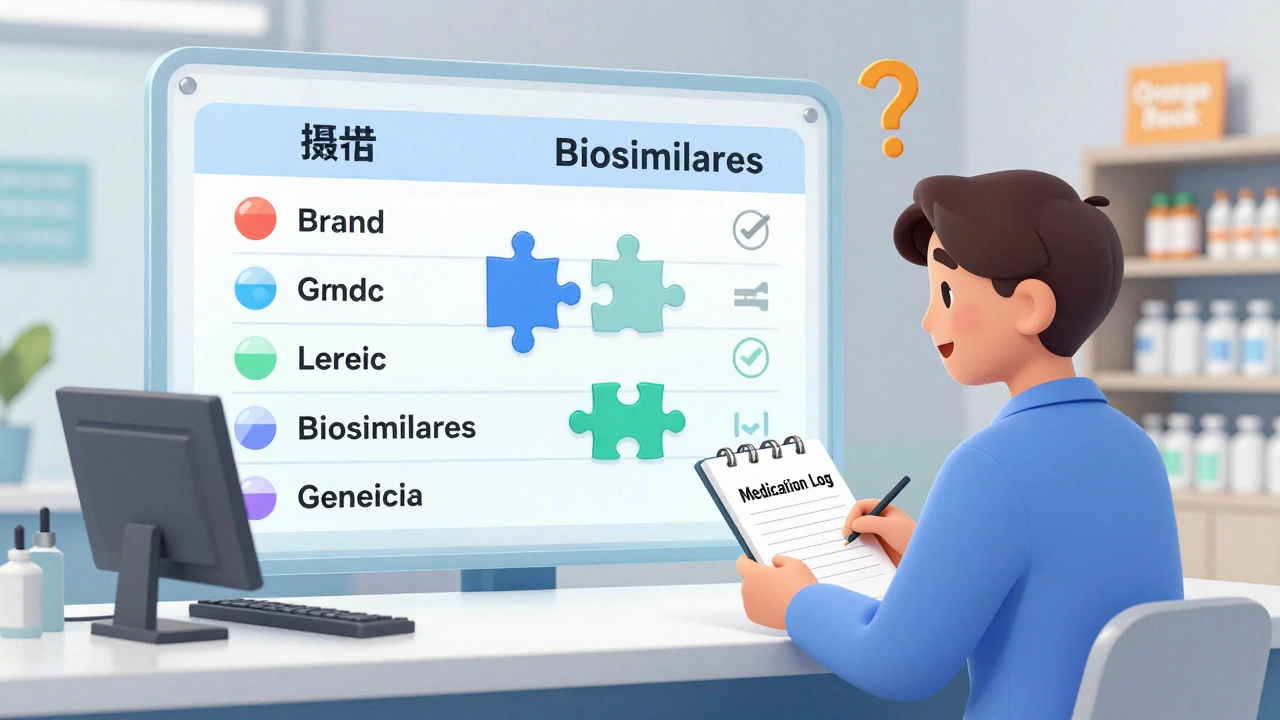
What Patients Are Saying
On Drugs.com, 68% of users reported smooth transitions to generics - and an average annual savings of $327 per medication. But 37% of negative reviews cited unexpected substitutions, even when “Dispense as Written” was clearly marked. Another 24% complained about inconsistent quality between generic brands. One LinkedIn user, a pharmacy technician, pointed out that different manufacturers use different inactive ingredients. One batch of generic metformin might cause stomach upset. Another might not. It’s not the drug - it’s the filler. And pharmacies don’t always tell you which manufacturer they’re using.What You Can Do Right Now
You don’t have to be passive in this system. Here’s your action plan:- Ask your doctor before your next refill: “Is this drug safe to switch to generic?” Especially if you’re on warfarin, lithium, or thyroid meds.
- Check your prescription - make sure “Dispense as Written” is written clearly. If it’s electronic, ask your doctor to confirm it’s included.
- Call your pharmacy before picking up. Ask: “Are you substituting this?” If they say yes, ask why - and if you can opt out.
- Keep a log of any side effects after switching. Track symptoms, lab results, and dosage changes. That’s your evidence if you need prior authorization.
- Know your insurance rules. Log into your plan’s website. Look up your drug. See if it’s on the generic-only list.
The Bigger Picture
Generic substitution isn’t going away. It’s saving billions. But it’s not perfect. The system was designed for simple pills - not complex inhalers, injectables, or biologics. And it doesn’t account for individual biology. The goal should be balance: save money where it’s safe, and protect patients where it’s not. You’re not just a number on an insurance spreadsheet. You’re someone whose health depends on the right drug, at the right dose - no matter who made it.Can my pharmacist substitute my brand-name drug without telling me?
In most states, yes - but only if your doctor didn’t write “Dispense as Written.” In 31 states and Washington, D.C., pharmacists are required to notify you before substituting. In 7 states and D.C., they need your explicit consent. Always check your state’s pharmacy board rules or ask your pharmacist directly.
What if I feel worse after switching to a generic?
Document your symptoms, lab results, and dosage changes. Then ask your doctor to write “Brand Medically Necessary” on your prescription. Submit a prior authorization request to your insurer with your medical records. Many patients have successfully regained brand-name coverage this way - especially for thyroid, seizure, or blood-thinning medications.
Are all generics the same quality?
All FDA-approved generics meet the same bioequivalence standards. But different manufacturers use different inactive ingredients - fillers, dyes, coatings - which can affect how you tolerate the drug. If you have allergies or sensitivities, ask your pharmacist which company made your generic. You can request a specific manufacturer if your insurance allows it.
Why do some insurance plans refuse to cover brand-name drugs even with a doctor’s note?
Some plans have strict formularies that only cover generics unless you meet very high medical criteria. For example, you might need to prove you tried at least two generics and had documented side effects or treatment failure. If your doctor’s note doesn’t include specific ICD-10 codes or lab results, your request may be denied. Always ask your insurer what documentation they require before your doctor submits it.
Can I switch back to the brand if I’m happy with the generic?
Yes - but only if your insurance allows it. If you’re saving money and feeling fine, there’s usually no reason to switch. However, if you want the brand for personal preference (e.g., you trust the name), you can request it - but you’ll pay the full price difference. Some insurers will let you switch back if you ask, especially if you’ve been stable on the generic for months.

11 Comments

ashlie perry
They swap your thyroid med and suddenly you're a zombie. No one tells you. No one cares. Just another cog in the machine.

Juliet Morgan
Hey, if you're feeling off after a switch, don't just suffer. Talk to your doc. Write 'Dispense as Written' on the script. You've got rights. I've been there. You're not alone.

Norene Fulwiler
In my country, generics are treated like second-class citizens. But here? It's a numbers game. Pharma and insurers play us like chess pieces. We need transparency, not just savings.

William Chin
According to the American Medical Association's 2023 Position Statement on Pharmaceutical Substitution, the bioequivalence threshold of 80-125% AUC and Cmax is statistically insufficient to guarantee clinical equivalence across all patient populations, particularly in geriatric and polypharmacy cohorts. Therefore, mandatory substitution constitutes a breach of the standard of care.

Ada Maklagina
Got my generic metformin from Walmart last week. Felt fine. Didn't even notice. Maybe it's not always a crisis.

Harry Nguyen
Of course the government lets them swap pills. Next they'll swap your kidneys for a coupon. Free market my ass. They're robbing us blind and calling it 'savings'.

Katie Allan
This system works when we treat people like data points. But we're not. We're humans with different metabolisms, allergies, fears. The real question isn't how much we save-it's how much we're willing to risk.

Deborah Jacobs
I switched from Synthroid to the generic and my hair started falling out like autumn leaves. I went back. My doctor didn't even blink. Just wrote 'Dispense as Written' like it was the most normal thing in the world. Sometimes the system gets it right.

James Moore
Let us not forget, dear fellow citizens, that the very foundation of modern pharmacology rests upon the Enlightenment ideal of empirical verification-yet here we are, allowing unregulated, profit-driven substitution protocols to override the Hippocratic oath’s cardinal principle: first, do no harm. The FDA’s Orange Book is a noble artifact, but it is not a divine scripture; it is a bureaucratic compromise, written by lawyers and accountants, not physicians or patients. When your thyroid levels fluctuate because some pharmacist chose the cheapest filler-what is that, if not a quiet, systemic betrayal?

Kylee Gregory
I think the real issue isn't generics vs brands-it's communication. If everyone-doctor, pharmacist, patient-talks upfront, a lot of this fear disappears. Maybe we need a simple checklist everyone gets at the pharmacy counter.

Lucy Kavanagh
My cousin in the UK says they don't do this there. They just give you the brand. I guess we're the guinea pigs for corporate efficiency. Who knew America was the lab?
Recent Posts
-

Anticholinergic Medications: Cognitive Risks and Managing Dry Mouth
-

Managing Dry Mouth from Medications: Causes, Risks, and Relief
-

Triple-Negative Breast Cancer Treatment: New Strategies and Clinical Trials
-
How to Safely Buy Phenytoin Online: A Complete Buyer's Guide
-

Citalopram vs Escitalopram: Managing QT Prolongation and Dose Limits

Write a comment