Addressing Patient Concerns About Generic Medications: Common Questions Answered
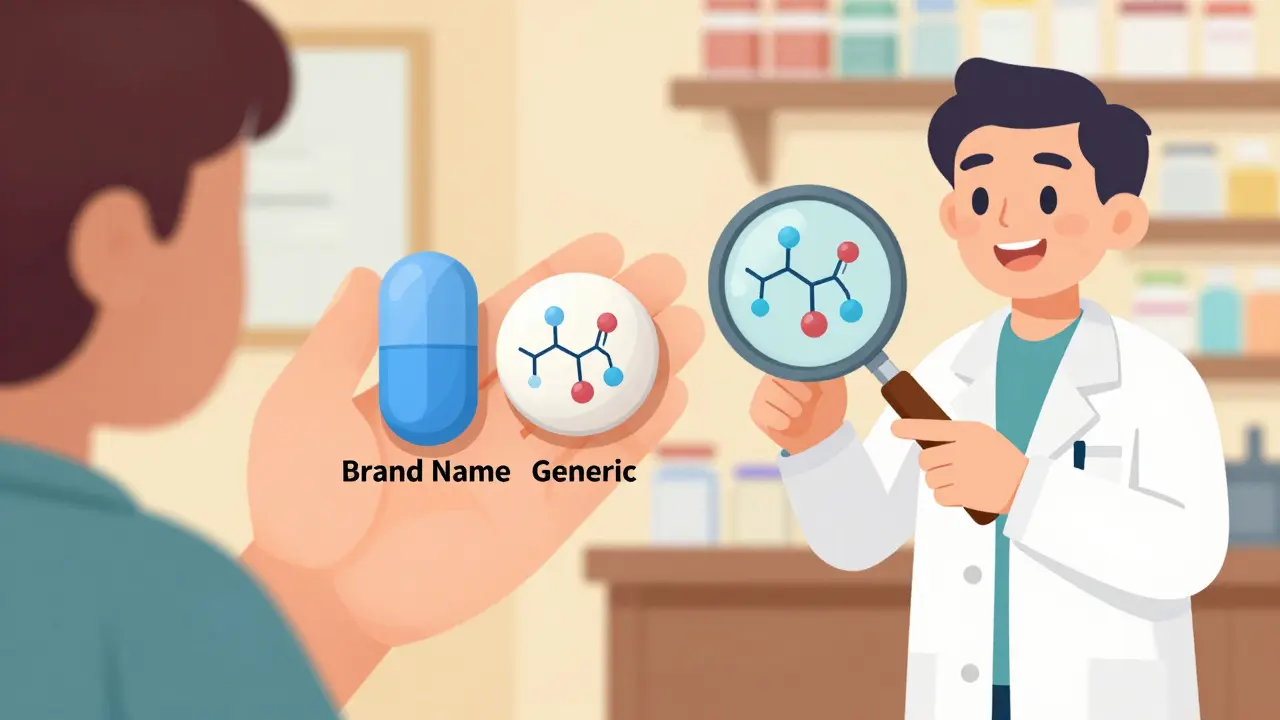
When your doctor prescribes a medication, you might notice the pharmacy gives you a pill that looks different from what you’ve taken before. The label says it’s the same drug, just cheaper. But you’re not alone if you wonder: Are generic drugs really the same? This question comes up all the time - and for good reason. People worry about whether they’ll still work, if they’re safe, or if they’re somehow "lesser" than the brand-name version they’ve trusted for years.
The truth is simpler than the fear suggests. Generic drugs are not a compromise. They are the exact same medicine, just without the marketing cost. The U.S. Food and Drug Administration (FDA) requires them to meet the same standards as brand-name drugs in every way that matters: same active ingredient, same strength, same way of taking it, same quality, and same performance. The only difference? Price. And sometimes, appearance.
Do generics work as well as brand-name drugs?
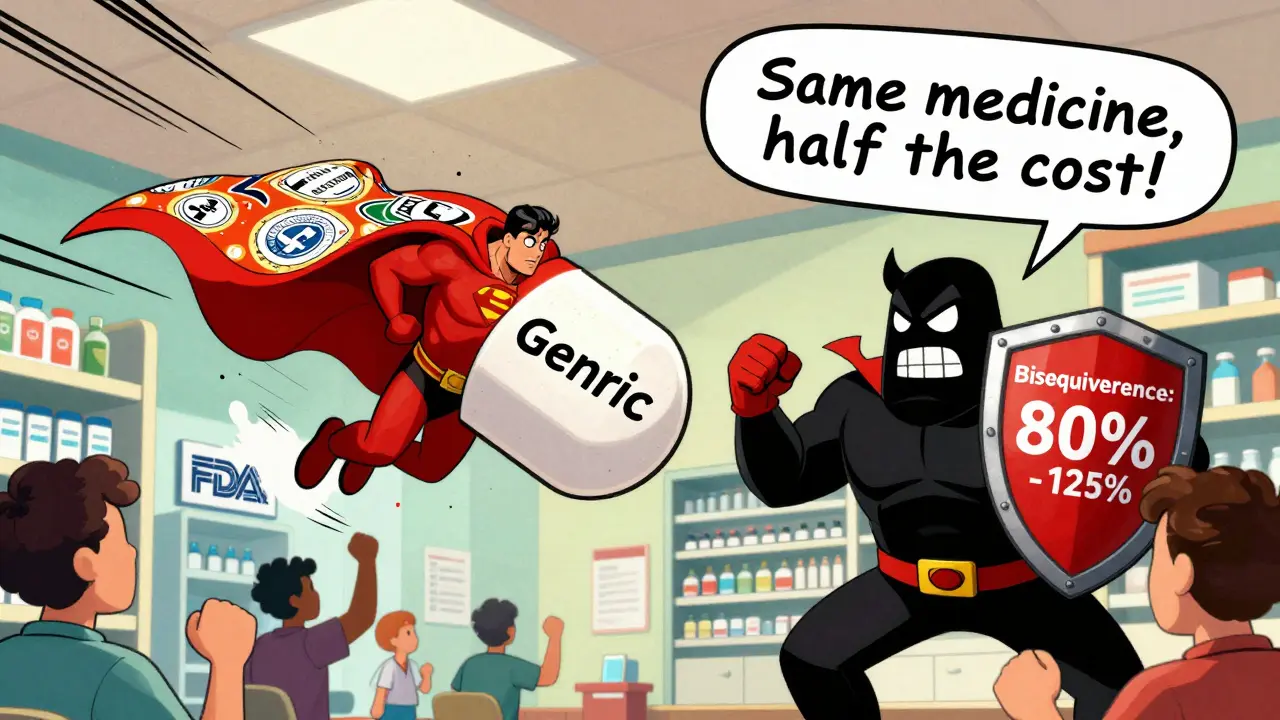
Yes. Every generic drug approved by the FDA must prove it works the same way in the body as the brand-name version. This is called bioequivalence. It means the generic drug delivers the same amount of active ingredient into your bloodstream at the same speed as the brand. The FDA requires this difference to be within 80% to 125% - a range tight enough to ensure no meaningful difference in how the drug affects you.
Think of it like this: two different brands of aspirin both contain 325 mg of acetylsalicylic acid. One might be white and round, the other blue and oval. But they both dissolve the same way, get absorbed the same way, and relieve pain the same way. The shape, color, or taste doesn’t change how it works. The same logic applies to blood pressure pills, antidepressants, or diabetes medications.
Studies back this up. In a 2014 survey of 753 patients with chronic illnesses, 87% said they believed generics were just as effective as brand-name drugs. And when researchers looked at actual health outcomes - like blood sugar control in diabetics or blood pressure in hypertensive patients - there was no measurable difference between those taking generics versus brand-name versions.
Are generics safe? What about side effects?
Generic drugs are held to the same safety standards as brand-name drugs. They’re made in the same type of facilities, under the same inspection rules, and tested for purity and stability. The FDA inspects over 3,500 manufacturing sites worldwide each year - including those making generics - to ensure they meet quality standards.
Some patients report side effects after switching from brand to generic. But here’s the catch: all drugs have side effects. If you switch from one brand of the same drug to another - even if both are brand-name - you might notice a change in how you feel. That’s because of small differences in inactive ingredients: fillers, dyes, or coatings that don’t affect how the medicine works but can change how your body reacts.
For example, one generic version of a pill might use a different dye, which could cause a mild allergic reaction in someone sensitive to that dye. Or a different coating might make the pill dissolve slightly faster, leading to a temporary stomach upset. These aren’t signs the drug is weaker - they’re just minor variations. If you notice something new after switching, talk to your pharmacist. They can check if the inactive ingredients changed and help you decide whether to stick with the generic or ask for a different version.
What about counterfeit generics?
This fear is understandable, but it’s based on misinformation. In the United States, all prescription generics - whether made in the U.S., India, or elsewhere - must pass strict FDA inspections before they reach pharmacies. The FDA has a program called RICA (Risk Identification and Correction Action) that has already fixed over 1,200 potential quality issues since 2018. If a batch of pills doesn’t meet standards, it’s pulled before it ever gets to you.
Counterfeit drugs are rare in the legal U.S. supply chain. They mostly show up online, from unregulated websites selling pills without prescriptions. If you get your medicine from a licensed pharmacy - whether it’s CVS, Walgreens, or your local independent pharmacy - you’re getting FDA-approved medication.
Why do generics cost so much less?
Brand-name drugs cost more because the company that invented them had to pay for years of research, clinical trials, and marketing. Once the patent expires, other companies can make the same drug. They don’t need to repeat expensive studies - they just prove their version works the same. That cuts costs dramatically.
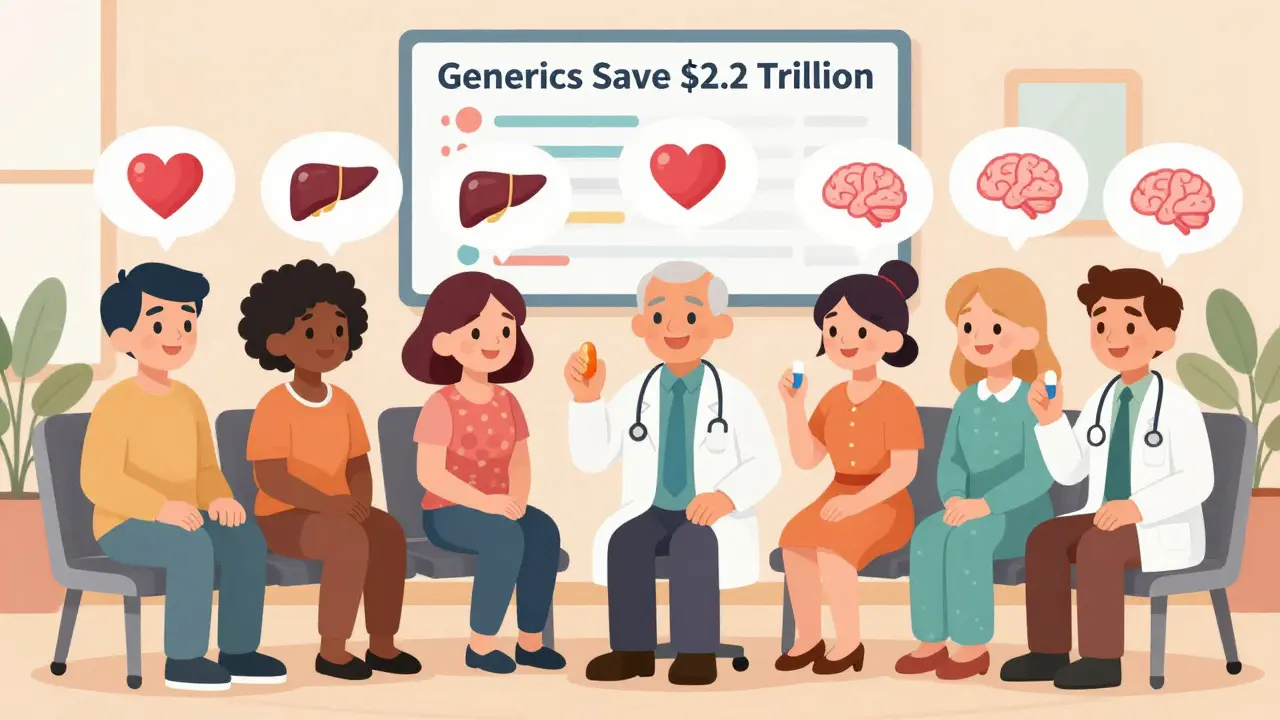
On average, generics cost 80% to 85% less than brand-name drugs. In 2022 alone, generic medications saved the U.S. healthcare system over $442 per prescription. Over the last decade, that added up to $2.2 trillion in total savings.
And here’s something surprising: about half of all generic drugs are actually made by the same companies that make the brand-name versions. The brand-name company simply stops marketing it under its own name and sells it under a generic label - sometimes even in the same factory.
Are there exceptions? When should I stick with brand-name?
Most of the time, switching to a generic is safe and smart. But there are a few medicines where small changes can matter more. These are called "narrow therapeutic index" drugs - meaning the difference between a dose that works and one that’s too strong is very small.
Examples include:
- Warfarin (a blood thinner)
- Levothyroxine (for thyroid conditions)
- Phenytoin and levetiracetam (for seizures)
For these, your doctor might suggest sticking with one version - brand or generic - and monitoring your levels closely. If you’re on one of these, your provider may write "Do not substitute" on your prescription. That means the pharmacy must give you exactly what’s written, even if a cheaper generic is available.
Even with these drugs, switching isn’t dangerous - it just requires more attention. If you do switch, your doctor may want to check your blood levels a few weeks later to make sure everything’s still in the right range.
Why do generics look different?
Generic pills often look different from brand-name ones because trademark laws prevent them from looking identical. A brand-name drug’s color, shape, and logo are protected like a company’s logo. So generics have to look different - even if they contain the exact same medicine.
This can be confusing. You might pick up a pill that’s green instead of blue, or oval instead of round, and think it’s a different drug. It’s not. The active ingredient is the same. The difference is just cosmetic.
If you’re unsure, always check the label. It will list the generic name (like "amoxicillin") and the dosage (like "500 mg"). That’s what matters. The shape and color? Just packaging.
Who decides if I get a generic?
In most cases, your pharmacist can switch you to a generic unless your doctor says "Do not substitute." This is called "automatic substitution," and it’s allowed in all 50 states. Pharmacists are trained to make these switches safely.
But here’s where communication matters: if you’re worried about switching, say something. Ask your pharmacist: "Is this a generic? Is it safe to switch?" They’re there to help. Many pharmacists offer free consultations to explain what you’re taking and why it’s a good choice.
Doctors, too, are learning. Many don’t know which generics are covered by insurance right after they’re approved. That’s why pharmacists often play a key role in helping patients get the most affordable option without losing effectiveness.
Why do some people distrust generics?
It’s not just about science - it’s about trust. A 2014 study found that non-Caucasian patients were more likely to ask for brand-name drugs. Some patients believed generics had "more chemicals" or were "less pure." These ideas often come from stories passed down - a friend had a bad reaction, a relative said it didn’t work.
But when researchers looked at real data, those fears didn’t hold up. People who switched from brand to generic didn’t have worse health outcomes. In fact, because generics are cheaper, more people stick with their treatment. That means better control of diabetes, high blood pressure, and cholesterol - and fewer hospital visits.
Education helps. When patients understand how generics are tested and regulated, their confidence grows. And when pharmacists take a few extra minutes to explain, adherence improves.
What should I do if I’m unsure?
If you’re nervous about switching to a generic, here’s what to do:
- Ask your pharmacist: "Is this a generic? Is it FDA-approved?"
- Check the label: Look for the generic name and dosage - that’s what matters.
- Watch for changes: If you notice new side effects after switching, call your doctor or pharmacist. It could be a harmless reaction to a different filler.
- Don’t assume it’s broken: If you feel the medicine isn’t working, it might be your condition changing - not the drug.
- Speak up: If you want the brand-name version, ask your doctor to write "Do not substitute." But know that you’ll likely pay more.
Most people switch without any issues. And those who do? They save money, stay on their treatment, and get just as good results.
Are generic drugs really as effective as brand-name drugs?
Yes. The FDA requires generic drugs to have the same active ingredient, strength, dosage form, and route of administration as the brand-name version. They must also prove bioequivalence - meaning they deliver the same amount of medicine into your bloodstream at the same rate. Studies show no meaningful difference in effectiveness for most medications.
Can generics cause more side effects than brand-name drugs?
Not because they’re weaker. Side effects come from the active ingredient, which is identical. However, generics may use different inactive ingredients - like fillers or dyes - which can rarely cause reactions in sensitive individuals. If you notice new side effects after switching, talk to your pharmacist. They can check if the formulation changed.
Why do generic pills look different?
Trademark laws prevent generics from looking exactly like brand-name pills. So they may be a different color, shape, or size. But the medicine inside is the same. Always check the label for the generic name and dosage - that’s what determines how the drug works.
Are there any drugs I shouldn’t switch to generic?
Yes - a few medications with a narrow therapeutic index, like warfarin, levothyroxine, and some seizure drugs, require close monitoring. Small changes in how the drug is absorbed can matter. Your doctor may advise sticking with one version. Always follow their guidance.
Can I trust generics made outside the U.S.?
Yes. The FDA inspects all manufacturing facilities - whether in the U.S., India, China, or elsewhere - that supply drugs to American pharmacies. If a facility doesn’t meet standards, the FDA blocks the shipment. You can trust generics from licensed U.S. pharmacies.

14 Comments

Scott Easterling
I've been taking generics for 12 years. My blood pressure? Same. My wallet? Thinner. But wait-why do they look like candy now? Last month I got a blue oval pill and thought I was taking Adderall. Turns out it was lisinopril. I almost called 911. FDA? More like FDA-Do-What-You-Want.

Mantooth Lehto
I switched to generic Zoloft and felt like my brain was made of wet socks. 😔 My anxiety went from 7/10 to 9/10. I went back to brand-name. They don't tell you this, but generics are basically the same drug with cheaper filler. I'm not a lab rat. 💔

Melba Miller
Let me tell you something about generics. They're not made in the same factories as brand-name drugs. The FDA says they are. But have you seen the reports? Some of these pills are made in warehouses in India where they don't even have running water. I'm not taking a pill that might've been handled by 17 people with no gloves. 🇺🇸 We need American-made medicine. Period.

Katy Shamitz
I used to be one of those people who thought generics were sketchy. Then I started reading. Turns out, 85% of them are made by the same companies that make the brand-name stuff. Same factory. Same machines. Same quality control. I just didn't know. Now I save $80/month. And yes, I still feel the same. 🙌

Nicholas Gama
Bioequivalence? Please. 80-125% is a joke. That's a 45% variance. If your insulin dose varies by 45%, you're dead. You're not a statistic. You're a person. And the FDA doesn't care.

Dan Mayer
i just got a generic version of my thyroid med and now i feel like a zombie. i swear it's not the same. the pill looks different and i think they swapped out the active ingrediant. or maybe it's the fillers. i dunno. but i'm going back to brand. i can't afford to be sick. 😩

Janelle Pearl
I used to be terrified of generics. Then I started asking questions. I went to my pharmacist and said, 'Can you tell me what's in this?' She spent 20 minutes explaining the inactive ingredients. Turns out, the dye in my old pill was causing my rash. The generic? Different dye. No more itching. I wish more people knew how helpful pharmacists are. 🙏

Erica Santos
Oh wow. So the FDA says it's the same. And you believe that? You really think the government isn't in bed with Big Pharma? Wake up. They're not testing the pills. They're testing the paperwork. The real drug? That's a different story. I'd rather pay extra than be a guinea pig. 🤷♀️

George Vou
my buddy took generic metformin and his sugar went through the roof. he said it was like the pill was a placebo. i thought he was crazy. then i tried it. same thing. now i only take brand. i don't care about the cost. i care about not dying. 🤨

Mary Beth Brook
The FDA's bioequivalence standard is a regulatory loophole. For narrow therapeutic index drugs, even 5% deviation can trigger clinical consequences. The current framework ignores pharmacokinetic variability across populations. This is not science-it's cost-driven policy. We need pharmacogenomic monitoring for generics.

Neeti Rustagi
In India, we have a long history of producing high-quality generics. Many pharmaceutical companies here are ISO-certified and FDA-compliant. The global supply chain is robust. I have personally verified manufacturing facilities in Gujarat. The fear of foreign-made generics is misplaced. Trust the science, not the rumors.

Ray Foret Jr.
I switched to generic warfarin last year. My INR went wild for a week. I panicked. Called my doc. They said, 'It's fine, we'll just test you more often.' We did. Two weeks later, I was stable. Saved $90/month. Honestly? I'm glad I didn't panic and go back. 😊

Samantha Fierro
I want to thank the author for this thoughtful breakdown. As a nurse, I see patients hesitate every day. Many assume 'generic' means 'inferior.' But when we take the time to explain the science-show them the FDA approval stamp, the identical active ingredient list-they relax. Knowledge reduces fear. And fear? It keeps people from taking their meds. That's the real danger.

Robert Bliss
I used to hate generics. Now I love them. I take 4 different ones. No side effects. No issues. My doctor said I'm doing great. I saved over $1,200 last year. Why did I wait so long? 🤷♂️

Write a comment