Online Reviews: How Patient Experiences Shape Trust in Generic Medications
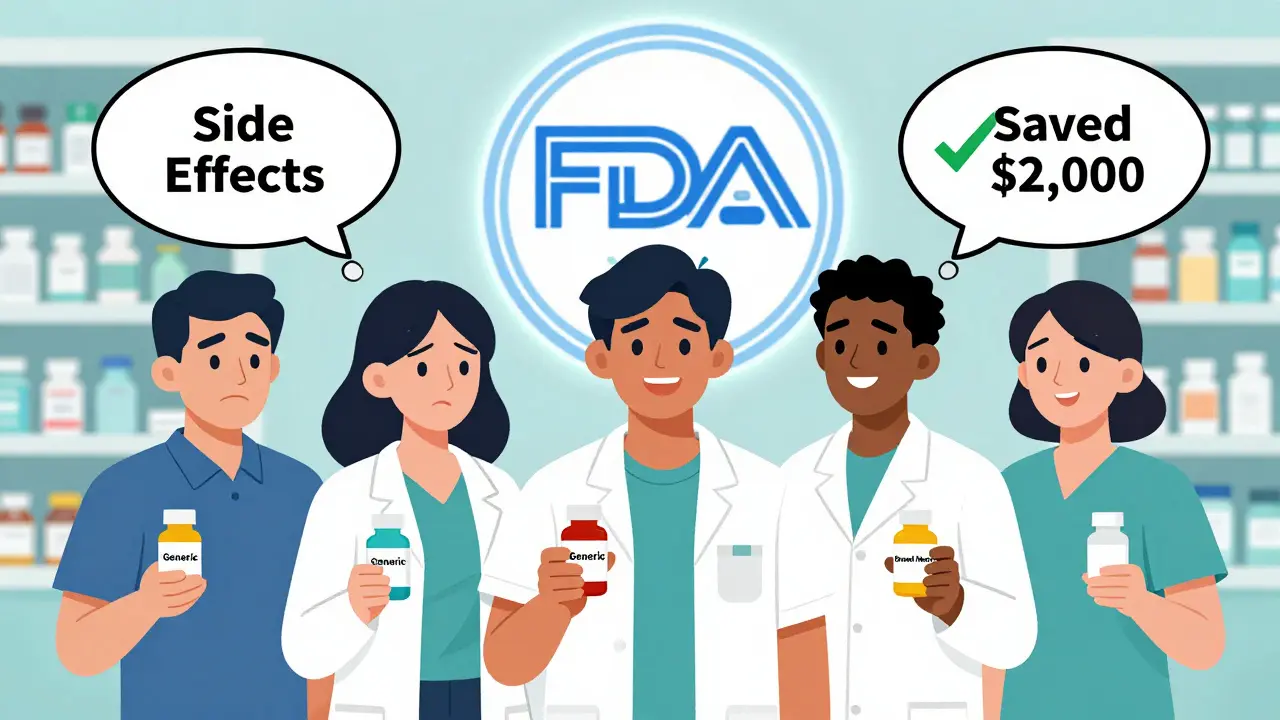
When you pick up a prescription at the pharmacy, you might not think twice about whether it’s the brand name or the generic version. But for many patients, that choice carries a lot of emotional weight. Generic medications are chemically identical to their brand-name counterparts - same active ingredient, same dosage, same way of working in the body. Yet, despite being 80-85% cheaper and making up 90% of all prescriptions filled in the U.S., a surprising number of people still doubt them. Why? Because online reviews and personal stories are shaping perceptions more than FDA data ever could.
What You’re Really Buying When You Choose a Generic
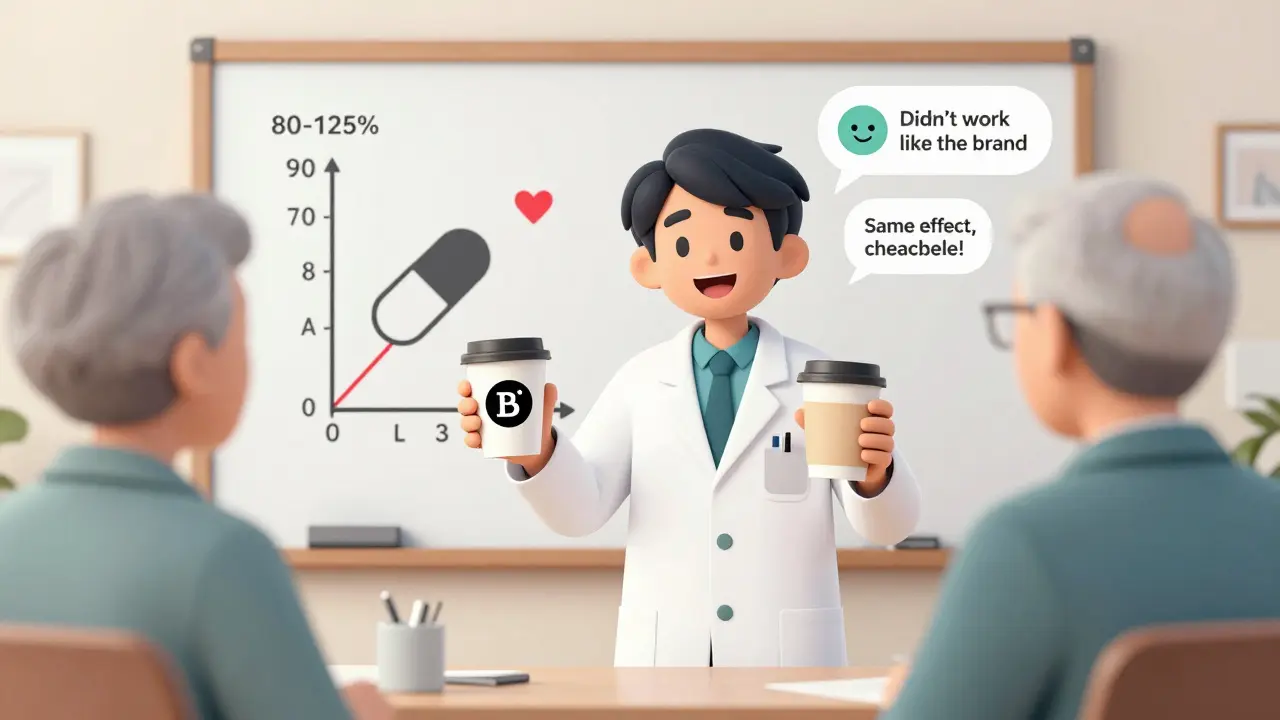
Generic drugs aren’t knockoffs. They’re not cheaper because they’re weaker. They’re cheaper because the patent expired. Under U.S. law, the FDA requires generics to prove they’re bioequivalent to the brand-name drug. That means the amount of medicine absorbed into your bloodstream has to fall between 80% and 125% of the original. For drugs with a narrow therapeutic index - like warfarin or levothyroxine - the range is even tighter: 90% to 111%. These aren’t loose standards. They’re backed by clinical trials, lab tests, and real patient data.
But here’s where things get strange: even though the science says they’re the same, many people feel different. A 2023 FDA survey found that only 27.3% of patients said they had complete confidence in generics. Meanwhile, 35.6% of laypeople believe generics are less effective - compared to just 28.7% of doctors and 23.6% of pharmacists. The disconnect isn’t about chemistry. It’s about psychology.
The Power of Online Stories
Look at Reddit’s r/pharmacy or PatientsLikeMe. Over 6,000 posts from 2020 to 2023 were analyzed. The most common complaints? “Generic didn’t work like the brand.” “I had new side effects.” “It made me feel worse.”
One user wrote: “My doctor switched me to generic Lyrica and within two weeks my nerve pain came back. I’m convinced the generics aren’t made to the same standards.”
Another said: “After three years on generic sertraline, I saved over $2,000. Zero difference in how I feel.”
Both are real. Both are true. But the first story gets shared more. Why? Because negative experiences stick harder. It’s called the negativity bias - humans are wired to remember when something goes wrong more than when it goes right. And online reviews? They amplify that.
Machine learning studies show that the phrase “cheap and poor copy” is one of the strongest predictors someone will reject a generic. Even when patients take the exact same pill - same manufacturer, same batch - if it’s labeled as generic, they report higher pain levels, more side effects, and are more likely to stop taking it. That’s not the drug. That’s their expectation.
Who Influences You More: Your Doctor or a Stranger Online?
Surprisingly, your doctor still matters most - but only if they speak up.
A 2024 study found that 69.8% of patients were more willing to try a generic if their doctor recommended it. But here’s the catch: only 45.5% of patients correctly understood that side effects don’t change between brand and generic. And 33.3% said they felt poorly informed by their GP.
Pharmacists have more time. When they spend just 90 seconds explaining bioequivalence - “This pill has the same active ingredient, same dose, same effect. The color is different because of the fillers, not the medicine” - patient acceptance jumps by 38.7%. Kaiser Permanente saw a 52% drop in patient questions about generics after rolling out simple handouts. One sentence: “FDA says this generic is as safe and effective as the brand.”
But most primary care visits last 15 minutes. Medication questions? On average, doctors have 1.7 minutes to talk about it. That’s not enough.
Why Age and Education Matter
Younger patients - those under 35 - are far more likely to trust generics. Sixty-eight percent of them have a positive view. Among those over 65? Only 41.7%. Why? Older patients remember when generics were less reliable. In the 1990s, some early generics did have issues with absorption. That memory lingers.
Education level also plays a role. People with college degrees are 73% more likely to understand bioequivalence than those without. That’s not about intelligence. It’s about access. If you’ve read about how drugs are tested, you’re less likely to panic when your pill looks different.
The Real Cost of Mistrust
This isn’t just about feelings. It’s about money and health.
The U.S. healthcare system loses $14.3 billion every year because people refuse generics. That’s prescriptions they don’t fill. That’s emergency room visits from uncontrolled blood pressure or diabetes. That’s switching back to expensive brand drugs because they “feel better.”
Even worse, the nocebo effect is real. When you expect a drug to fail, your body can make you feel worse - even if the pill is identical. A 2018 study gave patients the exact same tramadol - same dose, same manufacturer - but labeled one as “brand” and one as “generic.” Those who thought they were taking the brand reported 15.6% less pain. They also took fewer extra pills and stuck with the regimen longer.
It’s not the medicine. It’s the mind.
What’s Changing - and What’s Working
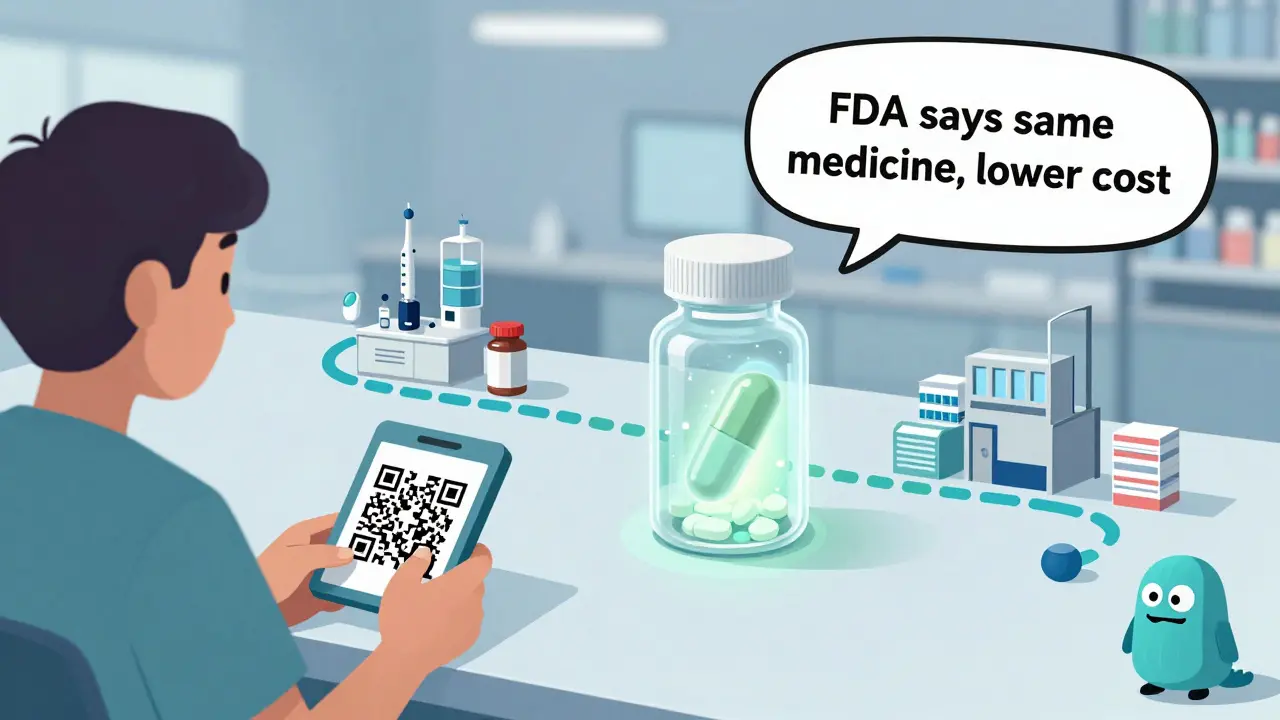
There’s hope. The FDA just launched a $15.7 million public education campaign called “Generics: Same Medicine, Lower Cost.” Early results? A 22.4% increase in consumer confidence after six months.
Pharmacies are training staff to talk about generics like they’re explaining a new coffee blend - not a compromise. “It’s the same coffee, just without the logo on the bag.”
Some manufacturers are even selling “authorized generics” - the brand-name company itself makes the generic version. These are flying off shelves. Sales grew 37.6% in 2023. Why? Because patients trust the brand name, even when it’s unlabeled.
Blockchain is being tested to let patients scan a code and see the full supply chain: where it was made, tested, and shipped. If you can verify the pill’s origin, you’re less likely to fear it’s fake.
What You Can Do
If you’re on a generic:
- Check the label. The active ingredient must match the brand.
- Don’t assume a change in how you feel is the drug. Talk to your pharmacist - not Google.
- Ask: “Is this FDA-approved? Can you show me the bioequivalence data?”
If you’re a provider:
- Don’t just say “It’s the same.” Explain why.
- Use simple analogies: “It’s like buying store-brand aspirin instead of Bayer. Same active ingredient.”
- Keep a one-pager on hand. Patients remember facts better when they see them.
Generics saved over $350 billion in the U.S. from 2007 to 2023. That’s billions in out-of-pocket savings for patients. But that number won’t grow until we fix the story we tell ourselves about them.
The science is clear. The data is solid. But trust? That’s built one conversation, one review, one honest moment at a time.

13 Comments

Kevin Y.
It's fascinating how much of this comes down to perception rather than pharmacology. I work in a pharmacy, and I've seen patients switch from brand to generic and swear up and down that the generic 'doesn't work'-only to find out later they switched brands twice and didn't realize it. The pill looks different, so the brain says it's different. We need more visual aids in the waiting room-side-by-side images, simple charts. A picture of two identical pills with one labeled 'brand' and one 'generic' says more than a paragraph of FDA jargon.

winnipeg whitegloves
Man, this whole thing is like buying a plain white T-shirt instead of the one with the fancy logo. Same cotton, same weave, same comfort-but somehow the logo makes you feel like you're wearing a status symbol. I’ve been on generic sertraline for five years. Zero drama. Zero side effects. My bank account thanks me. Meanwhile, my cousin paid $800 a month for the brand until her insurance dropped it. Now she’s on the generic and says she feels ‘more like herself.’ Turns out, the brand was the placebo all along.

Marissa Staples
I think we’re missing the real issue here. It’s not about the drug. It’s about control. When you’re sick, you want to feel like you’re doing something right. Taking a pill that looks different? It feels like surrendering to a system that doesn’t care. The brand name gives you a sense of certainty-even if it’s false. We need to stop treating patients like data points and start treating them like people who are scared. A little empathy goes further than a 90-second pharmacist spiel.

Rachele Tycksen
i just took generic adderall for a week and felt like a zombie lmao

Grace Kusta Nasralla
It’s not the pill. It’s the silence. No one tells you how much your body remembers-the shape of the pill, the taste, the ritual. You’ve been taking this exact blue capsule for ten years. Then one day, it’s white. Oval. Smells faintly of chalk. Your body panics. It’s not science. It’s trauma. We treat medication like a machine, but it’s part of a living, grieving, remembering human. That’s why the nocebo effect is so powerful. We’re not failing the science. We’re failing the soul.

Korn Deno
The data says generics are equal. The human says no. That gap isn't a flaw in the system. It's a feature of being alive. We don't trust numbers. We trust stories. And the story of the bad generic? It sticks. Because pain remembers. And fear is louder than facts.

Aaron Sims
Ohhh so now the FDA is running a 'Generics: Same Medicine, Lower Cost' campaign? What a coincidence! Right after Big Pharma lost their patent monopoly? I bet the 'authorized generics' are just the same pills with a new label. And blockchain? That's just a fancy way of saying 'trust us, we're the same guys who made you sick last year.' Wake up. They're milking you with placebo psychology.

Linda Foster
As a healthcare professional, I appreciate the depth of this analysis. The disconnect between clinical evidence and patient perception is not unique to generics-it's a recurring theme across chronic disease management. The challenge lies not in disseminating information, but in constructing narratives that align with lived experience. We must acknowledge the emotional validity of patient concerns before offering scientific correction. Trust is not built through brochures, but through consistent, compassionate dialogue that honors uncertainty. The pharmacy team’s 90-second explanation is a step in the right direction-but only if delivered with humility, not authority.

Agbogla Bischof
In Nigeria, generics are the only option-and we’ve had them for decades. We don’t have the luxury of brand-name drugs. But here’s what we’ve learned: consistency matters more than branding. If the same generic manufacturer produces the same pill every time, people trust it. It’s not about the label. It’s about reliability. We need to stop treating patients like they’re ignorant. They’re not. They’re just tired of being sold false promises. The real solution? Transparent sourcing. Let people see the lab reports. Let them know who made it. That’s trust. Not slogans.

Pat Fur
My grandmother refused generics until she saw the pharmacy receipt. $12 for the brand. $2.50 for the generic. She asked, ‘If it’s the same, why does it cost 500% more?’ I didn’t explain bioequivalence. I just handed her the receipt. She took the generic. No complaints. Sometimes the truth doesn’t need a lecture. Just a number.

Anil Arekar
As someone from a country where generics are the standard, I find this discussion both enlightening and disheartening. In India, we produce over 50% of the world’s generics. We know the quality. We’ve seen the science. Yet, here in the U.S., patients are told to fear what we rely on daily. This isn’t about medicine. It’s about privilege. Those who can afford brand names often do-and then assume their experience is universal. The real gap isn’t in chemistry. It’s in access. And that’s a moral issue, not a medical one.

Stephen Alabi
Let’s be brutally honest: the FDA’s bioequivalence standards are laughably lax. 80% to 125% absorption? That’s a 45% window. If a drug’s therapeutic index is narrow, even a 10% deviation can be catastrophic. And yet, they approve generics based on population averages-not individual variability. This isn’t science. It’s regulatory theater. Add to that the fact that generics are often manufactured in countries with questionable oversight, and you have a recipe for disaster. The 2023 survey isn’t irrational-it’s a survival instinct. People are right to be skeptical. The system is broken, and this campaign is a PR band-aid.

Elaine Parra
Let’s not sugarcoat this: Americans are being played. The brand-name companies don’t want you to take generics. They fund the fear. They pay influencers to post about ‘bad generics.’ They lobby to keep the word ‘generic’ off packaging. And now they’re selling ‘authorized generics’-same pill, same factory, but now it’s got the brand name on it. They’re monetizing your fear. This isn’t about medicine. It’s about profit. And if you’re still buying into this ‘trust the system’ nonsense, you’re part of the problem.

Write a comment