GLP-1 Side Effects: How to Manage Nausea, Dosing, and What Works Best
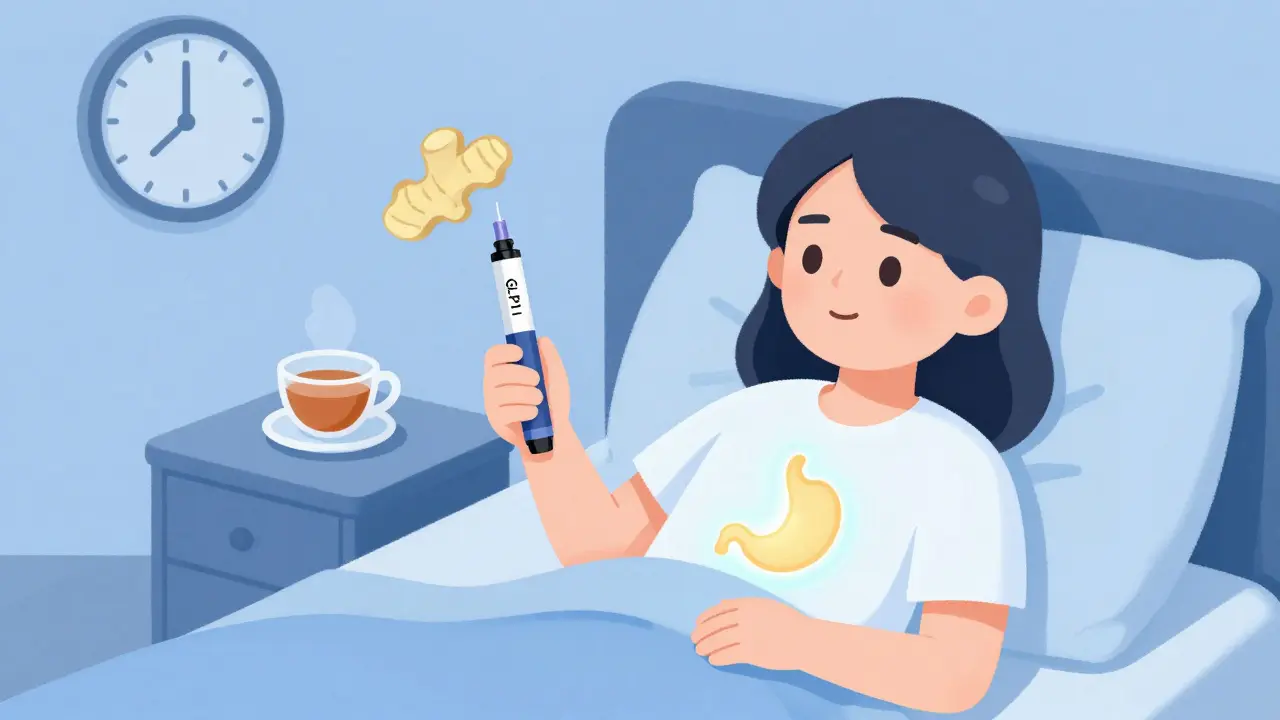
When you start a GLP-1 medication like Wegovy or Ozempic for weight loss, the first thing most people notice isn’t the scale dropping-it’s the nausea. It hits hard, often right after the first dose. You’re not alone. Around 30% of people experience it, and for many, it feels like the treatment is worse than the problem. But here’s the truth: nausea doesn’t mean you should quit. It means you need to adjust how you take it.
Why GLP-1 Medications Cause Nausea
GLP-1 drugs work by slowing down how fast your stomach empties. That’s not a bug-it’s the feature. Slower digestion means you feel full longer, eat less, and lose weight. But that same mechanism also makes your stomach feel queasy. The hormone mimics what your body naturally produces after eating, tricking it into thinking it’s full even when it’s not. For some, that triggers nausea, especially when the dose is ramped up too fast.It’s not just psychological. Clinical trials show nausea peaks during dose increases, not at maintenance. In the Wegovy trials, 32% of users reported nausea at the 0.25 mg starting dose. By the time they hit 2.4 mg, that jumped to 45%. Tirzepatide (Mounjaro and Zepbound) shows similar numbers. The good news? Most people see improvement within 2 to 4 weeks at each new dose.
Dosing Schedules That Reduce Nausea
The key to tolerating GLP-1 medications isn’t brute force-it’s patience. Each drug has a carefully designed ramp-up schedule for a reason.- Wegovy (semaglutide for weight loss): Starts at 0.25 mg weekly for 4 weeks. Then 0.5 mg for 4 weeks, 1 mg for 4 weeks, 1.7 mg for 4 weeks, and finally 2.4 mg. That’s 17 weeks just to reach the full dose.
- Ozempic (semaglutide for diabetes): Starts at 0.25 mg, then 0.5 mg, then 1 mg. Max dose is 2 mg-lower than Wegovy because it’s not designed for maximum weight loss.
- Mounjaro/Zepbound (tirzepatide): Begins at 2.5 mg weekly, then increases by 2.5 mg every 4 weeks up to 15 mg. This takes about 20 weeks to reach the top dose.
- Victoza (liraglutide): Starts at 0.6 mg daily, then moves to 1.2 mg or 1.8 mg. Daily dosing means more frequent side effects, but lower peak levels.
Notice the pattern? These schedules are built to let your body adapt. Rushing through them increases nausea risk by nearly 50%, according to patient surveys from the Obesity Action Coalition. Stick to the timeline-even if you’re not losing weight yet. Weight loss typically doesn’t kick in until after week 8.
What Actually Helps With Nausea
There’s no magic pill to stop nausea cold, but real people have found what works. Based on thousands of user reports and clinical advice, here’s what reduces symptoms:- Take it at bedtime. A Cleveland Clinic survey found 63% of users had less nausea when injecting at night. Your stomach is quieter while you sleep, and you’re less likely to notice discomfort.
- Eat smaller, bland meals. Skip greasy food, heavy sauces, and large portions. Stick to toast, rice, bananas, broth, and plain yogurt. High-fat meals slow digestion even more-making nausea worse.
- Stay hydrated, but sip slowly. Chugging water can trigger nausea. Sip room-temperature water, herbal tea, or ginger ale throughout the day. Aim for 6-8 cups total.
- Try ginger. A National Obesity Society survey found 78% of doctors recommend ginger. Try ginger tea, capsules (250 mg), or candied ginger. It’s one of the few natural remedies with real evidence behind it.
- Avoid alcohol and caffeine. Both irritate the stomach and can make nausea feel worse. Cut back during the first 8 weeks.
Some people swear by peppermint oil or acupressure wristbands. They don’t hurt, but don’t expect miracles. Stick with the proven methods.

When to Call Your Doctor
Nausea is normal. Vomiting, dizziness, or pain isn’t. Here’s when to reach out:- You’re vomiting more than once a day for 3+ days.
- You can’t keep down liquids for 24 hours.
- You feel lightheaded or have a rapid heartbeat.
- Nausea doesn’t improve after 4 weeks at your current dose.
If you’re struggling, your doctor might pause the dose increase for another 2-4 weeks. Or switch you to a lower maintenance dose. Some people stay on 1.7 mg of Wegovy instead of 2.4 mg and still lose 10-12% of their body weight. You don’t need the max dose to see results.
Long-Term Outlook: Does Nausea Go Away?
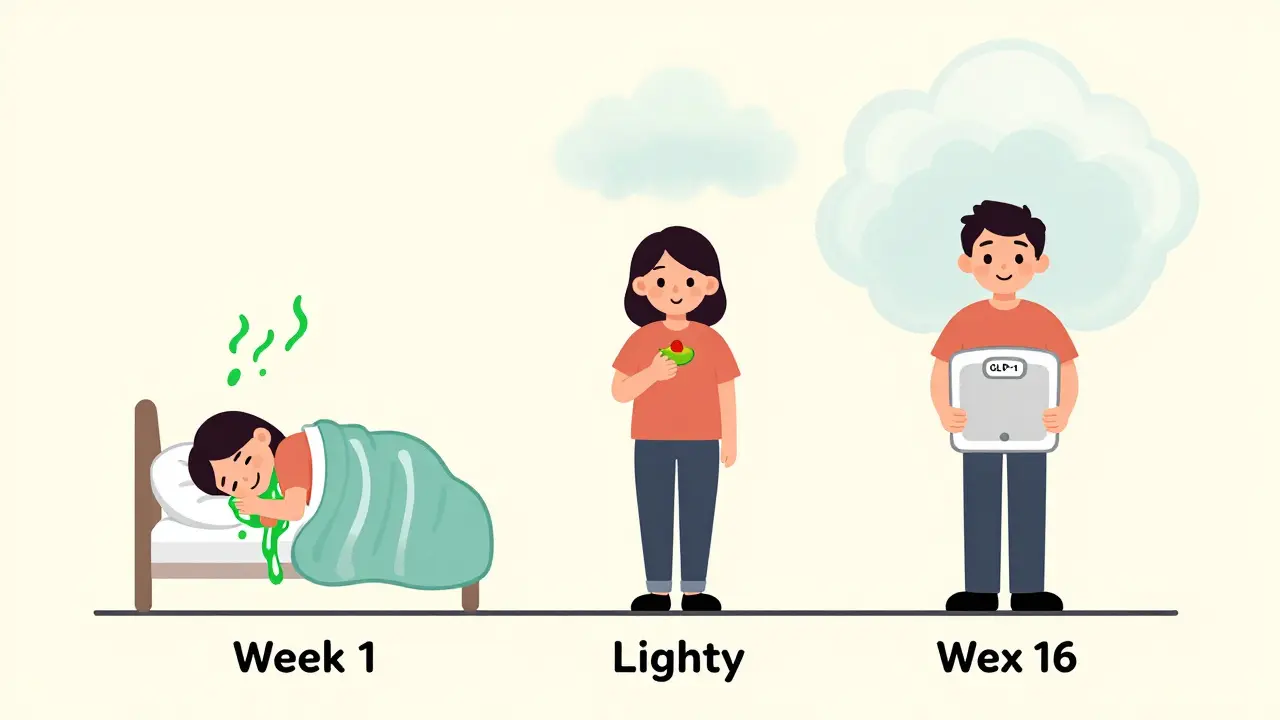
Yes-for most people. In a Reddit survey of 1,247 users on r/semaglutide, 72% said nausea improved significantly after 2-4 weeks at each dose. By the time they reached their final dose, only 18% still felt bothered by it.One user, @WeightLossWarrior87, wrote: “Week 1-4 on 0.25 mg? Nausea every day. Week 3 at 0.5 mg? Barely noticed it. By week 12, I forgot I was even on a medication.” That’s the story for most.
Long-term users report nausea becomes a distant memory. The body adapts. The stomach learns. The reward-losing 15-20% of body weight-is worth the temporary discomfort for most.
What If Nausea Never Gets Better?
It’s rare, but it happens. If nausea persists after 3 months at a stable dose, it’s not worth pushing through. Some people have sensitive digestive systems or underlying conditions like gastroparesis or IBS. In those cases, switching to a different GLP-1-like going from semaglutide to tirzepatide-can help. Others find oral semaglutide (expected in 2025) may be easier on the stomach than injections.Don’t feel like a failure if you need to stop. Weight loss isn’t one-size-fits-all. There are other options: metformin, phentermine, or even lifestyle changes with structured support. GLP-1s are powerful, but they’re not the only path.
What You Should Know Before Starting
- It’s not a quick fix. You won’t lose much weight in the first 8 weeks. Most lose 2-3% by then. Real results come after month 4.If you’re considering GLP-1s, talk to a doctor who understands weight management-not just diabetes. Ask for a titration plan. Ask for nausea tips. Ask what to expect. The right support makes all the difference.
How long does nausea last on GLP-1 medications?
Nausea typically lasts 2 to 4 weeks at each dose increase. For most people, it improves significantly by the time they reach their maintenance dose. Around 72% of users report noticeable improvement within a month of stabilizing at a new dose. By 3 months on a steady dose, only about 1 in 5 still experience bothersome nausea.
Can I skip the starting dose to avoid nausea?
No. Skipping the starting dose increases your risk of severe nausea, vomiting, and even stopping the medication entirely. The low starting dose is there to let your body adjust. Jumping straight to 0.5 mg or higher can cause nausea to spike. Stick to the schedule-even if it feels slow.
Is it normal to lose appetite on GLP-1s?
Yes. Reduced appetite is one of the main reasons these drugs work for weight loss. You don’t feel hungry as often, and meals feel more filling. This is different from nausea. If you’re not hungry but feel fine, that’s the drug working. If you’re nauseated and can’t eat at all, that’s a sign to slow down.
Do GLP-1s cause long-term stomach damage?
No evidence suggests GLP-1 medications cause permanent stomach damage. The slowing of gastric emptying is temporary and reversible. Once you stop the drug, digestion returns to normal within days to weeks. Long-term users in clinical trials (up to 4 years) show no signs of chronic stomach issues.
Can I take anti-nausea meds with GLP-1s?
Yes, but be careful. Over-the-counter options like dimenhydrinate (Dramamine) or meclizine (Bonine) can help with nausea. Avoid strong prescription anti-nausea drugs unless prescribed by your doctor. Some can interfere with how GLP-1s work or mask symptoms that need attention. Always check with your provider before combining medications.
Will switching from Ozempic to Wegovy make nausea worse?
It might. Ozempic maxes out at 2 mg, while Wegovy goes up to 2.4 mg. The higher dose can increase nausea risk. But if you’ve already been on Ozempic at 1 mg or higher, your body is already adapted. Switching to Wegovy usually means just increasing the dose slightly, not starting from scratch. Still, your doctor should guide the transition carefully.
What Comes Next?
If you’re struggling with nausea, don’t give up. Most people get through it. If you’re not sure where to start, ask your doctor for a written dosing plan. Track your symptoms in a notebook or app. Note what you eat, when you inject, and how you feel. Patterns will emerge.And remember: the goal isn’t to feel perfect. It’s to feel better than you did before. For many, that means losing 10, 15, even 20% of their body weight-without surgery, without extreme diets. The nausea is a chapter, not the whole story.

12 Comments

Ryan Hutchison
Let me cut through the fluff-this isn’t about nausea, it’s about people wanting magic pills without any discipline. You think your stomach’s being punished? Try working a 12-hour shift on no sleep and eating gas station food while your kid throws up from the flu. This is a tool, not a miracle. If you can’t handle a little queasiness to lose 20% of your body weight, maybe you shouldn’t be on it in the first place.

Isabella Reid
I started on Wegovy last year and yeah, week one was brutal. I thought I was dying. But I stuck to bedtime dosing, ate bland rice and bananas, and drank ginger tea like it was water. By week 6, I barely noticed it. The weight came off slowly but steadily-no crazy crashes, no rebound. It’s not fun, but it’s manageable. And honestly? I feel better than I have in 15 years.

john Mccoskey
There’s a systemic failure here. We’ve turned medical intervention into a lifestyle brand. GLP-1s aren’t weight loss-they’re metabolic recalibration. The nausea isn’t a side effect, it’s a signal. Your body is rejecting the artificial satiety signal, which means your gut microbiome and vagal tone have been compromised by decades of processed food and sedentary living. The real question isn’t how to manage nausea-it’s why we’re allowing pharmaceutical companies to treat symptoms of a broken food system as if they’re individual failures. We’re not failing at dosing-we’re failing at culture.

waneta rozwan
Oh please. Ginger tea? Bedtime injections? You’re treating this like a spa day. I was vomiting every morning for three weeks. I didn’t care about ‘patterns’ or ‘slow sips.’ I just took Zofran like candy and kept going. The doctors told me to wait it out-but I didn’t have time to wait. I lost 18 pounds in 6 weeks and I didn’t care if I felt like death. Sometimes you gotta be a little cruel to yourself to get results.

vivek kumar
It's important to clarify that while ginger is commonly recommended, its efficacy in GLP-1-induced nausea is not robustly supported by randomized controlled trials. The 78% statistic cited is likely from anecdotal surveys, not peer-reviewed data. Moreover, the claim that nausea 'improves significantly' within 2–4 weeks is misleading without specifying the dose cohort. For example, in the STEP-1 trial, 45% of patients on 2.4 mg still reported moderate-to-severe nausea at week 16. This article oversimplifies a complex pharmacological adaptation process.

Jody Fahrenkrug
Just wanted to say-this post saved me. I was about to quit after week 2. I switched to bedtime dosing and started eating oatmeal every morning. No more panic attacks when I felt queasy. I’m on week 10 now. I’ve lost 14 lbs. I still get a little off sometimes, but it’s not the monster it was. You’re not broken. You’re adapting.

Samyak Shertok
Oh wow, so now we’re supposed to be grateful for nausea? Let me get this straight-you’re telling me I should endure chemical-induced vomiting for 20 weeks because some CEO in New Jersey wants me to fit into a size 6? Meanwhile, my cousin in Delhi lost 30kg with yoga, fasting, and chai. Maybe the problem isn’t my stomach-it’s the idea that capitalism needs me to be sick to be worthy. Ginger tea won’t fix that.

Riya Katyal
i just want to say i cried last night because i threw up for the 4th time this week and my bf said 'maybe you're just weak' and i don't even know who i am anymore. i used to love food. now i look at a sandwich and feel like i'm gonna die. is this what being healthy looks like? i don't think so.

swarnima singh
They’re not telling you the real reason this works. It’s not the GLP-1-it’s the fear. You’re not losing weight because your stomach slows down-you’re losing weight because you’re terrified of the nausea. You eat less because you’re scared to eat. It’s psychological. The drug just gives you an excuse to starve yourself. And now we’re calling it medicine? This is just modern-day anorexia with a prescription label.

Nicholas Gabriel
Important note: If you’re on a GLP-1 and experience prolonged nausea beyond 4 weeks at a stable dose, don’t assume it’s ‘just part of the process.’ Get a gastric emptying study. I had gastroparesis masked by GLP-1 side effects-my doctor assumed it was normal. Turns out, I needed a different treatment entirely. Don’t let anyone gaslight you into thinking discomfort equals progress. Your body is not a machine to be brute-forced. Listen to it. And if your provider won’t listen? Find a new one. You deserve better.

kanchan tiwari
Wait… so you’re telling me the FDA approved this knowing it causes nausea… and the companies are making billions… and now you’re telling us to just ‘stick with it’? What if this is all a cover for something darker? What if the nausea is actually the drug testing your DNA for weaknesses? What if it’s designed to weed out the ‘unworthy’? I’ve read about this. It’s not coincidence. The same labs that made these drugs also made the opioid crisis. They don’t care if you’re sick-they care if you’re hooked.
Isabella Reid
Just wanted to say-I saw your comment about crying and feeling like you don’t know who you are anymore. I’ve been there. It’s not weakness. It’s grief. You’re mourning the food you loved, the comfort it gave you, the way meals used to feel like joy. That’s real. And it’s okay to feel that. You’re not broken. You’re human. And you’re not alone.

Write a comment