Goldenseal and Metformin Interaction Risks for Blood Sugar Control
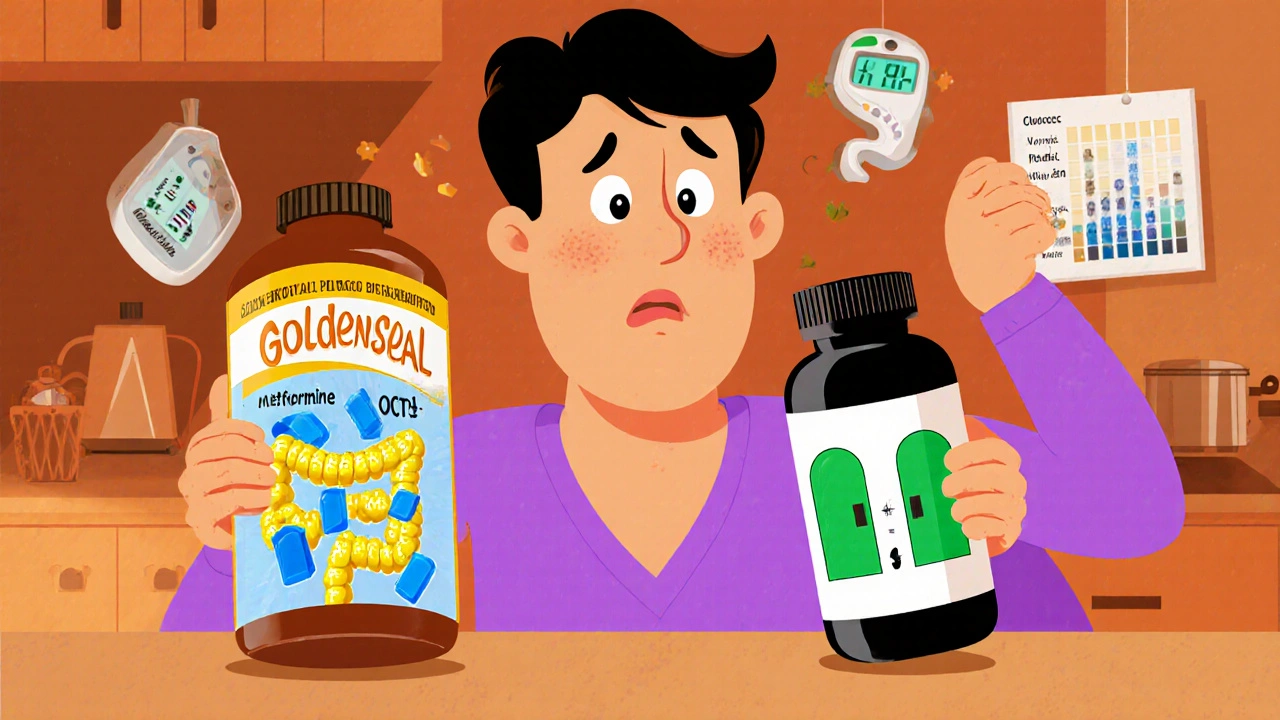
Many people with type 2 diabetes turn to herbal supplements like goldenseal hoping to improve their blood sugar control. But what they don’t realize is that taking goldenseal with metformin could be making their condition harder to manage-not easier. This isn’t just a theory. In 2021 and again in 2025, clinical studies confirmed a real, measurable interaction between goldenseal and metformin that affects how much of the drug actually gets into your bloodstream. And for someone relying on metformin to keep their glucose levels stable, that drop in drug exposure can be dangerous.
How Goldenseal Lowers Metformin Levels
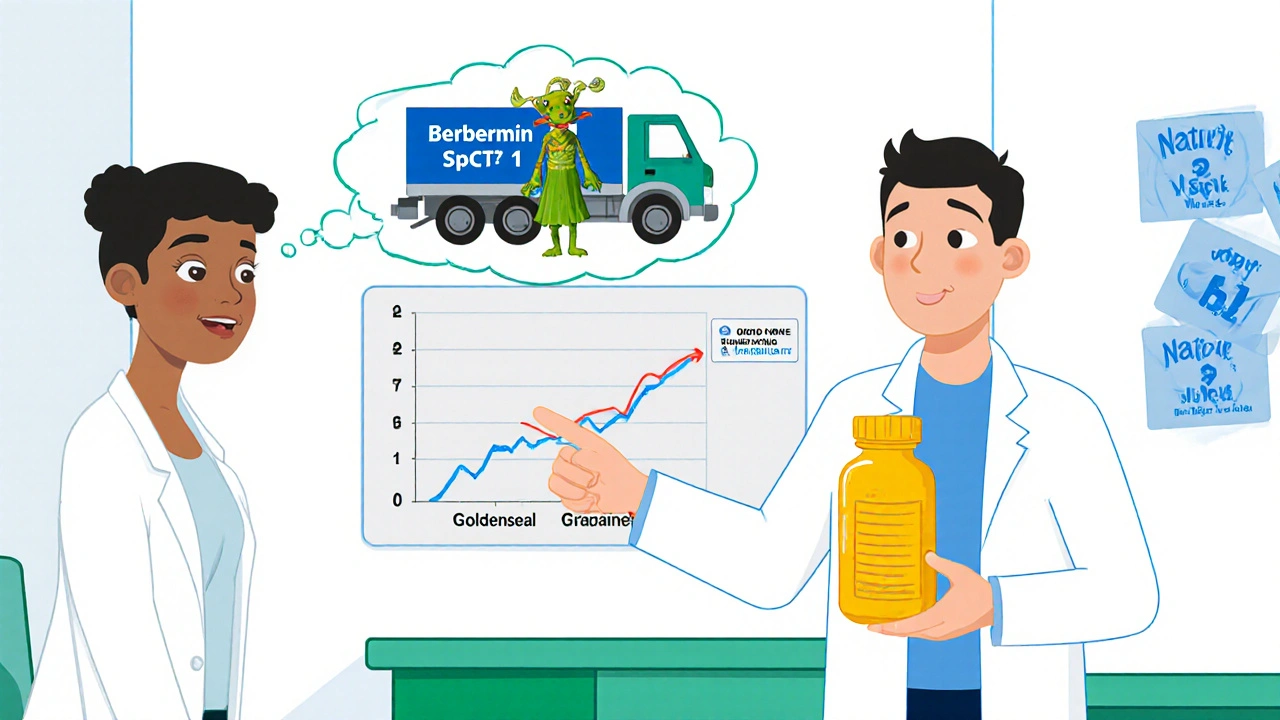
Goldenseal contains a compound called berberine, which has been studied for its own blood sugar-lowering effects. But berberine doesn’t just help-it interferes. The main problem isn’t liver metabolism or kidney clearance. It’s absorption in the gut. Metformin needs special transporters in the intestinal wall to get absorbed into the blood. One of these, called OCT1, is blocked by berberine. When you take goldenseal, berberine competes with metformin for the same doorway into your bloodstream. The result? Less metformin gets in.
A 2025 study published in Clinical and Translational Science showed this clearly. When people took goldenseal while on low doses of metformin (500-750 mg daily), the amount of metformin in their blood dropped by 20-25%. That’s not a small change. It’s enough to make a difference in how well your blood sugar is controlled. At higher doses of metformin (2000-2550 mg), the effect disappeared. Why? Because those doses overload the transporters anyway. The system is already saturated. But if you’re on a low or moderate dose, this interaction matters.
Why This Matters for Blood Sugar
You might think, “If berberine lowers blood sugar on its own, then isn’t this a good thing?” It seems logical-but it’s risky. The same study found that even though metformin levels dropped, HbA1c (a measure of average blood sugar over 3 months) still improved slightly. That’s because berberine was doing its own job: lowering glucose independently. But here’s the catch: berberine’s effect isn’t predictable. It varies by dose, duration, and individual metabolism. One person might get lucky. Another might see their blood sugar spike because the metformin wasn’t working as well.
Imagine someone on 1000 mg of metformin starts taking goldenseal. Their fasting glucose was stable at 120 mg/dL. After two weeks, it jumps to 150 mg/dL. They don’t change their diet or activity. Their doctor assumes they’ve stopped taking their meds. But the real culprit? A supplement they thought was “natural” and therefore safe. This kind of scenario happens more often than you’d think.
The Dual Risk: Too Much or Too Little?
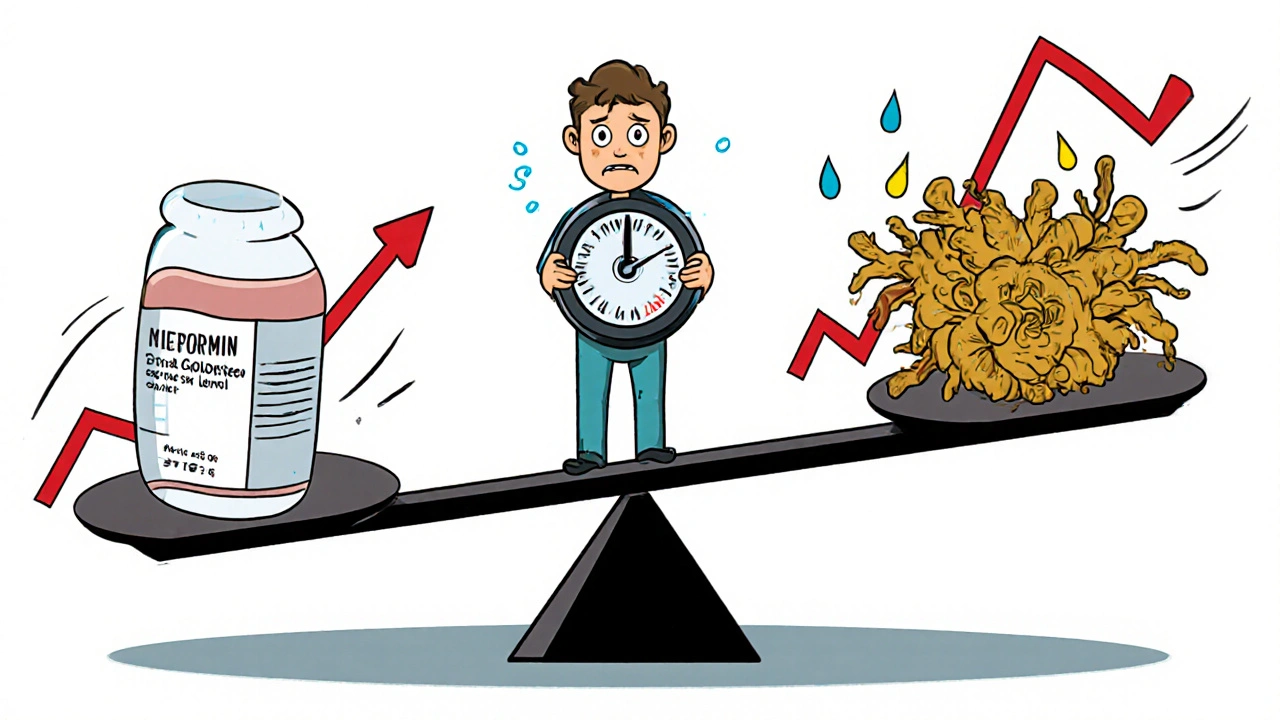
Goldenseal creates a paradox. On one hand, it reduces metformin levels, which could raise blood sugar. On the other, berberine itself lowers blood sugar. So which effect wins? It depends. In the short term, berberine might mask the problem. Your HbA1c looks good, so you keep taking it. But over time, the metformin drop can become a problem. Especially if you miss a dose of goldenseal, or your doctor increases your metformin dose without knowing you’re using it.
The MSD Manual Professional Edition (2024) warns: “Goldenseal may decrease the blood levels of metformin, potentially hindering glucose control.” But it also says, “Berberine may increase the hypoglycemic effects of antihyperglycemic drugs.” So you’re stuck between two risks: hyperglycemia from reduced metformin, or hypoglycemia from too much berberine. And because berberine isn’t standardized in goldenseal supplements, you never know how much you’re actually getting.
What the Research Really Says
The 2021 study from Washington State University was the first to pinpoint the transporter mechanism. Before that, people assumed goldenseal worked like grapefruit juice-by shutting down liver enzymes. But that’s not what’s happening. The interaction is all in the gut. And it takes time. The effect didn’t show up until after six days of daily goldenseal use. That means if you stop taking it, your metformin levels won’t bounce back immediately. You could be at risk for days after quitting the supplement.
Another key detail: the study used real patients with type 2 diabetes, not healthy volunteers. That’s important. Earlier studies used tiny doses of metformin (50 mg) and saw big drops in absorption. But those doses aren’t used in real life. The 2025 study used doses people actually take-500 to 2550 mg-and found the interaction was strongest at the lower end. That’s the sweet spot where things go wrong.
Who’s Most at Risk?
If you’re on less than 1000 mg of metformin per day, you’re at higher risk. That’s often the starting dose. Many people stay there for months-or even years-because they’re managing well. But if you add goldenseal, you’re quietly reducing the drug’s effect. Older adults (over 60) are also more vulnerable. Berberine’s glucose-lowering effect weakens with age, according to a 2023 meta-analysis of 27 trials. So you lose the benefit of berberine just as you need metformin more.
People who use multiple supplements are also at higher risk. Goldenseal is often mixed with other herbs like cinnamon, bitter melon, or fenugreek-all of which also affect blood sugar. Combine them with metformin, and you’re playing Russian roulette with your glucose control.
What Should You Do?
Don’t stop your metformin. Don’t panic. But do take action.
- If you’re taking goldenseal, tell your doctor. Don’t wait for a problem to arise. Bring the bottle to your next appointment.
- If you’re thinking about starting goldenseal, talk to your doctor first. Ask if there’s a safer way to support your blood sugar-like diet changes, exercise, or a standardized berberine supplement under medical supervision.
- Monitor your blood sugar more closely for two weeks after starting or stopping goldenseal. Look for patterns: higher fasting glucose? More spikes after meals?
- If your blood sugar starts rising without explanation, consider goldenseal as a possible cause-even if you’ve been taking it for months.
The American Diabetes Association doesn’t yet list goldenseal as a known interaction in its official guidelines. But it does say: “Routine assessment of all medications and supplements” is part of good diabetes care. That includes herbal products. Your doctor needs to know.
Alternatives to Goldenseal
If you’re using goldenseal for its berberine content, there are better options. Standardized berberine supplements (usually 500 mg, taken two to three times daily) are available. They contain no other plant compounds, so dosing is predictable. They’re also more sustainable-goldenseal is an endangered plant, and wild harvesting is depleting natural populations.
But even standardized berberine can interact with metformin. The same transporter issue applies. So if you want to use berberine, work with your doctor. They can adjust your metformin dose if needed, and monitor your HbA1c and fasting glucose more closely.
Other natural options-like chromium, magnesium, or alpha-lipoic acid-have less evidence of interaction with metformin. They’re not magic bullets, but they’re safer bets if you’re looking for support beyond diet and exercise.
Bottom Line
Goldenseal isn’t harmless. It’s not a gentle herb. It’s a powerful substance that changes how your body handles a life-saving medication. For people on low to moderate doses of metformin, it can reduce drug levels enough to cause real harm. Even if your HbA1c looks good, you might be dancing on a tightrope-berberine masking the problem, while your metformin quietly loses its edge.
If you’re managing type 2 diabetes, your medications are your foundation. Supplements should never replace them. And they shouldn’t be added without knowing the risks. This interaction isn’t theoretical. It’s documented, measured, and real. Don’t gamble with your blood sugar. Talk to your doctor before taking anything-even something labeled “natural.”
Can I take goldenseal with metformin if I’m on a low dose?
No. If you’re taking less than 1000 mg of metformin daily, goldenseal can reduce how much of the drug your body absorbs by up to 25%. This increases your risk of high blood sugar. Even if you feel fine, your glucose control may be worsening without you noticing.
Does berberine lower blood sugar better than metformin?
In some studies, berberine has lowered fasting glucose and HbA1c similarly to metformin. But it’s not a direct replacement. Berberine’s effects vary between individuals, and its long-term safety and consistency aren’t as well proven. Metformin has decades of research backing its safety and effectiveness. Using berberine instead of metformin without medical supervision is risky.
How long does it take for goldenseal to affect metformin?
The interaction builds up over time. Studies show it becomes significant after about six days of daily goldenseal use. That means even if you’ve been taking it for months without issues, it could still be quietly reducing your metformin levels.
Should I stop goldenseal cold turkey if I’m on metformin?
Don’t stop suddenly without talking to your doctor. Stopping goldenseal could cause metformin levels to rise, which might increase side effects like nausea or diarrhea. It could also cause your blood sugar to drop too low if berberine’s effect fades faster than your body adjusts. Work with your provider to taper or switch safely.
Are there any supplements that are safer to take with metformin?
Chromium, magnesium, and alpha-lipoic acid have minimal known interactions with metformin and are often used to support blood sugar control. However, always check with your doctor before starting any new supplement-even ones considered “safe.” Your individual health profile matters.

10 Comments

Peter Axelberg
Look, I get why people turn to goldenseal - it’s ‘natural,’ it’s got that whole ‘ancient wisdom’ vibe. But this isn’t some herbal tea you sip while meditating. This is pharmacology in disguise. Berberine blocking OCT1 transporters? That’s not folklore, that’s biochemistry. And if you’re on 500 mg of metformin and think a little root powder isn’t going to mess with your glucose control, you’re either dangerously naive or you’ve never had a fasting glucose above 140. I’ve seen it too many times - patients come in with rising HbA1c, swear they’re ‘doing everything right,’ and it’s because they’re popping goldenseal like it’s vitamin C. No one’s warning them. The supplement industry doesn’t care if you crash. They just want your money.

Monica Lindsey
So people are still surprised by this? Shocking.

linda wood
Wow. So the ‘natural’ label is just a marketing loophole for drug interference now? I mean, I get it - we want to believe in herbs. But this is like putting glitter on a landmine and calling it ‘artisanal.’

gerardo beaudoin
I’ve been on metformin for 8 years and took goldenseal for about 3 months last year thinking it’d help my energy. My fasting sugars went from 110 to 145 in six weeks. I didn’t realize it until I stopped the supplement and saw them drop back down. My endo said it was the goldenseal - I didn’t even know to mention it. Lesson learned: if it’s not on the FDA’s list, ask your doctor before you take it. Not after your numbers go haywire.

Peter Lubem Ause
This is why we need better public health education, especially in communities where herbal remedies are deeply trusted. In Nigeria, goldenseal isn’t common, but we have moringa, bitter leaf, and neem - all used for diabetes. But no one tells patients how these interact with prescription drugs. I’ve seen relatives stop insulin because they started ‘natural cures.’ This isn’t just an American problem - it’s a global blind spot. Doctors need to ask about supplements as routinely as they ask about smoking. And patients need to understand: ‘natural’ doesn’t mean ‘safe with meds.’

Brandy Johnson
It’s not just about pharmacokinetics - it’s about accountability. The FDA doesn’t regulate supplements for drug interactions because they’re not drugs. But when a patient’s HbA1c rises due to an unregulated botanical, the blame is placed on ‘poor compliance’ or ‘lifestyle failure.’ Meanwhile, the supplement manufacturer makes millions. This is corporate negligence disguised as wellness. We need mandatory labeling: ‘May interfere with metformin absorption.’ Period. No more loopholes.

Joy Aniekwe
So let me get this straight - you’re telling me the same compound that’s supposed to ‘help’ me is secretly sabotaging my meds? And I’m supposed to trust a bottle with no dosage info? Thanks, capitalism.

Sullivan Lauer
My mom’s on metformin and started goldenseal because her friend’s yoga instructor said it ‘cleanses the pancreas.’ She didn’t tell her doctor. Two months later, she was in the ER with DKA. Turns out, her metformin levels were at 20% of normal. They had to restart her meds and add a GLP-1. She’s fine now, but she won’t touch another ‘miracle herb’ again. Please, if you’re reading this - don’t be her. Talk to your doctor. Even if you think they’ll roll their eyes. They’ve seen worse.

jamie sigler
I just take what my cousin swears by. If it’s on Amazon, it’s probably fine, right?

Latika Gupta
My doctor told me to avoid goldenseal. I ignored him. Now I’m on insulin. I’m not mad. Just… really tired.
Recent Posts
-
Diphenhydramine Overdose: Recognizing Antihistamine Toxicity and Emergency Care
-
How to Safely Buy Phenytoin Online: A Complete Buyer's Guide
-
How to Get Prescription Assistance Programs from Manufacturers
-

Citalopram vs Escitalopram: Managing QT Prolongation and Dose Limits
-

Anticholinergic Medications: Cognitive Risks and Managing Dry Mouth

Write a comment