How to Create a Medication Plan Before Conception for Safety

Many women don’t realize that the first few weeks of pregnancy - when the baby’s heart, brain, spine, and limbs are forming - happen before they even know they’re pregnant. If you’re taking any medication - prescription, over-the-counter, or even herbal supplements - and you’re thinking about getting pregnant, waiting until you miss your period to make changes can be too late. The window for protecting your future baby from harmful drug exposures is before conception. That’s why creating a medication plan before you start trying is not just smart - it’s essential.
Why Timing Matters More Than You Think
Major organs form between weeks 3 and 8 of pregnancy. By week 6, the neural tube - which becomes the brain and spinal cord - has already closed. If you’re taking a medication that interferes with this process, the damage is done before you’ve had a chance to confirm your pregnancy. About 45% of pregnancies in the U.S. are unplanned, which means half of all women are exposed to their current meds during this critical window without realizing it. The good news? You have time to act. Experts recommend starting your medication review at least 3 to 6 months before you plan to conceive. This gives your body time to clear out risky drugs, adjust doses, or switch to safer alternatives. Waiting until you’re pregnant leaves you with fewer options and higher risks.Start With a Full Medication Inventory
Don’t just think about your prescription list. Write down everything you take:- Prescription drugs (even if you’ve been on them for years)
- Over-the-counter pain relievers, cold meds, or sleep aids
- Vitamins, minerals, and herbal supplements (like St. John’s wort or black cohosh)
- Topical creams or patches (including acne treatments like isotretinoin)
Medications to Review Carefully
Some drugs are known to carry clear risks during early pregnancy. Here’s what to watch out for:- Valproic acid (used for seizures or bipolar disorder): Linked to a 10.7% risk of major birth defects, including neural tube defects and facial malformations. Avoid completely if possible.
- Lithium (for mood disorders): Increases risk of Ebstein’s anomaly, a rare heart defect. Requires careful monitoring and possible switch to alternatives like lamotrigine.
- Topiramate (for seizures or migraines): Raises the chance of cleft lip or palate by nearly 4 times compared to the general population.
- Methotrexate (for autoimmune diseases or cancer): Highly teratogenic. Must be stopped at least 3 months before conception - and even then, you need a full ovulatory cycle to clear it.
- Isotretinoin (Accutane for acne): Causes severe birth defects. Requires 1 month of contraception after stopping, per the iPLEDGE program.
- Warfarin (blood thinner): Crosses the placenta and can cause fetal warfarin syndrome. Switch to low-molecular-weight heparin (like enoxaparin) before trying to conceive.
Folic Acid: The One Supplement Everyone Needs
Folic acid is non-negotiable. The World Health Organization recommends 400 micrograms daily for all women of reproductive age, regardless of whether they’re trying to get pregnant. Why? Because neural tube defects - like spina bifida - can be reduced by up to 70% with adequate folic acid before conception. But if you have certain conditions - like epilepsy, diabetes, obesity, or a previous pregnancy affected by a neural tube defect - you need a higher dose: 4 to 5 milligrams daily. This isn’t something you can get from a regular multivitamin. You’ll need a prescription-strength version. Start taking it at least 3 months before conception. Waiting until you’re pregnant means you’ve already missed the most critical window for neural tube closure.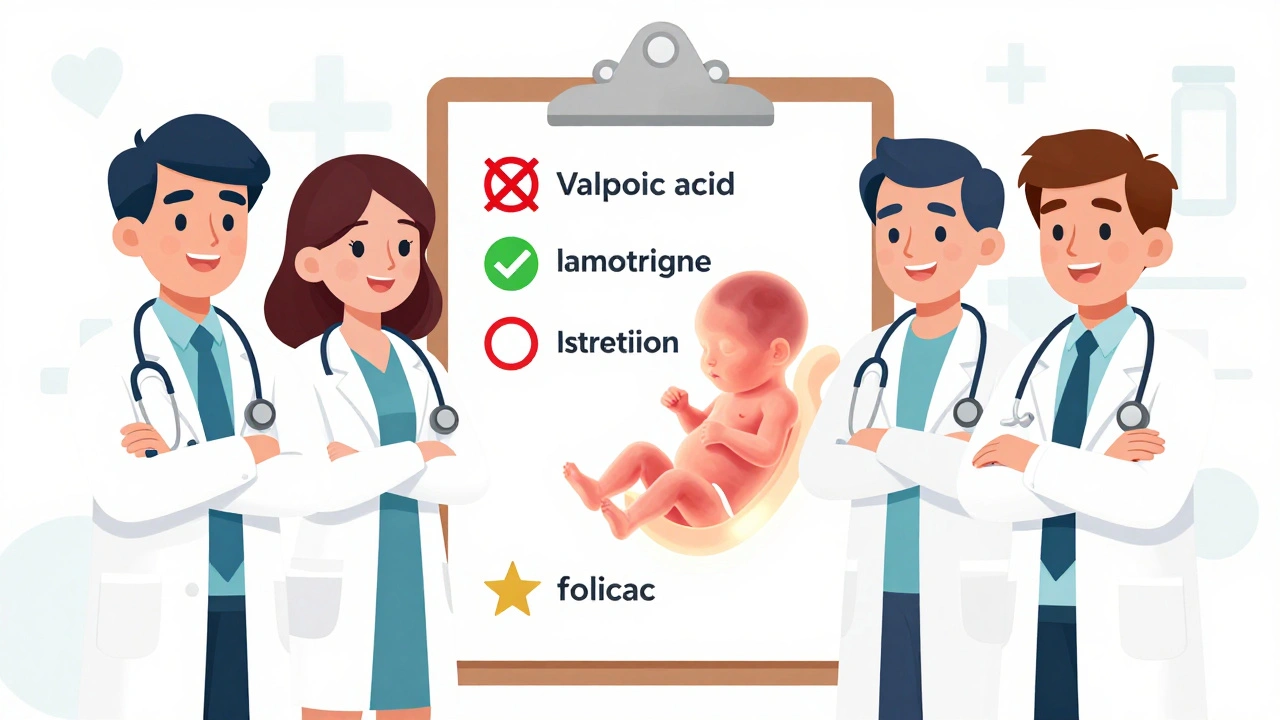
Chronic Conditions? Your Plan Gets More Complex
If you have a long-term health condition, your preconception medication plan becomes a team effort:- Thyroid disease: Your TSH should be under 2.5 mIU/L before conception. Once pregnant, your levothyroxine dose typically needs to increase by 30% - and you need to confirm this within the first 4 to 6 weeks.
- Autoimmune disorders (like lupus or rheumatoid arthritis): Drugs like methotrexate and cyclophosphamide are dangerous. Sulfasalazine and hydroxychloroquine are often safe to continue. Work with a rheumatologist to stabilize your condition before conception.
- HIV: Viral load must be undetectable (<50 copies/mL) before trying to conceive. This reduces transmission risk from 25% to under 1%. Some antiretrovirals are safer than others - your infectious disease specialist can help.
- High BMI (30+): Medications like liraglutide (for weight loss) have no proven safety data in pregnancy. Stop at least 2 months before trying.
What About Birth Control?
If you’re on hormonal birth control and planning to conceive, you’ll need to stop it. But here’s the catch: some medications can make birth control less effective - especially enzyme-inducing antiseizure drugs like carbamazepine or phenytoin. That means you might need a non-hormonal backup (like an IUD or condoms) even while on birth control pills. Also, don’t assume you’re protected right after stopping the pill. It can take a few cycles for your body to return to normal ovulation. Use ovulation tracking or a fertility monitor to time your attempts more accurately.What’s the Real Impact?
Women who get preconception medication counseling have 28% fewer major birth defects than those who don’t. That’s not a small number. In the U.S., that could mean preventing 8,000 to 10,000 serious birth anomalies every year. Yet, only 38% of women with chronic conditions get a formal medication review before pregnancy. Why? Because many doctors don’t ask. Many women don’t know to bring it up. And in fee-for-service systems, providers often don’t have the time. You can’t wait for your doctor to bring it up. Be the one to start the conversation. Bring your full medication list. Ask: “Which of these are safe to keep taking if I get pregnant?”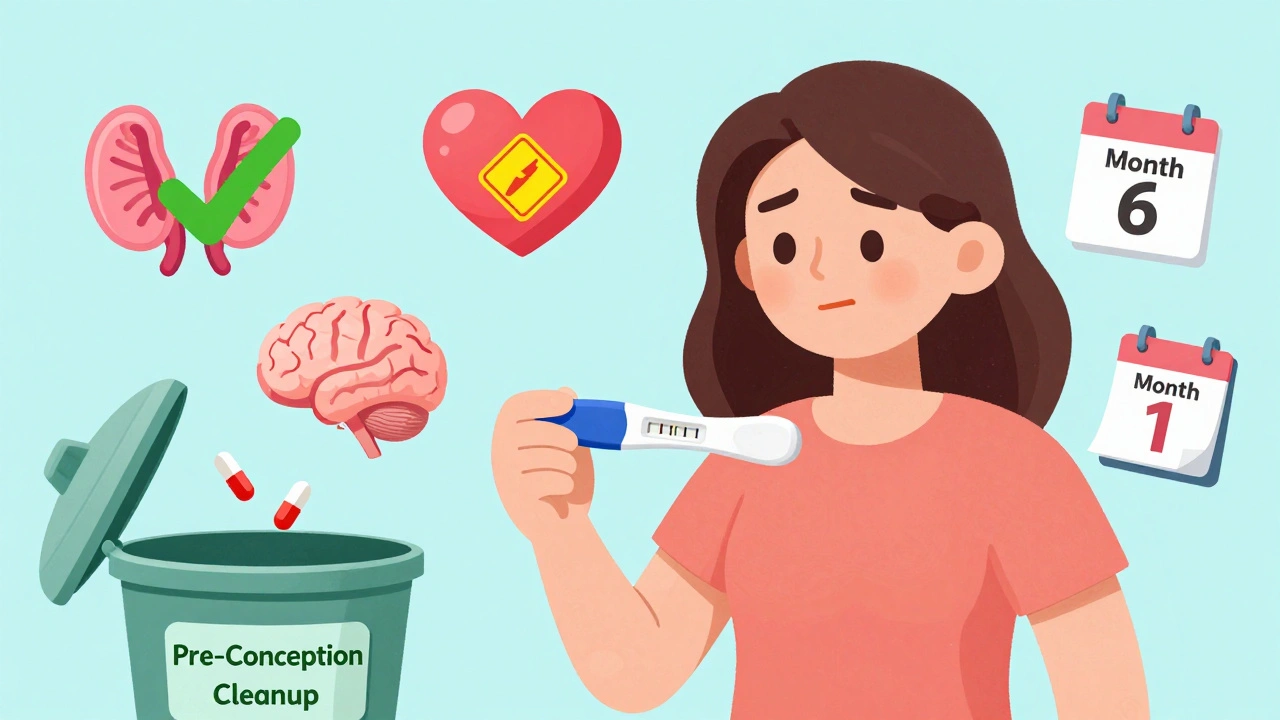
Next Steps: Your 6-Month Checklist
Here’s what to do, month by month:- Month 6: Schedule a preconception visit. Bring your full medication list. Ask for a referral to a maternal-fetal medicine specialist if you have a chronic condition.
- Month 5: Start 400-5,000 mcg of folic acid daily (based on your risk level). Stop all non-essential supplements.
- Month 4: Switch or discontinue high-risk medications. Follow washout timelines (e.g., 3 months for methotrexate, 1 month for isotretinoin).
- Month 3: Get thyroid levels, blood sugar, and other key labs checked. Confirm your condition is stable.
- Month 2: Switch to a safe contraceptive method if needed. Confirm your new meds are working.
- Month 1: Final review with your care team. Confirm all meds are pregnancy-safe. Begin tracking ovulation.
FAQ
Do I need to stop all my medications before getting pregnant?
No. Many medications are safe to continue during pregnancy - including insulin, certain blood pressure drugs like labetalol, and antidepressants like sertraline. The goal isn’t to stop everything. It’s to identify and replace only the drugs with known risks. Never stop a medication on your own. Work with your doctor to find safer alternatives if needed.
Is it safe to take prenatal vitamins before I’m pregnant?
Yes - and you should. Prenatal vitamins with at least 400 mcg of folic acid are recommended for all women of reproductive age, whether or not they’re actively trying to conceive. They also provide iron, choline, and other nutrients that support early development. Don’t wait until you miss your period to start.
What if I’m already pregnant and haven’t made changes to my meds?
Don’t panic. Contact your doctor right away. Many risks are highest in the first 8 weeks, but some medications can still be adjusted safely later. Avoiding new exposures and stabilizing your health now can still improve outcomes. Your care team can order targeted ultrasounds and screenings to monitor your baby’s development.
Can I use herbal supplements while trying to conceive?
Most herbal supplements haven’t been studied for safety in early pregnancy. Some - like black cohosh, dong quai, or high-dose vitex - can interfere with hormones or uterine function. Others, like ginger for nausea, are generally considered safe later on. Always tell your doctor exactly what you’re taking. When in doubt, stop it.
How do I know if a medication is safe during pregnancy?
Don’t rely on old pregnancy categories (A, B, C, D, X). The FDA now requires detailed, evidence-based summaries on labels. Use trusted resources like the MotherToBaby hotline (1-866-626-6847) or the Teratology Society’s database. Your pharmacist or OB/GYN can also access up-to-date teratogen information systems. When in doubt, assume it’s risky until proven otherwise.
Final Thought: This Is Your Power Move
Creating a medication plan before conception isn’t about being perfect. It’s about being prepared. It’s about taking control of something that’s often left to chance. You’re not just protecting your baby - you’re protecting your future as a parent. Every pill you swap, every dose you adjust, every folic acid tablet you take before you even know you’re pregnant - those are the quiet, powerful choices that change outcomes. Start today. Your future child will thank you.
13 Comments

Lynette Myles
If you're not taking folic acid daily, you're gambling with your baby's brain. No exceptions. This isn't optional. Stop scrolling and go buy it now.

Annie Grajewski
lol so now we're supposed to be pharmacists too? 🤡 Next they'll tell us to calculate our own CYP450 enzyme activity before we kiss our partner. Also, who decided 400mcg is the magic number? Probably someone who never had a seizure or a panic attack.

Jimmy Jude
Every pill you swallow is a whisper to the universe - and if you’re not listening before conception, you’re not parenting, you’re just… existing. The body remembers what the mind ignores. Your child’s spine? It’s not a suggestion. It’s a covenant.

Rupa DasGupta
i hate how everyone acts like this is some noble choice 😭 like it’s not just another way to control women’s bodies. what if i can’t afford the right meds? what if my doctor doesn’t care? what if i’m just tired and want to be happy for once? 🥺

ashlie perry
isotretinoin is the worst. my cousin had a baby with cleft palate after taking Accutane 2 months before she knew she was pregnant. they didn't even tell her it was dangerous. no one ever does. they just say 'be careful' and move on.

Juliet Morgan
you’re not alone in this. i was terrified too - i was on lamotrigine for years and thought i’d never get pregnant. but my neurologist and OB worked together, adjusted my dose, and now my daughter is 3 and thriving. it’s hard, but it’s possible. take a breath. you’ve got this.

Katie Allan
This is one of the most critical conversations we’re not having in public health. Women are expected to magically know what’s safe during pregnancy, yet we’re rarely given structured guidance before conception. The system fails us at the earliest stage - and then blames us when things go wrong.

Deborah Jacobs
my grandma used to say, 'you don't fix the house after the storm hits.' same logic here. you don't tweak your meds after you're already pregnant. you prep like you're training for a marathon - because you are. your body's the track, and the baby's the finish line.

Krishan Patel
It is morally irresponsible to conceive without first consulting a physician regarding teratogenic exposure. The Western medical system has failed to prioritize preconception care, and this negligence is reflected in rising rates of congenital anomalies. This is not a lifestyle choice - it is a bioethical imperative.

Carole Nkosi
Why are we only talking about women? Where’s the accountability for men? If your sperm carries mutations from your meds, your kid suffers too. This is gendered fear-mongering disguised as care.

Manish Shankar
It is recommended that individuals planning conception undergo a comprehensive pharmacological review at least three months prior to attempting pregnancy. This protocol ensures optimal maternal and fetal outcomes and aligns with international clinical guidelines.

luke newton
Oh please. You think this is about safety? It’s about control. The government wants you on folic acid, off ibuprofen, and scared of your own prescriptions. Meanwhile, Big Pharma is selling you $200/month supplements you don’t need. Wake up.

an mo
Based on CDC data from 2022, 68% of women of reproductive age are exposed to at least one teratogen before conception. The current paradigm is reactive, not proactive. We need mandatory preconception counseling embedded in primary care - not optional wellness fluff. This is public health infrastructure failure.
Recent Posts
-
How to Get Prescription Assistance Programs from Manufacturers
-
How to Safely Buy Phenytoin Online: A Complete Buyer's Guide
-
Diphenhydramine Overdose: Recognizing Antihistamine Toxicity and Emergency Care
-

Triple-Negative Breast Cancer Treatment: New Strategies and Clinical Trials
-

Anticholinergic Medications: Cognitive Risks and Managing Dry Mouth

Write a comment