How to Dispose of Expired Medications Safely at Home: Step-by-Step Guide for Families
Keeping expired pills, patches, or liquids in your medicine cabinet isn’t just messy-it’s dangerous. Every year, over 60,000 children in the U.S. end up in emergency rooms after accidentally swallowing meds they found at home. And it’s not just kids. Around 9.9 million people misuse prescription drugs each year, many of them pulling from family medicine cabinets. Meanwhile, pharmaceuticals are showing up in rivers, lakes, and even drinking water supplies. The good news? You can fix this-with simple, safe steps you can do right now in your kitchen.
Why You Can’t Just Flush or Toss Medications
You’ve probably heard the old advice: flush pills down the toilet or throw them in the trash. Neither is safe. Flushing is only allowed for about 15 specific drugs on the FDA’s flush list, like fentanyl patches and oxycodone tablets. These are high-risk medications that can cause fatal overdoses if found by children or pets. For everything else, flushing adds to water pollution. Studies show 80% of U.S. streams contain traces of medications-even after wastewater treatment. That’s not just an environmental issue. It affects fish, frogs, and potentially human health over time. Throwing meds in the trash without preparation is just as risky. A curious child, a pet, or even a stranger rummaging through your bin can find unmarked pills. And if someone takes them, it could be deadly. The DEA says improper home disposal contributes to 23% of diverted opioid prescriptions. That’s not a small number-it’s a preventable public health gap.The FDA’s Safe Home Disposal Method (5 Steps)
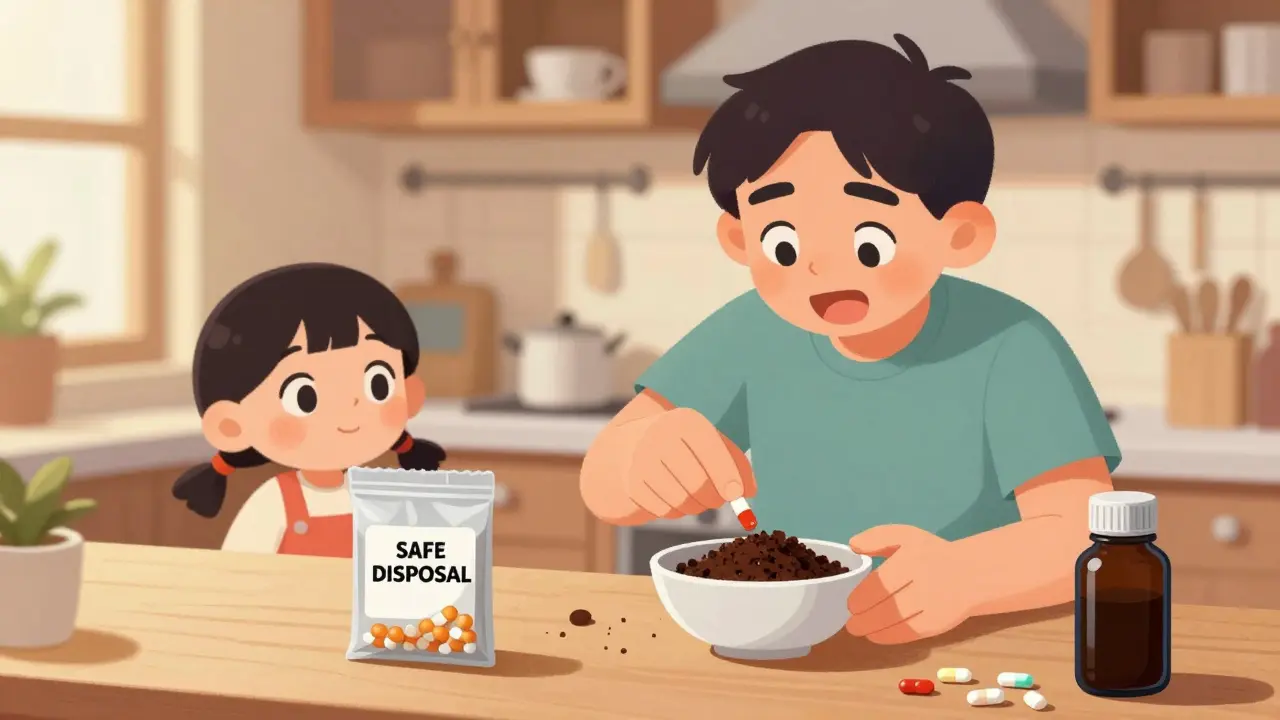
When you can’t get to a take-back program right away, the FDA and EPA agree on a simple five-step process that works with stuff you already have at home.- Remove the meds from their original bottles. Don’t leave them in the bottle with your name and prescription number on it. That’s a privacy risk. Take out the pills, liquids, or patches.
- Mix them with something unappetizing. Use 1 cup (240ml) of used coffee grounds, cat litter, or dirt. This isn’t optional-it needs to be a 1:1 ratio with the amount of medicine. The goal is to make it look and smell disgusting. Crushed pills alone? Not enough. Liquid meds? Mix them with kitty litter so they turn into a thick sludge. Insulin? Mix it with absorbent material immediately to avoid leaks.
- Put the mixture in a sealed container. Use a resealable plastic bag (at least 2-mil thick) or an empty margarine tub. Make sure it won’t leak. If you’re disposing of liquids, double-bag it. No paper bags. No cereal boxes. They tear too easily.
- Hide your personal info. Use a permanent marker to black out your name, prescription number, pharmacy, and dosage on the empty bottle. Don’t just scribble-cover every letter. If you’re worried about smudging, peel off the label and throw it in a separate bag.
- Put it in the trash. Not recycling. Not compost. Just regular household trash on your normal pickup day. Don’t leave it outside or in a garage where someone might dig through it.
This method isn’t perfect, but it’s the best you can do at home. Studies show it reduces misuse risk by over 80%. It doesn’t eliminate environmental contamination entirely-but it cuts it dramatically compared to tossing pills whole into the trash.
What About Needles and Inhalers?
Needles, syringes, and lancets? Never throw them loose in the trash. They’re sharp, dangerous, and can injure sanitation workers. Use an FDA-approved sharps container. Most Walgreens and CVS locations give them out for free. If you can’t get one, use a rigid plastic bottle like a detergent bottle with walls at least 1mm thick. Seal it tightly with heavy-duty tape, label it “SHARPS,” and put it in the trash. Never recycle it. Inhalers are different. They’re pressurized. If crushed in a trash compactor, they can explode. Don’t puncture them. Don’t throw them in the recycling. Take them to a medical waste drop-off site, or check with your pharmacy. Some pharmacies like CVS and Walgreens accept inhalers at their take-back kiosks.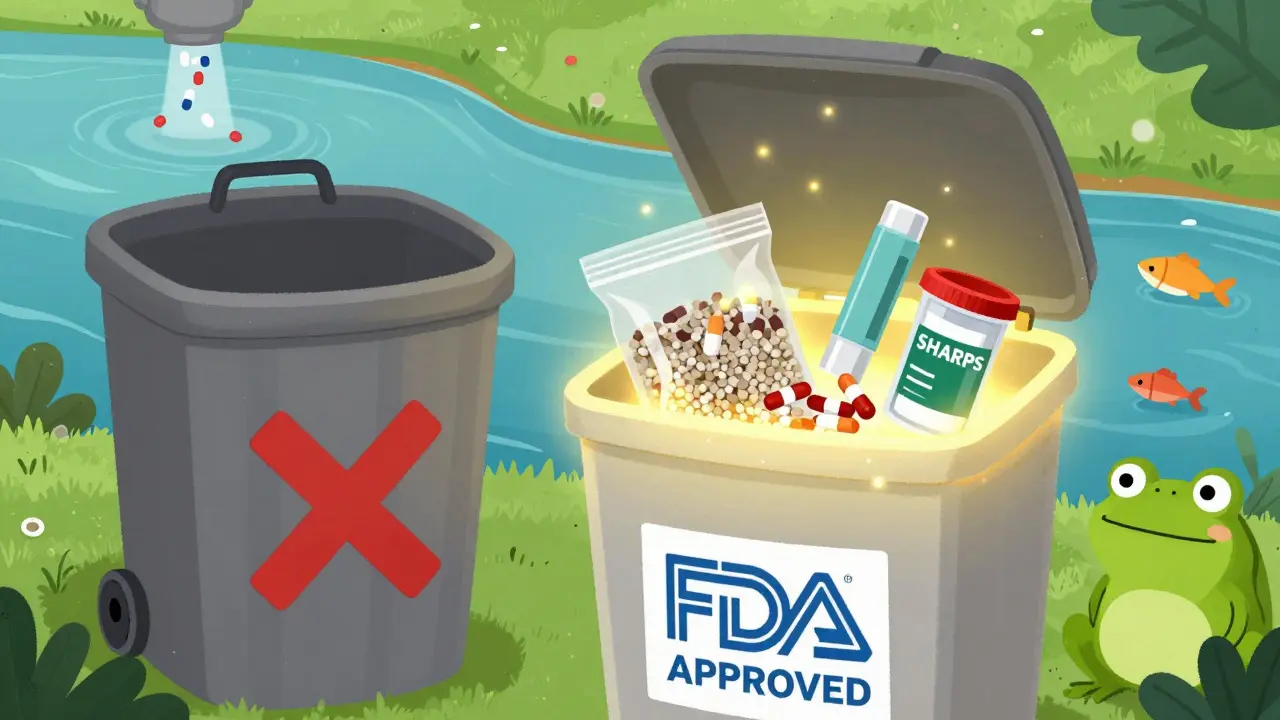
When to Use a Take-Back Program (And Where to Find One)
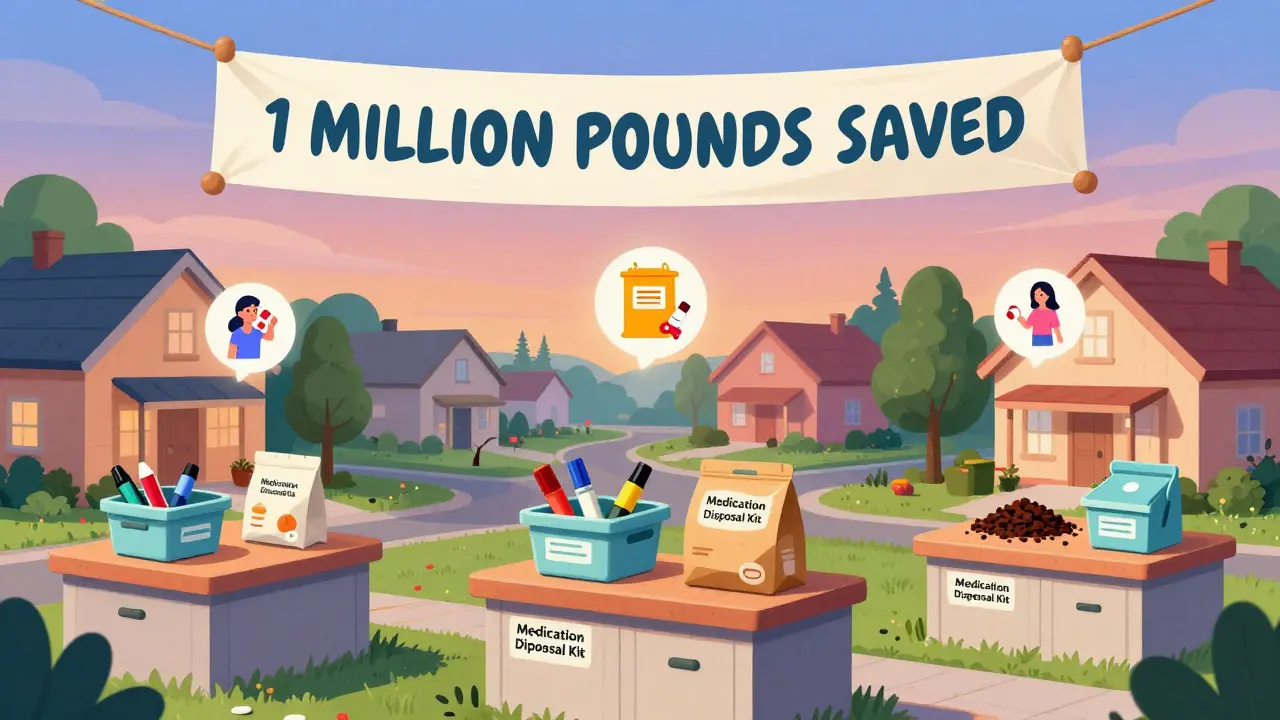
The safest way to dispose of any medication is through a take-back program. These are run by the DEA, pharmacies, or local health departments. They collect meds, then incinerate them under strict environmental controls. Over 99.8% of the drugs are fully destroyed. The problem? Availability. Urban areas have 3.7 times more take-back locations than rural ones. In Oxford, you can drop off meds at most pharmacies-like Boots, Lloyds, or your local community pharmacy. Many have year-round kiosks. Just look for the blue disposal box near the pharmacy counter. If you’re not sure where to go, use the DEA’s online locator or call 1-800-882-9539. You can also check with your local council or NHS website for collection events. The National Prescription Drug Take Back Day happens twice a year-last Saturday in April and October. In 2023, over a million pounds of meds were collected nationwide in just one day.Mail-Back Kits: A Convenient Alternative
If you live far from a drop-off site, mail-back kits are a solid option. Companies like DisposeRx send you a prepaid envelope with a special powder inside. You dump your meds in, seal it, and mail it back. The powder turns pills and liquids into a gel that can’t be reused. These kits are available at 76% of U.S. pharmacies and are growing in the UK too. They cost $2.50-$5.00 per envelope, but they’re worth it if you’re dealing with chronic pain meds or multiple prescriptions.Common Mistakes (And How to Avoid Them)
Even people who mean well mess this up. Here are the top three errors:- Using too little coffee grounds or litter. If the meds aren’t fully covered, someone might still fish them out. Use a full cup per standard prescription bottle.
- Forgetting to black out labels. Your name and dosage are private. Cover every word. If you’re unsure, cut the label off and shred it.
- Using flimsy containers. A cereal box or thin plastic bag will leak or tear. Use thick resealable bags or sturdy plastic tubs.
Pro tip: Keep a small “disposal kit” in your kitchen drawer. Stock it with a permanent marker, a few resealable bags, and a small container of used coffee grounds. It takes 7-12 minutes to dispose of one bottle-and you’ll never be caught off guard.
What You Should Never Do
- Don’t crush pills. Unless you’re using a DisposeRx packet, crushing can release airborne particles or make drugs easier to snort. The FDA explicitly warns against it. - Don’t pour liquids down the sink. Even if it’s just a few tablespoons, it adds to water contamination. - Don’t flush unless it’s on the FDA’s list. Only fentanyl patches, oxycodone, and 13 others are approved for flushing. Everything else? Use the coffee grounds method. - Don’t keep old meds “just in case.” Medications lose potency over time. Expired antibiotics can be ineffective. Painkillers can degrade into harmful compounds. If it’s past the expiration date, get rid of it.What’s Changing in 2025?
New rules are coming. Starting in 2025, U.S. law will require all prescription bottles to include disposal instructions on the label. In the UK, pharmaceutical manufacturers are being pressured to fund take-back programs, following the EU’s lead. By 2030, the EPA expects 92% of households to have easy access to a drop-off point. That’s a big shift from today, where many rural areas still struggle.For now, your actions matter. Every pill you dispose of safely is one less that could end up in a child’s hands, a pet’s stomach, or a river.
Can I throw expired medications in the recycling bin?
No. Never recycle medication containers or leftover pills. Recycling facilities aren’t designed to handle pharmaceuticals. Even empty bottles can have residue that contaminates other recyclables. Always put used meds and their containers in the regular trash after following the proper disposal steps.
What if I have liquid medications like cough syrup?
Mix liquid meds with cat litter or coffee grounds in a bowl until they turn into a thick sludge. Pour the mixture into a resealable plastic bag, double-bag it to prevent leaks, and seal it tightly. Then place it in your household trash. Never pour liquids down the drain or toilet unless they’re on the FDA’s flush list.
Are there free disposal options in the UK?
Yes. Most pharmacies in the UK, including Boots and Lloyds, have free take-back kiosks where you can drop off expired or unused medications. You don’t need a receipt or ID. Some local councils also host collection events-check your town’s website or call your NHS pharmacy. Take-back programs are the safest and most environmentally responsible option.
What should I do if a child swallows an expired pill?
Call 111 immediately or go to the nearest emergency department. Don’t wait for symptoms. Even expired pills can be toxic. Keep the medication bottle handy so medical staff can see what was ingested. Poison control services are available 24/7 in the UK through NHS 111.
Can I donate unused medications?
No. In the UK and most countries, it’s illegal to donate or resell prescription medications-even if they’re unopened. Medications are regulated drugs, and redistribution without proper licensing is dangerous and against the law. Always dispose of them safely instead.
Next Steps: Make a Plan Today
Start by checking your medicine cabinet. Pull out anything expired, discolored, or smelling odd. Don’t wait until it’s an emergency. Set aside 15 minutes this weekend to sort through your meds. Use the coffee grounds method for anything you can’t drop off. Keep a disposal kit ready for next time. And if you’re unsure where to take your meds, call your local pharmacy-they’ll tell you exactly what to do.Safe disposal isn’t complicated. It just takes a little attention. And when you do it right, you’re not just protecting your home-you’re protecting your community.

13 Comments

Josh McEvoy
lol i just threw my ex's painkillers in the trash without even thinking 🤡 guess i'm part of the 23% now. oops.

Shanta Blank
this is the most condescending pile of performative environmentalism i've ever read. you think people don't know flushing meds is bad? no one's got coffee grounds lying around in their kitchen because they're too busy paying rent and feeding their kids. this isn't a guide-it's a guilt trip with footnotes.

Tiffany Wagner
i just mixed my expired ibuprofen with cat litter and threw it in the bag like you said... i feel like a hero 🙃

Darren Links
so you're telling me i can't just flush my fentanyl patches but i can dump 100 other pills into the trash with coffee grounds? the system is broken. we need federal take-back mandates not kitchen hacks. this is greenwashing with a side of performative responsibility.

Kevin Waters
this is actually super helpful. i’ve been keeping old antibiotics ‘just in case’ for years. i’m doing this this weekend. thanks for the clear steps. the disposal kit tip? genius.

Kat Peterson
i mean... if you’re gonna do it at home, sure. but have you seen the price of those mail-back kits? $5 for a lousy envelope? capitalism turns even your expired meds into a subscription service 💸

Helen Leite
they’re putting drugs in the water on purpose. the government wants us docile. that’s why they don’t want you flushing-so they can track who’s taking what. the coffee grounds? it’s a distraction. i use vinegar. it breaks down the chemicals. they don’t want you to know that.

Elizabeth Cannon
i did this with my grandmas pills last week. she had like 12 bottles. i used coffee grounds and a yogurt tub. she cried. said she felt guilty. i told her its not your fault the system made you keep them. we need to fix the system not just the trash

Marie-Pier D.
this made me cry. i lost my brother to an overdose from a pill he found in our old cabinet. thank you for writing this. i’m printing it out and posting it on the fridge. ❤️

Alexandra Enns
this is a joke right? you think a canadian with a jar of coffee grounds is gonna fix america’s opioid crisis? we’ve got more pressing problems like border security and inflation. stop pretending your kitchen disposal is activism. it’s not. it’s a distraction. go protest a pharmacy chain instead of playing house with your meds.

Sawyer Vitela
80% reduction? source? EPA? FDA? no citation. garbage data. don’t trust this.

Michael Camilleri
the real crime is letting corporations profit off our addiction then telling us to fix it with coffee grounds and ziplock bags. we need systemic change not kitchen theater. this is moral laundering for lazy citizens who think a bag of sludge makes them righteous. we’re not fixing the problem-we’re just burying it. literally.

lorraine england
i love how you included the uk info too! my cousin in london just used the Boots kiosk last week. so easy. and no receipt needed. it’s nice to see global solutions being shared. keep it up! 🌍💙

Write a comment