How to Recognize Pet Overdose from Human Medications: Symptoms & Immediate Actions
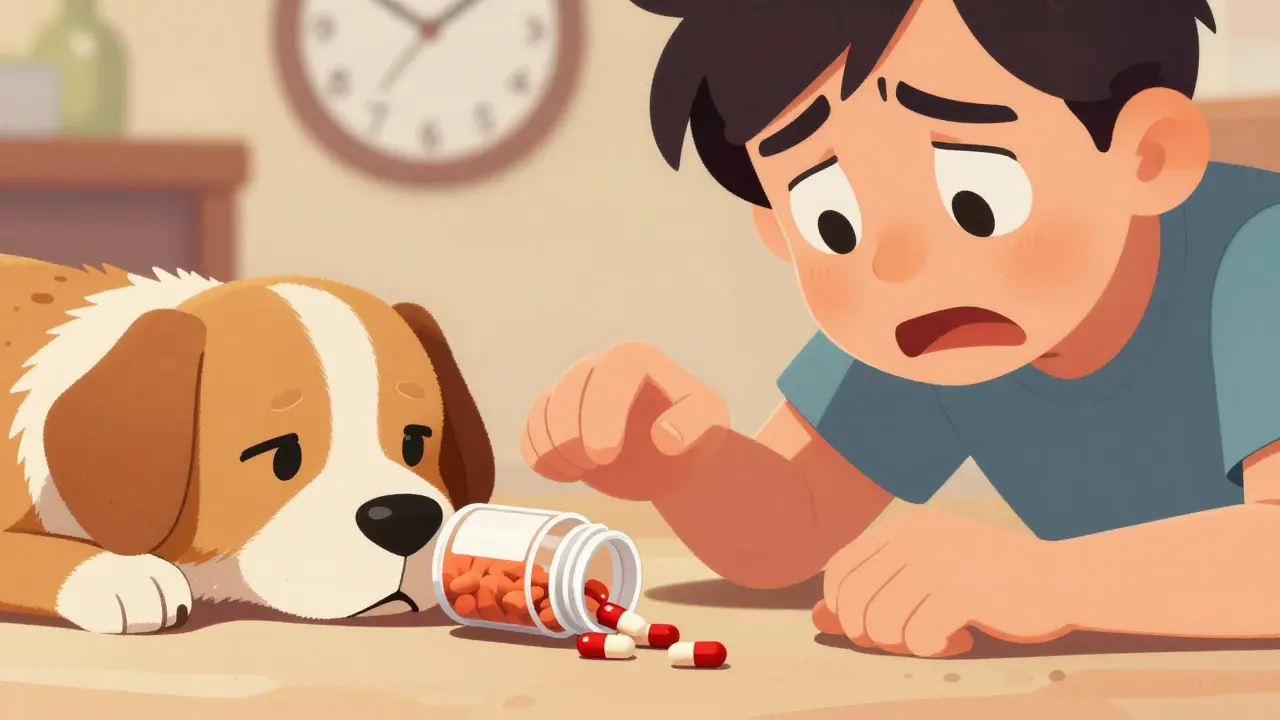
Every year, over 150,000 pets accidentally ingest human medications. That's a staggering number, and it's why knowing how to recognize pet overdose symptoms quickly can mean the difference between life and death for your pet. According to the Pet Poison Helpline, human medications account for 28% of all pet poisonings reported annually in the U.S. The good news? When treatment begins within two hours, mortality rates drop from 28% to just 4%.
Key Symptoms by Medication Class
Not all human medications cause the same symptoms in pets. The effects depend heavily on the type of drug and your pet's species. Here's what to watch for:
| Medication Type | Key Symptoms | Onset Time | Species-Specific Risks |
|---|---|---|---|
| Antidepressants (SSRIs like Prozac) | Fever (103-106°F), vocalization, disorientation, tremors | Minutes to 12 hours | SSRIs safer for dogs; SNRIs like Effexor extremely dangerous for cats |
| ADD/ADHD Medications (Adderall, Concerta) | Heart rate over 220 bpm, body temp 107°F, severe tremors | 30-60 minutes | Both dogs and cats affected, but cats more sensitive |
| NSAIDs (ibuprofen, naproxen) | Vomiting, black tarry stools, kidney failure | 1-6 hours | Dogs tolerate 5-10mg/kg; cats show toxicity at just 5mg/kg |
| Acetaminophen (Tylenol) | Brown mucous membranes, cyanosis (cats), liver failure (dogs) | 1-4 hours (cats), 24-72 hours (dogs) | Cats develop fatal toxicity at 10mg/kg; dogs tolerate up to 150mg/kg |
| Benzodiazepines (Xanax, Ambien) | Agitation (paradoxical reaction in 52% of dogs), hepatic failure in cats | 1-6 hours | Dogs often become agitated instead of sedated; cats face liver damage |
For example, a single 37.5mg extended-release Effexor capsule can kill a cat due to its sweet coating. Dogs eating ibuprofen may vomit within hours and develop kidney failure in days. These differences matter because Serotonin Syndrome from antidepressants looks like panic in pets, while ADD/ADHD drug overdoses mimic extreme excitement.
Immediate Actions to Take
If you suspect your pet has ingested human medication, act fast. Here's what to do:
- Check for pill fragments or spilled medication near your pet.
- Measure rectal temperature-hyperthermia above 103.5°F suggests stimulant or SSRI toxicity.
- Check pupil size-dilated pupils in 88% of ADD/ADHD cases.
- Look at mucous membrane color-brown or grayish indicates acetaminophen toxicity in cats.
- Time when symptoms started-this is crucial for vets.
- Call the Pet Poison Helpline at 1-800-213-6680 immediately. They handle over 400,000 cases yearly with average response times under 50 seconds.
Do not induce vomiting unless instructed. Some medications like acetaminophen cause more damage if vomited. Your vet needs accurate details to guide treatment.
Species-Specific Considerations
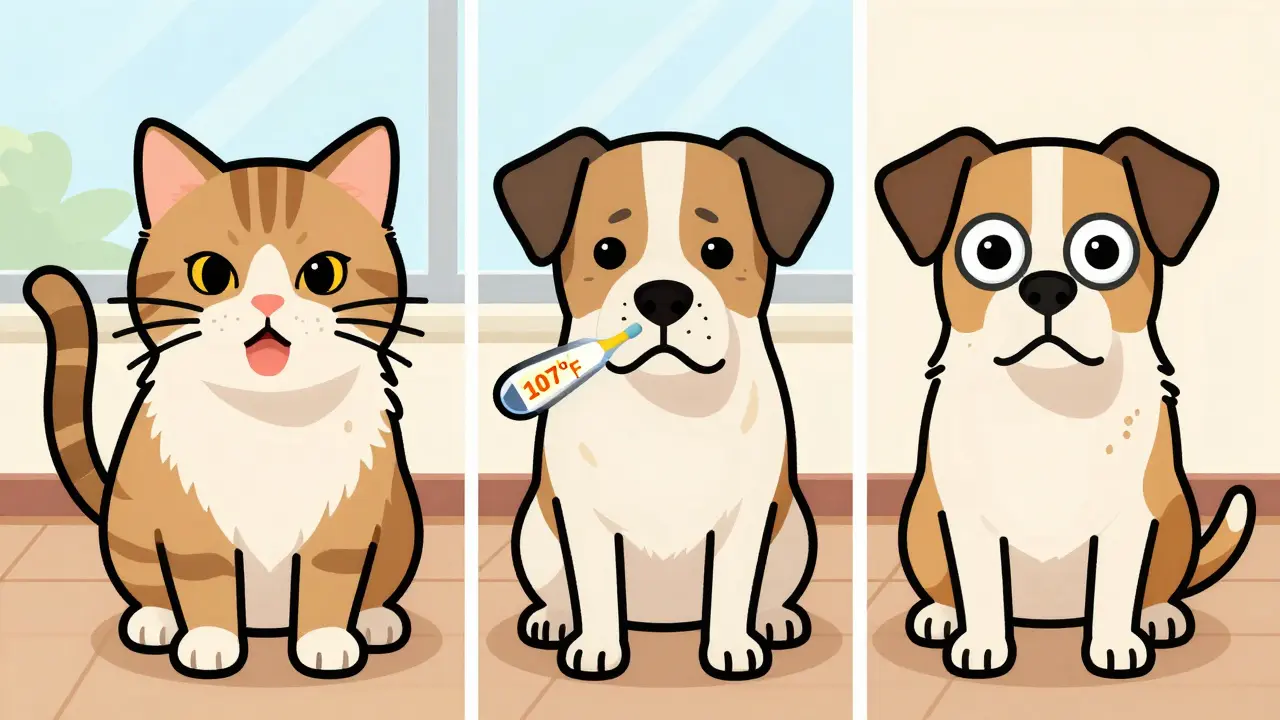
Cats and dogs process medications completely differently. Cats lack certain liver enzymes, making them far more vulnerable. For instance:
- Acetaminophen is fatal to cats at just 10mg/kg (about one adult Tylenol tablet) but dogs tolerate up to 150mg/kg before liver damage.
- Benzodiazepines like Xanax cause agitation in 52% of dogs instead of sedation, while cats develop liver failure at doses as low as 1mg/kg.
- NSAIDs like ibuprofen cause stomach ulcers in dogs at 50mg/kg but trigger kidney failure in cats at just 5mg/kg.
This is why a cat eating one pill of Effexor can die within hours, while a dog might survive a similar dose. Always assume human medications are toxic to pets-regardless of species.
What to Do While Waiting for the Vet
Time is critical. While rushing to the clinic:
- Keep your pet calm and in a quiet space. Stress worsens symptoms.
- Collect any remaining pills, packaging, or vomit for the vet to test.
- Use the ASPCA Animal Poison Control Center app for real-time symptom tracking (used by 287,000 pet owners in 2023).
- Do not give home remedies like milk or charcoal unless directed by a professional.
Early intervention saves lives. A Dove Mountain Veterinary Hospital case study showed a Labrador with ibuprofen ingestion fully recovered after owners recognized vomiting and lethargy within 90 minutes-enabling activated charcoal before significant absorption.
What should I do if my pet ingests human medication?
Call the Pet Poison Helpline immediately at 1-800-213-6680 or your veterinarian. Do not wait for symptoms to appear. Have the medication name, amount ingested, and your pet's weight ready. Time is critical-treatment within two hours significantly improves outcomes. For example, a dog that ingested Adderall was treated successfully when owners called within 30 minutes.
How quickly do overdose symptoms appear?
It varies by medication. Stimulants like Adderall cause symptoms in 30-60 minutes, while NSAIDs may take 1-6 hours. Acetaminophen affects cats within 1-4 hours but dogs only after 24-72 hours. Always track the time of ingestion-this helps vets predict symptoms.
Can I give my pet activated charcoal at home?
Only if directed by a vet or poison control expert. For some medications like antidepressants, activated charcoal can worsen symptoms. For others like NSAIDs, it may help. Never self-administer-improper use can cause choking or lung damage.
What's the most common human medication causing pet poisoning?
NSAIDs like ibuprofen (Advil) and naproxen (Aleve) account for 28.3% of cases, according to the Pet Poison Helpline 2023 report. Antidepressants (17.1%) and acetaminophen (12.7%) follow closely. Always store these medications in locked cabinets.
Why do cats react differently to medications than dogs?
Cats lack the liver enzyme glucuronyl transferase, which breaks down many drugs. This makes them extremely sensitive to acetaminophen, benzodiazepines, and SNRIs like Effexor. Dogs metabolize these differently but are more prone to NSAID toxicity. Never assume a human dose is safe for pets.
Should I try to induce vomiting if my pet ingests medication?
Never induce vomiting without professional guidance. For medications like acetaminophen or corrosive substances, vomiting can cause more damage. For stimulants, vomiting may not be effective. Always consult the Pet Poison Helpline first-they'll guide you based on the specific drug.

13 Comments

Bella Cullen
Always keep human medications locked away.

Sam Salameh
Hey everyone, as an American, I always keep meds locked up. Safety first! Our country leads in pet safety standards.

Cole Streeper
The government is poisoning pets through medications. They want to reduce the population. Always check for hidden toxins and report suspicious activity.

divya shetty
It is imperative that all pet owners secure their medications. Failure to do so is negligent and endangers animal lives. Proper storage is a moral obligation.

Rene Krikhaar
I've helped many pets with overdose.
The key is to act fast.
Call the helpline immediately.
Don't wait.
Time is critical.
Always have the med name ready.
I've seen cases where people waited too long.
The sooner you act, the better the outcome.
Always keep the helpline number handy.
It's 1-800-213-6680.
They're available 24/7.
I've helped dozens of pets this way.
Don't hesitate to call.
It's worth it.
In my experience, early intervention saves lives.
For example, a dog that ingested ibuprofen was saved because the owner acted quickly.
Always be prepared.
Keep the number in your phone.
It's simple but crucial.

one hamzah
Hey everyone! 🌍 Just wanted to say that pet safety is so important! 🐾 Always keep medicatons locked up! 😊 My cat's safe because I'm careful. 🤗 #PetSafety #LovePets

Diana Phe
The FDA is behind this. They want to control pet ownership. Always check for hidden toxins in meds.

Carl Crista
The real issue is the government's control over pet health. They want to reduce animal populations. Always verify meds for additives.

Elliot Alejo
I agree with Rene. Acting fast is crucial. Call the helpline immediately. Have the med name ready. Time is critical.

Cullen Bausman
It is clear that the government is involved. Pet owners must be vigilant. Always check for hidden toxins.

Arjun Paul
Most pet owners are negligent. They don't lock up meds. This is why pets die. Always be responsible.

Andre Shaw
Hey, you know what's really wild? The fact that people think Tylenol is safe for cats. It's not. It's a death sentence. Always double-check before using meds.

Dr. Sara Harowitz
It is imperative that pet owners understand the risks! The government must regulate medications more strictly! Failure to do so is unacceptable!!!

Write a comment