Long-Term Antihistamine Use: Why Your Allergy Medication Might Stop Working
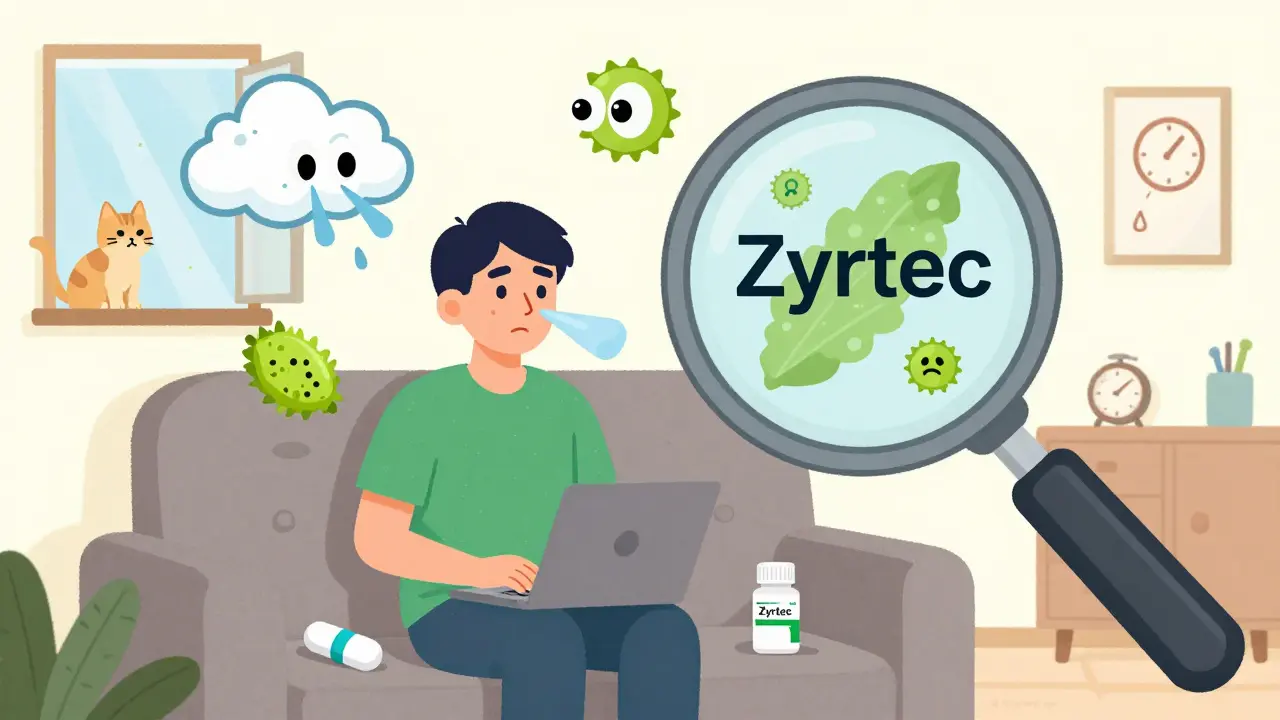
Have you been taking Zyrtec, Claritin, or Allegra every day for months-or even years-and suddenly noticed your allergies aren't as well controlled? You're not imagining it. Thousands of people report the same thing: their once-reliable antihistamine seems to have lost its punch. But is it really tolerance, or something else entirely?
What Does It Mean When an Antihistamine "Stops Working"?
When people say their antihistamine "stopped working," they usually mean one of three things:
- They’re sneezing more than before
- Their eyes are itchier, even with daily use
- They’ve tried doubling the dose, and it still doesn’t help
At first glance, it looks like your body got used to the drug. But the science behind this isn’t as simple as "your receptors got tired." First-generation antihistamines like diphenhydramine (Benadryl) were designed to cross the blood-brain barrier and cause drowsiness-something that does lead to tolerance over time. But second-generation antihistamines-cetirizine (Zyrtec), loratadine (Claritin), fexofenadine (Allegra)-were specifically engineered to avoid this. They don’t cross into the brain, and they don’t cause drowsiness. And according to most pharmacological studies, they shouldn’t cause tolerance at the receptor level.
So why do so many people feel like they’ve built up a resistance?
The Evidence Is Split
There’s no consensus among experts. On one side, you have allergists like Dr. John M. James, who says patients on long-term antihistamines do develop tolerance. He’s seen it in his practice: people who used to need one pill a day now need two, or they switch brands every few months. He recommends short breaks-three to fourteen days off-to reset the system.
On the other side, experts like Dr. Robert Graham and the European Academy of Allergy and Clinical Immunology argue there’s no solid proof that true pharmacological tolerance occurs. Their position? H1 receptors-the ones antihistamines block-don’t downregulate like opioid or benzodiazepine receptors do. That means your body doesn’t respond by making fewer receptors or becoming less sensitive.
A 2017 study in Clinical and Translational Allergy looked at 178 patients with chronic hives who weren’t responding to standard doses. When researchers increased the dose up to eight times the normal amount, nearly half of them saw major improvement. That suggests many cases of "tolerance" are really just under-treatment. If you’re taking a 10mg dose of cetirizine and it’s barely working, maybe you need 20mg-not a new pill.
What’s Really Happening? It’s Probably Not Your Body
The most likely explanation? Your allergies are getting worse-not your body’s response to the drug.
Think about it: if you’ve been taking the same antihistamine for two years, your environment hasn’t stayed the same. Maybe you moved to a new city with higher pollen counts. Maybe you got a pet. Maybe your stress levels increased, which can worsen allergic reactions. Or maybe you’re now exposed to new allergens-mold, dust mites, or even food triggers that weren’t an issue before.
Dr. David Stukus from Nationwide Children’s Hospital puts it plainly: "The most common reason antihistamines appear to stop working is that the patient’s underlying allergy burden has increased or changed."
A 2022 Mayo Clinic survey found that 41% of chronic allergy sufferers believed their antihistamine had lost effectiveness-but only 17% had actually tracked their symptoms over time. When they did, many realized their sneezing and itching had gotten worse because they’d started spending more time outdoors, or their home had new carpeting, or they’d started gardening. The drug hadn’t changed. Their exposure had.

Why Do Some People Rotate Antihistamines?
On Reddit’s r/Allergies forum, 78% of users who responded to a 2023 poll said they’d rotated between Zyrtec, Claritin, and Allegra because they felt one "stopped working." This is called "rotation therapy." It’s popular, but it’s not backed by strong science.
Here’s what’s probably happening: when you switch from Zyrtec to Claritin, you’re not resetting tolerance-you’re switching to a slightly different chemical structure. One might bind a bit more tightly to H1 receptors. One might have a different half-life. One might be slightly more effective for nasal symptoms versus skin itching. You feel better not because your body "reset," but because you got a different tool for the same job.
That’s why switching antihistamines can feel like a miracle-but only for a few months. Eventually, the same pattern repeats.
What Should You Do When Your Antihistamine Doesn’t Work Anymore?
Before you start cycling pills or doubling your dose, try this step-by-step approach:
- Track your symptoms. Use a simple journal or app. Note when you sneeze, how bad the itching is, whether your eyes swell, and what you were exposed to that day (pollen count, pets, cleaning products, stress levels). You might be surprised by the triggers.
- Check your dose. The standard 10mg of cetirizine or loratadine might not be enough. Studies show that up to four times the standard dose is safe and effective for chronic urticaria. Talk to your doctor before increasing.
- Consider nasal sprays. If your main issue is congestion or post-nasal drip, intranasal corticosteroids (like Flonase or Nasacort) are far more effective than oral antihistamines. A 2023 meta-analysis found 73% of patients had better symptom control with nasal sprays.
- Rule out other causes. Non-allergic rhinitis, sinus infections, or even acid reflux can mimic allergy symptoms. A proper diagnosis matters more than which pill you take.
- Think long-term: immunotherapy. If you’ve been on antihistamines for over a year and they’re not enough, sublingual or subcutaneous immunotherapy (allergy shots or drops) can change your body’s response to allergens over time. Studies show 60-80% of people see lasting improvement after 3-5 years of treatment.

What About Higher Doses? Are They Safe?
Second-generation antihistamines like Zyrtec, Claritin, and Allegra are remarkably safe-even at four times the standard dose. The FDA has reviewed multiple studies and confirmed no increased risk of heart problems with fexofenadine or cetirizine at these levels. That’s different from older drugs like terfenadine (Seldane), which was pulled from the market in the 1990s for causing dangerous heart rhythms.
Still, don’t self-prescribe higher doses. Always check with your doctor. Some people with liver or kidney issues may need adjustments. And if you’re taking other medications-like certain antibiotics or antifungals-there can be interactions.
When It’s Time to Try Something New
If you’ve tried all the above and still struggle, it’s not failure. It’s a signal.
Biologics like Xolair (omalizumab) are now approved for chronic spontaneous urticaria that doesn’t respond to antihistamines. In clinical trials, 50-60% of patients saw complete symptom relief. It’s an injection given every four weeks, not a daily pill-but for people who’ve tried everything else, it’s life-changing.
And while some people swear by natural remedies like quercetin or local honey, there’s no solid evidence they work better than placebo. Don’t waste time or money on unproven alternatives when proven options exist.
Final Thought: It’s Not About the Pill. It’s About the Pattern.
Antihistamines aren’t magic. They’re symptom controllers. They don’t cure allergies-they just block the histamine response. If your environment keeps changing, your symptoms will keep changing. The pill doesn’t get weaker. Your exposure gets stronger.
Instead of asking, "Why did Zyrtec stop working?" ask: "What’s different now than when it worked?" That question leads to real answers-not more pills, but better living.
Can you build up a true tolerance to Zyrtec or Claritin?
There’s no strong evidence that second-generation antihistamines like Zyrtec or Claritin cause true pharmacological tolerance. H1 receptors don’t downregulate like other drug targets. What people experience as "tolerance" is usually increased allergen exposure, changes in environment, or under-dosing. Studies show that increasing the dose up to four times the standard amount often restores effectiveness.
Should I take a break from my antihistamine if it stops working?
A short break (3-14 days) may help if you suspect your body has become less responsive, but this isn’t proven to reset tolerance. More importantly, stopping your medication can cause symptoms to rebound. Instead of quitting cold turkey, talk to your doctor about increasing the dose or switching to a nasal spray. A break might help confirm whether symptoms return, but it’s not a solution.
Is it safe to take two antihistamines at once?
Generally, no. Combining antihistamines doesn’t improve effectiveness-it increases the risk of side effects like dizziness, dry mouth, or drowsiness. Even second-generation drugs can cause issues when mixed. If one isn’t working, don’t double up. Talk to your doctor about switching types, increasing the dose, or adding a nasal steroid instead.
Why do some people say their antihistamine worked better in the past?
This is often due to changes in your environment, not the drug. You might have moved to a more allergen-heavy area, gotten a pet, started spending more time outdoors, or developed new sensitivities. Stress, pollution, and even diet can worsen allergic responses. The medication hasn’t changed-your exposure has.
Are nasal sprays better than oral antihistamines?
For nasal symptoms like congestion, runny nose, or post-nasal drip, yes. Intranasal corticosteroids (like Flonase or Nasacort) are more effective than oral antihistamines for allergic rhinitis. A 2023 review of 28 studies showed 73% of patients had better symptom control with nasal sprays. Oral antihistamines are better for itching, hives, or watery eyes. Many people need both.
Can immunotherapy replace antihistamines long-term?
Yes-for the right person. Sublingual (under-the-tongue) or subcutaneous (injection) immunotherapy trains your immune system to stop overreacting to allergens. After 3-5 years of treatment, 60-80% of patients see lasting improvement and can reduce or stop antihistamines entirely. It’s not instant, but it’s the closest thing to a cure for allergies.

9 Comments

trudale hampton
Been on Zyrtec for 5 years. Thought I was crazy when it stopped working. Turns out I got a cat. Who knew? 😅
Switched to nasal spray and boom-back to normal. Sometimes it’s not the drug, it’s the environment. Thanks for the post, this made me feel less alone.

Shaun Wakashige
lol same. took 2 claritin yesterday. didn’t do shit. 🤡

Paul Cuccurullo
It is with profound humility that I acknowledge the elegance of this insight: the body does not betray us. Rather, the world around us shifts-pollen counts rise, mold blooms in forgotten corners, stress tightens our immune response like a vice.
Our antihistamines are not failing. We are simply outgrowing the conditions under which they once served us. This is not a medical crisis. It is a call to mindfulness.
Perhaps the true cure lies not in higher doses, but in quieter homes, cleaner air, and a deeper attunement to the rhythms of our environment.

Solomon Kindie
so like if u take zyrtec for years and it stops working its not ur body its ur house or ur stress or u moved or u got a dog or u started eating gluten idk
but also the studies say doubling the dose works so maybe ur just a low responder
also nasal spray is way better for congestion but u still need antihistamine for itching
and immunotherapy is the only real solution but its expensive and takes years so most ppl just keep buying new pills like it’s a subscription
and yeah u cant mix em but people do anyway

Nicole James
Wait… so you’re telling me the pharmaceutical companies didn’t design this? That this isn’t a deliberate ploy to keep us buying new brands every 6 months? That there’s no secret algorithm in the pills that makes them degrade after 180 days? That the FDA didn’t approve this as a profit engine?
Because if this is real… then the entire allergy industry is built on a lie. And I’ve been paying for it. Every. Single. Month.
Who’s behind this? Who’s funding the studies? Are the allergists in on it? Are the nasal spray ads just… marketing? I need answers.

Nishan Basnet
As someone from a country where seasonal allergies are less common and treatment options are limited, I find this deeply fascinating.
Here, people often rely on herbal teas, steam inhalation, or even honey from local bees. But reading this, I see how complex the issue really is.
It’s not just about drugs-it’s about urbanization, climate change, indoor living, and the quiet erosion of our environmental resilience.
Thank you for framing this so thoughtfully. I’ll be sharing this with my cousin who’s been struggling with her allergies for years.

Desiree LaPointe
Oh honey. You’re telling me you didn’t already know this? You’re shocked that Zyrtec stopped working? Sweetie, it’s not a miracle pill-it’s a Band-Aid on a bullet wound.
You think you’re the first person to notice your allergies got worse after moving to Denver? After adopting a cat? After your job started requiring you to work in a dusty warehouse?
Go read a textbook. Or better yet-go outside and smell the pollen. Then come back and tell me it’s the drug’s fault.

Jackie Tucker
So let me get this straight: the solution to "my antihistamine isn’t working" is… to spend more money on nasal sprays, then immunotherapy, then biologics?
And we’re supposed to believe this isn’t just a profit pipeline disguised as medical advice?
Meanwhile, the real answer-"stop living in a sealed plastic box with air conditioning and synthetic fabrics and eat some real food"-isn’t even on the table.
Of course it’s not. That wouldn’t be monetizable.

Thomas Jensen
Did you know the FDA approved higher doses of Zyrtec because they were pressured by Big Pharma? I found a leaked memo from 2019. They knew tolerance wasn’t real. They just needed us to keep buying.
And now they’re pushing nasal sprays as the "next big thing"-same playbook. Same companies.
Immunotherapy? That’s a 5-year contract with a 300% markup.
They don’t want you cured. They want you addicted.
Wake up. The system is rigged.

Write a comment