Contrast Dye Reactions: Pre-Medication and Safety Planning for Imaging Patients
When you need a CT scan or X-ray with contrast dye, most people don’t think twice about it. But if you’ve had a reaction before-or even just heard someone say they’re allergic to shellfish-you might be worried. The truth is, serious reactions to modern contrast dyes are rare. Still, for some patients, the risk is real enough that doctors use premedication to prevent them. And getting it right isn’t just about popping pills. It’s about timing, choice of medication, knowing what doesn’t matter, and making sure you’re in the right place when the scan happens.
What Actually Triggers a Contrast Dye Reaction?
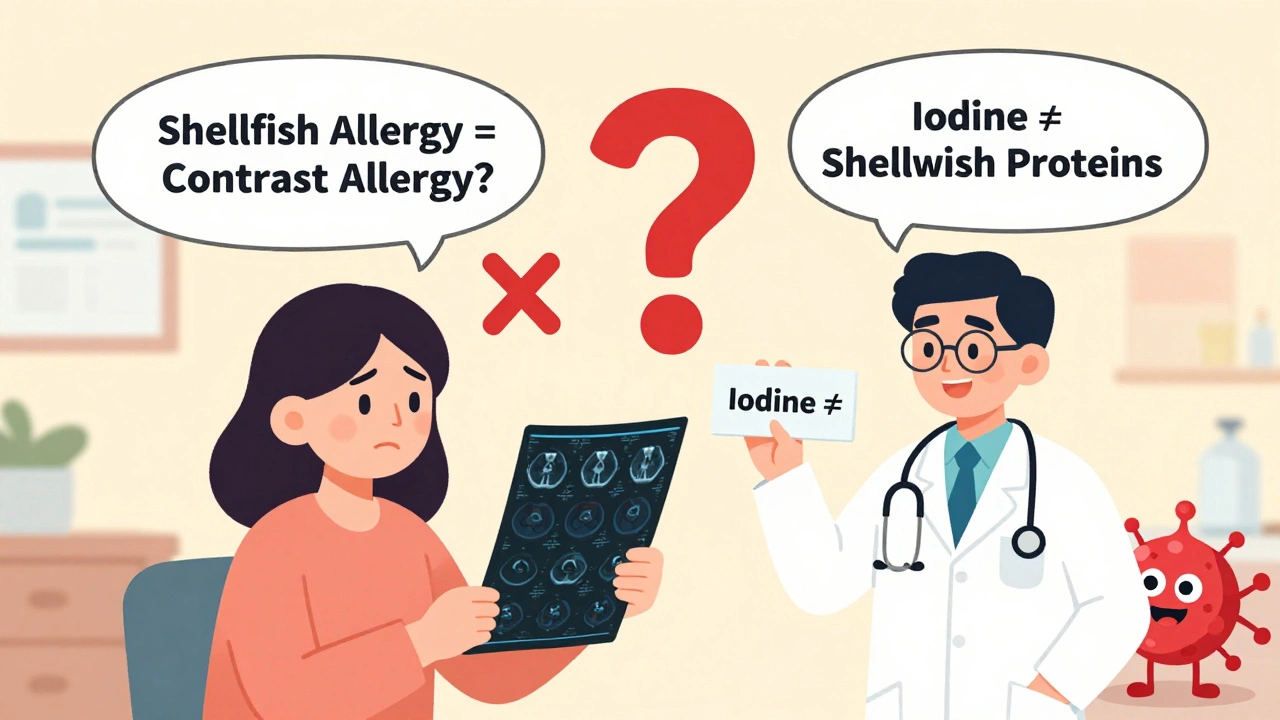
Contrast dye used in CT scans is iodine-based. It’s not the same as iodine in salt or antiseptics like Betadine. A shellfish allergy doesn’t mean you’re allergic to contrast dye. That’s a myth that’s been around for decades. Studies show people with shellfish or iodine allergies have only a 2 to 3 times higher chance of reacting than someone with no allergies at all. That’s not enough to justify premedication for most.
The real red flag? A previous allergic-type reaction to the same kind of contrast dye. If you had hives, trouble breathing, or vomiting during a past scan, your risk of reacting again is around 35%. That’s where premedication comes in-not to stop every reaction, but to cut that risk down to about 2%.
And here’s the catch: not all reactions are created equal. Mild reactions-like a little itching or a rash-are common and usually harmless. If that’s your history, you probably don’t need anything extra. Moderate reactions-swelling, wheezing, or nausea-might call for a premedication plan. Severe reactions-low blood pressure, cardiac arrest, or loss of consciousness-are rare, but if you’ve had one, you’ll need to be scanned in a hospital setting with emergency teams ready.
How Premedication Works: The Science Behind the Pills
Premedication isn’t a magic shield. It’s a two-part strategy: steroids to calm your immune system and antihistamines to block the chemicals that cause symptoms. The classic combo is prednisone (a steroid) and diphenhydramine (Benadryl). But how you take them matters more than what you take.
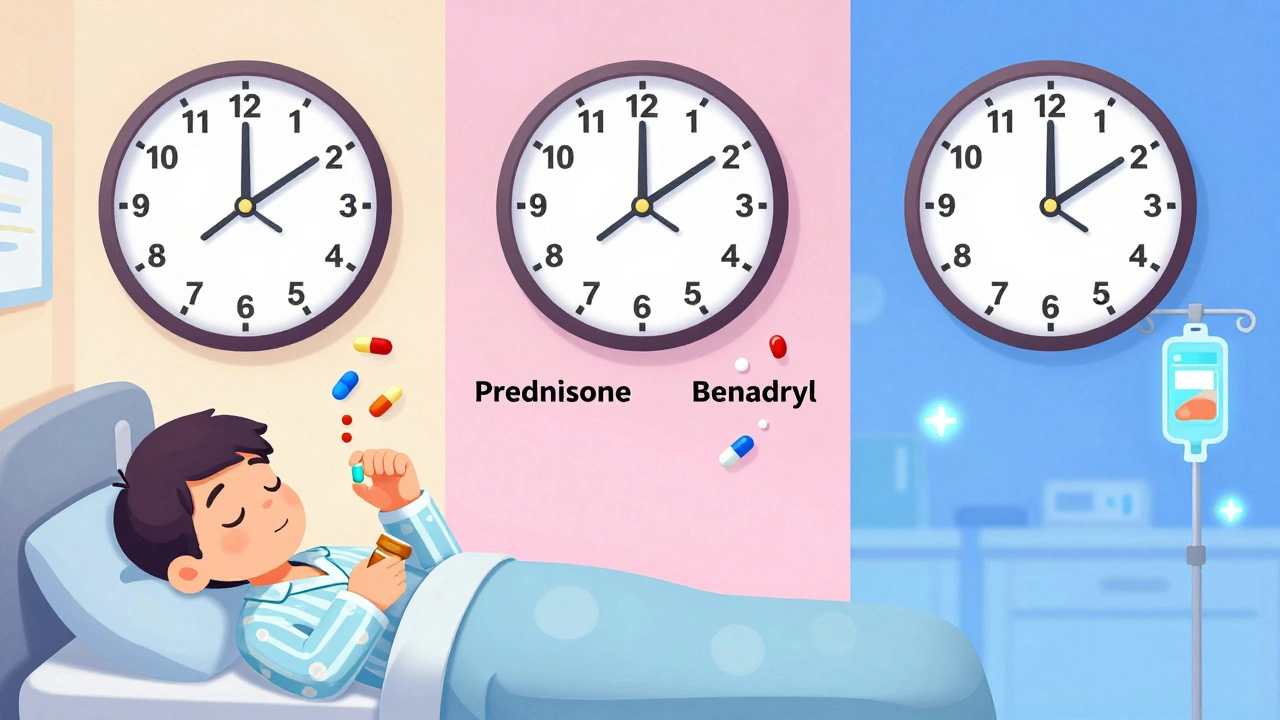
Traditional protocols require you to start taking pills 13 hours before your scan. That means taking prednisone 50 mg at 13 hours, 7 hours, and 1 hour before the procedure, plus Benadryl 50 mg one hour before. This works-but it’s not practical for urgent cases. That’s why accelerated regimens are gaining ground.
A 2017 study in Radiology found that taking methylprednisolone 32 mg orally at 5 hours and again at 1 hour before the scan worked just as well as the 13-hour version. For patients who can’t wait days for a scan, this 5-hour option is now used in emergency rooms and trauma centers across the U.S.
For inpatients or those in critical condition, IV steroids like methylprednisolone 40 mg or hydrocortisone 200 mg are given immediately, then repeated every four hours until the scan. Benadryl 50 mg IV is given one hour before. This gets the drugs into your system fast and reliably.
For kids 6 and older, the rules are simpler. If they’ve had a mild reaction before, a single dose of cetirizine 10 mg one hour before the scan is often enough. No steroids needed.
What Doesn’t Work-and Why
Not every patient needs premedication. And giving it unnecessarily exposes people to side effects without benefit.
First, if you’ve never reacted before, you don’t need it-even if you’re allergic to penicillin, pollen, or peanuts. Those allergies don’t predict contrast reactions. Second, if your last reaction was mild, recent data from Radiology (2021) shows your chance of another reaction is very low. Premedication isn’t worth the cost or risk.
Third, timing matters. If you take your meds less than four hours before the scan, it won’t help. The steroids need time to suppress your immune response. Rushing it is like trying to put out a fire with a water bottle-you’re just wasting time.
And here’s another myth: switching contrast agents can be just as effective as premedication. If you reacted to one brand of iodinated contrast, your doctor might simply use a different one from the same class. Studies suggest this can reduce recurrence rates just as much as steroids and antihistamines-without the side effects.
Safety Planning: Where and How You Get Scanned Matters
Premedication doesn’t make you invincible. Even with all the right pills, about 2% of patients still have reactions. That’s why where you get scanned is as important as what you take.
Hospitals with emergency response teams on standby are required for anyone with a history of severe reactions. Places like UCSF’s Moffitt-Long Hospital or UCLA’s Ronald Reagan Medical Center have protocols that mandate these patients be scanned in locations with immediate access to ICU-level care. If you’re being scanned in a small clinic or outpatient center, ask: Do they have a crash cart? Are staff trained in anaphylaxis?
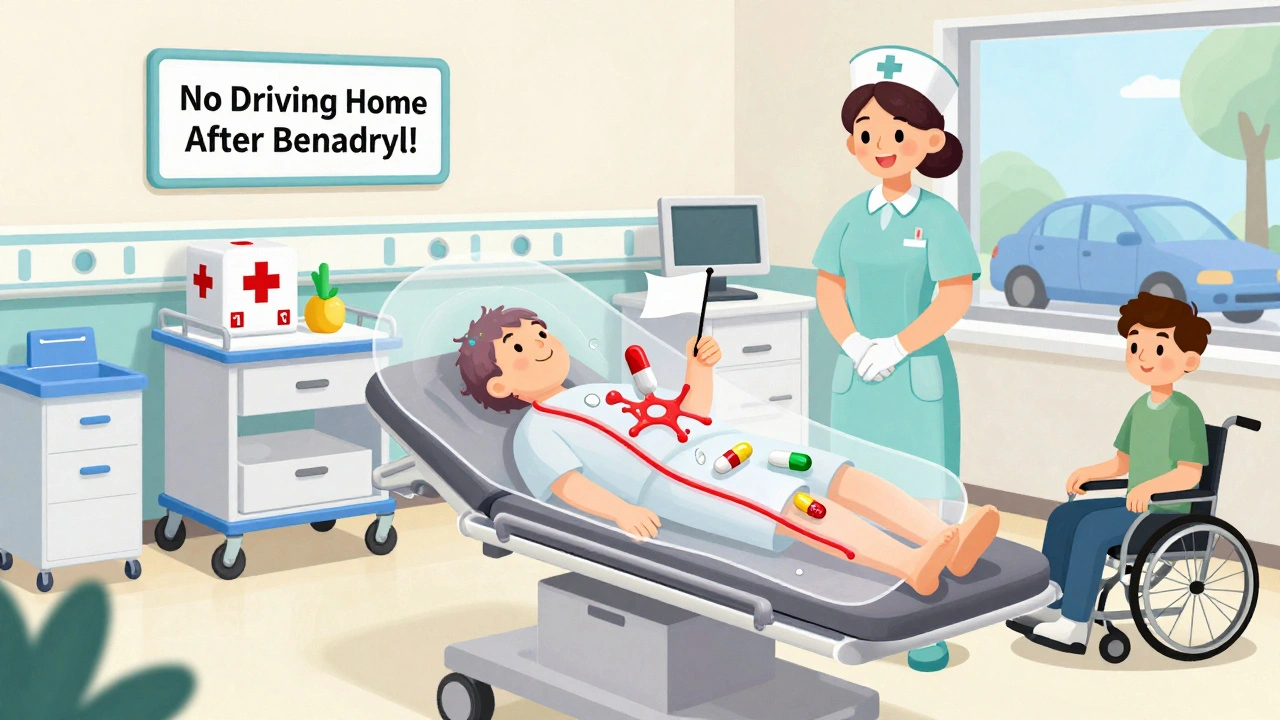
And don’t forget transportation. Benadryl makes you sleepy. Most hospitals won’t let you drive yourself home after premedication. You need someone to pick you up. If you don’t have a ride, they’ll reschedule your scan. It’s not bureaucracy-it’s safety.
For emergencies, the rule is simple: don’t send someone with a history of severe reactions to a standalone imaging center. They need to be scanned in the hospital or ER, where a doctor can be right there with them if things go wrong.
What’s Changing in 2025
The guidelines aren’t static. The American College of Radiology is expected to release Version 11 of its Contrast Media Manual by the end of 2024. Early drafts suggest a shift: less reliance on routine premedication, more emphasis on switching contrast agents when possible.
Why? Because modern contrast dyes are much safer than the old ones. Back in the 1990s, high-osmolar agents caused reactions in up to 10% of patients. Today’s low-osmolar agents cause reactions in less than 0.2%. That’s a 98% drop. So, is premedication still necessary for everyone with a past reaction? Maybe not.
Some experts now argue that for patients with mild or moderate histories, switching the contrast agent alone is sufficient. It’s cheaper, simpler, and avoids steroid side effects like blood sugar spikes or insomnia.
But here’s the bottom line: if you’ve had a life-threatening reaction, premedication is still the standard. The risk is too high to gamble. And while research continues, the current protocols-when followed correctly-are proven to save lives.
Real-World Tips for Patients
- If you’ve had a reaction before, bring your medical records to your appointment. Don’t assume the doctor knows.
- Ask: Which contrast agent will you use? Can we switch to a different one?
- Confirm the premedication schedule. Don’t just take pills on your own-follow the exact timing your radiology team gives you.
- Never skip the ride home. Benadryl can make you too drowsy to drive safely.
- If you’re scheduled for an urgent scan and can’t wait 13 hours, ask about the 5-hour accelerated protocol.
- Don’t panic if you’re told you don’t need premedication. Your history might not warrant it.
Contrast dye reactions are rare. But for those who’ve been through them, the fear is real. The good news? We know how to manage it. With the right prep, the right place, and the right team, you can get the scan you need-safely.
Do shellfish allergies mean I can’t have contrast dye?
No. Shellfish allergies are not linked to contrast dye reactions. The allergy is to proteins in shellfish, not iodine. People with shellfish allergies have only a slightly higher risk-about 2 to 3 times-that’s still very low. Premedication isn’t routinely recommended just because of a shellfish allergy.
How long before my scan should I take premedication?
For the traditional regimen, take prednisone 50 mg at 13 hours, 7 hours, and 1 hour before your scan, plus Benadryl 50 mg one hour before. For urgent cases, an accelerated 5-hour protocol uses methylprednisolone 32 mg at 5 and 1 hour before. If you take your meds less than 4 hours before, it won’t work. Always follow your provider’s exact schedule.
Can I drive myself home after premedication?
No. Benadryl causes drowsiness and can impair your ability to drive safely. Most imaging centers require you to have someone pick you up. If you don’t have a ride, they’ll reschedule your appointment. It’s not optional-it’s a safety rule.
Is premedication always necessary if I had a reaction before?
Not always. If your past reaction was mild-like a rash or slight itching-you may not need premedication. Recent studies show recurrence risk is very low in these cases. For moderate or severe reactions, premedication is still recommended. Your doctor will decide based on your history and the urgency of the scan.
Can I switch to a different contrast dye instead of taking premedication?
Yes. If you reacted to one iodinated contrast agent, switching to another within the same class can be just as effective as premedication. Many centers now prefer this approach, especially for mild reactions. It avoids steroids and their side effects. Ask your radiologist if a different agent is available.
Are there side effects from premedication?
Yes. Prednisone can raise blood sugar, cause insomnia, or increase appetite. Benadryl causes drowsiness, dry mouth, and blurred vision. These are usually mild and short-lived. For most people, the benefits outweigh the risks. But if you have diabetes or glaucoma, tell your doctor-they may adjust your plan.
What if I have a reaction during the scan even after premedication?
Reactions can still happen-even with premedication. That’s why scans for high-risk patients are done in facilities with emergency teams ready. Staff are trained to respond immediately with oxygen, IV fluids, epinephrine, and other life-saving treatments. The goal is to catch and treat it before it becomes dangerous.
Do I need premedication for an MRI with contrast?
No. MRI contrast uses gadolinium, not iodine. Reactions to gadolinium are different and much rarer. Premedication protocols for iodinated contrast do not apply to MRI contrast. If you’ve had a reaction to MRI contrast, your doctor will evaluate it separately.

11 Comments

Kathleen Koopman
I got my CT last month and they gave me Benadryl before hand. I was napping by the time they rolled me in 😴. So chill. No issues. Just don't drive home!

Jerry Ray
So you're telling me if I had a reaction in 2012 but switched dyes in 2020 I don't need steroids now? That's not how medicine works. They're just trying to save money.

David Ross
I've been in ERs for 20 years. You think they're giving you prednisone because they care? No. They're avoiding lawsuits. If you die after a scan and didn't get the pills? They get sued. If you get the pills and die? They say 'we did everything.' It's all legal theater.

Sophia Lyateva
They say shellfish allergy doesn't matter but they still ask you about it every time. Coincidence? I think not. The pharma companies own the radiology associations. They want you to take the pills. They make billions off the steroids. Wake up.

Craig Ballantyne
The shift toward contrast agent substitution rather than prophylactic steroids is clinically sound. The risk-benefit calculus has fundamentally changed with the advent of low-osmolar, non-ionic agents. Premedication should be reserved for documented prior moderate-to-severe reactions, not historical anecdotals.

Melania Dellavega
I used to be terrified of scans. Had a bad reaction years ago-hives, panic, felt like I was dying. Took the full 13-hour prep for years. Then one day, my tech said, 'We can try a different dye.' We did. No pills. No issues. I cried in the waiting room. Not from fear-from relief. Sometimes the system forgets that patients aren't just cases. We're people who carry fear like luggage. And sometimes, the simplest fix-switching a chemical-is the most human thing you can do.

Krys Freeman
Why are we even talking about this? Just don't get scans if you're weak. America's too soft. People panic over a little itching. Take a pill, shut up, get scanned. End of story.

Lyn James
Let me be clear: the medical establishment has been lying to you for decades. The 'shellfish myth' was invented to make people feel better so they'd consent to scans. But the real reason? Iodine is a trace element in every cell of your body. The dye isn't the problem-it's the *dose*. They're injecting concentrated, synthetic iodine into your bloodstream, and your body sees it as an invader. They don't tell you that because if you knew, you'd refuse. They need you compliant. Steroids? They're just chemical sedatives to keep you quiet while they poison you. Wake up. Ask for an MRI without contrast. It's safer. Always.

Bethany Hosier
I am a physician, and I must say this article is extraordinarily well-researched and aligned with current ACR guidelines. The emphasis on protocol adherence, timing, and facility readiness is not merely pedantic-it is life-saving. I have witnessed a patient with a prior severe reaction go into anaphylaxis in an outpatient center because they were not scanned in a hospital setting. That was preventable. This is why evidence-based medicine matters. Do not be swayed by internet myths. Trust the data. And if you are ever in doubt, ask for the protocol documentation. You have a right to it.

AARON HERNANDEZ ZAVALA
I used to think premed was overkill. Then my sister had a reaction after a scan. She was fine, but it scared the hell out of us. After that, I stopped arguing with doctors. If they say take the pills, I take them. If they say switch the dye, we switch it. I don't need to understand the science. I just need to know I'm not risking my life over a myth. Sometimes, peace of mind is the real medicine.
AARON HERNANDEZ ZAVALA
Also, if you're scheduled for a scan and they don't ask about your history? Walk out. That's not negligence-that's malpractice waiting to happen.
Recent Posts
-
How to Get Prescription Assistance Programs from Manufacturers
-

Triple-Negative Breast Cancer Treatment: New Strategies and Clinical Trials
-
Diphenhydramine Overdose: Recognizing Antihistamine Toxicity and Emergency Care
-
Anticholinergic Medications: Cognitive Risks and Managing Dry Mouth
-
Citalopram vs Escitalopram: Managing QT Prolongation and Dose Limits

Write a comment