Prescriber Education Resources: Essential Guides for Doctors on Generic Medications
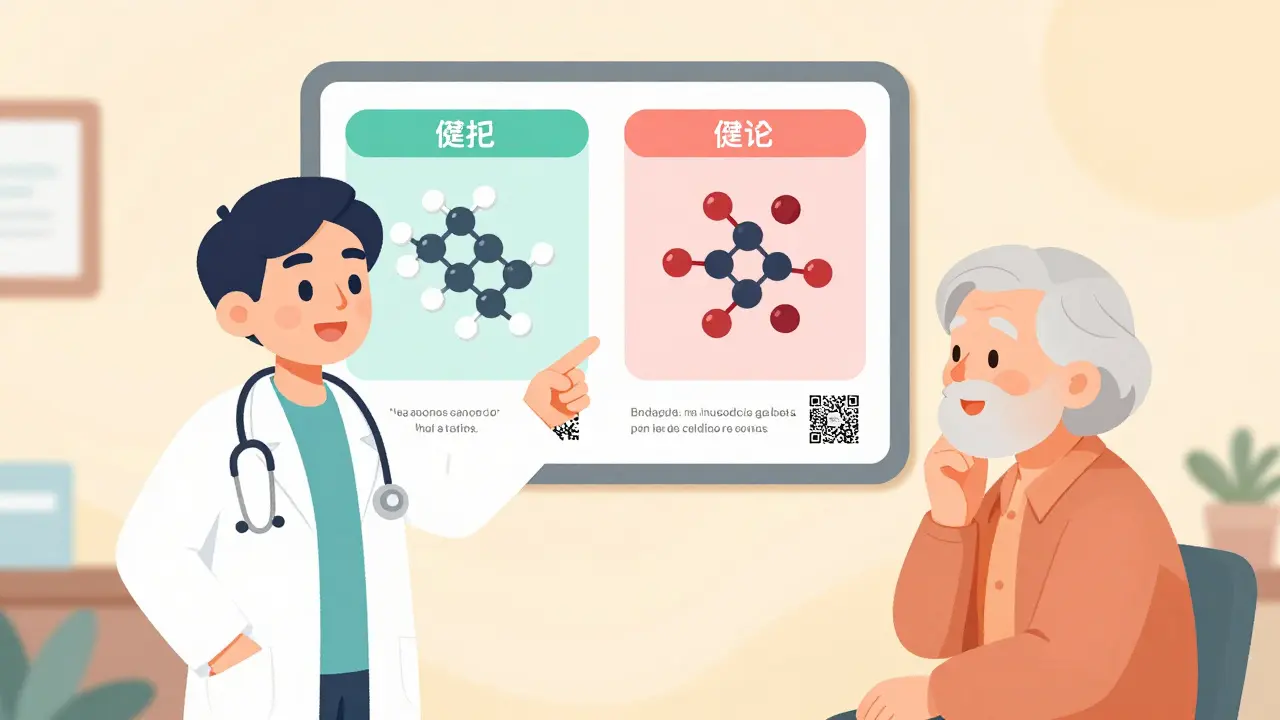
Doctors prescribe generic drugs every day-over 90% of prescriptions in the U.S. are for them. But many still hesitate. Why? Because the myths won’t die. Some think generics are weaker. Others worry they’re made in shoddy labs. A few still believe the brand-name version is somehow more reliable, even when the patient can’t afford it. The truth? Generics are chemically identical, regulated just as strictly, and save patients hundreds of dollars a month. The problem isn’t the science-it’s the education.
Why Doctors Need Better Generic Drug Education
It’s not that doctors don’t want to prescribe generics. They do. But they’re often caught between what they know and what they’ve been told. A 2023 survey of over 1,200 physicians found that 68% said the FDA’s prescriber flyers were useful, but too dense to use during a 10-minute visit. One family doctor in Ohio put it bluntly: “I know generics work. But when a 72-year-old patient says, ‘My cousin took the generic for her blood pressure and ended up in the ER,’ I need something better than a PDF to respond.”
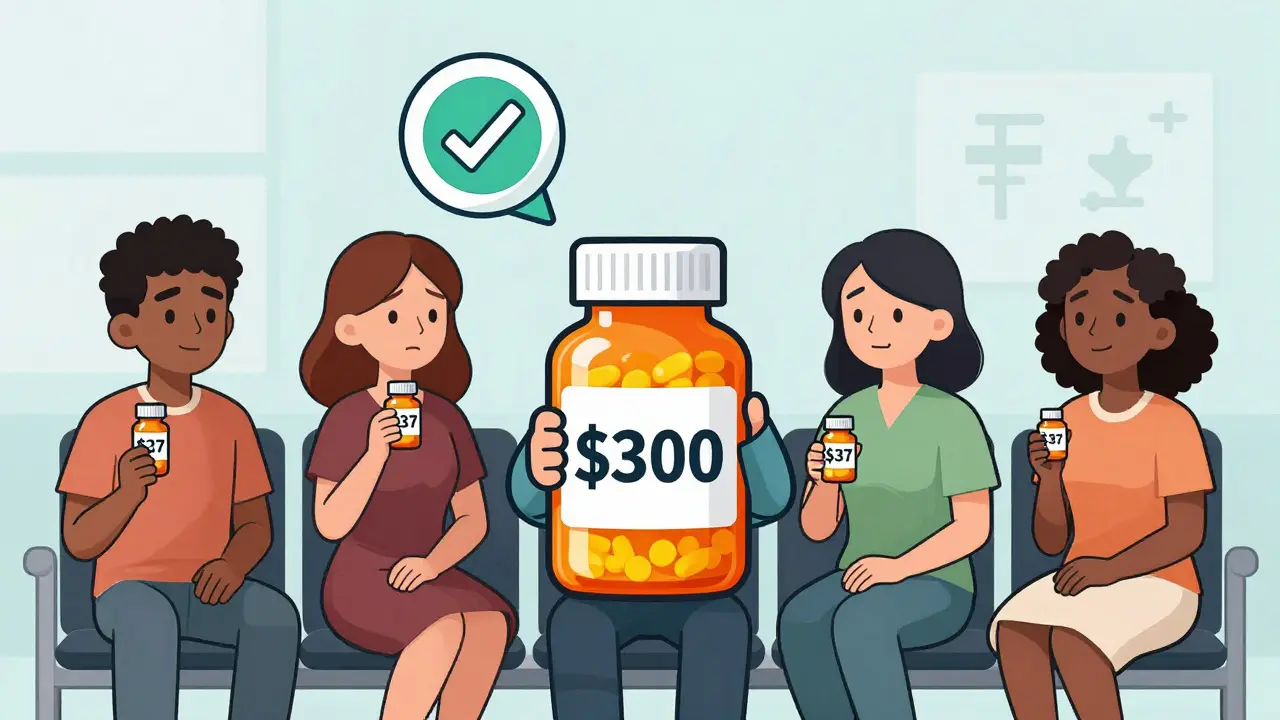
The data doesn’t lie. The FDA’s own analysis shows that 42% of Hispanic patients and 61% of low-income patients (household income under $25,000) are more likely to skip doses or stop meds entirely because of cost. That’s not just a financial issue-it’s a clinical one. Non-adherence leads to hospitalizations, complications, and higher long-term costs. When a doctor prescribes a $300 brand-name statin instead of a $37 generic, they’re not just saving the insurer money-they’re saving the patient from financial ruin.
Yet, only 48% of physicians even know the FDA’s Generic Drugs Stakeholder Toolkit exists. That toolkit has been available since 2019. It includes ready-to-print handouts, social media templates, and infographics that explain exactly how generics are approved. The disconnect isn’t about willingness. It’s about access, timing, and clarity.
What the FDA Actually Requires for Generic Approval
Let’s clear up the biggest myth: generics aren’t “copies.” They’re exact copies-down to the molecular structure. The FDA doesn’t just approve them based on paperwork. Every generic must pass a battery of tests, including bioequivalence studies in 24 to 36 healthy volunteers. These studies measure how the drug moves through the body-how fast it’s absorbed, how high the blood levels go, how long it lasts.
The standard? The generic must deliver between 80% and 125% of the brand-name drug’s effect. That’s not a wide range-it’s tight. For most drugs, the difference in blood levels between brand and generic is less than 4%. In a 2022 analysis of over 12,000 adverse event reports, the FDA found nearly identical safety profiles between brand and generic versions of the same drug. The same number of patients reported side effects. The same number had unexpected reactions.
The approval process is called an ANDA-Abbreviated New Drug Application. It’s “abbreviated” because the generic maker doesn’t have to repeat the original 10-year clinical trial. They prove they match the brand. That’s it. The FDA inspects the manufacturing facility just as rigorously as they do for brand-name drugs. There’s no second-tier system. A generic made in India or Tennessee is held to the same standard.
Still, many doctors don’t know this. And when patients ask, “Why is this cheaper if it’s the same?”-they need an answer that’s simple, credible, and quick.
Key Resources Doctors Can Actually Use
The FDA’s resources aren’t buried in archives. They’re free, downloadable, and designed for real-world use. Here’s what works:
- Prescriber Flyers (Version 2, 2022): One-page, front-and-back. Covers bioequivalence, manufacturing, and safety. Fits in a clinic’s literature rack. Includes QR codes linking to Spanish-language versions.
- What Makes a Generic the Same? Infographic: A visual breakdown of the 5-step FDA approval process. Shows side-by-side comparisons of brand and generic manufacturing lines. Used successfully by rural clinics in Nebraska to convince skeptical elderly patients.
- Generic Drugs and Health Equity Handout: Focuses on cost barriers. Uses data from CMS to show low-income patients are 3.7 times more likely to discontinue meds due to price. Includes conversation starters like, “This generic will save you $262 a month. The effect? Almost identical.”
- Stakeholder Toolkit: Contains 12 social media templates, 5 customizable patient cards, and 3 infographics. All designed for 6th-8th grade reading level. Validated by NIH.
These aren’t academic papers. They’re tools. One doctor in Kansas printed the infographic and taped it to her exam room wall. She started pointing to it during visits. Within six months, her generic prescribing rate jumped from 62% to 89%.
Where Education Falls Short
Even the best resources fail if they don’t fit into the workflow. Most EHR systems-Epic, Cerner, Allscripts-don’t integrate generic education into the prescribing flow. Only 37% of major systems include pop-up educational prompts when a brand-name drug is selected. That’s a missed opportunity.
Doctors want this info where they already are: inside their charting system. Dr. Jenkins_MD, a family physician in Texas, posted on Reddit: “I need this in my Epic alert box, not as a PDF I have to hunt for.” He’s not alone. A 2022 study in Annals of Internal Medicine found 73% of physicians said they didn’t have time to look up resources during patient visits.
Another gap? Complex generics. Inhalers, topical creams, injectables-these aren’t simple pills. Their delivery systems matter. Bioequivalence is harder to prove. Yet, only 42% of prescribers feel confident explaining why a generic inhaler is still safe and effective. The FDA’s materials don’t yet fully address these nuances.
And then there’s the “authorized generic.” It’s the exact same drug as the brand, just sold under a generic label. Confusing? Yes. 61% of surveyed physicians didn’t know what it was. That’s not their fault-it’s a lack of clear messaging.
How to Make Generic Prescribing Stick
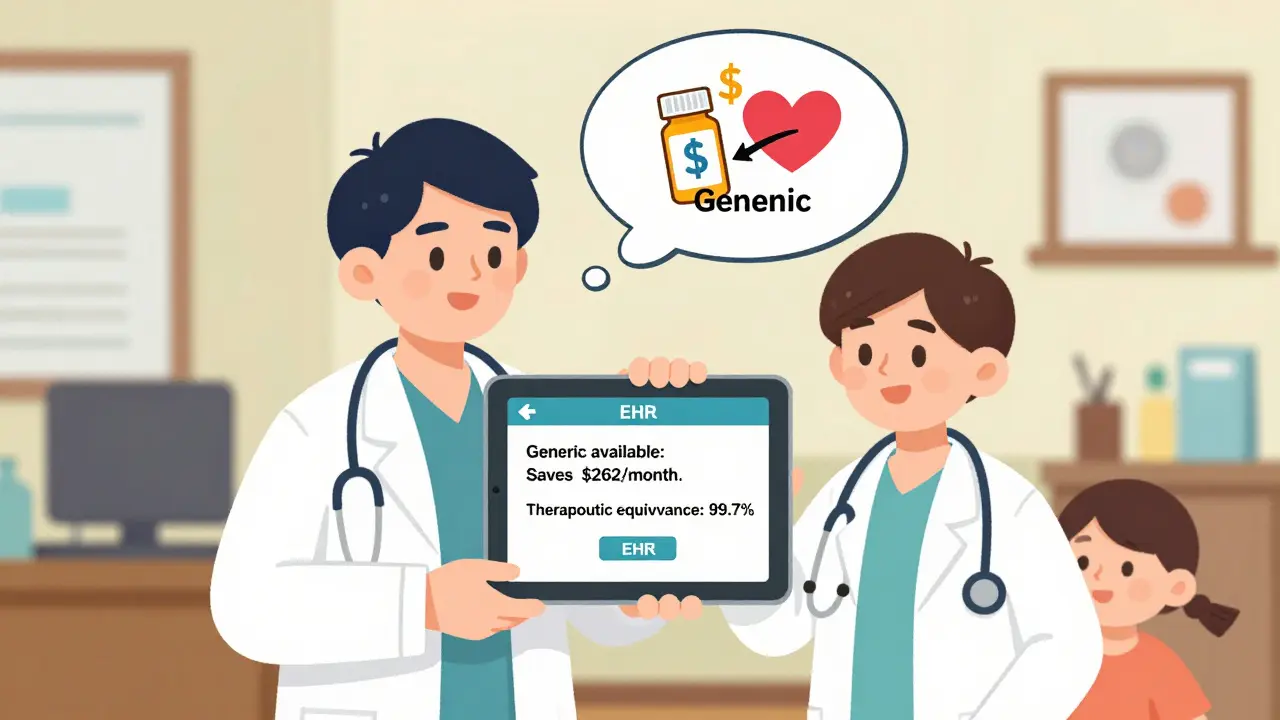
Change doesn’t happen with one flyer. It happens with systems. Kaiser Permanente saw an 18.7% drop in brand-name prescribing after embedding FDA-approved generic facts directly into their Epic system. When a doctor selects a brand-name statin, a small pop-up appears: “Generic available. Saves patient $262/month. Therapeutic equivalence: 99.7%.” No extra clicks. No extra time.
Other successful strategies:
- 15-minute training: A single session on bioequivalence and FDA standards cuts skepticism. A 2022 trial showed physicians needed just 22 minutes of focused education to shift prescribing habits.
- Conversation prompts: Add a checkbox to intake forms: “Patient concerned about switching to generic?” Then offer a script: “The FDA requires generics to work the same way. This one has been used by over 2 million people.”
- Monthly feedback: Compare your prescribing rate to peers. Seeing you’re below average motivates change. The CDC recommends this in their implementation toolkit.
Doctors who use these methods don’t just prescribe more generics-they have better conversations. The American Medical Association found those who received structured education were 2.3 times more likely to initiate cost discussions with patients. That’s not just about savings. It’s about trust.
The Bigger Picture: Why This Matters Now
From 2010 to 2020, generics saved the U.S. healthcare system $2.29 trillion. That’s not a guess. That’s from the Association for Accessible Medicines. From 2021 to 2025, another $1.87 trillion is projected to be saved. But only if doctors prescribe them.
Regulatory pressure is rising. Medicare Part D is now offering incentives for plans that educate prescribers on therapeutic alternatives. Forty-four states have laws requiring pharmacists to substitute generics unless the doctor writes “dispense as written.” But laws don’t change minds. Education does.
And the future? AI is stepping in. IBM Watson Health tested a prototype that generated personalized generic substitution recommendations based on patient history, insurance, and concerns. In a trial with 120 doctors, patient acceptance rates jumped 29 percentage points. That’s not science fiction. That’s the next step.
Prescriber education isn’t about convincing doctors to save money. It’s about helping them give better care. Generics aren’t a compromise. They’re the standard. And the tools to make that clear? They already exist. The question is-how many doctors will use them?
Are generic drugs really as effective as brand-name drugs?
Yes. The FDA requires generic drugs to have the same active ingredient, strength, dosage form, and route of administration as the brand-name version. They must also demonstrate bioequivalence-meaning they deliver the same amount of drug into the bloodstream at the same rate. Studies show the average difference in blood levels between brand and generic is less than 4%. For over 90% of drugs, the therapeutic effect is identical.
Why do some patients believe generics don’t work?
Misinformation spreads easily. Patients may have heard stories from friends, seen ads promoting brand-name drugs, or assumed higher price equals better quality. Some also confuse generics with “authorized generics” or biosimilars. The FDA’s educational materials include clear scripts to address these concerns, like: “The FDA tests generics just as strictly as brand names. The only difference is the price.”
Can I trust generics made overseas?
Yes. The FDA inspects all manufacturing facilities-whether in the U.S., India, or Germany-using the same standards. Over 50% of generic drugs sold in the U.S. are made overseas, but every facility must pass an on-site inspection before approval. The FDA conducts over 3,500 inspections annually. There’s no difference in safety or quality based on location.
What’s the difference between a generic and an authorized generic?
An authorized generic is the exact same drug as the brand-name version, manufactured by the brand company but sold under a generic label. It has the same inactive ingredients, packaging, and labeling as the brand-just without the brand name. Many doctors don’t realize this exists, which causes confusion. The FDA recommends clearly explaining this to patients to reduce distrust.
How can I start using generic education resources in my practice?
Start small. Download the FDA’s Prescriber Flyer and place it where patients wait. Use the infographic during consultations to show how generics are made. Ask your EHR vendor if they integrate FDA generic data. If not, request it. Finally, dedicate 15 minutes in your next staff meeting to review the basics. Small steps build lasting change.

14 Comments

Nancy Kou
Doctors need this stuff embedded in their EHRs, not buried in PDFs. I’ve seen clinics in rural Ohio flip from 40% to 90% generic prescribing just by putting the FDA infographic on the wall. No extra time, no extra effort. Just point and explain. It’s not rocket science.

Kevin Motta Top
Same. My grandma switched to generic metformin and didn’t even notice. She just saved $200 a month. If the science’s solid and the price’s a tenth, why are we still having this conversation?

Hussien SLeiman
Let’s be real-this whole thing is a corporate ploy disguised as patient care. The FDA’s approval process is a joke. They let generics pass with 80-125% bioequivalence? That’s a 45% swing. I’ve seen patients crash after switching. And don’t even get me started on the manufacturing plants in India-no one’s doing surprise inspections, and the FDA’s budget’s been gutted since 2016. This isn’t about education-it’s about profit margins and insurance companies pushing the cheapest option, no matter the risk.
And don’t quote me some Kansas doctor who ‘improved prescribing rates.’ That’s anecdotal nonsense. Real medicine isn’t about hitting targets-it’s about individual outcomes. I’ve got a patient on generic lisinopril who developed angioedema after six months. Brand-name? Zero issues for three years. You think that’s coincidence? I don’t.
The ‘authorized generic’ thing? That’s the only real solution, and even that’s buried in the fine print. Why isn’t the FDA requiring all generics to be labeled with their actual manufacturer? Because then people would see how many are made by the same companies that make the brand names. It’s all the same factory, just different labels. And now they want us to trust the cheaper version because it’s ‘the same’? That’s not science. That’s marketing.
And the ‘15-minute training’? Please. You think a busy physician has time for that? Or are we just going to shove another checkbox into Epic and call it a day? This isn’t fixing the problem. It’s just making everyone feel better about doing less.
And the AI recommendations? Next thing you know, algorithms will be deciding who gets which drug based on their zip code and insurance tier. That’s not healthcare. That’s rationing with a smiley face.
Generics aren’t the enemy. But pretending they’re perfectly interchangeable? That’s dangerous. And the people pushing this agenda? They’re not doctors. They’re bureaucrats with spreadsheets.

Marsha Jentzsch
OH MY GOD I JUST HAD A PATIENT WHO SWITCHED TO GENERIC AND HAD A SEIZURE!!!
She was fine on the brand for 5 years!!! Then they switched her because of ‘cost savings’ and BOOM-seizure in the grocery store!!!
And now the pharmacy says ‘it’s the same’??? SAME??? HOW IS THAT POSSIBLE??? I’M A NURSE AND I’VE SEEN THIS TOO MANY TIMES!!!
It’s not about the data-it’s about the people!!! The FDA doesn’t know what happens in real life!!!
And now they want to put this in EHRs??? So when a doctor clicks ‘brand’ it pops up ‘GENERIC IS CHEAPER’??? LIKE THAT’S GOING TO HELP A PATIENT WHO ALREADY SURVIVED A SEIZURE BECAUSE OF A GENERIC??? NO!!!
This is how people DIE!!! And no one cares!!! Everyone’s just happy they saved $200!!!
WHERE IS THE ETHICS HERE??? WHERE IS THE HUMANITY???!!!

Ryan van Leent
Who cares if it’s the same? It’s still cheaper so just use it. If your patient can’t afford it they’ll skip doses anyway. So why not give them the one that works and costs less? Stop overthinking it.

Sajith Shams
Let me break this down for you. Bioequivalence range of 80-125% is not tight-it’s a 45% window. That’s not equivalence. That’s a gamble. And you think 4% average difference means nothing? What about the outliers? What about patients on narrow-therapeutic-index drugs? Warfarin? Lithium? Levothyroxine? Those aren’t just ‘statins.’ Those are drugs where a 10% variation can kill you. And yet the FDA treats them the same as ibuprofen? That’s not science. That’s laziness disguised as policy.
And don’t even get me started on the manufacturing inspections. Over 50% of generics are made overseas? And the FDA inspects 3,500 facilities annually? That’s less than one inspection per facility every two years. That’s not oversight. That’s a lottery.
And the ‘authorized generic’? That’s the only real solution. But no one talks about it because it doesn’t fit the narrative. The brand manufacturer makes it, sells it under a generic label, and still pockets the profit. The system is rigged.
Education won’t fix this. Regulation will. And right now, we’re trusting a broken system to save lives.

Andrew Kelly
They’re not telling you the whole truth. The FDA doesn’t require generics to be tested in actual patients with the disease. They test in healthy volunteers. So what happens when a 75-year-old with liver disease takes a generic? The pharmacokinetics change. But the FDA doesn’t care. They don’t test for that. The ‘same’ claim is a lie. It’s only the same for healthy people. For the elderly, the immunocompromised, the obese? It’s a crapshoot. And you’re okay with that? You’re okay with prescribing a drug that’s only proven to work on college students?
And the ‘infographics’? Cute. But they don’t explain why the same pill from the same company costs 10x more when it has the brand name on it. That’s not science. That’s price gouging. And the FDA is complicit.
Don’t fall for the propaganda. Generics are not the same. They’re just cheaper. And that’s all.

Isabel Rábago
My dad took a generic blood thinner after his stroke. He ended up back in the hospital with a bleed. The doctor said ‘it’s the same.’ But it wasn’t. He didn’t respond the same. The generic had a different filler. It changed absorption. He almost died. Now I don’t trust any generic. Not even for antibiotics. Not after that.
They say ‘the data shows’-but data doesn’t have a heartbeat. People do.

Mike Rengifo
I’ve been prescribing generics for 18 years. Never had a single patient report a problem. The ones who say they ‘feel different’? Usually they’re just anxious about change. I show them the FDA flyer. They relax. They save money. Everyone wins.

Ashley Bliss
This is the most important conversation in modern medicine and no one’s talking about it right. We’re not just talking about pills-we’re talking about dignity. A single mom choosing between insulin and rent. An elderly man skipping his cholesterol med because he can’t afford the copay. This isn’t about ‘efficacy.’ It’s about whether we believe people deserve to live. Generics aren’t a compromise-they’re a moral imperative. And if you’re still hesitating? You’re not protecting your patients. You’re protecting your own discomfort.
The tools exist. The data is clear. The only thing standing in the way? Our arrogance. We think we know better. But the patients? They know exactly what’s at stake.

Dev Sawner
It is imperative to note that the bioequivalence criteria established by the FDA are not universally harmonized with international regulatory agencies such as the EMA or Health Canada, which employ stricter thresholds in certain cases. Furthermore, the absence of post-marketing pharmacovigilance data specific to generic formulations in heterogeneous populations-particularly those with polypharmacy, renal impairment, or genetic polymorphisms in CYP450 enzymes-renders the current regulatory framework insufficient for clinical decision-making at the individual patient level. The assertion that ‘generics are the same’ is therefore scientifically untenable when applied to complex clinical scenarios.

Moses Odumbe
Bro, I work in a pharmacy. I’ve handed out 10,000+ generics. 99% of people don’t even notice. The ones who do? Usually just want the brand because they think it’s ‘stronger.’ I show them the FDA chart. They’re like ‘ohhhhh’ 😌
Also, the ‘authorized generic’? That’s the secret sauce. Same pill, different label. I tell patients: ‘This is literally the same thing your cousin took, just cheaper.’ They love it. 🤝

Mahammad Muradov
The FDA’s bioequivalence standard is fundamentally flawed. The 80-125% range is derived from statistical models assuming normal distribution of pharmacokinetic parameters. In reality, drug absorption is highly variable in patients with gastrointestinal disorders, diabetes, or obesity. The assumption that a single study in 24 healthy volunteers is sufficient for a population of 330 million is not only scientifically invalid-it is ethically negligent. Furthermore, the lack of mandatory post-market pharmacokinetic surveillance for generics renders the entire system a regulatory illusion.

Connie Zehner
I just had a patient cry because her generic antidepressant made her feel ‘numb’-but the brand made her feel alive again. She said, ‘I don’t care if it’s the same on paper-I need to feel like me.’ And you know what? She was right.
It’s not about the science. It’s about the soul.
Stop pushing ‘efficiency.’ Start listening.
Recent Posts
-

Citalopram vs Escitalopram: Managing QT Prolongation and Dose Limits
-
How to Get Prescription Assistance Programs from Manufacturers
-

Anticholinergic Medications: Cognitive Risks and Managing Dry Mouth
-
How to Safely Buy Phenytoin Online: A Complete Buyer's Guide
-
Diphenhydramine Overdose: Recognizing Antihistamine Toxicity and Emergency Care

Write a comment