Remote Microphone Systems: How They Help You Hear Speech in Noise
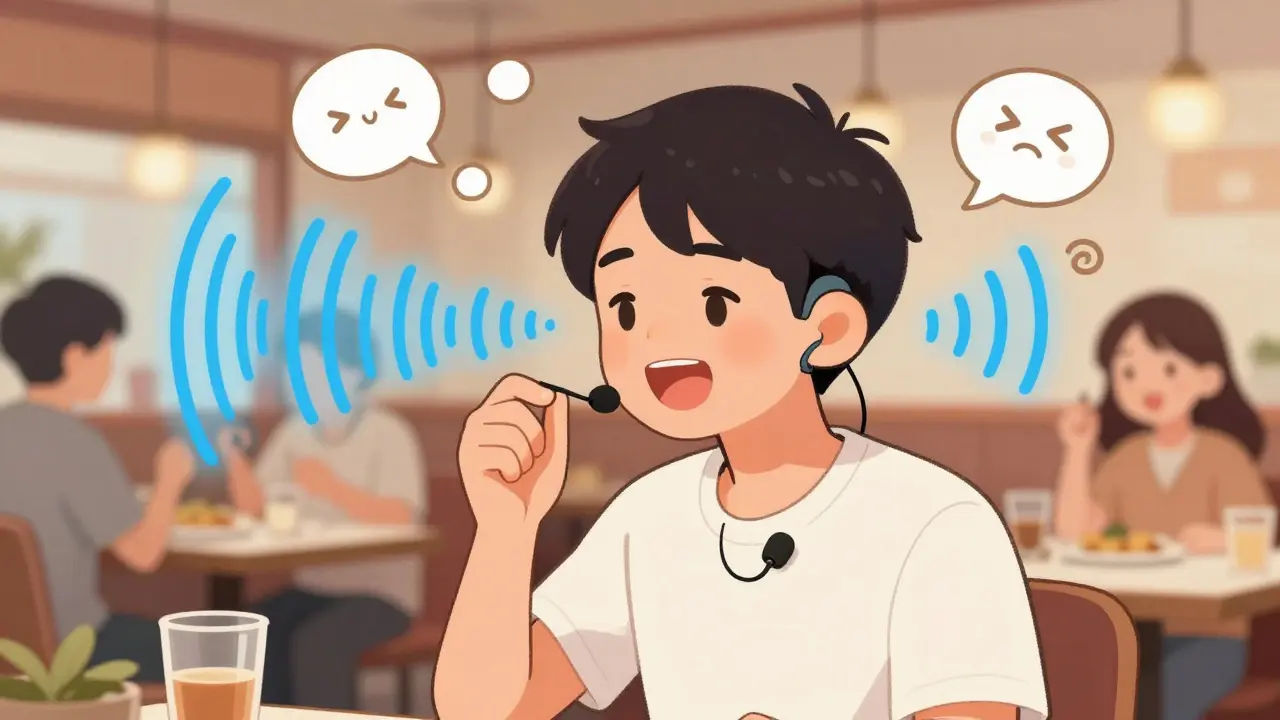
Imagine sitting at a busy restaurant, surrounded by clinking glasses, laughter, and overlapping conversations. You’re wearing your hearing aids, but you still can’t follow what the person across from you is saying. It’s not that they’re speaking too quietly-it’s that the noise is drowning out their voice. This isn’t just frustrating. For millions of people with hearing loss, it’s a daily barrier to connection. That’s where remote microphone systems come in.
What Exactly Is a Remote Microphone System?
A remote microphone system is a small, wireless device that picks up speech from someone speaking near you-like a friend, coworker, or teacher-and sends it directly to your hearing aids or cochlear implants. It’s not a speaker. It’s not a headset. It’s a tiny microphone, often clipped to a shirt or held in hand, that captures the speaker’s voice just 6 to 8 inches from their mouth. That’s close enough to avoid the natural drop-off in sound quality that happens when you’re more than a few feet away. These systems use digital radio signals, usually on the 2.4 GHz band, to send the voice signal straight to your hearing device. Older versions used FM technology, but today’s systems like Phonak Roger, ReSound Multi Mic, and Oticon ConnectClip are digital, smarter, and far more reliable. They automatically adjust to background noise, hop between frequencies to avoid interference, and in some cases, even focus on the person you’re talking to while ignoring others.Why Do They Work So Well?
Hearing aids are great, but they have a big weakness: they amplify everything. In a noisy room, that means your brain gets flooded with chatter, clatter, and hums-all competing with the voice you want to hear. Remote microphone systems fix this by removing the distance problem. Sound loses about 6 decibels every time you double the distance from the source. So if someone is 10 feet away, their voice is already half as loud as if they were right next to you. In a restaurant at 70 dBA, that’s enough to make speech nearly impossible to understand-even with the best hearing aids. Studies show that remote microphone systems can improve speech recognition in noise by up to 61% compared to hearing aids alone. That’s not a small gain. It’s the difference between guessing at words and understanding full sentences. One 2021 study found adults improved their speech-to-noise ratio thresholds by 11 to 19.5 dB. For context, that’s like turning up the volume on a TV by 20%-but without making the background noise louder too.How Do Different Systems Compare?
Not all remote microphones are the same. There are two main types: directional and omnidirectional.- Directional systems like the Phonak Roger Select or ReSound Multi Mic use multiple microphones to focus on the speaker in front of you and ignore noise from the sides and back. They automatically adjust as you move or as the environment changes. In tests, they outperform omnidirectional models by 15 to 20 percentage points in noisy settings.
- Omnidirectional systems like the Roger Pen pick up sound from all directions. They’re simpler, cheaper, and great for one-on-one conversations, but they don’t filter out background noise as well. They’re still better than nothing-just not as powerful.
Who Benefits the Most?
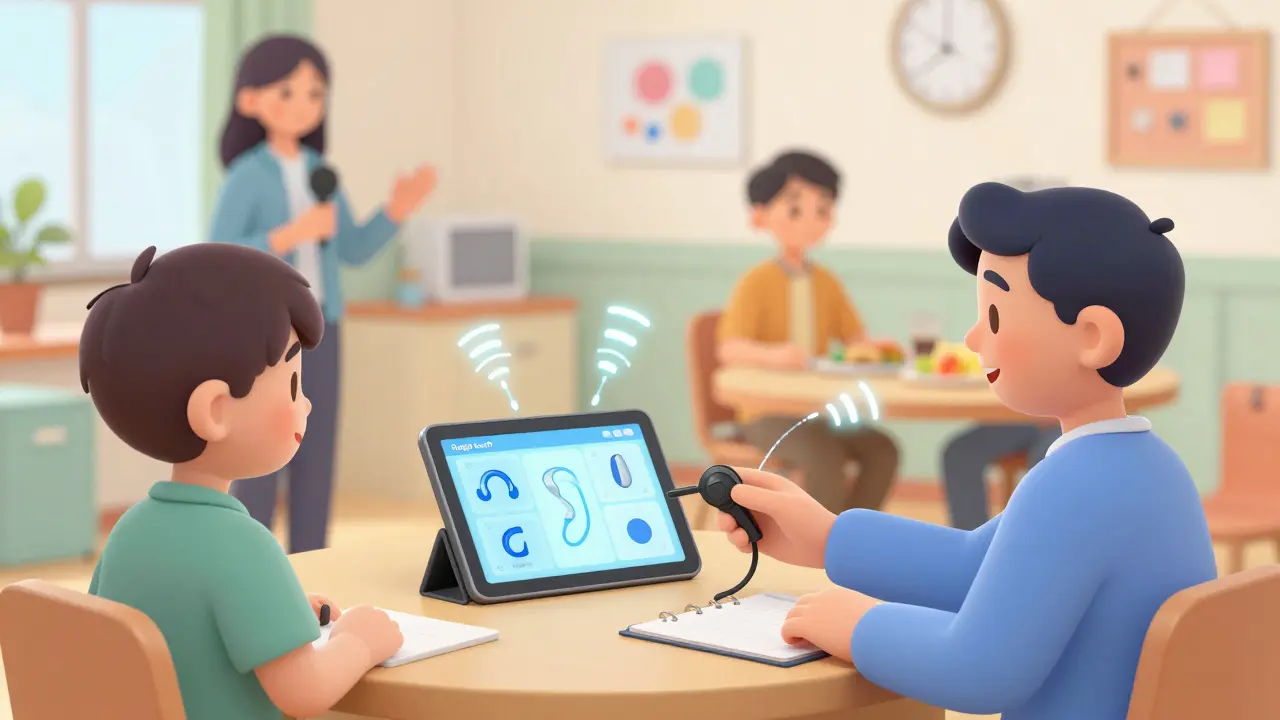
Children with hearing loss are the most consistent users. In U.S. schools, 75% of school-aged kids with hearing loss use these systems, thanks to federal mandates under IDEA (Individuals with Disabilities Education Act). Teachers wear the mic, and the child’s hearing aids receive the signal directly-no shouting, no straining, no falling behind. But adults benefit just as much. Nurses, teachers, salespeople, and retirees all report life-changing results. One user on Reddit said they went from understanding 20% of family dinners to 85% with the Roger Select. Another, a nurse, said her Phonak Roger Pen added five years to her working life. The biggest advantage? It’s not just about hearing words. It’s about being present. You stop constantly asking people to repeat themselves. You stop nodding when you have no idea what was said. You stop avoiding social events because they’re too exhausting.What Are the Downsides?
No technology is perfect. The biggest complaint? Cost. Most systems range from $499 to $799. Medicare and most private insurance plans cover less than 15% of that cost. That’s a huge barrier. Forty-two percent of negative Amazon reviews cite price as the main reason they didn’t keep using it. There’s also the social stigma. Some people feel awkward asking others to wear a mic. One user on Trustpilot wrote, “People think I’m recording them when I ask them to wear the mic at meetings.” It’s a real concern. But many users find that once they explain how it works, people are supportive-even impressed. Another limitation: if multiple people are talking at once, and none of them are wearing a mic, the system can’t help. It only enhances the voice it’s connected to. That’s why newer models like Roger Focus II and upcoming AI-powered systems are so promising-they’re designed to handle group conversations better.
How Do You Get One?
You can’t just buy one online and start using it. These are medical devices, and they need to be fitted by an audiologist. The process usually takes two to three visits:- First, your audiologist tests your hearing and checks if your hearing aids are compatible. Most modern hearing aids from Phonak, ReSound, Oticon, and Starkey can connect wirelessly to these systems.
- Next, they program the microphone to match your hearing profile and set up the connection to your hearing aids.
- Finally, they train you on how to use it-switching modes, managing batteries, placing the mic correctly.
What’s Next?
The future is integration. Right now, you wear a separate mic and your hearing aids. But companies are working to build the mic right into the hearing aid. Oticon’s 2024 More hearing aid already includes built-in Roger technology. That means no extra device to carry, no extra button to press. AI is also coming. Phonak’s 2024 Roger X uses artificial intelligence to separate speech from noise even better-improving recognition by 9% in crowded rooms. Starkey’s Evolv AI platform, launching in late 2024, will automatically adjust speech enhancement based on the environment. The market is growing fast. It was worth $1.2 billion in 2023 and is expected to grow 8.7% a year through 2030. By 2027, the Hearing Industries Association predicts 60% of new hearing aids will have remote microphone tech built in. That will drive prices down-potentially by 25 to 30%.Is It Worth It?
If you struggle to hear in restaurants, meetings, or group settings-even with hearing aids-then yes. The evidence is clear: remote microphone systems deliver the biggest improvement in speech understanding in noise that hearing aid users have ever seen. Better than noise reduction algorithms. Better than directional microphones built into hearing aids. Better than anything else on the market. It’s not a cure. It’s a tool. And like any tool, it works best when it’s right for you. Talk to your audiologist. Try a demo. Ask about loaner programs. Some clinics let you test a system for a week before deciding. Because hearing isn’t just about volume. It’s about connection. And with the right technology, you don’t have to miss out on another conversation.Can remote microphone systems work with any hearing aids?
No. Remote microphone systems only work with hearing aids that have compatible wireless technology. Most modern hearing aids from Phonak, ReSound, Oticon, and Starkey support 2.4 GHz or Bluetooth Low Energy connections. Older or basic models may not be compatible. Your audiologist will check your device’s specs and recommend a matching system.
Do insurance plans cover remote microphone systems?
Most insurance plans, including Medicare, cover very little-often less than 15% of the cost. Some private insurers offer partial coverage if you have a documented medical need and a prescription from an audiologist. Medicaid coverage varies by state. Always check with your provider before purchasing.
How long do the batteries last?
Most remote microphones last between 8 and 12 hours on a single charge. The Roger Select and Roger Focus II last up to 12 hours, while smaller models like the ReSound Mini Mic may last closer to 8. Charging takes about 2 to 3 hours. Many models come with portable charging cases, similar to wireless earbuds, so you can recharge on the go.
Can I use a remote microphone system in a group setting?
Yes, but only with newer models. The Roger Focus II (2023) and Roger X (2024) allow you to connect multiple microphones at once. Each speaker wears a mic, and your hearing aid blends their voices. This works well in meetings or family dinners. Older systems only connect to one mic at a time, so you’d need to pass it around.
Are there cheaper alternatives to remote microphone systems?
Basic FM systems are cheaper but outdated and less reliable. Personal amplifiers (like pocket talkers) are inexpensive but amplify all noise, not just speech. Smartphone apps that claim to improve speech in noise are not medical devices and offer little to no benefit for hearing loss. For real-world results, especially in noise, remote microphone systems remain the most effective option.
How do I know if I need one?
If you can hear clearly in quiet places but struggle in restaurants, meetings, or group conversations-even with your hearing aids-you’re a strong candidate. Ask yourself: Do I avoid social events? Do I frequently ask people to repeat themselves? Do I feel exhausted after listening for long periods? If you answered yes, talk to your audiologist about trying a demo.

9 Comments

matthew martin
Man, I wish I’d known about these things 10 years ago. I used to sit at family dinners like a ghost-nodding, smiling, totally lost. My hearing aids? Great for quiet rooms. Useless at Thanksgiving. Got a Roger Select last year and it’s like someone flipped a switch in my brain. I actually laugh at jokes now instead of just pretending to. No exaggeration-it changed my life.

jonathan soba
Let’s be real-this is just a $700 band-aid for a system that’s broken. Why isn’t the government forcing restaurants to install induction loops? Why are we putting the burden on the deaf to buy expensive gadgets so they can hear in public? This isn’t accessibility-it’s corporate exploitation wrapped in ‘innovation’.

Katie Mccreary
Ugh, I tried one. My cousin wore it at dinner and I felt like a criminal. Like, ‘Oh great, now I’m being recorded by the deaf person at the table.’ People don’t get it-it’s not magic. It’s just louder speech. And it’s so annoying when they forget to turn it off in meetings.

doug b
Don’t let the price scare you. My clinic had a 2-week loaner program. I used it at work and in coffee shops. If you’re struggling in noise, you’ll know within days. This isn’t a luxury-it’s a necessity. Talk to your audiologist. They’ve seen this a thousand times.

Kevin Kennett
I’ve been an audiologist for 18 years. I’ve seen people cry when they hear their grandkid say ‘I love you’ for the first time with one of these. The tech isn’t perfect, but the impact? It’s everything. If you’re hesitating because of cost or stigma-get over it. Your relationships matter more than what strangers think.

Irebami Soyinka
Wow, Americans spending $800 on a mic when in Nigeria we just shout louder and move closer 😂. You people have money to burn but no patience. Maybe if you stopped eating fast food and learned to listen better, you wouldn’t need this gadget. But hey, capitalism wins again 🤑.

SRI GUNTORO
Why are we rewarding people who can’t hear with expensive toys instead of teaching everyone to speak clearly? If you’re in a restaurant, lower your voice. If you’re in a meeting, take turns. This isn’t a technological problem-it’s a moral one. We’ve lost basic human decency.

Chris Urdilas
So let me get this straight-you’re telling me that if I want to hear my wife at dinner, I need to pay $700 and make her wear a tiny mic like she’s a spy? And this is the pinnacle of modern medicine? 🤡 I mean… I guess it works? But it feels like we’re all just hacking around the edges of a society that doesn’t care about inclusion. Still… I bought one. My wife says I finally stop saying ‘huh?’ every 30 seconds. So… win? I guess?

Jeffrey Carroll
Thank you for this comprehensive overview. The data on speech recognition improvement is compelling, and the distinction between directional and omnidirectional systems is particularly useful. I appreciate the emphasis on professional fitting-many users overlook this critical step. The integration of AI and built-in microphone technology represents a significant leap forward. I encourage all individuals experiencing difficulty in noisy environments to pursue a consultation with a qualified audiologist. This technology, when properly implemented, offers a meaningful improvement in quality of life.




Write a comment