Routine Monitoring to Catch Medication Side Effects Early: Tests and Timelines
When you start a new medication, you’re told to watch for side effects-but no one tells you how to watch, when to act, or what tests to ask for. That’s the gap. Thousands of people end up in emergency rooms every year because a side effect was missed, dismissed, or ignored until it was too late. The good news? We now have better ways to catch these problems early-not just by waiting for symptoms to get bad, but by using smart monitoring tools, simple tracking habits, and data-driven checks that work even before you feel anything wrong.
Why Most Side Effects Are Missed Until It’s Too Late
The old system relies on patients and doctors reporting problems after they happen. That’s called spontaneous reporting. But here’s the truth: studies show only about 6% of serious drug reactions ever make it into official databases like the FDA’s FAERS. Why? Because most people don’t know if what they’re feeling is normal or dangerous. A headache after starting a new blood pressure pill? Maybe it’s stress. Nausea after a new antidepressant? Maybe it’s the flu. By the time someone calls their doctor, the damage might already be done. Clinical trials don’t catch everything either. They test drugs on a few thousand people over months, not millions over years. Side effects that only show up in older adults, or when two drugs interact, or after long-term use? Those often slip through. That’s why monitoring doesn’t stop when you leave the clinic-it starts there.What Tests Should You Ask For-and When?
Not every medication needs the same tests. But there are key blood and lab checks that are standard for many common drugs. Here’s what to expect based on timing:- First 1-2 weeks: If you’re on statins (like atorvastatin), liver enzymes (ALT, AST) should be checked before starting and again at 4-6 weeks. Kidney function (creatinine, eGFR) is checked early if you’re on ACE inhibitors or NSAIDs.
- Month 1-3: For lithium or anticonvulsants like valproate, blood levels are monitored monthly at first. Thyroid function tests are routine for amiodarone or lithium users.
- Every 3-6 months: Long-term users of metformin need vitamin B12 checks. Those on warfarin require regular INR tests. Diabetes medications like SGLT2 inhibitors need urine checks for ketones if you’re at risk.
- Annually: Electrolytes, kidney and liver panels for anyone on multiple chronic medications. Bone density scans for long-term steroid users.
How Patients Can Track Side Effects Before They Become Emergencies
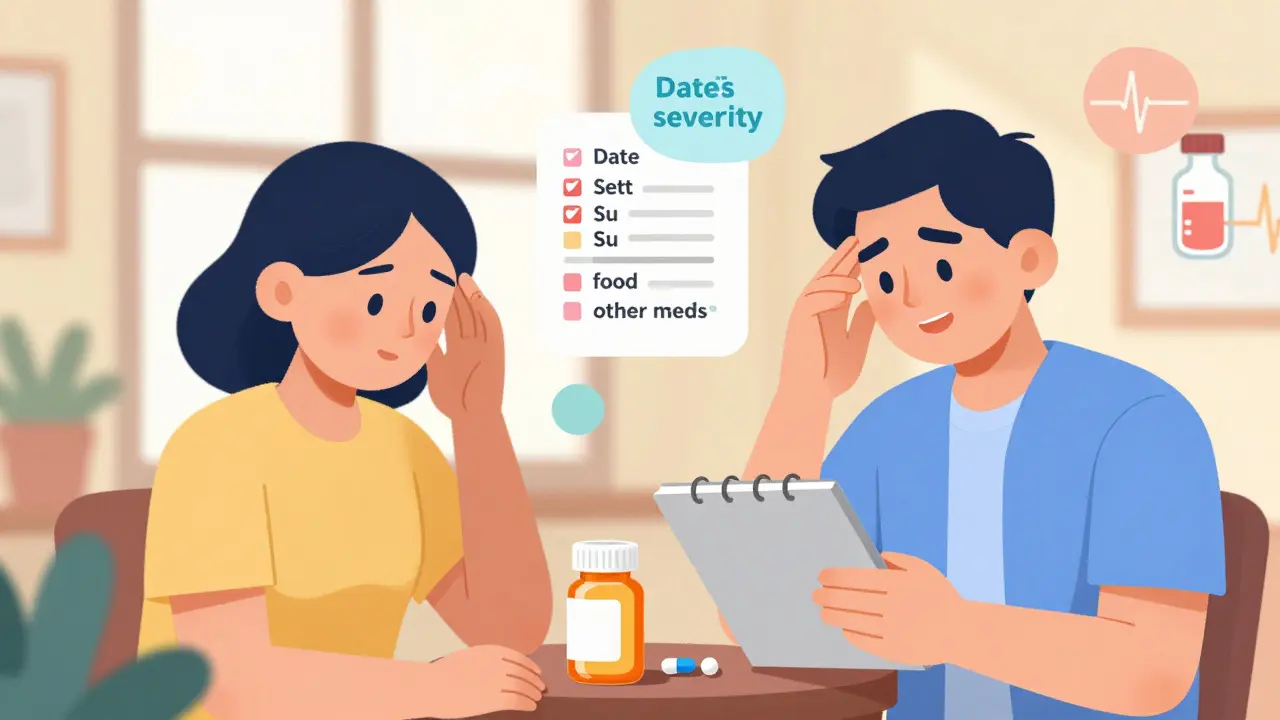
You don’t need a hospital to catch early warning signs. You need a notebook-or a phone app. Here’s what to log every time you take your meds:- Date and time of dose
- Exact symptom (e.g., “tingling in fingers,” not just “feeling weird”)
- Severity on a scale of 1-10
- Duration (e.g., “lasted 2 hours,” “came back every morning”)
- What you ate, drank, or did before it started (alcohol, caffeine, exercise, sleep)
- Other meds taken that day
How Doctors Are Using Technology to Catch Side Effects Faster
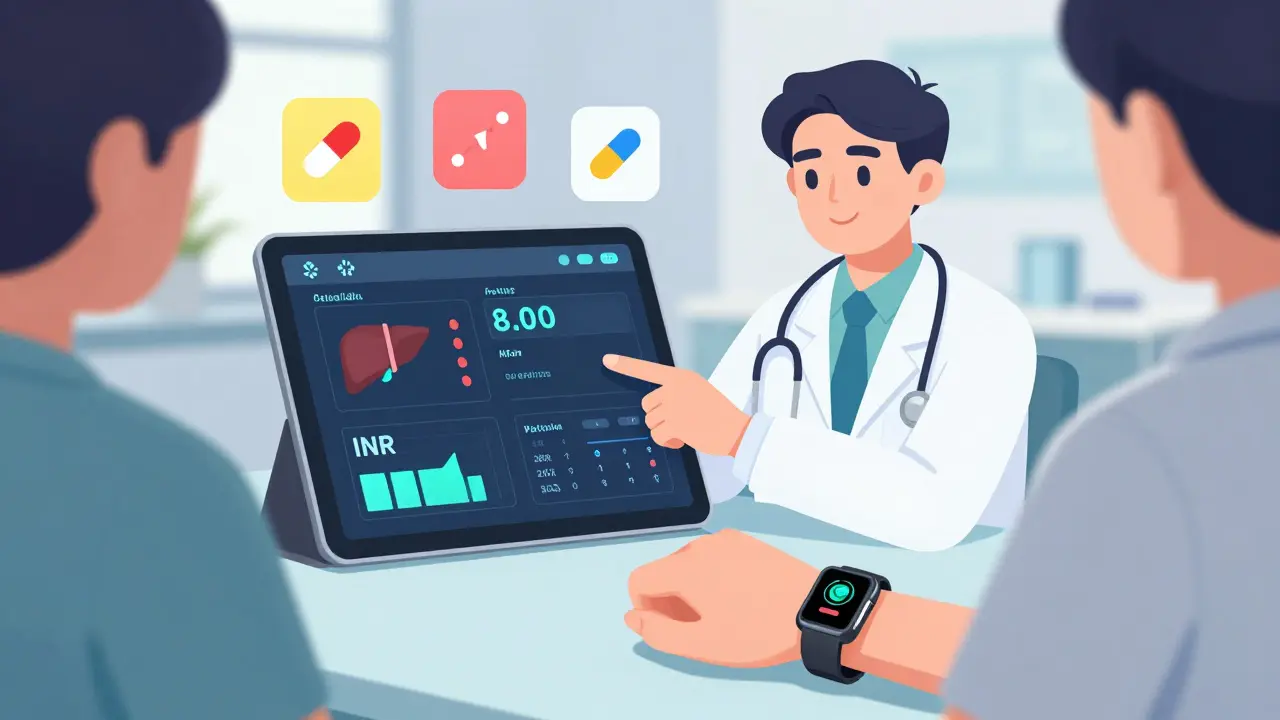
At places like Stanford and UCSF, researchers are using the same data doctors already generate-clinical notes in electronic health records-to find hidden patterns. Instead of waiting for someone to report a side effect, computers scan thousands of notes for phrases like “patient reports dizziness after starting metoprolol” or “new rash after adding allopurinol.” This method found dangerous drug reactions two years before the FDA issued warnings. It works because it’s looking at real-world use, not just what’s officially reported. It’s not magic-it’s math. Algorithms spot unusual clusters: if 50 people on Drug X all develop the same rare symptom within 10 days of starting it, the system flags it. Some clinics now use Clinical Decision Support Systems (CDSS). These tools pop up alerts when a doctor prescribes a new drug that might clash with what you’re already taking. For example, if you’re on warfarin and your doctor tries to add an antibiotic like ciprofloxacin, the system warns: “High risk of bleeding. Consider alternative.” These systems aren’t perfect. They still miss things. But they’re turning passive monitoring into active prevention.The Hidden Danger: Polypharmacy and Drug Interactions
If you’re over 65, chances are you’re on three or more medications. That’s called polypharmacy. And it’s the #1 reason side effects go unnoticed. Why? Because when you’re taking five drugs, every new symptom gets blamed on aging, stress, or “just getting older.” But here’s what’s really happening: one drug might be raising your potassium, another is lowering your sodium, and a third is slowing how fast your liver clears the others. The result? Confusion, dizziness, falls, kidney stress-symptoms that look like dementia or heart failure, but are actually drug-induced. The fix? Ask for a medication review every six months. Bring all your pills-prescription, OTC, supplements-to your doctor or pharmacist. They can spot interactions that no algorithm catches. For example: St. John’s Wort can make birth control, antidepressants, and blood thinners useless-or deadly. Most patients don’t even think to mention it.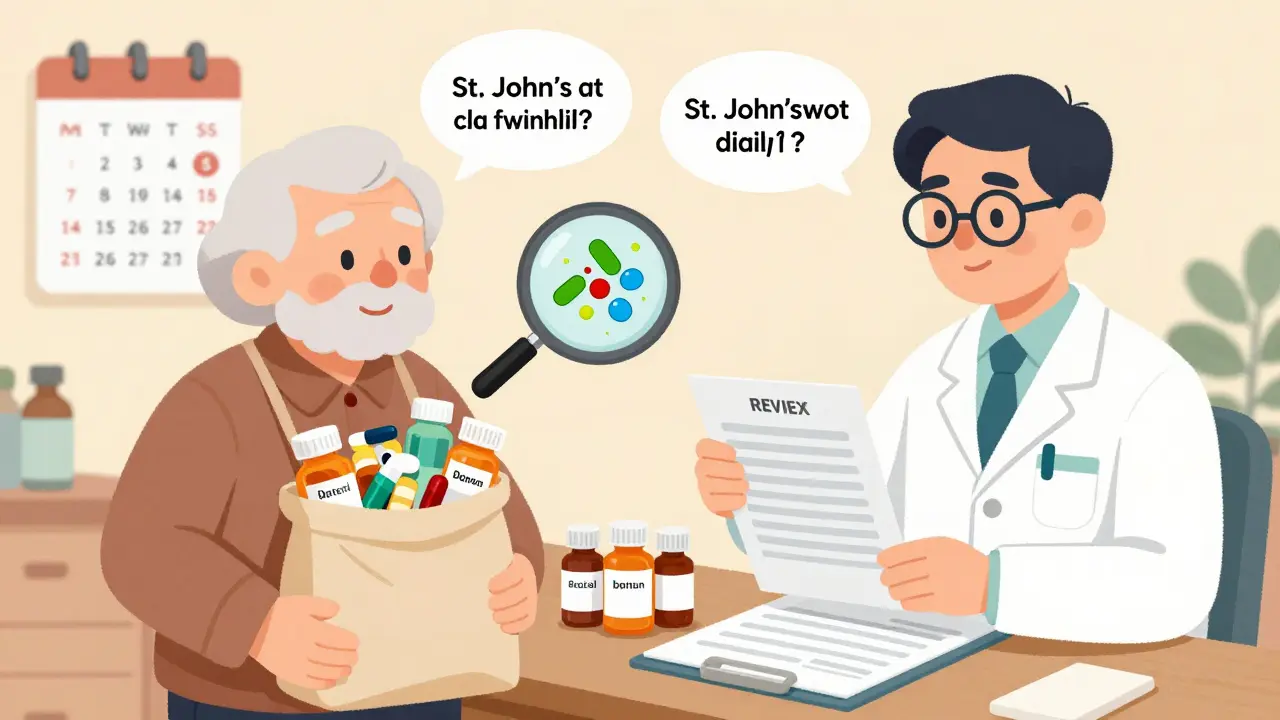
What’s Next? Wearables, Apps, and Real-Time Alerts
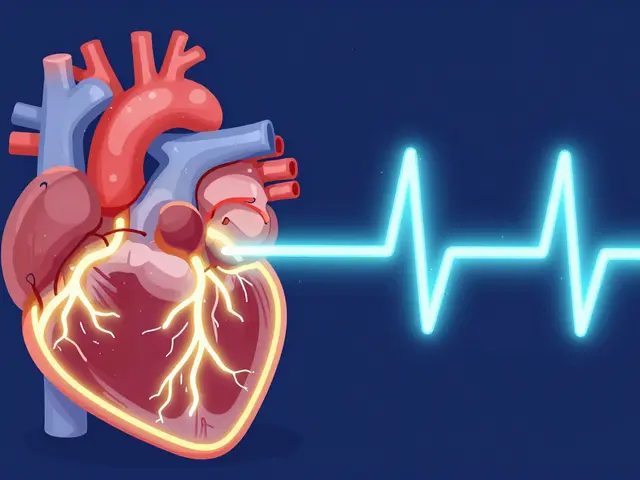
The future isn’t just about lab tests. It’s about continuous monitoring. Wearables like smartwatches can now track heart rhythm changes, sleep disruption, and even subtle drops in activity levels-signs that might signal a drug reaction before you feel sick. Apps like Medisafe and MyTherapy let you log symptoms, set reminders, and share reports with your doctor. Some hospitals are testing systems where your wearable data flows directly into your EHR. If your heart rate spikes every time you take a new beta-blocker, your doctor gets an alert-not months later, but the same day. This isn’t sci-fi. It’s already being tested in Oxford, London, and Boston. The goal? To move from reactive care-waiting for a crisis-to predictive care, where side effects are caught before they become problems.What You Can Do Right Now
You don’t need to wait for the future to protect yourself. Here’s your action plan:- Ask for baseline labs before starting any new medication-especially if it’s long-term.
- Start a symptom log using your phone or a notebook. Track the 5 key details every time.
- Request a medication review every six months. Bring everything you take.
- Know your risk factors-age, kidney/liver disease, multiple meds-then ask: “What side effects should I watch for with this drug?”
- Don’t ignore small changes. A new taste in your mouth, sudden fatigue, or unexplained bruising could be your body’s first signal.

15 Comments

josh plum
Of course the system is broken-do you really think Big Pharma wants you to monitor your own side effects? They make billions off ER visits and lawsuits. They don’t care if you live or die, as long as you keep buying the next pill.

Brendan F. Cochran
why do they even make us do all this? i just wanna take my meds and not be a lab rat. my doc dont even ask me how i feel, just hands me a script and says 'call if u feel weird'. lol.

John Ross
The pharmacovigilance infrastructure remains fundamentally reactive due to structural incentives within the healthcare-industrial complex. Passive surveillance mechanisms like FAERS are statistically underpowered for low-incidence, delayed-onset adverse drug reactions. Proactive, algorithm-driven EHR mining represents a paradigm shift toward prescriptive safety analytics-leveraging natural language processing to extract phenotypic signals from unstructured clinical narratives at scale.

jigisha Patel
This is all common sense, but obviously only for people who actually read the damn medication guide. Most patients are too lazy to even look at the insert. You think a blood test is hard? Try swallowing a pill without googling 'can this kill me' first.

Mandy Kowitz
Wow. So now we’re supposed to be amateur doctors AND data entry clerks? Next they’ll ask us to interpret our own MRIs. Thanks for the extra unpaid labor, healthcare system.

Rory Corrigan
We're all just trying to survive the machine... 🤷♂️ But honestly? If you track your symptoms, you start seeing patterns no algorithm can fake. It's like listening to your body instead of letting the system silence it.

Stephen Craig
Awareness is the first drug.

Connor Hale
I’ve been on 5 meds for 8 years. I don’t track anything. I just know when something’s off. Sometimes the body just tells you. Maybe we don’t need apps. Maybe we need doctors who listen.

Roshan Aryal
You Americans think you invented medicine. In India, we’ve been monitoring side effects since Ayurveda. We don’t need your fancy algorithms-we need your doctors to stop treating pills like candy. Also, your 'simple blood test' costs $400 here. Go cry to your insurance.

Jack Wernet
I appreciate the depth of this post. Many patients feel abandoned after the prescription is written. The emotional weight of managing chronic medication is rarely acknowledged. Thank you for validating that experience.

Charlotte N
I started logging my meds after my mom went into renal failure from NSAIDs... I don’t know if it saved her... but I know I won’t stop... I write down everything... even if it seems dumb... even if the doctor doesn’t ask... I just... I need to...

Catherine HARDY
Did you know the FDA gets paid by pharma companies to approve drugs? And those 'clinical decision support alerts'? They’re turned off 90% of the time because hospitals don’t want the liability. This whole system is a lie. You think your wearable is protecting you? It’s just feeding data to the same corporations that profit when you get sick.

bob bob
This is actually super helpful. I didn’t know about the B12 thing with metformin. I’ve been tired for years and thought it was just aging. Gonna ask my doc next week. Thanks for the real talk.

Vicki Yuan
I’ve been using Medisafe for 6 months. I log everything. My doctor was shocked when I showed her the pattern: my anxiety spiked every time I took my statin after dinner. We switched to morning. Done. No more panic attacks. This isn’t just data-it’s control.

mark etang
As a medical professional with over two decades of clinical experience, I must emphasize that the proactive monitoring protocols outlined herein represent not merely best practices, but ethical imperatives in contemporary pharmacotherapy. The onus of patient safety is not solely borne by the clinician; it is a shared covenant between provider and patient, grounded in informed autonomy and vigilant self-advocacy. To neglect baseline laboratory assessment or symptom documentation is to abdicate one’s responsibility within the therapeutic alliance. The data are unequivocal: early detection reduces morbidity, mitigates hospitalization, and preserves quality of life. Let us not confuse convenience with competence.

Write a comment