SGLT2 Inhibitors and Fournier’s Gangrene: What You Need to Know About Early Signs and Immediate Action
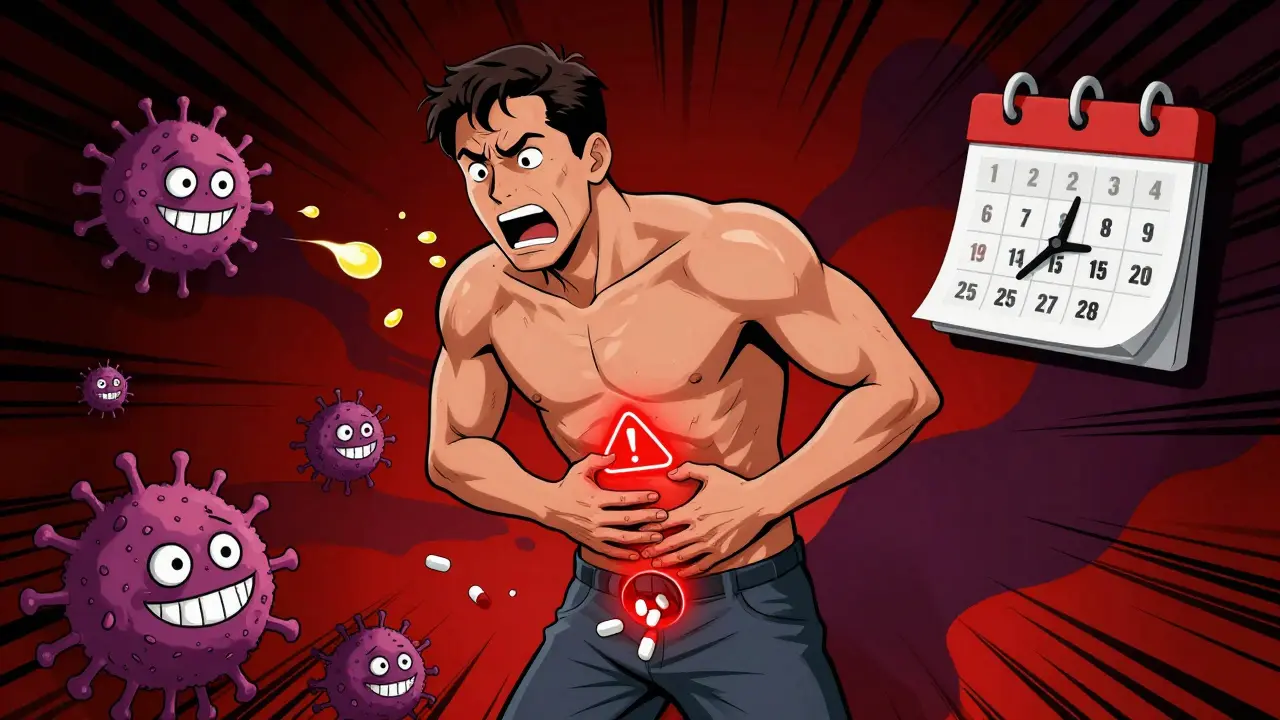
Fournier's Gangrene Symptom Checker
Early Warning Signs
Fournier's gangrene is a rare but life-threatening bacterial infection. This tool helps you identify symptoms that require immediate medical attention.
If you experience any of these symptoms, go to the emergency room immediately.
Select symptoms to see your result
When you're managing type 2 diabetes, taking an SGLT2 inhibitor like canagliflozin, dapagliflozin, or empagliflozin can feel like a win. These drugs help lower blood sugar by making your kidneys flush out excess glucose through urine. But there’s a rare, dangerous side effect few patients hear about until it’s too late: Fournier’s gangrene.
This isn’t just another infection. It’s a fast-moving, life-threatening bacterial invasion that eats through skin, fat, and muscle in the genital and perineal area. And while it’s rare - about 1 in 10,000 men on these drugs - the speed and severity demand immediate recognition. If you’re on an SGLT2 inhibitor, knowing the warning signs could save your life.
What Exactly Is Fournier’s Gangrene?
Fournier’s gangrene is a type of necrotizing fasciitis - a bacterial infection that destroys soft tissue. It starts in the genital or anal region, often from a small cut, abscess, or even a urinary tract infection. In people with diabetes, the immune system is already weakened, making it harder to fight off bacteria. Add in the glucose-rich urine from SGLT2 inhibitors, and you’ve created a perfect breeding ground.
The bacteria involved are usually a mix - E. coli, Staphylococcus, Clostridium, and others. They spread quickly through the fascia, the connective tissue beneath the skin. Within hours, the area becomes swollen, dark, and numb. Gas forms under the skin. Fever spikes. And if you don’t act, the infection can enter your bloodstream, leading to septic shock.
Why Do SGLT2 Inhibitors Increase the Risk?
SGLT2 inhibitors work by blocking glucose reabsorption in the kidneys. That means extra sugar ends up in your urine. For most people, that’s harmless. But for bacteria? It’s a buffet.
Studies show that glucose in urine raises the pH and moisture level around the genitals - ideal conditions for bacterial growth. The sugar also weakens local tissue defenses. Some researchers believe it may even interfere with white blood cell function, though that’s still being studied.
It’s not just the drug itself. Most cases occur in people with poorly controlled diabetes - HbA1c above 9%. So if you’re already fighting high blood sugar, the added sugar in your urine pushes you closer to the edge.
Early Warning Signs You Can’t Ignore
There’s no time for hesitation. Fournier’s gangrene doesn’t wait. Here’s what to watch for:
- Severe, unexplained pain or tenderness in the genitals, scrotum, or around the anus
- Redness, swelling, or warmth that spreads quickly - not just a rash, but a deep, hot inflammation
- Skin discoloration: purplish, gray, or black patches that look dead or blistered
- Fever over 38°C (100.4°F) with no other obvious cause
- Foul-smelling discharge from the genital area
- A feeling of pressure or fullness in the perineum - like something’s bursting inside
These symptoms don’t appear slowly. They escalate over hours. One day, you have mild discomfort. The next, you’re in excruciating pain and can’t sit down. If you’re on an SGLT2 inhibitor and notice any of these, don’t wait. Don’t call your doctor tomorrow. Go to the emergency room now.
What to Do If You Suspect Fournier’s Gangrene
Time is everything. Every hour of delay increases your risk of death by about 9%. Here’s what needs to happen:
- Stop taking your SGLT2 inhibitor immediately. Don’t wait for confirmation. Discontinue it the moment you suspect this infection.
- Go to the ER. Tell them you’re on an SGLT2 inhibitor and suspect Fournier’s gangrene. Use the exact term - it’s rare, and not all ER staff know it.
- Expect urgent imaging. CT scans or ultrasounds will check for gas in the tissue - a key sign of necrotizing infection.
- Prepare for surgery. Debridement - removing dead tissue - is almost always required. Multiple surgeries may be needed.
- Start broad-spectrum antibiotics. IV antibiotics like piperacillin-tazobactam or carbapenems are given immediately, even before cultures come back.
Survival depends on speed. Studies show patients treated within 24 hours have a 70%+ survival rate. Beyond 48 hours, that drops below 30%.

Who’s Most at Risk?
While Fournier’s gangrene is most common in men - especially those over 50 - women are not immune. About one-third of reported cases in Europe were in women. Risk factors include:
- Poorly controlled diabetes (HbA1c >9%)
- History of genital yeast infections or urinary tract infections
- Obesity
- Immunosuppression from steroids, chemotherapy, or autoimmune disease
- Recent genital surgery or trauma
Even if you don’t fit all these criteria, if you’re on an SGLT2 inhibitor and have any of these, talk to your doctor. You might need closer monitoring.
Regulatory Warnings and What They Mean
In 2018, the U.S. FDA added a boxed warning - its strongest safety alert - to all SGLT2 inhibitors. The European Medicines Agency and UK’s MHRA followed. These aren’t just footnotes. They’re red flags.
By May 2018, only 12 cases had been reported since these drugs launched in 2013. Since then, the number has grown. The FDA and EMA continue to track cases through their safety databases. The UK reported 6 cases by early 2019 - 4 in men, 2 in women - across over half a million patient-years of exposure.
The message is clear: this is a class-wide risk. It’s not just one drug. Canagliflozin, dapagliflozin, empagliflozin, and ertugliflozin all carry this warning. No SGLT2 inhibitor is exempt.
Should You Stop Taking Your SGLT2 Inhibitor?
No - unless you have symptoms. For most people, the benefits far outweigh the risks.
SGLT2 inhibitors don’t just lower blood sugar. They reduce the risk of heart failure hospitalization by up to 30%. They slow kidney disease progression. They lower blood pressure and help with weight loss. For people with heart or kidney disease, these drugs are often life-saving.
The American Diabetes Association still recommends them as first-line therapy for many patients. But they stress: education is key.
Your doctor should explain the risk of Fournier’s gangrene at the start of treatment - not as a scary footnote, but as a clear, actionable warning. They should tell you exactly what symptoms to watch for and what to do if they appear.

What Your Doctor Should Be Doing
Good prescribers don’t just hand out scripts. They have a conversation:
- Ask about your history of genital infections
- Check your HbA1c - if it’s above 9%, consider alternatives or tighter control first
- Explain the warning signs in plain language: “If your groin swells up suddenly and hurts like hell, go to the ER - don’t wait.”
- Give you a printed summary of symptoms to take home
- Reassess your risk every 3-6 months if you have other risk factors
If your doctor hasn’t mentioned this, ask. Say: “I’ve heard SGLT2 inhibitors can cause a rare but dangerous infection. Can you explain the signs and what I should do if I notice them?”
What You Can Do Right Now
If you’re on an SGLT2 inhibitor:
- Know the symptoms - write them down and keep them on your phone
- Don’t ignore genital pain, even if it seems minor
- Keep your blood sugar under control - HbA1c below 7% reduces your risk
- Practice good hygiene - change underwear daily, dry thoroughly after showers
- Don’t delay care. If something feels wrong, go to the ER - even if it’s 2 a.m.
There’s no need to panic. This is rare. But when it happens, it’s brutal. Your awareness is your best defense.
What Happens After Recovery?
Survivors often face long recoveries - multiple surgeries, skin grafts, and sometimes permanent changes to genital anatomy. Many can’t take SGLT2 inhibitors again. Doctors usually switch them to GLP-1 agonists like semaglutide or insulin.
Some patients develop chronic pain or sexual dysfunction. Psychological support is often needed. Recovery isn’t just physical - it’s emotional too.
That’s why prevention matters more than ever.

12 Comments

Katherine Carlock
Just read this and my jaw dropped. I’m on dapagliflozin and had no idea about this risk. My doctor never mentioned it - just handed me the script and said ‘it’s great for weight loss.’ I’m scheduling a follow-up tomorrow to ask about alternatives. Seriously, if you’re on one of these, don’t wait - go check your symptoms now.

Sona Chandra
THIS IS WHY AMERICA’S MEDICAL SYSTEM IS A JOKE. Doctors don’t tell you shit until you’re half-dead. My cousin died from this and they told him it was just a ‘bad yeast infection’ for THREE WEEKS. RIP. SGLT2 inhibitors should be BANNED. No more sugar flushing into your privates like some kind of diabetic buffet. #MedicalNegligence

Jennifer Phelps
So if you’re on one of these drugs and you get a weird ache in your groin you just go to the ER immediately right like no questions asked I mean what if it’s just a pimple or something but what if it’s not what if you wait a day and it’s too late

beth cordell
Y’all. I’m on empagliflozin and I just checked my groin. No discoloration. No swelling. Phew. 🥲 But I saved this post. I printed the symptoms. I put it on my fridge next to my insulin. This isn’t fear-mongering - this is survival. If you’re reading this and you’re on an SGLT2 inhibitor, go look right now. Seriously. 🙏

Lauren Warner
Let’s be real - the FDA warning is barely a footnote in the prescribing info. The real issue is pharmaceutical marketing pushing these drugs as miracle weight-loss pills while burying the necrotizing fasciitis risk in page 47 of the 100-page insert. This isn’t negligence. It’s profit-driven silence. And patients are paying with their genitals and lives.

Craig Wright
While the risk is statistically negligible, the clinical implications are profound. In the UK, the MHRA has documented only six cases across 500,000 patient-years - a rate of 0.0012%. To frame this as a common danger is misleading. Patients must be informed, but not panicked. Rational discourse must prevail over sensationalism.

Lelia Battle
It’s interesting how we treat medical risk as a binary - either you’re safe or you’re doomed. But the real story here is about vulnerability. Diabetes already makes you fragile. The body’s defenses are strained. Adding glucose to urine isn’t just a chemical change - it’s an ecological shift. We’re not just treating blood sugar. We’re altering the terrain of the body. And sometimes, the terrain turns against you.

Rinky Tandon
As a clinical pharmacologist, I must emphasize that the pathophysiological cascade involves hyperglycemic microenvironment-induced neutrophil dysfunction, biofilm formation via glucose-mediated adhesion molecules, and synergistic polymicrobial invasion facilitated by impaired local immune surveillance. The risk is not merely statistical - it’s mechanistically inevitable in high HbA1c cohorts. Avoid SGLT2i if HbA1c >8.5% and/or history of recurrent GU infections.

Ben Kono
I’ve been on canagliflozin for two years and never had an issue but my wife says I smell weird after showers now so maybe I should check it out

Cassie Widders
My dad had this. Took him three months to walk again. Lost part of his scrotum. Didn’t talk about it for a year. I just keep this article open on my phone. If he ever says ‘it’s just a little sore’ - I’m calling 999.

Konika Choudhury
Why do Americans always make everything a crisis I mean one in ten thousand is nothing if you are scared of your own urine then maybe you should not be on diabetes medicine at all

Darryl Perry
Stop taking the drug if you have symptoms. Go to ER. Get surgery. Done. No need for overanalysis. This isn’t a debate. It’s a medical emergency. Period.
Recent Posts
-

Citalopram vs Escitalopram: Managing QT Prolongation and Dose Limits
-
How to Safely Buy Phenytoin Online: A Complete Buyer's Guide
-

Anticholinergic Medications: Cognitive Risks and Managing Dry Mouth
-
How to Get Prescription Assistance Programs from Manufacturers
-
Diphenhydramine Overdose: Recognizing Antihistamine Toxicity and Emergency Care

Write a comment