Calcium, Iron, and Mineral Interactions with Medications: What You Need to Know
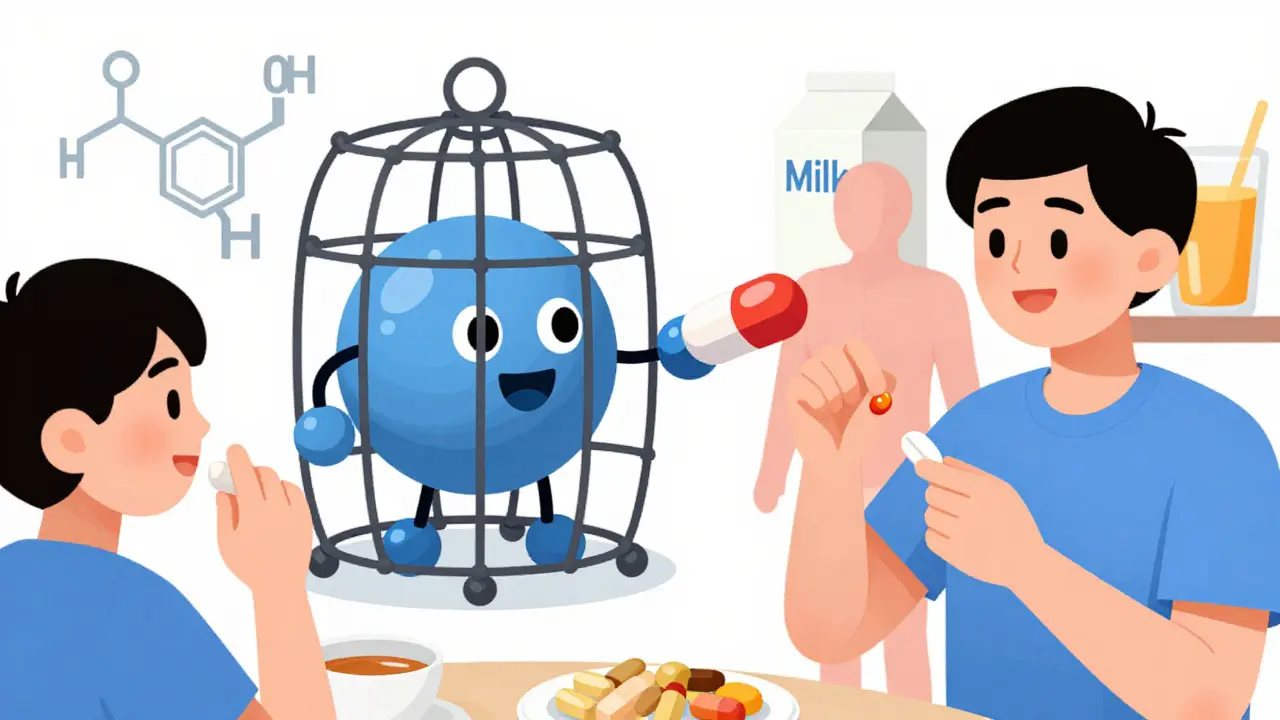
Most people don’t think twice about popping a calcium pill with breakfast or taking an iron supplement for fatigue. But what if that same pill is quietly making your antibiotic, thyroid medicine, or heartburn drug less effective? These aren’t rare edge cases - they’re everyday risks for millions of people taking common supplements alongside prescription meds.
How Calcium Blocks Antibiotics
Calcium doesn’t just build bones. It also binds tightly to certain antibiotics, forming a chemical cage that stops your body from absorbing them. This isn’t a theory - it’s a measurable drop in drug levels. Studies show calcium carbonate can cut the absorption of ciprofloxacin, a common fluoroquinolone antibiotic, by up to 40%. That’s not a small hit. It’s enough to let an infection grow unchecked.Same thing happens with tetracycline and doxycycline. These drugs need to be absorbed in the upper gut, but calcium from dairy, supplements, or even fortified orange juice grabs onto them like a magnet. The result? You take the pill, your body doesn’t get the drug, and the infection doesn’t clear. You might even end up with a stronger, resistant strain because the dose was too low to kill all the bacteria.
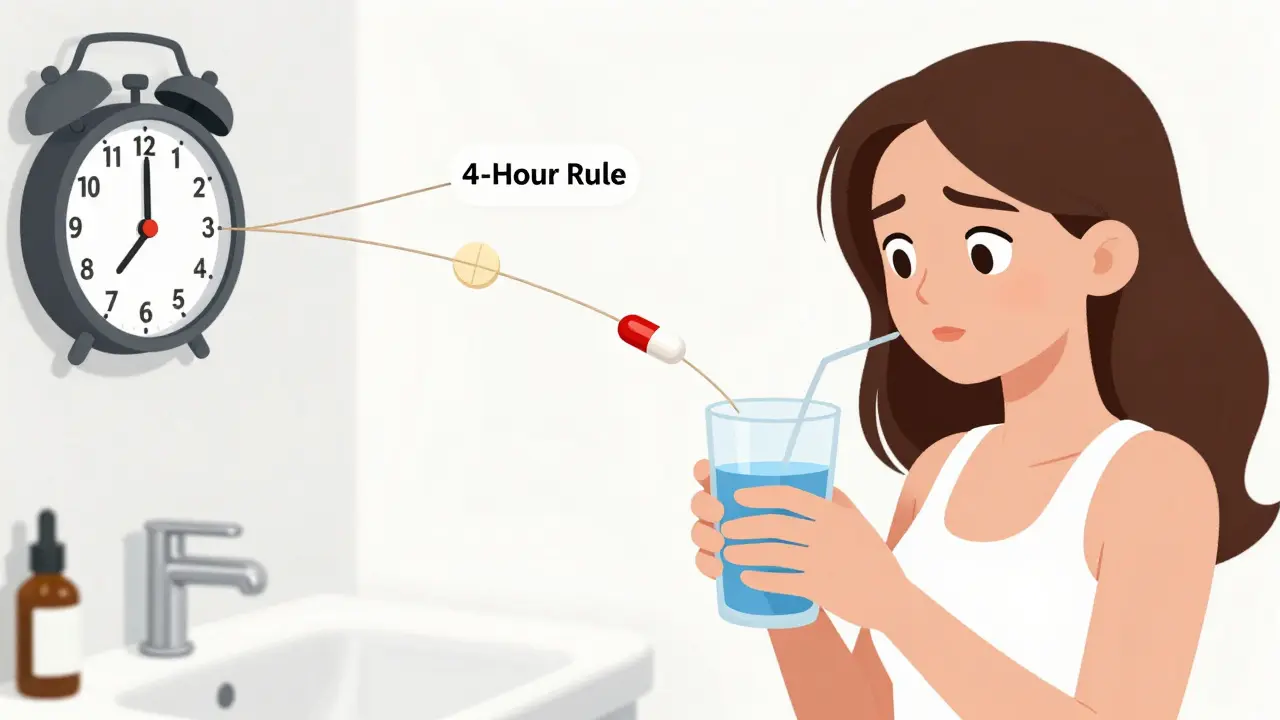
The fix? Don’t take calcium supplements - or milk, yogurt, or calcium-fortified foods - within two hours before or after these antibiotics. For safety, many pharmacists recommend waiting four hours. That’s a long time to go without dairy, but it’s the difference between healing and relapsing.
Iron and Antibiotics: A Similar Battle
Iron supplements - often prescribed for anemia - have the same problem. Ferrous fumarate, ferrous sulfate, and other forms of iron bind to tetracyclines and fluoroquinolones just like calcium does. If you take your iron pill and your doxycycline at the same time, you’re essentially canceling out both drugs. The iron won’t get absorbed, and the antibiotic won’t work.Doctors and pharmacists usually recommend spacing iron and antibiotics by at least two hours. Some experts suggest four hours if you’re on a critical course of treatment. It’s not just about timing - it’s about knowing which meds are involved. If you’re on doxycycline for acne or ciprofloxacin for a UTI, and you’re also taking iron for low energy, you need a clear plan.
Thyroid Meds and Calcium: The Silent Saboteur
Levothyroxine, the most common thyroid hormone replacement, is one of the most sensitive drugs to mineral interference. Calcium - even from a single 500 mg tablet - can reduce how much of the hormone your body absorbs by up to 30%. That might not sound like much, but for someone who’s carefully tuned their dose to fix fatigue, weight gain, or brain fog, that drop can throw everything off.Research from the South Medical Journal showed that taking calcium within four hours of levothyroxine significantly lowers thyroid hormone levels in the blood. Patients who didn’t space their doses ended up needing higher doses of levothyroxine just to compensate for the interference. That’s not a fix - it’s a bandage on a leak.
The standard advice? Take levothyroxine on an empty stomach, first thing in the morning, with water only. Wait at least four hours before taking any calcium supplement. Same goes for iron. Don’t take your iron pill at breakfast with your thyroid med. Wait until lunch or later.
Heartburn Meds and Iron: A pH Problem
Iron needs acid to be absorbed. Your stomach makes hydrochloric acid to break down minerals and pull them into your bloodstream. But if you’re on a proton pump inhibitor (PPI) like omeprazole or pantoprazole - or even an H2 blocker like famotidine - your stomach acid is turned way down. That means your iron supplement becomes almost useless.People on long-term heartburn meds often find their anemia doesn’t improve, even with daily iron pills. The problem isn’t the dose - it’s the environment. The iron is sitting there, unchanged, because there’s not enough acid to unlock it.
Here’s what works: Take your iron supplement at least two hours before your heartburn medication. That gives your stomach time to produce acid before the PPI shuts it down. If you’re taking antacids like Tums (which also contain calcium), the same rule applies - space them out. Some patients find that taking iron with a glass of orange juice helps, because the vitamin C boosts absorption. But milk? Avoid it. The calcium in milk blocks iron just like it blocks antibiotics.
Why This Isn’t Just a ‘Take With Food’ Issue
Many people think, “I’ll just take my supplement with food.” That’s often the wrong move. Calcium and iron don’t just interfere with meds - they interfere with each other. If you take iron with a calcium-rich meal, you’re canceling out the iron. If you take calcium with your thyroid med, you’re sabotaging your hormone levels.It’s not about digestion. It’s about chemistry. These minerals form insoluble complexes with drugs - they lock together and pass right through your body without being absorbed. No matter how much you eat or drink, if the timing’s wrong, the drug won’t work.
Who’s Most at Risk?
You’re more likely to run into these problems if:- You’re a woman over 50 taking calcium for bone health (67% of women in the U.S. do)
- You’re on thyroid medication and also take a multivitamin with iron or calcium
- You’re a teen or young adult on doxycycline for acne and also take iron for low iron levels
- You’re on long-term heartburn meds and were recently diagnosed with anemia
- You’re a parent giving iron drops to a child with anemia while they’re on antibiotics
These aren’t edge cases. They’re common. And they’re often missed because patients don’t think to mention their supplements to their doctor. A 2004 study in U.S. Pharmacist found that most people don’t volunteer this info - even when asked.
What to Do: A Simple Action Plan
Here’s how to protect yourself:- Write down every supplement you take. Include calcium, iron, magnesium, zinc, and even multivitamins.
- Write down every prescription you take. Especially antibiotics, thyroid meds, and heartburn drugs.
- Check for interactions. If you’re on tetracycline, doxycycline, ciprofloxacin, or levothyroxine, assume there’s a conflict unless proven otherwise.
- Space them out. For calcium and antibiotics: wait 4 hours. For iron and antibiotics: 2-4 hours. For calcium and levothyroxine: 4 hours. For iron and PPIs: take iron 2 hours before the heartburn med.
- Use orange juice, not milk. Vitamin C helps iron absorb. Calcium blocks it.
- Talk to your pharmacist. They’re trained to spot these conflicts. Don’t wait for your doctor to ask.
What’s Changing Now?
The FDA now requires interaction warnings on supplement labels and prescription bottles. Pharmacies are starting to flag potential clashes when you fill your script. The NHS updated its guidance in 2023 to stress personalized timing - because one-size-fits-all doesn’t work when someone’s on five different meds.Some companies are developing new forms of iron and calcium that are less likely to bind to drugs, but those aren’t widely available yet. For now, timing is still your best tool.
As more people live longer and take more meds, these interactions will become even more common. The key isn’t to stop taking supplements. It’s to take them right - at the right time, with the right foods, and with full awareness of what else you’re swallowing.
Can I take calcium and iron together?
No. Calcium and iron compete for absorption in the gut. Taking them together reduces how much of each your body can use. Space them at least 2-4 hours apart. If you’re taking both for health reasons, take one in the morning and the other at night.
Does milk interfere with iron supplements?
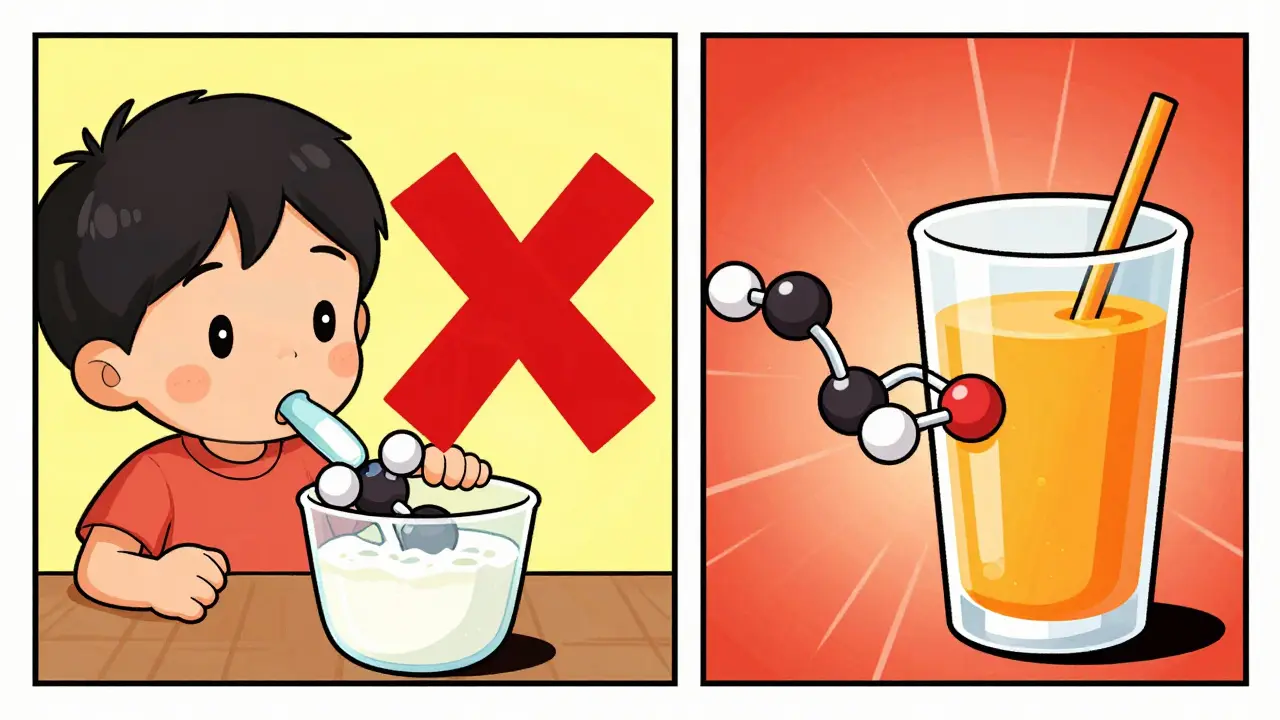
Yes. Milk contains calcium, which binds to iron and blocks its absorption. Even a glass of milk with your iron pill can cut absorption by up to 50%. Use orange juice or water instead. The vitamin C in orange juice helps your body absorb iron better.
How long should I wait after taking levothyroxine before taking calcium?
Wait at least four hours. Studies show calcium can reduce levothyroxine absorption significantly if taken within that window. Take your thyroid pill first thing in the morning on an empty stomach, then wait until lunch or later to take your calcium supplement.
Can I take iron with my heartburn medicine?
Not at the same time. Heartburn meds like omeprazole reduce stomach acid, which iron needs to be absorbed. Take your iron at least two hours before your heartburn pill. If you need heartburn relief later, wait until after your iron has had time to absorb.
What if I forget and take my calcium with my antibiotic?
Don’t panic, but don’t repeat it. One accidental dose won’t ruin your treatment - but doing it regularly can lead to treatment failure. If this happens, take your next antibiotic dose as scheduled, but space it correctly from now on. Talk to your pharmacist about how to avoid it in the future.
Are there any supplements that don’t interfere with medications?
Some forms of minerals are less likely to interact, like chelated iron or calcium citrate, but they’re not risk-free. Even these can interfere with certain drugs. The safest approach is always to space them out and check with your pharmacist before combining any supplement with a prescription.
Next Steps
If you’re on any of these medications - antibiotics, thyroid meds, or heartburn drugs - and you take calcium or iron, review your routine today. Write down your doses and times. Ask your pharmacist to check for interactions. Don’t assume your doctor knows you’re taking supplements. Most don’t ask. And if you’re a parent giving iron to a child on antibiotics, make sure you’re not mixing it with milk or yogurt. Use orange juice instead.This isn’t about fear. It’s about control. You can still take your supplements. You just need to take them right.

10 Comments

Aliyu Sani
Man, I never realized calcium was basically a drug saboteur. I take my iron at breakfast with yogurt and wonder why I'm still tired. This is wild. It's not just about nutrition-it's biochemistry warfare in my gut. I feel like my body's a battlefield and I'm the dumb general giving conflicting orders. Time to reorganize my whole damn routine.

Sam Black
Just read this while sipping my oat milk latte-*pauses*-wait, oat milk’s fortified with calcium? Oh no. I’ve been taking my doxycycline with breakfast for months. My acne’s been stubborn as hell. No wonder. Time to switch to black coffee and orange juice. Thanks for the wake-up call. 🙏

Jeremy Hendriks
Look, we’ve been lied to. The pharmaceutical-industrial complex doesn’t want you to know that minerals are the real villains here. They profit off your failed antibiotics, your escalating thyroid doses, your endless prescriptions. This isn’t science-it’s a monetized distraction. You think your doctor cares? They’re paid to prescribe, not to teach you chemistry. You’re on your own now. Wake up.

Gabriella da Silva Mendes
Okay but like… why is this even a thing?? 🤦♀️ I take my levothyroxine at 6am, then my multivitamin at 7am. That’s 1 hour. I thought that was fine. I’ve been feeling like a zombie since 2022. Is it the calcium?? Am I just… broken?? I need a nap AND a pharmacist. 😭

Kiranjit Kaur
This is life-changing. I’m from India where we drink milk with everything-even with medicine. My mom gave me iron with milk when I was anemic. No wonder I never got better. Now I take iron with lemon water at lunch and calcium at night. I have more energy than ever. 🌞✨ Thank you for this. We need more posts like this.

Sai Keerthan Reddy Proddatoori
They don't want you to know this. Big Pharma and Big Dairy are in cahoots. They profit when you're sick. They add calcium to everything-juice, bread, even plant milk. They want you dependent. Your thyroid meds? They're designed to fail unless you pay for more. This is control. Don't trust the system. Go raw. Skip supplements. Eat real food. Only then are you free.

Kathryn Weymouth
Just confirmed this with my endocrinologist yesterday. My TSH was fluctuating wildly until I stopped taking my calcium supplement within 4 hours of levothyroxine. The difference was night and day-no more brain fog, no more afternoon crashes. This isn’t anecdotal. It’s evidence-based. If you’re on thyroid meds, treat this like a protocol, not a suggestion.

Nader Bsyouni
Timing? Interactions? Please. You’re all overthinking it. The body knows how to handle nutrients and drugs. If your meds aren’t working, maybe you’re just not sick enough-or your doctor’s incompetent. Stop micromanaging your gut. Life’s too short to calculate absorption windows. Just take the pill. The universe will sort it out.

Julie Chavassieux
I took my calcium with my cipro and now I have a UTI again. And my thyroid feels like it’s on vacation. And my doctor just shrugged. And my pharmacist said ‘maybe try spacing it out’ like I’m a child. I’m so mad. I’ve been doing this for YEARS. I just wanted to be healthy. Why is everything so complicated?? 😭

Herman Rousseau
Been a pharmacist for 18 years. This is the #1 thing patients mess up. They think ‘I took my pill’ = ‘it worked.’ Nope. Timing is everything. I had a 72-year-old woman on levothyroxine and calcium who was taking both at breakfast-her TSH was 12. We spaced it out, she got her dose lowered, now she’s hiking every weekend. It’s not magic. It’s chemistry. Do the math. Your body will thank you. 💪
Recent Posts
-
Diphenhydramine Overdose: Recognizing Antihistamine Toxicity and Emergency Care
-
How to Safely Buy Phenytoin Online: A Complete Buyer's Guide
-

Citalopram vs Escitalopram: Managing QT Prolongation and Dose Limits
-

How to Get Prescription Assistance Programs from Manufacturers
-
Anticholinergic Medications: Cognitive Risks and Managing Dry Mouth

Write a comment