Common Pharmacist Concerns About Generic Substitution: What Really Happens Behind the Counter
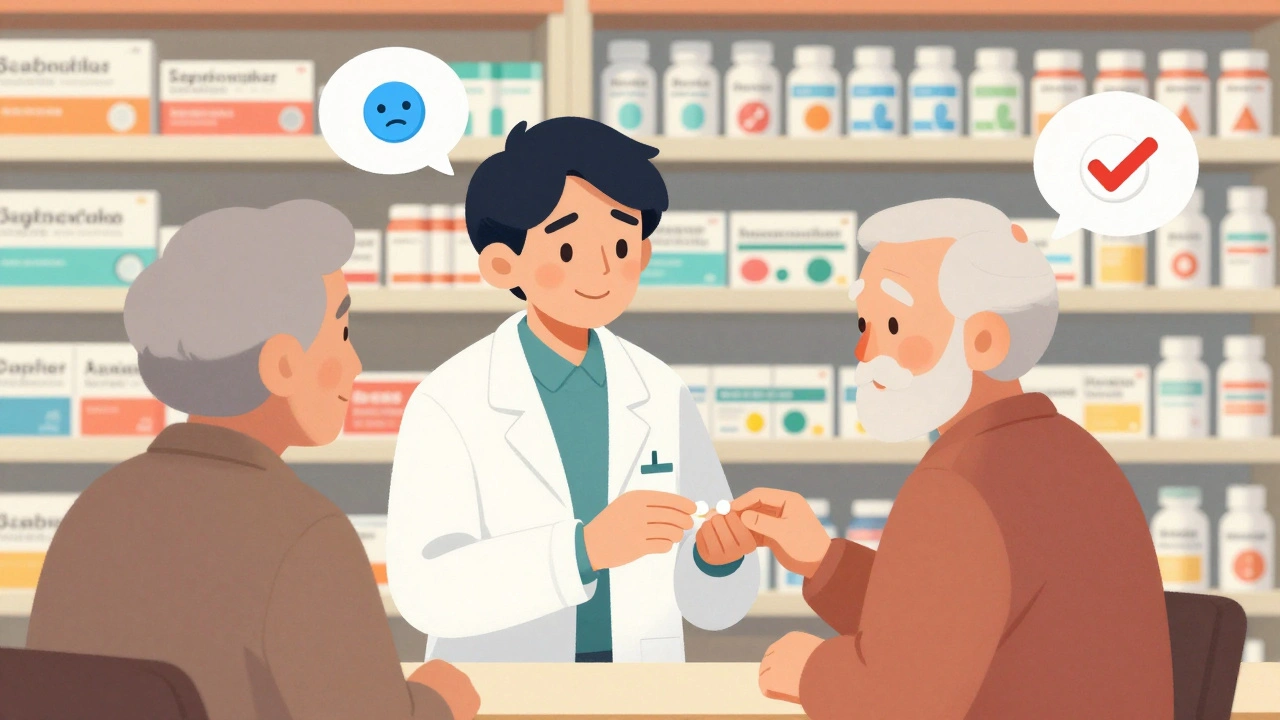
Every day, pharmacists face a quiet but persistent challenge: convincing patients that a small, white pill with a different name is just as safe and effective as the brand-name drug their doctor prescribed. It’s not about profit. It’s not about convenience. It’s about trust - and the system is stacked against them.
Why Pharmacists Keep Pushing for Generics
Generic drugs aren’t cheap knockoffs. They’re FDA-approved copies of brand-name medications, required to have the same active ingredient, strength, dosage form, and route of administration. The FDA says they’re bioequivalent - meaning they deliver the same amount of medicine into your bloodstream within a 3.5% average difference compared to the brand. That’s less variation than you’d see between two batches of the same brand-name drug. The goal? Cut costs. Generic substitution saves patients about 21% on their medication bills, on average. In a system where out-of-pocket drug costs push people to skip doses or split pills, that matters. Pharmacists know this. They recommend generics for 96% of eligible prescriptions. But here’s the catch: most patients don’t ask for them. And many don’t even know they have a choice.The Patient Who Doesn’t Believe It
The biggest hurdle isn’t the law or the science. It’s the patient sitting across the counter. “I’ve had people cry because they think I’m giving them something fake,” says one pharmacist in Ohio. “They say, ‘My doctor prescribed me the blue pill. This is white. It’s not the same.’” Patients notice the differences - shape, color, size, even the imprint. They see a lower price and assume lower quality. Some believe generics are made in foreign factories with shoddy standards. Others remember a bad experience - maybe they switched to a generic and felt off for a few days. They don’t know that minor side effects can come from changes in inactive ingredients, not the active drug. A study found that one-third of patients report negative experiences after switching. That’s not because the drug doesn’t work. It’s because they weren’t prepared. No one explained why the pill looked different. No one told them the change was normal. This is especially true for older adults, people with chronic illnesses, or those on multiple medications. For someone managing diabetes, heart disease, and depression, switching pills can feel like a gamble. And when they’re already anxious about their health, uncertainty feels dangerous.The Prescriber Who Doesn’t Talk About It
Doctors don’t always help. In fact, 64% of patients say their doctor never mentioned generics at all. That puts the entire burden of education on the pharmacist - often during a 90-second interaction while the line grows behind them. Pharmacists aren’t trained to be counselors, but they’re forced into the role. They have to explain bioequivalence, FDA standards, and why a $4 generic is just as good as a $40 brand. They have to answer questions about manufacturing, patent expiration, and why the same drug comes in different colors. And when patients panic? Many ask to speak with their doctor. Half of patients in Australia requested this before accepting a substitution. That means extra phone calls, delays, and frustration. For the pharmacist, it’s not just a transaction - it’s a disruption in an already packed day.
The Dangerous Gray Areas
Not all drugs are created equal when it comes to substitution. Narrow therapeutic index (NTI) drugs - like warfarin, levothyroxine, and some anti-seizure medications - have a tiny margin between a therapeutic dose and a toxic one. Even small changes in absorption can matter. While the FDA says generics are safe, many pharmacists still hesitate. They’ve seen cases where a switch led to unstable INR levels or breakthrough seizures. That’s not common. But it’s enough to make them pause. Biosimilars - the newer, more complex cousins of generics used for biologic drugs like Humira or Enbrel - add another layer. These aren’t simple chemical copies. They’re made from living cells. Small variations can affect how they work. Pharmacists need extra training to understand them. And many patients don’t even know the difference between a generic and a biosimilar. State laws vary, too. Some require written consent for NTI substitutions. Others don’t. Pharmacists have to know their state’s rules, their pharmacy’s policy, and their own comfort level. It’s a legal and ethical tightrope.The Communication Gap
Here’s the sad truth: only 38.5% of patients are told they can refuse a generic substitution. That’s not just a missed opportunity - it’s a violation of patient autonomy. Most pharmacists want to do better. They know that a simple 30-second conversation - “This is a generic version of your drug. It’s the same medicine, just cheaper. You can choose to stick with the brand if you prefer.” - can boost acceptance by 40%. But time is the enemy. The average counseling session lasts less than two minutes. Pharmacists are juggling refill requests, insurance denials, and drug interactions. They can’t sit down with every patient for a full explanation. Some pharmacies try to help with printed materials or digital kiosks. But brochures don’t build trust. A calm voice, eye contact, and honesty do.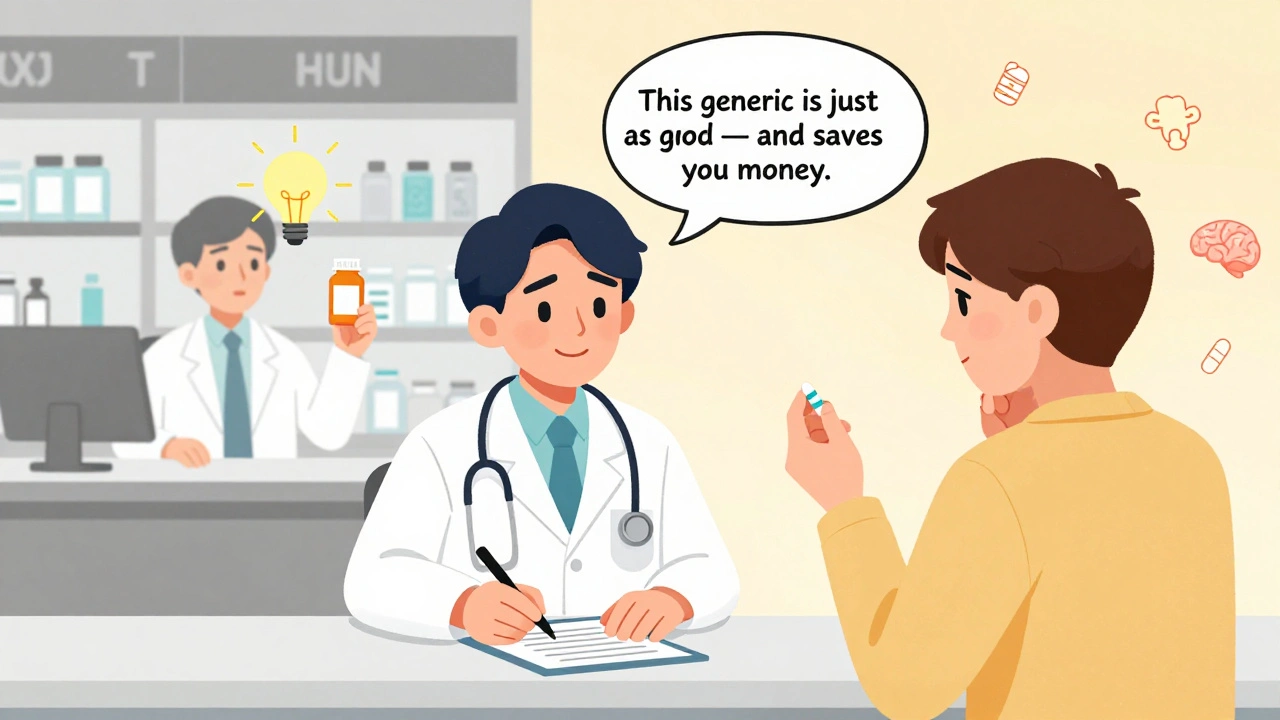
What Needs to Change
The solution isn’t more rules. It’s better communication - and shared responsibility. Doctors need to start the conversation. If a prescriber says, “I’m prescribing this generic because it’s just as good and saves you money,” patients are far more likely to accept it. That simple phrase removes fear. Pharmacists need more time. Not just to counsel, but to document concerns, track outcomes, and flag problematic switches. If a patient has a bad reaction after a substitution, that data should be recorded and shared with the prescriber. Right now, it rarely is. Regulators need to clarify guidance on NTI drugs and biosimilars. Pharmacists shouldn’t have to guess whether a substitution is safe. Clear, evidence-based protocols would reduce anxiety and improve consistency. And patients? They need facts, not fear. The FDA’s 3.5% absorption difference? That’s not a flaw - it’s a standard. The same drug from the same manufacturer can vary more than that between batches. The system works. But it only works if everyone understands it.It’s Not About the Pill. It’s About the Person.
At the end of the day, generic substitution isn’t a technical issue. It’s a human one. A patient isn’t just rejecting a drug. They’re rejecting uncertainty. They’re afraid of change. They’re worried their health is being compromised for savings. Pharmacists know this. That’s why they keep pushing - not because they’re forced to, but because they’ve seen the cost of inaction. Patients skipping insulin because they can’t afford it. Elderly people splitting pills to stretch their supply. Families choosing between medicine and groceries. Generics save lives. But only if people take them. The pharmacist’s job isn’t to sell a cheaper pill. It’s to make sure the right pill gets into the right hands - with understanding, dignity, and trust.
12 Comments

Saketh Sai Rachapudi
Why do we even allow this? In India, we know fake medicine kills people. These generics? Made in some Chinese factory with rats running through the labs. FDA? Ha! They take bribes. My uncle took a generic for blood pressure and ended up in ICU. This isn't science-it's corporate greed disguised as savings.

Nigel ntini
Really appreciate this breakdown. Pharmacists are the unsung heroes of healthcare-juggling insurance headaches, patient panic, and legal gray zones all before lunch. The 30-second conversation tip? Gold. If every prescriber started with, 'This is the same medicine, just cheaper,' we’d see a 70% drop in refusal rates. Let’s train doctors to lead this conversation, not dump it on the pharmacist at 4:57 PM.

Kay Jolie
Oh my god, the biosimilar confusion is REAL. I had a friend on Humira who got switched without explanation-she thought she was getting a 'discount biologic' and started having panic attacks. Like, honey, no. Biosimilars aren't generics. They're like the cousin who went to med school but still isn't your identical twin. The FDA’s language is so dry, it’s criminal. We need a public service announcement narrated by a soothing voice and animated by Pixar. Please. Someone. Do this.

Max Manoles
I’ve worked in a pharmacy for 12 years. The most heartbreaking moment? When a diabetic patient refused insulin because the generic looked 'too small.' She’d been on the brand for 15 years. We had to call her doctor three times. She cried. We cried. She took it. She’s fine now. But no one asked her why she was scared. No one explained that the pill’s color change was due to a new binder, not a new drug. We need more time. Not more rules. More time.

Myles White
Let’s not pretend this is just about cost. The real issue is that the healthcare system has turned medication into a transaction instead of a therapeutic relationship. When patients see a different-colored pill, they’re not just seeing a different chemical formulation-they’re seeing a system that’s indifferent to their anxiety, their history, their fear of losing control over their own body. Generics aren’t the problem. The lack of continuity, the rushed interactions, the absence of narrative-those are the problems. We need pharmacists to be medical storytellers, not just pill dispensers. And we need prescribers to hand off that story, not dump the burden on someone who’s already running on fumes.

Brooke Evers
I’m a nurse and I’ve watched my mom go through this with her thyroid meds. She switched to generic levothyroxine and felt like a zombie for two weeks. We thought it was the drug-turns out, it was the filler. Different brand, different binders, different absorption curve. Her doctor didn’t know either. We had to go back and forth for a month. The worst part? No one told her this could happen. No one warned her that even tiny changes in inactive ingredients can affect how your body processes the medicine. We need a standardized patient handout-simple, visual, no jargon. Maybe even a QR code that links to a 90-second video from a real pharmacist. That’s the kind of support people need.

joanne humphreys
It’s interesting how much emotional weight people attach to pill color. I once saw a woman refuse a generic because it was oval instead of round. She said, 'My body knows the shape.' At first I thought it was irrational-but then I realized: for someone with chronic illness, routine is safety. The pill shape is part of their identity. Changing it feels like losing control. Maybe we need to let patients choose their pill’s appearance if possible-like a flavor option. It’s not about science. It’s about psychological continuity.

Mansi Bansal
It is with profound regret and a sense of moral disquietude that I observe the commodification of human health under the guise of fiscal prudence. The pharmacists, those noble custodians of pharmaceutical integrity, are being systematically undermined by a mechanistic, profit-driven apparatus that prioritizes balance sheets over biological sovereignty. The FDA’s 3.5% bioequivalence threshold? A mathematical illusion. A statistical sleight-of-hand. One must ask: who benefits? The patient? Or the conglomerate that owns both the brand and the generic? The answer, my dear interlocutors, is self-evident. This is not healthcare. It is pharmaceutical colonialism.

Shayne Smith
My grandma takes 8 meds. She switches generics every time. She never asks. She just swallows them. One day she said, 'This one tastes funny.' I looked it up-different coating. She didn’t care. She just wanted the pain to stop. Maybe we’re overthinking this. Not everyone needs a lecture. Some people just need the pill to work.

Clare Fox
i think the real issue isnt the pill… its that we’ve been taught to trust big pharma more than our own bodies. if you grow up thinking your medicine is magic and only the blue pill is real… then a white one feels like betrayal. maybe we need to stop selling pills as perfect and start teaching people that healing is messy, and sometimes the same drug just looks different. also… typo on purpose. feels right.

Akash Takyar
It is imperative that we recognize the dignity inherent in every patient’s right to informed consent. The pharmacist’s role, as a guardian of therapeutic integrity, must be elevated-not diminished-by systemic constraints. It is not sufficient to rely on brochures or digital kiosks. Human connection, characterized by patience, clarity, and unwavering compassion, remains irreplaceable. Let us advocate for legislative reform that mandates adequate counseling time, and let us honor the unsung professionals who, against all odds, continue to serve with quiet excellence.

Arjun Deva
They say generics are 'the same'... but why do the brand-name pills always have the same logo? Why do the generics never have it? And why do all the big pharma CEOs drive Ferraris while pharmacists get paid minimum wage? Coincidence? I think not. The FDA is a puppet. The '3.5%'? A lie. They’re using generics to test new poisons on poor people. And the ones who get sick? They're just 'statistical noise.' I’ve seen it. I’ve read the documents. They’re not saving lives. They’re running a trial.
Recent Posts
-
How to Get Prescription Assistance Programs from Manufacturers
-

Citalopram vs Escitalopram: Managing QT Prolongation and Dose Limits
-
Diphenhydramine Overdose: Recognizing Antihistamine Toxicity and Emergency Care
-

Managing Dry Mouth from Medications: Causes, Risks, and Relief
-

Triple-Negative Breast Cancer Treatment: New Strategies and Clinical Trials

Write a comment