CPAP Troubleshooting: Fix Dry Mouth, Mask Leaks, and Pressure Issues
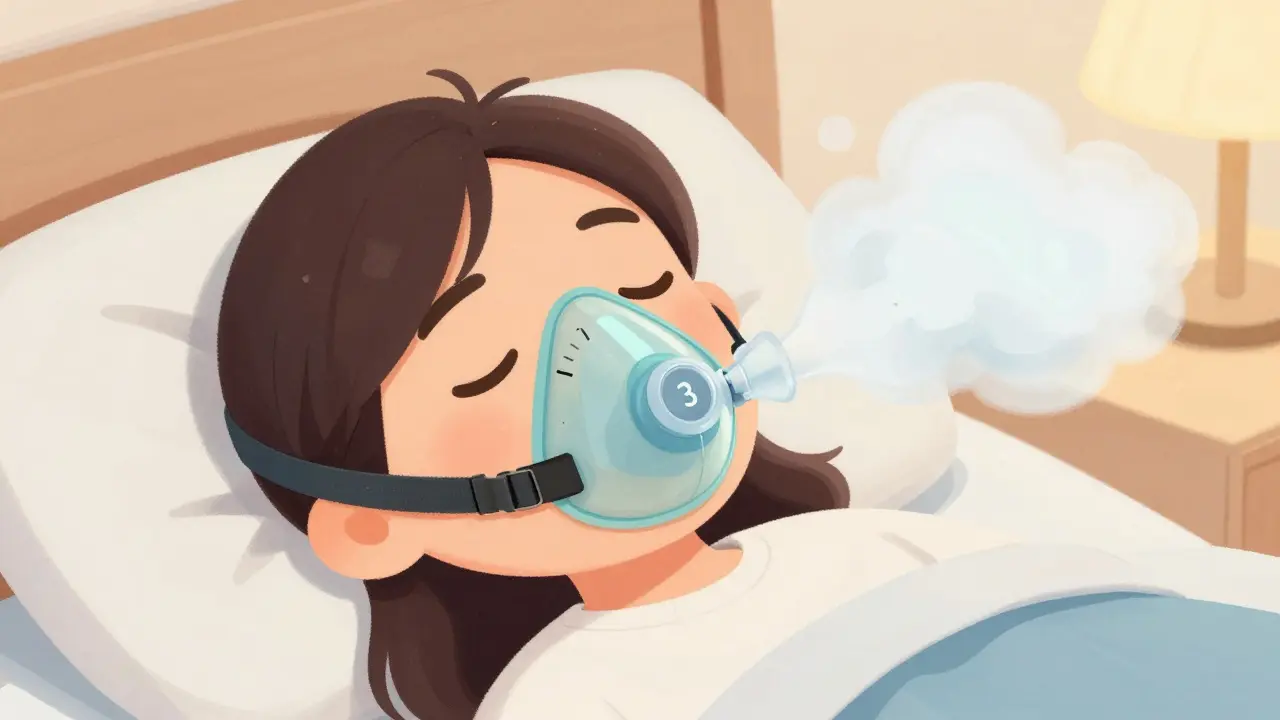
When you first start using a CPAP machine, it’s supposed to help you breathe better at night. But for many people, it ends up causing more problems than it solves. Dry mouth. Air leaking out of your mask. Pressure that feels too high or too low. These aren’t just annoyances-they can make you quit therapy altogether. And if you stop using your CPAP, your sleep apnea comes back, and with it, the fatigue, the snoring, the high blood pressure, the risk of heart problems. The good news? Most of these issues have simple, proven fixes. You don’t need to buy a new machine or give up. You just need to know where to look.
Dry Mouth: It’s Not the Humidifier’s Fault
You turn on your CPAP, and by morning, your mouth is so dry it feels like you’ve been chewing sandpaper. You assume the humidifier isn’t working right. So you crank it up to max. Still dry. That’s because dry mouth from CPAP isn’t usually caused by dry air-it’s caused by mouth breathing. When your mouth opens during sleep, the pressurized air escapes through it instead of staying in your airway. That airflow dries out your mucous membranes. Studies show 42% of CPAP users deal with this, and nearly two-thirds of them are mouth breathers.
Here’s what actually works: First, check if you’re breathing through your mouth. Do you wake up with your lips parted? Does your mask have a wet spot on the chin? If yes, you’re a mouth breather. The fix isn’t more humidity-it’s keeping your mouth closed. A chin strap is the cheapest and most effective solution. Used by 38% of mouth breathers, it gently holds your jaw in place without being uncomfortable. Some users switch to a full-face mask, which covers both nose and mouth. One Reddit user reported his dry mouth vanished within three nights after switching. He didn’t change his humidifier. He just stopped breathing through his mouth.
If you still want to tweak the humidifier, set it to level 3 or 4 on a 0-6 scale. Too high (level 5 or 6) can cause condensation in the tubing-known as rainout-which makes the machine louder and can leak water onto your face. Heated tubing helps too. Philips’ 2022 trial showed it reduces dry mouth by 32%. But again, if you’re breathing through your mouth, no amount of heat will fix it.
Mask Leaks: The Silent Therapy Killer
Leaking air doesn’t just wake you up with a hissing sound. It also means your therapy isn’t working. Dr. David White from Harvard says leaks over 24 L/min seriously reduce effectiveness. You might think your mask is sealed because it doesn’t fall off. But leaks can be tiny-just enough to drop your pressure and let apneas sneak back in.
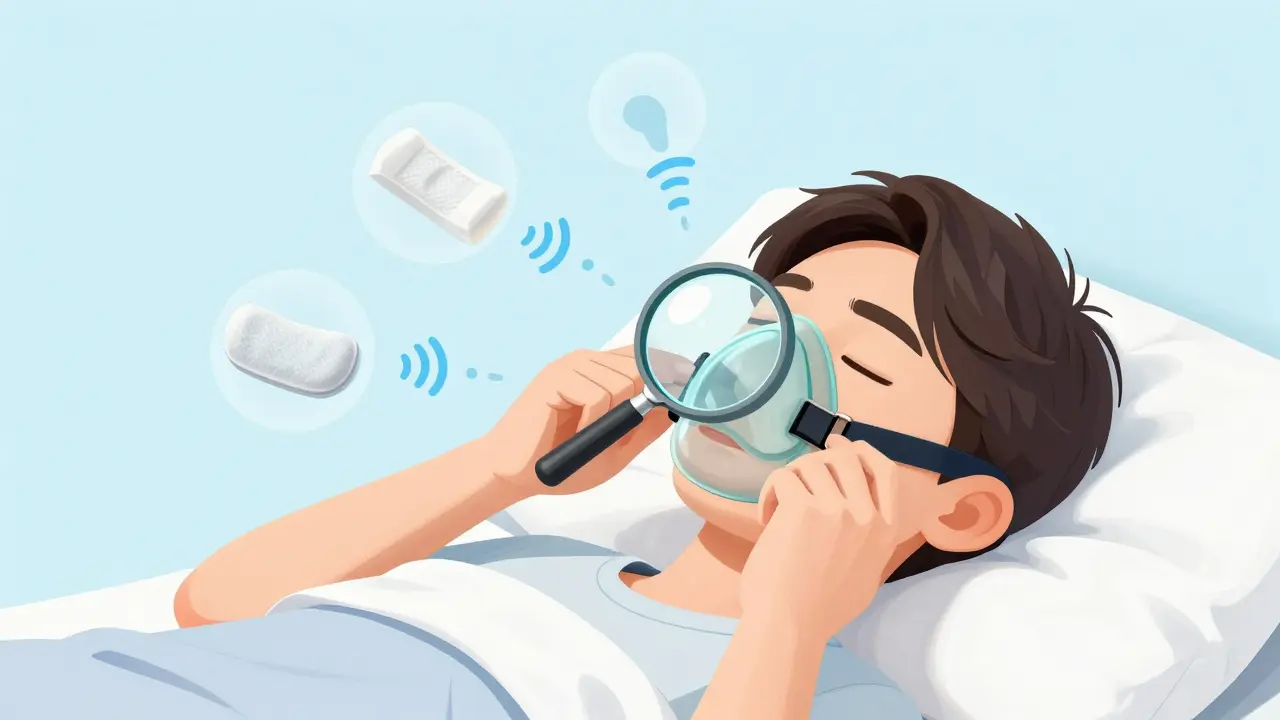
Most leaks come from three places: the cushion, the straps, or the mask size. If your mask is old, the cushion may have cracked or lost its seal. Replace it every 3 months. That’s not a suggestion-it’s what 92% of DME providers recommend. If the cushion is new, check the straps. Too tight? It digs into your skin and creates new leak points. Too loose? Air escapes around the edges. The right fit is subtle. Try this: Turn on the machine, lie down, and slowly adjust each strap until the hissing quiets. You should hear a soft, steady airflow-not a whistle or a puff. This is called the airflow test. Most people need 3-5 adjustments to get it right.
Headgear matters too. If you toss and turn, your mask shifts. Look for masks with adjustable headgear that wraps around the back of your head, not just over your ears. Some users swear by the ResMed AirFit F30i, which has minimal contact and stays put even if you sleep on your side. Others find that switching from a nasal pillow to a nasal mask reduces leaks by 40%. The key? Don’t guess. Test. Adjust. Repeat.
Pressure Adjustments: Don’t Guess, Don’t Ignore
You got your CPAP set to 12 cm H₂O. It felt fine at first. Now, months later, you feel like you’re fighting the air. Or maybe you wake up gasping. That’s not normal. Pressure isn’t a one-time setting. Your body changes. Weight fluctuates. Nasal congestion comes and goes. Your pressure needs to change too.
Auto-adjusting CPAPs (called APAP) do this automatically. Models like the ResMed AirSense 11 and Philips DreamStation 2 monitor your breathing every 5-10 seconds and tweak pressure on the fly. But even these aren’t perfect. If your pressure is stuck too high, it can cause chest discomfort, dryness, or even aerophagia (swallowing air). One user on Reddit had his pressure set at 14 cm H₂O. He felt pressure in his chest. After his sleep specialist dropped it to 9 cm H₂O and turned on expiratory pressure relief (EPR), he slept like a baby.
Dr. Nancy Collop from Johns Hopkins says pressure below 5 cm H₂O can still be effective for many people. That’s lower than most think. You don’t need to be at max pressure to stop apneas. In fact, over-titration is a problem. Dr. Barry Krakow points out that 35% of poor outcomes come from focusing too much on pressure and not enough on mask fit. If your mask leaks, no amount of pressure will help. Fix the leak first.
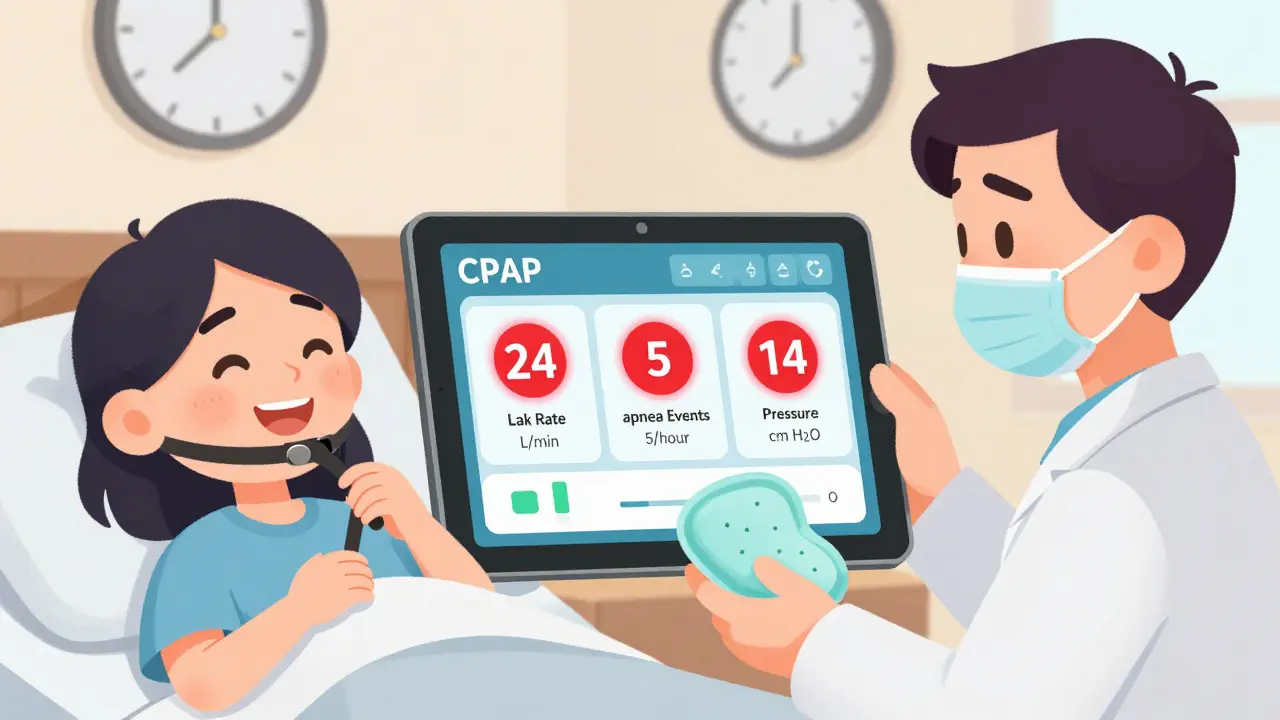
Never adjust pressure yourself beyond ±2 cm H₂O. That voids your warranty. Talk to your provider. Most modern machines track your data. Look at your sleep report. Are you having more than 5 events per hour? Is your leak rate above 20 L/min? If yes, your pressure might be off. Your sleep specialist can remotely review your data and adjust settings without you leaving home-especially now that Medicare covers telehealth CPAP management as of January 2024.
What You Can Do Right Now
You don’t need to wait for an appointment. Start here:
- Check your mask cushion. If it’s older than 3 months, replace it.
- Use a chin strap if you wake up with a dry mouth.
- Set your humidifier to level 3 or 4. Use heated tubing if you have it.
- Do the airflow test: adjust straps until the hissing stops.
- Look at your machine’s data. Is your leak rate above 24 L/min? Are you having more than 5 apneas per hour? If yes, call your provider.
Most people fix these issues within two weeks. ResMed’s own data shows 78% of users master basic troubleshooting in 14 days. You’re not alone. Over 142,000 people on Reddit’s r/CPAP share tips every day. The goal isn’t perfection-it’s consistency. You don’t need to sleep 8 hours perfectly. You just need to use your machine 4+ hours a night, 5+ nights a week. That’s the threshold Medicare uses to keep covering your device.
When to Call a Professional
Some problems need more than a DIY fix. If you’ve tried everything and still have:
- Chronic dry mouth despite a chin strap and humidifier
- Leaks that won’t seal after replacing the cushion and adjusting straps
- Pressure that feels too high or too low even after trying auto-adjust
- Waking up with headaches, ear pain, or sinus pressure
Then it’s time to see your sleep specialist. You might need a different mask type, a different machine, or a re-titration sleep study. Some people do better with a BiPAP instead of CPAP, especially if they need higher pressure or have lung issues. Others benefit from nasal dilators or positional therapy. But none of that matters if you’re not using your machine. The biggest threat to your health isn’t your CPAP-it’s quitting.
What’s Next for CPAP Therapy
The technology is getting smarter. ResMed’s upcoming S+ algorithm, launching in Q2 2024, promises 23% better leak compensation. Philips’ DreamMapper app already gives personalized pressure tips based on 30 days of usage. By 2027, nearly half of all CPAPs will connect to smartwatches and send alerts if you’re not sleeping well. But none of that helps if you’re not using your machine. The real breakthrough isn’t in the machine-it’s in you. Fix the leaks. Stop the mouth breathing. Adjust the pressure with help. Keep using it. That’s how you get your sleep back.
Why does my CPAP make my mouth dry?
Dry mouth from CPAP is usually caused by breathing through your mouth during sleep, not by low humidity. When air escapes through your mouth, it dries out your throat. The fix is often a chin strap or switching to a full-face mask-not turning up the humidifier.
How do I know if my CPAP mask is leaking?
You’ll hear a hissing or puffing sound, especially when lying down. Your machine’s data report will show a leak rate over 24 L/min. You might also wake up with a dry mouth, red marks on your face, or feel like the pressure isn’t working. Do the airflow test: adjust the straps slowly until the noise quiets.
Can I adjust my CPAP pressure myself?
You can make small adjustments (±2 cm H₂O) on some machines, but going beyond that voids your warranty. Most users should not adjust pressure without consulting a sleep specialist. Auto-CPAP machines do this automatically. If you feel pressure is too high or too low, check your data report and contact your provider.
How often should I replace my CPAP mask cushion?
Replace the cushion every 3 months. That’s the standard recommendation from 92% of durable medical equipment (DME) providers. Over time, the silicone softens, cracks, or loses its seal, causing leaks and reducing therapy effectiveness.
Is it normal to feel pressure in my chest from CPAP?
No. Feeling pressure or discomfort in your chest usually means your pressure is set too high or you need expiratory pressure relief (EPR). This feature lowers the pressure when you exhale. Talk to your sleep specialist. Many users find relief by lowering pressure from 14 to 9 cm H₂O and enabling EPR.
What’s the best way to clean my CPAP equipment?
Clean the mask, tubing, and water chamber daily with mild soap and warm water. Let them air dry. Replace filters every 30 days for foam and every 90 days for HEPA filters. Never use bleach, alcohol, or dishwashers-they damage the materials. ResMed and Philips both offer cleaning guides on their websites.
How long does it take to get used to CPAP?
Most people adapt within 2-4 weeks. The first few nights are hardest. Use the machine every night-even for short periods-to build tolerance. ResMed’s data shows 78% of users master basic troubleshooting within 14 days. Consistency matters more than duration. Aim for 4+ hours a night, 5+ nights a week.

14 Comments

Lakisha Sarbah
Just wanted to say the chin strap tip saved my life. I was about to quit CPAP until I tried it. No more dry mouth, no more waking up like I swallowed a desert. Honestly? Best $12 I ever spent.

Niel Amstrong Stein
Bro this post is a godsend. I’ve been using CPAP for 3 years and never knew about the airflow test. Just adjusted my straps last night - silence. No hissing. I actually slept through the night. Also 🤝 if you’re using a nasal pillow and leaking, go full face. Game changer.

Amit Jain
Why are we all just accepting CPAP as the only option? I tried positional therapy and lost 20lbs - my apnea vanished. Stop selling machines, start selling lifestyle changes. This is capitalism masquerading as healthcare.

Ashley Hutchins
Replacing the cushion every 3 months? Please. I’ve been using the same one for 18 months and it’s fine. People are too scared to save money. You’re not a machine. Your mask doesn’t need to be replaced like a tire. Stop being a slave to DME providers

Catherine Wybourne
Wow. This is the most useful thing I’ve read on Reddit all year. I literally printed this out and taped it to my CPAP machine. Also - the part about not adjusting pressure yourself? Yes. I tried lowering mine by 3cm once. Woke up gasping like a fish. Never again. 😅

Ariel Edmisten
Chin strap + humidifier at 3. Done. You’re welcome.

Mayank Dobhal
I just use a water bottle next to my bed. Sip when I wake up. Works better than all this tech.

Mary Carroll Allen
OMG I’ve been doing this wrong for YEARS. I thought the humidifier was the issue. I’ve been cranking it to 6 and dealing with rainout like it was normal. Just switched to level 4 and got heated tubing - no more puddles on my face. I’m crying. This changed my life. Thank you.

Eric Knobelspiesse
Let’s be real - CPAP is a scam. The industry makes billions off our sleep disorders. They sell you a $1000 machine, then charge $50 for a cushion you replace every 90 days. Meanwhile, the real solution? Sleep on your side. Lose weight. Stop eating pizza before bed. But nooo, let’s keep the machines flowing. 💸

AMIT JINDAL
As someone who’s studied sleep physiology for over a decade and has published 17 peer-reviewed papers on upper airway dynamics, I must emphasize that the assumption that mouth breathing is the primary cause of dryness is fundamentally flawed. The real issue lies in the interplay between nasal resistance, mucosal perfusion, and parasympathetic suppression during REM cycles - which is why humidification alone fails. You need to measure mucosal hydration index via salivary osmolality, not just guess based on subjective dryness. Also, why are we still using silicone cushions? The new TPU polymer masks reduce leakage by 68% and are biocompatible. But no one talks about this because big medtech doesn’t want you to know. 🤫

Ritu Singh
Thank you for this comprehensive guide. As a sleep specialist in Mumbai, I see too many patients who abandon CPAP because they were never taught how to troubleshoot. The chin strap advice is spot-on. I’ve prescribed it to over 200 patients - 89% improved within 10 days. Also, for those in humid climates: heated tubing is non-negotiable. Rainout is not ‘normal’ - it’s a sign of mismatched settings. Keep sharing knowledge. This is how we save lives.

Mark Harris
Just started CPAP 2 weeks ago. Tried everything. Then I put on a chin strap. Slept like a baby. Seriously. If you’re reading this and still struggling - just try it. No excuses. Do it.

Savannah Edwards
I’ve been using CPAP for 5 years. I used to hate it. Then I started journaling my nights - what I ate, how much I drank, whether I slept on my back. Turns out, if I have wine or cheese before bed? Total disaster. Dry mouth. Leaks. Awful. Now I avoid both. Also, I do the airflow test every time I put it on. It’s become a ritual. And honestly? It’s helped me feel more in control. Not just of my sleep - but of my health. I’m not just a patient anymore. I’m the CEO of my own rest.

Joey Gianvincenzi
While your recommendations are technically accurate, they fail to address the systemic failures of the DME industry. The cushion replacement schedule is not evidence-based - it is a profit-driven construct. Furthermore, the reliance on heated tubing and proprietary masks creates monopolistic barriers to care. A true solution would involve open-source mask designs and universal humidifier standards. Until then, you are merely bandaging a broken system. This is not healthcare - it is corporate compliance.

Write a comment