How the FDA Ensures Generic Drug Quality During Manufacturing
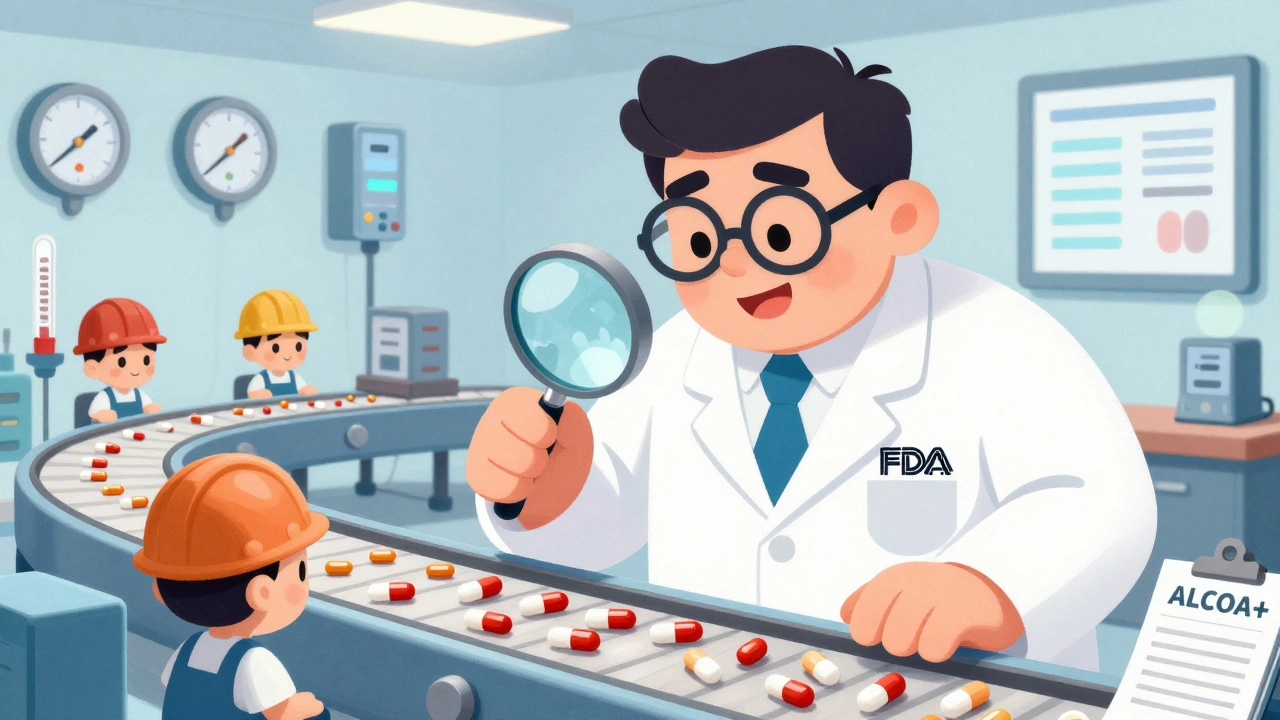
When you pick up a generic pill at the pharmacy, you expect it to work just like the brand-name version. But how does the FDA make sure that’s true-not just in theory, but in every batch, every factory, every country? The answer isn’t just about testing the final product. It’s about controlling every step of how it’s made.
The Core Rule: cGMP Is Non-Negotiable
The foundation of FDA’s generic drug quality system is Current Good Manufacturing Practices, or cGMP. These aren’t suggestions. They’re federal law, written in Title 21 of the Code of Federal Regulations, Parts 210 and 211. Every generic drug maker-whether in the U.S., India, or China-must follow them to sell in America.Before the 1960s, the FDA mostly tested pills after they were made. But when they tested 4,600 drugs from that era, about 8% didn’t deliver the right dose. Some were too weak. Some were too strong. That’s when the agency switched strategy: instead of waiting to catch bad batches, they started preventing them by controlling the process.
Today, cGMP is the single most important rule. It’s not about whether a pill looks right. It’s about whether the factory can make the same perfect pill, every time, under the same conditions. If the process isn’t controlled, the product isn’t trusted.
The Five Pillars of Quality Control
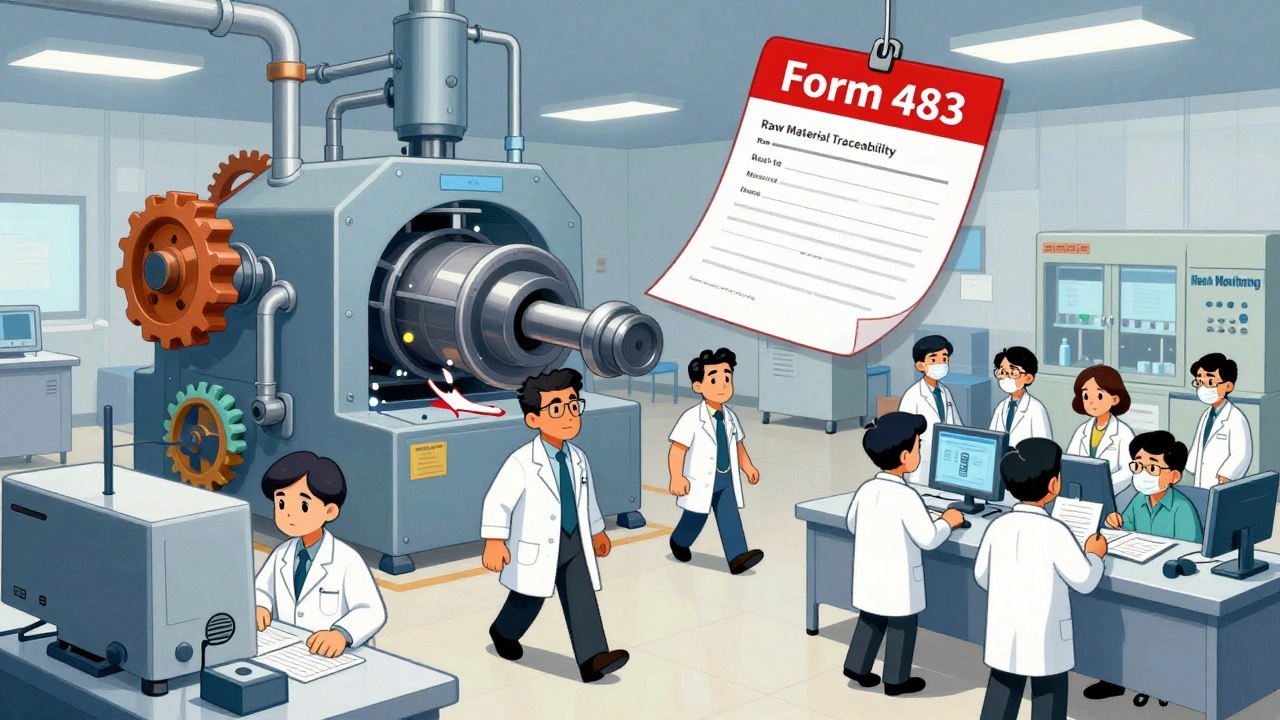
The FDA breaks cGMP down into five non-negotiable areas. Each one has specific technical requirements.- Control of Materials: Every raw ingredient-active and inactive-must be tested, tracked, and stored properly. The FDA requires full documentation of where it came from, how it was handled, and who approved it. No guessing. No shortcuts.
- Production and Process Controls: Every step in making the drug must have a written procedure. Temperature, mixing time, pressure, humidity-all of it is monitored in real time. If a machine goes out of range, the system stops. The deviation is logged. The cause is investigated. Corrective action is taken.
- Quality Control and Laboratory Testing: Raw materials, intermediate batches, and final products are tested using validated methods. All data must follow ALCOA+: attributable, legible, contemporaneously recorded, original or true copy, accurate, complete, consistent, enduring, and available. A single missing signature or erased log can trigger a warning letter.
- Packaging, Labeling, and Distribution: The right pill goes in the right bottle with the right label. Mislabeling a 50mg pill as 100mg can kill someone. The FDA checks packaging lines, barcode accuracy, and storage conditions during transport.
- Documentation and Record Keeping: Every action, every test, every adjustment must be written down. No digital files that auto-delete. No handwritten notes on napkins. Records must survive audits for years. This isn’t bureaucracy-it’s accountability.
Inspections: No Notice, No Mercy
The FDA doesn’t call ahead. Inspectors show up unannounced at about 1,200 facilities each year-1,700 global sites that make generic drugs for the U.S. market. They don’t just walk through. They stay as long as needed. They review logs. They interview workers. They check calibration records for machines that haven’t been touched in months.Foreign facilities get inspected more often now. In 2021, the Government Accountability Office found 17% of foreign plants had cGMP violations, compared to 8% of U.S. ones. That gap is shrinking, but the pressure is higher. The FDA uses remote inspections too-video tours, live data feeds-especially since the pandemic. But nothing replaces being on-site.
When inspectors find problems, they issue a Form 483. It’s not a fine. It’s a list of what’s wrong. If the company doesn’t fix it, the FDA can block the drug from entering the U.S. One violation can delay approval for months.
How Generic Drugs Are Approved: The ANDA Process
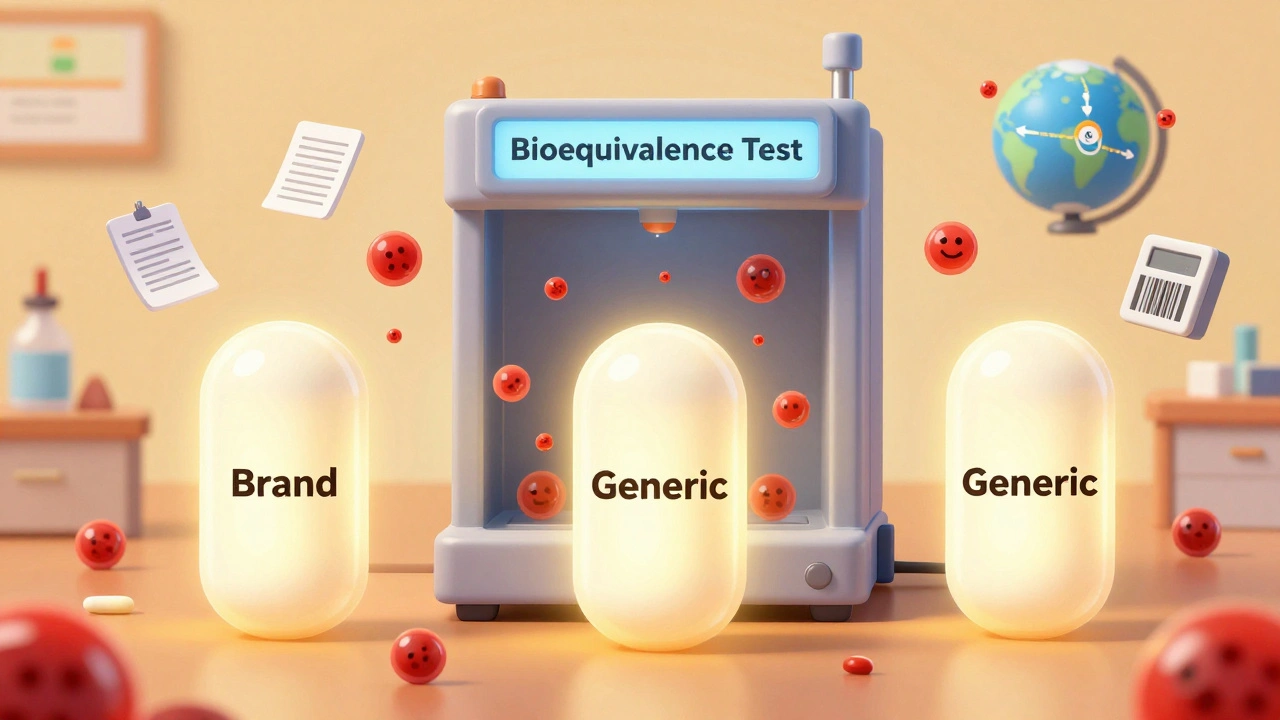
To get approval, a company submits an Abbreviated New Drug Application (ANDA). It doesn’t need to repeat clinical trials. But it must prove two things: pharmaceutical equivalence and bioequivalence.Pharmaceutical equivalence means the generic has the same active ingredient, strength, dosage form, and route of administration as the brand. Bioequivalence means it gets into the bloodstream at the same rate and amount. The FDA tests this with healthy volunteers, measuring blood levels over time.
But there’s another layer: the manufacturer must submit three separate batches of the drug. One batch is used to make all the strengths. The other two are used to test the lowest and highest doses. Why? To make sure the process works across the full range. If the 5mg and 50mg versions behave differently, the whole line gets rejected.
Why It Works: Data, Not Trust
The FDA doesn’t rely on a company’s word. They use data. The Office of Pharmaceutical Quality runs a market surveillance system that tracks adverse events, product complaints, and lab results from independent testing. If a batch of metformin shows inconsistent dissolution rates, the FDA can pull it before it reaches patients.Dr. Janet Woodcock, former head of the FDA’s drug center, put it simply: “Generic drugs must meet the same batch requirements for identity, strength, purity, and quality as brand-name medicines.” That’s not marketing. That’s regulation.
The system isn’t perfect. The GAO reported that resource limits sometimes delay inspections. Smaller manufacturers struggle with the cost of compliance-up to $5 million just to set up a quality system. Documentation alone can eat up 40% of development time.
But the results speak for themselves. Generic drugs make up 90% of all prescriptions filled in the U.S. They cost 80-85% less than brand names. And in 98-99% of cases, they work just as well. That’s not luck. That’s engineering.
What’s Changing Now
The FDA isn’t standing still. In 2023, they launched the Drug Quality Reporting System (DQRS), making it easier for companies to report quality issues in real time. They’re also pushing for advanced manufacturing-like continuous production and real-time release testing. These technologies can detect flaws during production, not after.The Generic Drug User Fee Amendments (GDUFA) III, effective in 2022, gave the FDA $650 million over five years to boost inspections and staffing. By 2025, new rules will require full traceability of active ingredients from source to final pill.
Some manufacturers complain. But the data shows the system works. In 2020-2022, during the pandemic, the FDA’s proactive monitoring helped prevent shortages of critical generics like insulin and antibiotics. That’s not just regulation. That’s saving lives.
What You Can Trust
When you take a generic drug, you’re not taking a gamble. You’re taking a product that passed through one of the most rigorous quality systems in the world. The FDA doesn’t just check the pill. They check the machine that made it. They check the person who cleaned it. They check the paper trail that proves it was done right.That’s why millions of Americans rely on generics every day. And why, despite the cost and complexity, the FDA won’t lower its standards. Because when it comes to your health, there’s no such thing as a cheap shortcut.
Are generic drugs as safe as brand-name drugs?
Yes. The FDA requires generic drugs to have the same active ingredient, strength, dosage form, and route of administration as the brand-name version. They must also prove bioequivalence-meaning they work the same way in the body. The same manufacturing standards apply to both. The only differences are in inactive ingredients, packaging, or price.
Does the FDA inspect foreign drug factories?
Yes. The FDA inspects about 1,700 manufacturing facilities worldwide that supply generic drugs to the U.S. About 60% of these are outside the U.S., mostly in India and China. Inspections are unannounced and follow the same cGMP rules as U.S. plants. Foreign facilities had a higher rate of violations in past audits, but enforcement has tightened significantly since 2020.
Why do generic drugs cost so much less?
Generic manufacturers don’t need to spend money on research, clinical trials, or marketing. They only need to prove their product is equivalent to the brand. That saves them billions. But they still spend $2-5 million on quality systems and compliance. The price difference comes from eliminating R&D and advertising costs-not cutting corners on safety.
Can a generic drug be recalled by the FDA?
Yes. The FDA can recall any drug-generic or brand-if it finds a quality issue. Recalls happen for reasons like contamination, incorrect dosage, or failed stability testing. Between 2020 and 2023, over 120 generic drug recalls were issued, mostly due to impurities or packaging defects. The FDA’s real-time monitoring system helps catch these before they reach patients.
How long does it take for the FDA to approve a generic drug?
The review process typically takes 12 to 24 months, with multiple review cycles. Each cycle can last several months. Delays often happen when the application lacks complete data or has unresolved cGMP issues. The FDA now offers pre-submission meetings to help manufacturers avoid common mistakes before filing.

13 Comments

Anna Roh
So basically the FDA just makes sure the pills don’t kill you, but doesn’t care if they make you feel like a zombie for a week? I’ve taken generics that just didn’t work like the brand, and no one ever listens.
Still, I guess it’s better than nothing.

om guru
India produces over 60 percent of generic drugs for United States. Our factories follow cGMP with precision. Quality is not compromise. We take pride in serving global health. Your trust is our responsibility.

Katherine Chan
Love that the FDA actually cares enough to show up unannounced. So many systems rely on trust but this one? It’s built on paper trails and machine logs. It’s boring but it saves lives.
Also shoutout to the workers in those factories who clean the machines and log every single thing. Heroes in scrubs and lab coats.

Philippa Barraclough
The notion that pharmaceutical equivalence and bioequivalence are sufficient metrics for therapeutic interchangeability warrants further scrutiny. While the statistical thresholds for bioequivalence are defined within a 80-125% confidence interval, interindividual pharmacokinetic variability may result in clinically significant deviations in subpopulations such as the elderly or those with hepatic impairment. Furthermore, the absence of post-marketing pharmacovigilance integration into the ANDA framework remains a structural gap, despite the existence of the Drug Quality Reporting System. The regulatory framework, while robust, appears to prioritize process control over patient-specific outcomes.

Tim Tinh
bro i had a generic metformin once that made me feel like i was walking through syrup for two weeks. then i switched back to the brand and boom instant energy. not saying the FDA’s wrong but sometimes the ‘same’ ain’t the same for your body.
also i think they should let us see the inspection reports. like, real time. think of the transparency.

Tiffany Sowby
Of course the FDA inspects foreign plants more often. Why? Because they know American companies wouldn’t dare cut corners. But let’s not pretend Indian and Chinese factories are somehow magically better now. They’re just better at hiding it.
And don’t give me that ‘saving lives’ crap. They’re still making billions off our prescriptions while we pay for their compliance.

Brianna Black
Let us not forget the silent architects of American healthcare: the quality control technicians in Hyderabad, the data entry clerks in Shenzhen, the inspectors who fly across oceans with no fanfare. They are the ones who turn regulation into reality.
This is not just policy. This is dignity.
Thank you.

Ronald Ezamaru
One thing people miss: the three-batch requirement isn’t just about consistency-it’s about scalability. If a process works for 5mg but fails at 50mg, that’s not a fluke. That’s a design flaw. The FDA’s asking for proof the whole system works, not just one lucky batch.
And yes, it’s expensive. But imagine if they didn’t do this. We’d be back to the 1960s. 8% of pills wrong. People dying because someone skipped a step.

Lauren Dare
Oh, so now ‘cGMP’ is the new holy scripture? How quaint. Let me guess-next you’ll tell me that ALCOA+ is a divine commandment written in triplicate. Truly, the altar of bureaucratic orthodoxy has never glowed so brightly.
Meanwhile, actual patients are still waiting for their prescriptions because the system is too busy auditing logbooks to fix supply chains.

Nikhil Pattni
People think India makes cheap drugs but they don’t know the truth. We have 300+ FDA-approved plants. Every machine is calibrated. Every batch is tracked. Even small factories have LIMS systems. You think it’s easy to meet ALCOA+? It takes 10 people just to sign one log.
And yes we make mistakes. But we fix them. We don’t hide. We learn. You Americans think we cut corners? We work 18 hours a day to prove you wrong.
👍

Arun Kumar Raut
Good to see the system works. I’ve seen friends take generics for blood pressure and diabetes. No issues. No side effects. Same results as brand.
It’s not magic. It’s just good process.
Let’s keep supporting it. Not just for cost. For safety too.

precious amzy
One cannot help but observe the performative nature of regulatory compliance-how the ritual of documentation substitutes for authentic epistemic rigor. The FDA’s obsession with traceability is not a safeguard, but a symptom of modernity’s failure to trust human judgment. In a world where data replaces wisdom, even pills become allegories.

Carina M
It is morally indefensible that a nation which claims to prioritize patient safety permits the importation of pharmaceuticals from jurisdictions with historically lax oversight. The fact that 60% of generics originate abroad, and that inspections remain insufficiently resourced, constitutes a systemic betrayal of public trust. The FDA’s rhetoric of ‘rigorous standards’ is, in practice, a euphemism for regulatory capture.

Write a comment