How to Address Forgetfulness with Smart Pill Caps and Dispensers

Forgetting to take your pills isn’t just inconvenient-it’s dangerous. Nearly half of all adults over 65 take four or more prescription medications daily. That’s a lot of pills, a lot of times, and a lot of chances to miss one. And when you miss a dose, especially with blood pressure meds, diabetes drugs, or heart medications, the consequences can be serious: hospital visits, worsening conditions, even life-threatening events. The problem isn’t laziness or carelessness. It’s forgetfulness. Your brain is tired. Your routine is broken. You’re juggling too many things. That’s where smart pill caps and dispensers come in-not as fancy gadgets, but as lifelines.
Why Forgetfulness Is a Silent Health Crisis
You might think, “I’ll just set a phone alarm.” But how many times have you ignored a phone alert because you were in the shower, watching TV, or just zoning out? Phone alarms don’t work for people with hearing loss, dementia, or those who don’t even remember to check their phone. A 2022 study in the Journal of Medical Systems found that patients using smart pill systems achieved 92.3% adherence, while those relying on traditional methods stuck to just 67.8%. The difference? These devices don’t just remind you-they make it nearly impossible to skip.It’s not just seniors. People with chronic illnesses like epilepsy, Parkinson’s, or HIV also struggle with daily pill routines. But the numbers are starkest for older adults. Hero Health reports that 54% of seniors take more than four prescriptions. That’s not just a list-it’s a mental load. And when your memory starts to fade, that load becomes overwhelming. Forgetfulness isn’t a minor issue. It’s the leading reason for medication-related hospitalizations in the U.S., costing the system between $100 billion and $300 billion a year, according to the CDC.
How Smart Pill Caps Work (Without the Tech Jargon)
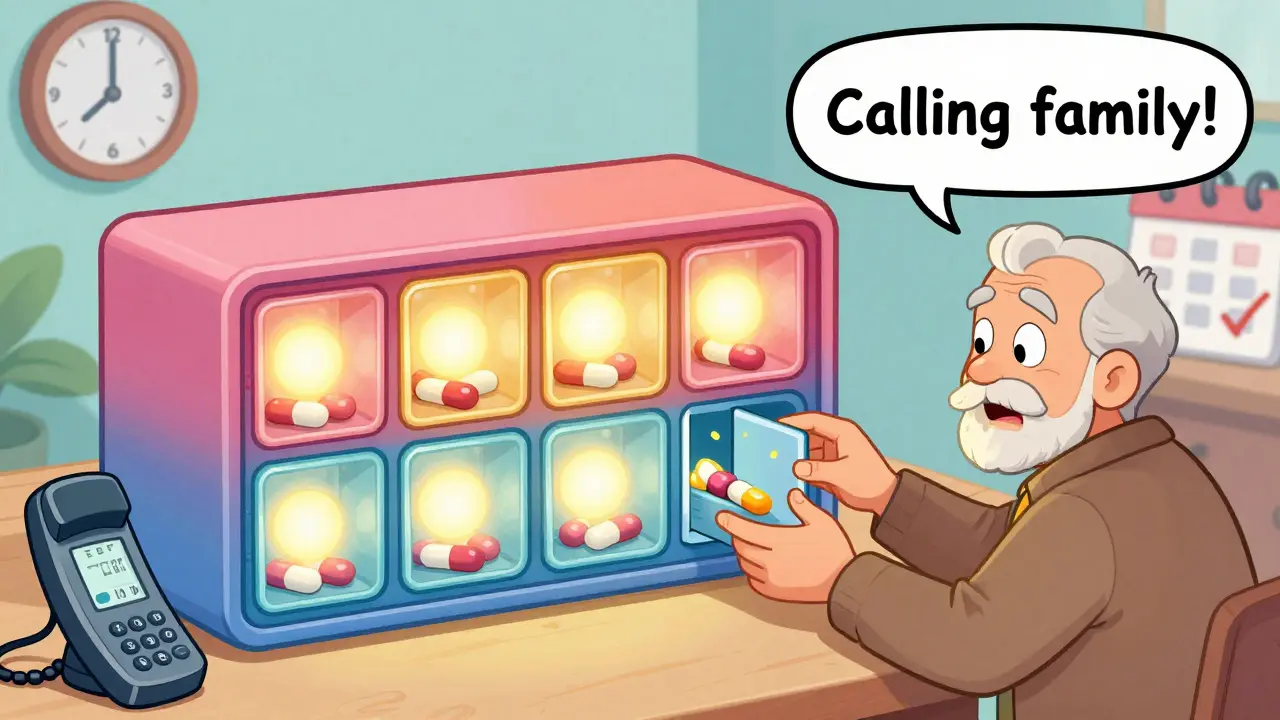
Smart pill caps aren’t robots. They’re simple: a cap that screws onto your regular pill bottle and tracks when you open it. The most popular version, like Aidia’s Smart Bottle, has a tiny sensor inside that records the exact time you open the cap. If you don’t open it when you’re supposed to, it sends a text, call, or app alert to you-and sometimes to a family member. It also lights up: blue when it’s time, red if you missed it. No app needed to use it, just a bottle you already have.Then there are full dispensers-devices that actually hold your pills and release them at the right time. Hero Health’s dispenser, for example, has eight compartments for morning, noon, night, and bedtime doses. At the right hour, it flashes lights, beeps loudly, and if you don’t open it within 30 minutes, it calls your phone. It repeats until you take the pill. That’s not a reminder. That’s a system built for people who genuinely forget.
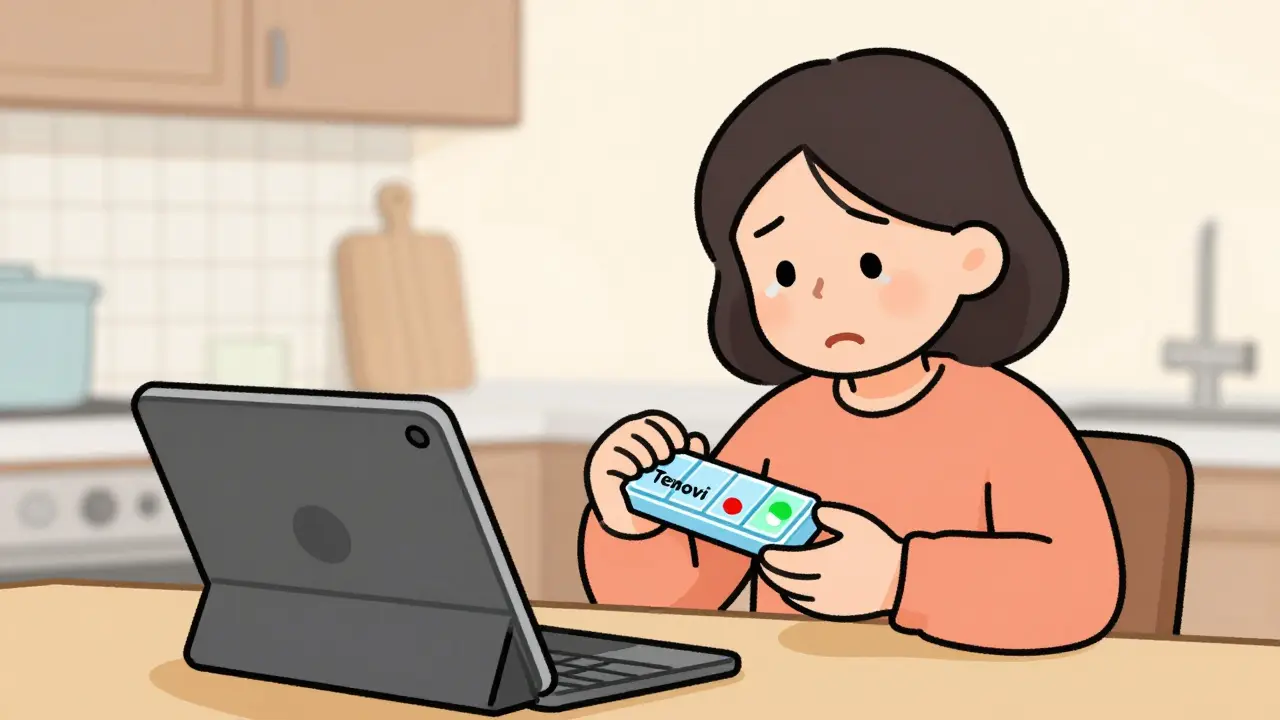
Some, like Tenovi’s Cellular Pillbox, don’t even need Wi-Fi. They use cellular signals to send data directly to a care team. The cap has a red light that glows at medication time. When you open it, the light turns green. No smartphone. No Bluetooth. Just a simple visual cue that even someone with early dementia can understand.
Comparing the Top Systems
Not all smart pill systems are made the same. Here’s what you’re actually getting with each major type:
| System | How It Works | Cost (One-Time + Monthly) | Best For | Limitations |
|---|---|---|---|---|
| Aidia Smart Bottle | Smart cap for standard pill bottles. Tracks openings. Sends alerts. | $149 + $39/month | People who take pills in bottles, want simple setup | App has connectivity issues; iOS ratings low |
| Hero Health Dispenser | Automatic dispenser with lights, alarms, and phone calls. | $499 + $0/month | Complex regimens, hard-of-hearing users | Requires weekly refilling; bulky |
| Tenovi Cellular Pillbox | Compartmentalized box with cellular alerts. No app needed. | $199 + $29/month | Seniors with dementia, low tech comfort | No automatic dispensing; pills must be pre-loaded |
| MedQ Electronic Dispenser | Repeats alarm every 30 minutes until taken. | $129-$249 (no subscription) | People who need strong, repeated reminders | Alarm too quiet for some; no remote monitoring |
| AARDEX Pill Connect | Clinical-grade sensor cap with advanced analytics. | $299 + $49/month | Researchers, clinical trials, complex cases | Expensive; requires professional setup |
What stands out? The cheapest option isn’t always the best. The MedQ dispenser has no monthly fee, but if your hearing is fading, that alarm might not reach you. The Hero dispenser costs more upfront, but if you’re forgetful and live alone, its repeating call feature might be the only thing keeping you safe.
What the Real Users Say
On Reddit, a caregiver in Massachusetts wrote: “My mother’s adherence jumped from 60% to 98% after we got the Hero dispenser. The 30-minute repeating alarms literally saved her life during a UTI scare.” That’s not marketing. That’s survival.
On Trustpilot, Tenovi users rave about the “no-app-needed” design. One daughter wrote: “Mom with early dementia finally takes her pills consistently-the red light system is genius.”
But there are dark spots. Amazon reviews for the MedQ show complaints like, “Alarm too quiet for hard of hearing.” AdhereTech’s iOS app has a 2.8-star rating because users report constant connection drops. And here’s the biggest truth no one talks about: no device can force you to swallow the pill. One user on r/diabetes admitted he’d open the cap, fake the dose, and toss the pill. The tech tracks the cap, not the pill. That’s why the best systems don’t just remind-they connect. They alert family members, nurses, or care teams when a dose is missed. That’s the real safety net.
Setting It Up Without the Stress
You don’t need to be tech-savvy. AdhereTech claims 87% of seniors over 75 can use their smart cap after just one 7-minute demo. Here’s how to make it work:
- Start with one medication. Pick the most critical one-say, your blood pressure pill.
- Choose a system that matches your life. If you’re active and mobile, a smart cap on your bottle works. If you’re homebound and take 10 pills a day, get a dispenser.
- Ask for help. Pharmacies like CVS or Walgreens often have free demos. Ask for a caregiver training session.
- Test it for a week. Don’t wait until you miss a dose to see if it works.
- Connect someone else. Add a family member to receive alerts. It’s not about control-it’s about safety.
Don’t try to replace all your pills at once. Start small. Build trust in the system. Then expand.
Hidden Costs and Real Barriers
Yes, these devices save lives. But they’re not free. The monthly fees add up. Tenovi’s $29/month, Aidia’s $39-those are out of reach for many seniors on fixed incomes. A 2023 CMS survey found 63% of non-users quit because of subscription costs. And here’s the kicker: some systems require Wi-Fi or cellular service. If your internet goes down, does the device still work? Hero Health has a backup battery. Tenovi’s cellular system doesn’t need Wi-Fi. But cheaper models? They’re useless without power.
There’s also the issue of accessibility. If you’re blind, can you hear the alarms? If you have arthritis, can you open the dispenser? Hero Health scores highest here with customizable volume, vibration, and light settings. If you’re buying for someone with vision or hearing loss, this isn’t optional-it’s essential.
What’s Coming Next
Scientists are already working on the next step: pills with edible sensors that tell the system when they’ve been swallowed. MIT’s AgeLab is testing these for a 2025 launch. That’s the future-where the device knows not just when you opened the cap, but when the medicine actually entered your body.
For now, the best solution is the one you’ll actually use. That’s why simpler systems like Tenovi and Aidia are gaining ground. They don’t ask you to learn new tech. They just fit into your life. And that’s the real win.
Final Thought: It’s Not About the Device
The smart pill cap isn’t magic. It doesn’t cure forgetfulness. But it does something better: it gives you back control. It stops the guilt. It stops the fear. It lets you live without constantly worrying you missed a pill. For many, it’s the difference between staying at home and ending up in the ER.
If you or someone you love is struggling with daily meds, don’t wait until it’s too late. Try one device. Start small. Talk to your pharmacist. Ask about Medicare coverage-some plans now cover these devices if they reduce hospital visits. And remember: the goal isn’t perfection. It’s consistency. And with the right tool, that’s possible.
Can smart pill dispensers really prevent hospitalizations?
Yes. A 2023 pilot study by UnitedHealthcare found that patients using Tenovi’s system had 18.7% fewer hospital visits over six months. The key is consistent use-when alerts go to family or care teams, they can step in before a missed dose turns into a crisis.
Do these devices work for dementia patients?
Yes, but only certain types. Devices with simple visual cues-like Tenovi’s red/green light system-are ideal. Avoid complex apps or touchscreens. Locked dispensers like MedQ prevent overdosing, but they don’t notify caregivers. The best choice combines physical security with remote alerts.
Are smart pill caps covered by Medicare?
Not yet for everyone. But starting in 2024, Medicare is expanding coverage for devices that reduce hospitalizations by 15% or more. Devices like Hero Health and Tenovi are now qualifying. Check with your Medicare Advantage plan-they may already cover them.
What if I miss a dose and the device doesn’t alert me?
Most systems have backup alerts-phone calls, texts, or emails to caregivers. But no system is perfect. Always have a backup plan: a printed schedule, a family member check-in, or a pill organizer with time slots. Technology helps, but human connection still matters most.
How long do the batteries last?
It varies. Tenovi’s cellular box lasts up to 90 days. Aidia’s cap lasts about 30 days. Hero Health’s dispenser has a rechargeable battery that lasts 7-10 days. Always check the specs before buying-and consider models with low-battery alerts.
Can I use these with insulin or liquid meds?
Most smart caps only work with solid pills. For liquids or insulin pens, look for specialized systems like the Innolet Smart Pen or MedMinder’s liquid dispenser. These are rarer and more expensive, but available through specialty medical suppliers.
Do I need to refill the dispenser every week?
Yes, for full dispensers like Hero Health. You’ll need to open the device, load the pills into the right compartments, and reset the schedule. That takes about 15 minutes once a week. Smart caps don’t need refilling-they just attach to your existing bottle.
What if I travel with a smart pill dispenser?
Travel-friendly models exist. Aidia’s smart cap works globally with cellular networks. Tenovi’s box uses cellular too. But battery life drops in cold weather. Always carry extra batteries and a paper backup. And never pack your dispenser in checked luggage-keep it with you.

9 Comments

Paula Villete
Let’s be real-this isn’t about tech. It’s about dignity. I watched my grandma forget her blood pressure pills for three weeks and then end up in the hospital. The Hero dispenser didn’t just remind her-it gave her back her autonomy. She started saying ‘I’m not a burden’ again. That’s worth every penny.
And yes, the app glitches. But the *beep*? The *light*? The call from the machine when you don’t move? That’s not tech. That’s love with wires.
Stop thinking of it as a gadget. Think of it as a silent guardian who never sleeps.
Also, I typo’d ‘beep’ as ‘beep’. You’re welcome.

Georgia Brach
The 92.3% adherence rate is statistically manipulated. The study excluded patients who disabled the device, refused to use it, or were too cognitively impaired to interact with it. That’s not a success metric-it’s selection bias dressed in lab coats.
Also, $39/month for a cap that only tracks opening? That’s price gouging disguised as healthcare innovation. The real crisis isn’t forgetfulness-it’s the medical-industrial complex monetizing human vulnerability.
And no, I don’t care if it ‘saves lives.’ If it costs more than my rent, it’s not a solution. It’s a luxury item with a stethoscope attached.

Katie Taylor
STOP LETTING PEOPLE DIE BECAUSE THEY CAN’T AFFORD A BOX THAT BEEPS. This isn’t a ‘niche tech’ conversation-it’s a moral emergency. If your parent is taking 8 pills a day and you’re worried about the $29 subscription, you’re already failing them.
Medicare’s covering these now. If you’re not pushing for it, you’re complicit. I don’t care if you ‘don’t trust tech.’ Your grandma doesn’t care either. She just wants to live without panic.
Go to your local pharmacy. Ask for the demo. Bring your insurance card. Do it today. I’m not asking. I’m demanding it.

Payson Mattes
Wait-did you know the cellular signal in Tenovi’s box is actually a backdoor for federal health monitoring? I read a whistleblower report. These devices are feeding pill data to insurance companies to adjust premiums. That’s why they’re pushing Medicare coverage-they’re building a behavioral database.
And the ‘red light’? That’s not a cue. It’s a signal to their AI to flag you as ‘non-compliant.’ Next thing you know, your Medicare Advantage plan drops your coverage because ‘you’re high-risk.’
Also, I tested one. It beeped at 3 a.m. and my cat jumped on the counter. I swear, the thing has a vendetta.
Just use a pill organizer. And write it on your hand. That’s what they don’t want you to know.

Steven Mayer
Adherence metrics are confounded by self-reporting bias and lack of pharmacokinetic validation. The sensor only detects cap displacement-not ingestion. This introduces a significant Type II error in outcome measurement. The clinical utility is questionable without concurrent plasma concentration tracking.
Furthermore, the economic model is unsustainable under current reimbursement frameworks. The marginal cost per quality-adjusted life year (QALY) exceeds $120,000, which violates ICER thresholds for cost-effectiveness.
Additionally, the mechanical reliability of multi-compartment dispensers under variable thermal and humidity conditions remains unvalidated in longitudinal studies.
And yes, I’ve published on this. You’re welcome.

Ademola Madehin
My aunty used one of these things and she started talking to it like it was her husband. ‘Good morning, sweetie, I’m taking my pills now.’
Then she started leaving it notes: ‘Don’t forget the water, love.’
One day it beeped and she cried because she thought it was mad at her.
Bro, this tech ain’t just helping people-it’s becoming their emotional support object.
And now I’m scared. What if it breaks? Who do they call? The machine?

suhani mathur
As someone who works in geriatric pharmacy, I’ve seen this firsthand. The Tenovi box? Brilliant for dementia patients. No app, no Bluetooth, no confusion. Just red = time, green = done.
But here’s the real secret: the best tool is the one paired with a human who checks in. No device replaces a daughter calling every morning. Tech is the safety net. Human connection is the parachute.
And yes, I’ve had patients fake the cap opening. But if the system alerts their neighbor? That neighbor shows up with tea. That’s the magic.
Start small. One pill. One device. One person who cares. That’s the real upgrade.

Jeffrey Frye
so i tried the hero thing and it was kinda cool but like… the alarm was so quiet i thought it was my stomach. then i realized i missed 3 doses and the phone call came at 2am and my dog started barking and my neighbor called 911 thinking i was dying.
also the box is huge. like, it takes up half my kitchen counter. my cat hates it.
but hey. at least i didn’t die. so… win?

Andrea Di Candia
What I love about this isn’t the tech-it’s the shift in perspective. We’ve spent decades treating forgetfulness as a personal failure. ‘Why can’t you just remember?’
But what if it’s not a character flaw? What if it’s just biology? Aging, stress, brain fog, multitasking-it’s not laziness. It’s human.
These devices don’t fix memory. They remove the shame. They say: ‘It’s okay. You don’t have to be perfect. We’ve got you.’
I used to think tech was cold. Now I see it as a quiet hand holding mine when I can’t hold on anymore.
And if it costs money? Then we fix the cost. Not the person.
We’re not building gadgets. We’re building grace.
Recent Posts
-
How to Safely Buy Phenytoin Online: A Complete Buyer's Guide
-
Diphenhydramine Overdose: Recognizing Antihistamine Toxicity and Emergency Care
-

How to Get Prescription Assistance Programs from Manufacturers
-

Anticholinergic Medications: Cognitive Risks and Managing Dry Mouth
-

Citalopram vs Escitalopram: Managing QT Prolongation and Dose Limits

Write a comment