Medication Adherence Challenges for Older Adults: Practical Solutions That Work
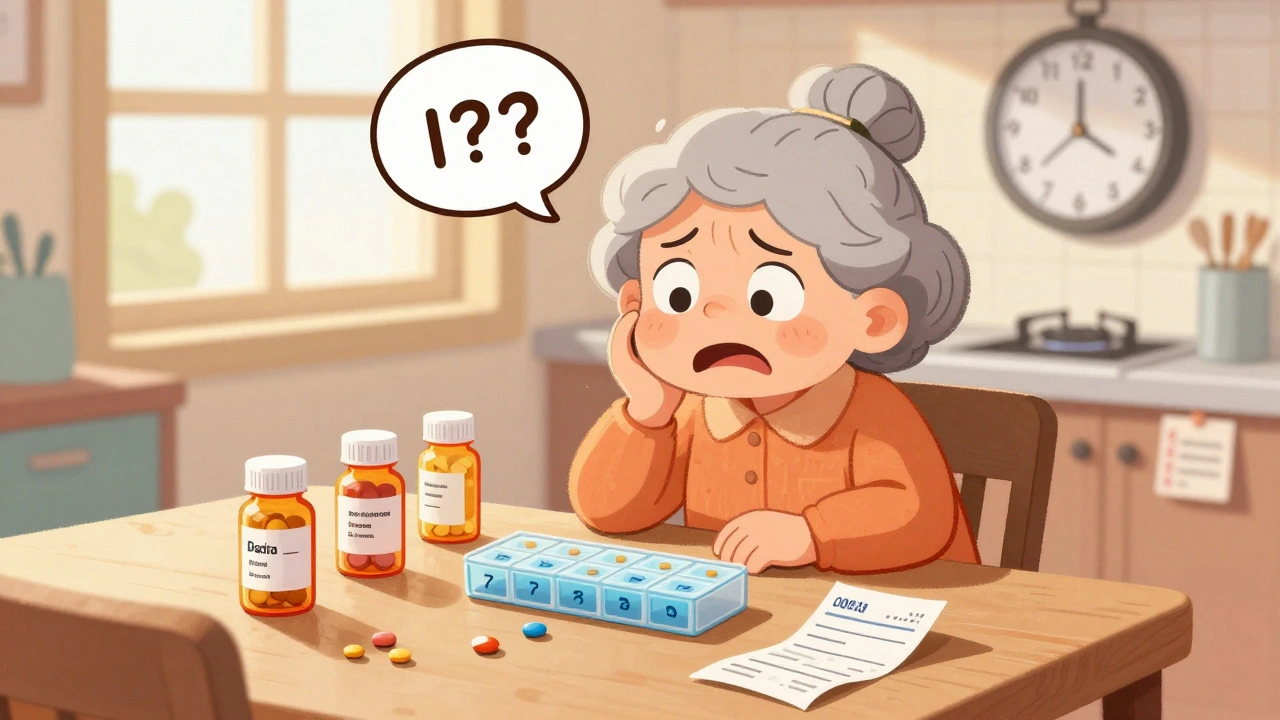
More than 8 out of 10 older adults in the U.S. take at least one prescription drug. Half take four or more. And yet, nearly one in three aren’t taking them as directed. It’s not laziness. It’s not forgetfulness alone. It’s a tangled web of costs, confusion, and complexity that makes sticking to a medication plan feel impossible.
Why Older Adults Struggle to Take Their Medications
Taking pills isn’t like taking a vitamin. For many seniors, it’s a full-time job. Picture this: a 78-year-old woman with high blood pressure, diabetes, arthritis, and heart failure. She’s on eight different medications. Some she takes with food. Some she takes on an empty stomach. One she takes at bedtime. Another she splits in half. One comes in a capsule she can’t swallow. Another is a liquid she has to measure with a tiny spoon. She’s supposed to take them at 7 a.m., 12 p.m., 5 p.m., and 9 p.m. - and sometimes, she just doesn’t remember. This isn’t rare. It’s normal. The CDC found that 88.6% of adults over 65 are on prescription meds. But 3.4% skip doses because they can’t afford them. Another 2.2% take less than prescribed. And 2.7% delay filling prescriptions. That’s not just numbers - that’s someone choosing between insulin and groceries. Cognitive decline plays a role. Memory fades. Labels blur. Pill bottles look alike. A 2024 study showed that older adults with mild cognitive impairment are twice as likely to miss doses. But here’s what most people miss: the biggest barrier isn’t memory - it’s social isolation. Brazilian research found that lack of family or community support was the top reason for non-adherence, at 33.6%. That’s higher than confusion, higher than cost, higher than side effects. If no one checks in, no one notices when the pill organizer is still full.Polypharmacy: The Hidden Danger
Taking five or more medications? That’s called polypharmacy. And it’s not just common - it’s dangerous. Nearly 60% of women over 65 and 44% of men take five or more pills a week. Twelve percent take ten or more. Each extra pill adds risk. The chance of a bad reaction jumps to 35% annually. And those reactions? They don’t always look like nausea or dizziness. They show up as falls, confusion, urinary incontinence, or sudden fatigue - all things doctors might blame on aging. But they’re often caused by drug interactions. Worse, many seniors are on multiple drugs for the same condition. One for blood pressure, another for heart rate, another for fluid retention - all from different doctors, prescribed months apart. No one ever stepped back and asked: “Do you really need all of these?” The solution isn’t just taking fewer pills. It’s asking the right question: “What’s the goal here?” If someone’s 85 and has heart disease but no symptoms, does a daily statin still make sense? If they’re frail and likely to live only another two years, does a medication that takes five years to show benefit still matter? These aren’t easy conversations - but they’re necessary ones.The Cost Trap: When Medicine Becomes a Luxury
Medicare covers prescriptions for most seniors. But it doesn’t cover all of them. Out-of-pocket costs can still be crushing. A single diabetes drug can cost $400 a month. A new blood thinner? $500. Even with insurance, co-pays add up. And here’s the cruel twist: cost-related nonadherence hits Black and Hispanic seniors hardest - 5.3% skip doses because they can’t pay, compared to 4.4% of white seniors. Women are more likely than men to skip pills for money. And if you’re food insecure? You’re six times more likely to skip your meds to eat. Some seniors cut pills in half. Others take them every other day. One man I spoke to in Oxford told me he’d been skipping his cholesterol pill every other week because he “couldn’t afford both the pills and the bus fare to the doctor.” He didn’t tell his GP. He didn’t think it mattered. The fix isn’t just lower prices - though that helps. It’s also better access to assistance programs. Many seniors don’t know about manufacturer coupons, state pharmaceutical assistance programs, or nonprofit aid. Pharmacies can help - but they need time, training, and support to do it.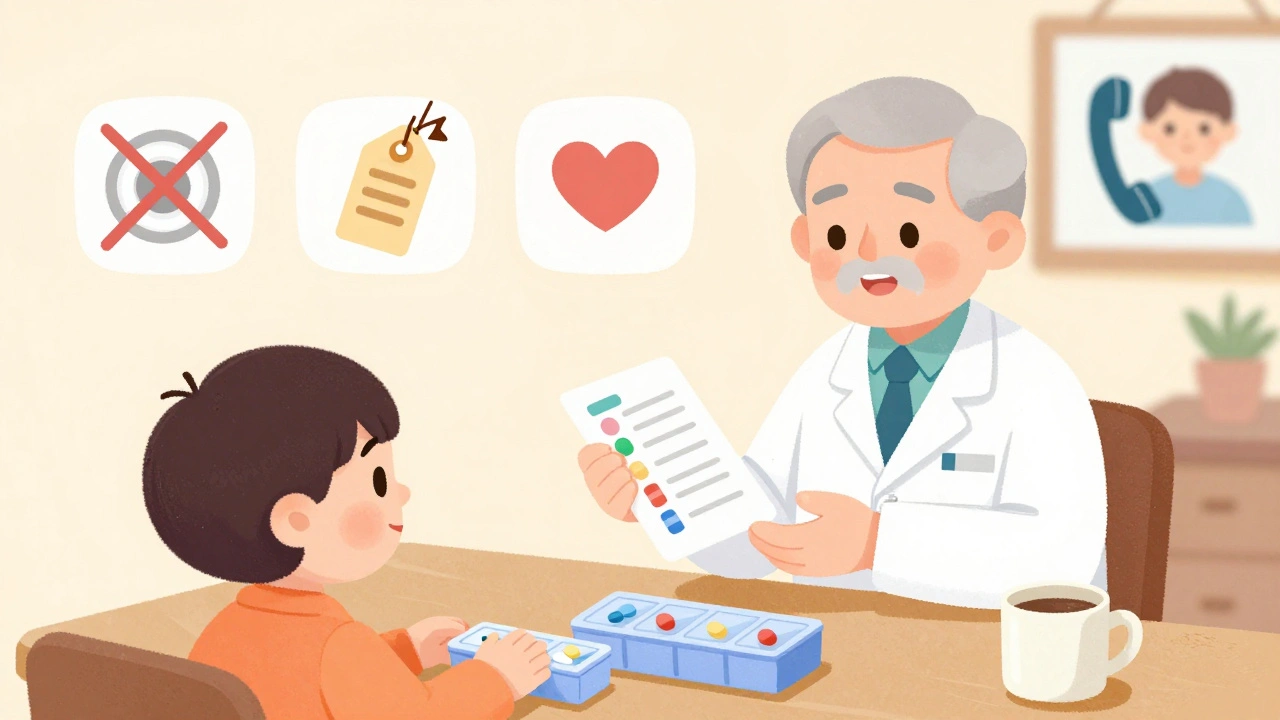
Simple Fixes That Actually Work
There’s no magic bullet. But there are simple, proven steps that make a real difference. 1. Simplify the regimen. If a senior is taking a pill three times a day, can it be switched to once daily? Many blood pressure and diabetes drugs now come in once-daily versions. One study showed that switching from three doses to one nearly doubled adherence. 2. Use a pill organizer. Not the fancy ones with alarms. Just a basic seven-day box with morning/afternoon/evening compartments. Place it next to the coffee maker or toothbrush. Pair taking pills with a daily habit - like brushing teeth or eating breakfast. 3. Involve someone. A neighbor. A grandchild. A home care worker. Someone who checks the pill box once a week. That’s more effective than any app. One woman in Birmingham told me her granddaughter came every Sunday to sort her pills. “She’s the only one who knows if I’ve taken my heart medicine,” she said. “And she reminds me if I’m feeling off.” 4. Talk to the pharmacist. Pharmacists are underused. They can spot duplicate prescriptions, flag dangerous interactions, and even help you find cheaper brands. Ask them: “Can we cut down on these?” or “Is there a cheaper version?” Most will do it - if you ask. 5. Use technology - wisely. Automated dispensers that unlock at the right time, or apps that send reminders, help. But only if the person can use them. Don’t push a smartphone app on someone who can’t read the screen. A simple voice-activated device that says, “It’s time for your blood pressure pill,” works better for many.What Doctors and Caregivers Can Do
Doctors often don’t know how hard it is. They write prescriptions. They assume the patient will follow through. But that’s not how it works. Start with a simple question: “What’s your biggest problem with taking your meds?” Not “Do you take them as prescribed?” - that’s a yes/no trap. Ask about the experience. Listen. You’ll hear things like: “I don’t know what this one’s for.” “I’m scared of the side effects.” “I can’t open the bottle.” “I forgot to refill it.” Do a full med review at least once a year. Cut the ones that aren’t helping. Combine pills. Switch to generics. Reduce the number of daily doses. That’s not giving up - that’s treating the person, not the chart. Caregivers need support too. Many are family members - spouses, adult children - who are exhausted. They need training on how to help with pills, how to spot signs of non-adherence, and how to ask for help themselves.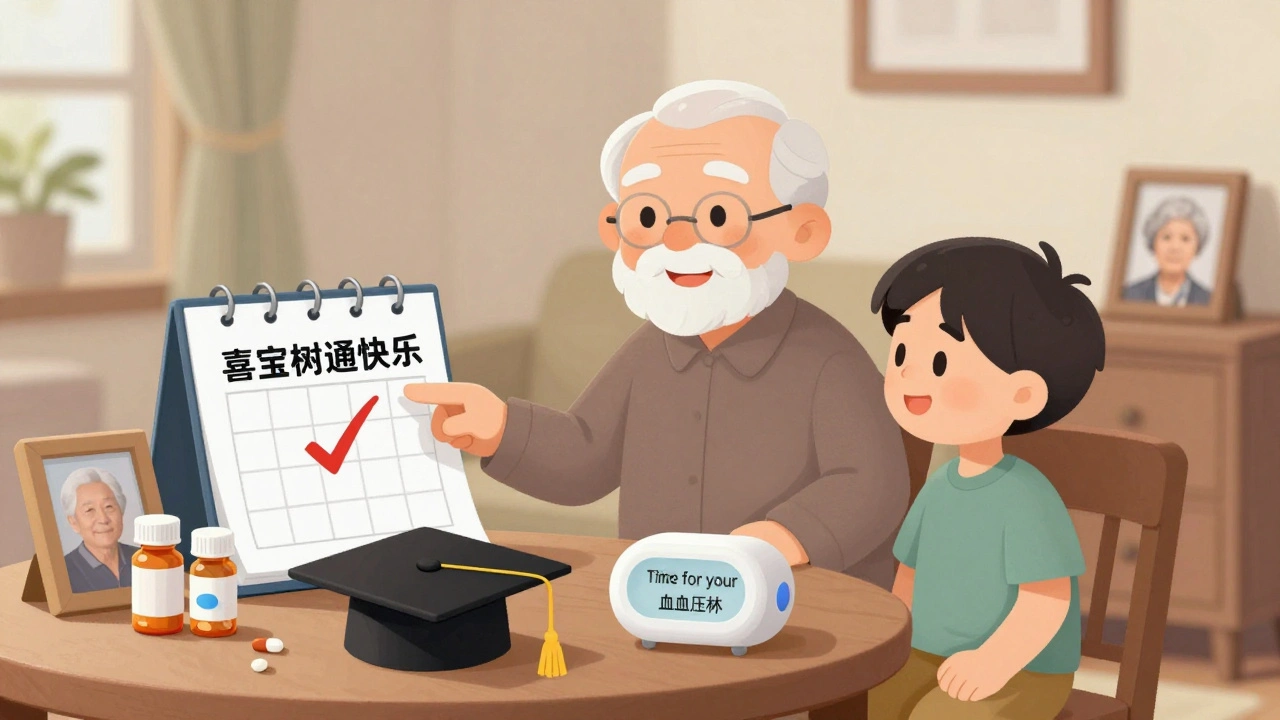
When It’s Not About the Pills - It’s About the Person
Medication adherence isn’t about compliance. It’s about dignity. An older adult doesn’t want to be told they’re “non-compliant.” They want to feel heard. They want to know their life still matters. They want to believe their pills are worth taking. One man I met in Oxford, 82, had stopped taking his blood thinner after his wife died. He didn’t say why. He just said, “What’s the point?” His doctor didn’t push. He asked: “What do you want to do this year?” The man said he wanted to see his grandson graduate. The doctor said: “Then let’s make sure you’re here for that.” They cut his pills from five to two. They added a weekly check-in. He’s still taking them - two years later. That’s the real solution. Not more reminders. Not cheaper pills. Not better apps. It’s connection.What You Can Do Today
If you’re caring for an older adult:- Look in their medicine cabinet. Are there bottles with no labels? Pills with no names?
- Ask: “Do you know what each of these is for?”
- Check the pill organizer. Is it empty? Full? Half-full?
- Call their pharmacist. Ask if there’s a cheaper option.
- Offer to go with them to their next doctor visit. Take notes.
- Write down every pill you take - even the ones you skip.
- Bring that list to every appointment.
- Ask: “Can I take less?”
- If you can’t afford your meds, say so. There are programs. You just have to ask.
Final Thought: Adherence Isn’t a Failure - It’s a System Failure
When an older adult misses a dose, we blame them. We say they’re forgetful. Unmotivated. Non-compliant. But the real failure? A system that gives them 10 pills, no one to help them take them, and a bill they can’t pay - then expects them to be perfect. Fixing adherence means fixing the system. Simplifying prescriptions. Lowering costs. Building support networks. Training providers to listen. Because medications don’t work if they’re not taken. And no one should have to choose between their health and their dinner.Why do older adults often skip their medications?
Older adults skip medications for many reasons - not just forgetfulness. The most common causes are complex pill schedules, high out-of-pocket costs, lack of social support, confusion about what each pill does, and side effects they don’t know how to manage. Many also fear interactions or think their symptoms mean the medicine isn’t working. Cost is a huge factor: nearly 4% skip doses because they can’t afford them, and that number jumps to 6 times higher for those struggling with food insecurity.
Is polypharmacy always bad for seniors?
Not always - but it’s risky. Taking multiple medications can be necessary for managing several chronic conditions. But when someone is on five or more drugs, especially if some are duplicates or no longer needed, the risk of side effects, falls, confusion, and hospitalization goes up sharply. The key isn’t to eliminate all meds, but to regularly review them with a doctor or pharmacist and stop anything that’s no longer helping - especially if the benefits take years to show and the person’s life expectancy is limited.
How can family members help with medication adherence?
Family members can help by checking in weekly, using a simple pill organizer, and asking open-ended questions like, “What’s hard about taking your pills?” or “Do you know why you take this one?” They can also accompany the person to doctor visits, bring a full list of medications, and call the pharmacy to ask about cheaper alternatives. Even a weekly phone call to remind them to take their meds can make a big difference - especially if they live alone.
Can pharmacists really help with medication management?
Yes - and they’re often underused. Pharmacists can spot duplicate prescriptions, flag dangerous drug interactions, suggest cheaper generic versions, and even help with packaging. Many offer free med reviews - where they sit down with you and go through every pill you take. Ask for one. They can also connect you with patient assistance programs that lower costs. Don’t wait for your doctor to bring it up - go to the pharmacy and ask.
What should I do if I can’t afford my medications?
Don’t skip doses or cut pills in half. Instead, talk to your pharmacist or doctor. Ask if there’s a generic version. Check if the drugmaker offers a patient assistance program - many do. Look up state pharmaceutical assistance programs (PAPs) - they exist in most states. Some nonprofits help seniors pay for meds. And if you’re food insecure, ask about programs that help with both food and medicine - they’re linked. You’re not alone, and help is available.
Are there tools or apps that help seniors take their pills on time?
Yes - but not all are right for everyone. Simple pill dispensers that open at set times with alarms work well. Voice assistants like Alexa or Google Home can be programmed to say, “It’s time for your blood pressure pill.” Apps like Medisafe or MyTherapy send reminders, but they require smartphone use. For someone with poor vision or memory, a physical pill organizer placed next to the coffee maker or toothbrush is often more effective than an app. Choose the tool that fits the person’s life - not the other way around.
Next steps: Start with one small change. Pick one medication. Ask one question. Call one person. Progress isn’t about fixing everything at once - it’s about making one thing easier today.

15 Comments

Irving Steinberg
lol at all these 'solutions' 🤡 my grandma takes 12 pills and still forgets half of them. just give her a pill box and a nudge. why make it so complicated? 🙄

Lydia Zhang
Cost is the real issue. No one talks about how people choose between insulin and food.

Kay Lam
I've seen this up close with my dad. It's not about being forgetful or lazy it's about being overwhelmed by a system that treats seniors like broken machines that need to be fixed with more pills and more apps. The real fix is human connection someone who shows up not to check a box but to sit down and say hey how are you really doing today? That's what makes the difference not another reminder app or a fancy pill dispenser. People need to feel seen not managed.

Jack Arscott
Love the part about pharmacists being underused. My uncle started asking his pharmacist to review his meds and cut 3 pills. Life changed. 🙌

Matt Dean
Of course they miss doses. They're old. Their brains are fried. Stop pretending it's the system's fault. People need to take responsibility. 🤷♂️

Walker Alvey
Medication adherence is just another word for obedience. We've turned healthcare into a cult where the pills are the gods and the elderly are the faithful. What happened to autonomy? What happened to dignity? We don't need more reminders. We need less control.

Bee Floyd
I work in geriatric care and I can tell you the most powerful tool isn't a pill box or an app. It's a 10-minute weekly call from someone who cares. Not a nurse. Not a robot. A real person who says hey I was thinking about you. How'd your meds go this week? That's the magic. Simple. Quiet. Human.

Jeremy Butler
The empirical data overwhelmingly supports the hypothesis that polypharmacy in geriatric populations is correlated with increased morbidity and mortality. The systemic failure lies not in individual nonadherence but in the fragmentation of prescriptive authority across multiple specialty providers who operate in silos without coordinated pharmacological oversight.

Courtney Co
I tried to help my neighbor with her meds but she got so mad at me she stopped talking to me. Now I just send her cookies. Maybe that's the real solution? 😭

Shashank Vira
Ah yes the American healthcare system. Where the elderly are left to drown in a sea of pills while CEOs collect bonuses. How quaint. In India we at least have family. Here you're just a number on a chart. Pathetic.

Priyam Tomar
You say 'simplify the regimen' but what if the regimen is necessary? You think reducing meds is easy? Some people need all 10 pills. You don't know their history. Stop being so simplistic.

Adrian Barnes
This entire article is a feel-good fantasy. People skip meds because they're irresponsible. No amount of 'connection' will fix a lifetime of poor decision-making. Stop coddling them.

Jaswinder Singh
I'm a nurse in Delhi and we don't have fancy pill dispensers. We have grandkids who come after school and say 'dada take your pill'. That's it. No app. No alarm. Just love. You don't need tech. You need someone who remembers you.

Eric Vlach
My mom used to skip her blood pressure meds until I started putting her pill box next to her coffee maker. Now she takes it every morning with her cup. Simple. Routine. No drama. I wish more people knew this stuff works.

Souvik Datta
Let me tell you something. When I was helping my uncle manage his meds after his stroke I realized something. The goal isn't to make him follow a schedule. The goal is to make him feel like he still has control. So we started with one pill. One question. One conversation. And slowly he started to care again. Not because we fixed the system. But because we reminded him he still mattered.
Recent Posts
-
How to Safely Buy Phenytoin Online: A Complete Buyer's Guide
-
Anticholinergic Medications: Cognitive Risks and Managing Dry Mouth
-

Citalopram vs Escitalopram: Managing QT Prolongation and Dose Limits
-
Diphenhydramine Overdose: Recognizing Antihistamine Toxicity and Emergency Care
-
How to Get Prescription Assistance Programs from Manufacturers

Write a comment