Opioid Rotation: How Switching Medications Can Reduce Side Effects
Opioid Rotation Dose Calculator
Dose Conversion Tool
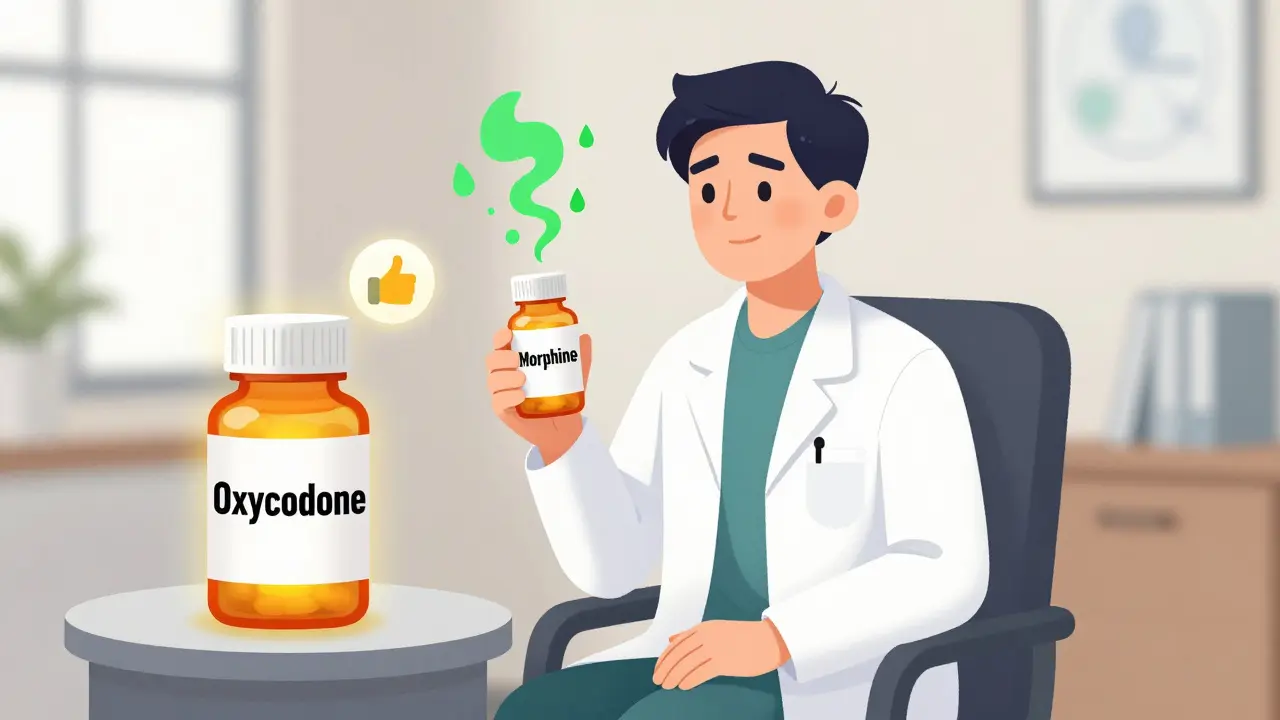
When long-term opioid therapy stops working - not because the pain is getting worse, but because the side effects become unbearable - there’s a solution many clinicians turn to: opioid rotation. This isn’t just swapping one pill for another. It’s a carefully calculated shift from one opioid to a different one, designed to keep pain under control while cutting down on nausea, drowsiness, confusion, or other troubling reactions. For many patients, this switch is the difference between continuing treatment and quitting it altogether.
Why Rotation Works When Dose Increases Don’t
You might think the answer to poor pain control is simple: take more. But with opioids, that often backfires. Increasing the dose doesn’t always mean better pain relief. Instead, it usually means more side effects - and sometimes, paradoxically, more pain. This is called opioid-induced hyperalgesia, where the body becomes more sensitive to pain because of the drugs themselves. When this happens, doubling the dose makes things worse, not better. That’s where opioid rotation comes in. Instead of pushing the dose higher, clinicians switch to a different opioid. The reason? Not all opioids affect the body the same way. One drug might cause severe nausea, while another leaves the stomach alone. One might make you feel foggy, while another keeps you alert. Even if two opioids are considered "equally strong" on paper, your body may respond very differently to each. Studies show that between 50% and 90% of patients who undergo opioid rotation see improvements - either less side effects, better pain control, or both. One study of 49 cancer patients switching from morphine to other opioids found nausea, vomiting, and sedation dropped significantly. Another found switching to oxycodone or fentanyl helped reduce constipation and blurry vision.When Is Opioid Rotation Recommended?
Not everyone needs to switch. But there are clear signs it’s time to consider it:- You’re experiencing intolerable side effects - like constant vomiting, extreme drowsiness, muscle twitching, or confusion - even at doses that should be manageable.
- Your pain isn’t improving, even after increasing your dose by more than 100%.
- You’ve developed new health problems, like liver or kidney issues, that make your current opioid harder to process.
- You need a different way to take the medication - for example, switching from pills to a patch or injection because swallowing is difficult.
- You’re taking other drugs that interact badly with your current opioid.
- Cost or availability makes your current medication hard to get.
The Methadone Exception
Among all opioids, methadone stands out. It’s not just another option - it’s often the key to reducing total opioid use. Unlike most opioids, methadone tends to lower the Morphine Equivalent Daily Dose (MEDD) after rotation. Why? Because it works differently in the body. It blocks pain signals in more than one way, and it sticks around longer, meaning you don’t need as much to get the same effect. But here’s the catch: the old conversion ratios are outdated. For years, doctors used a 10:1 ratio - meaning 10 mg of morphine equals 1 mg of methadone. Recent data suggests that for patients switching due to side effects, the real ratio is closer to 9:1. And for pain control alone? It might be even lower. This means if you follow the old math, you could end up with too much methadone - and risk overdose. That’s why experts now recommend reducing the new dose by 30% to 50% when switching to methadone, even if the math says otherwise. Safety comes first.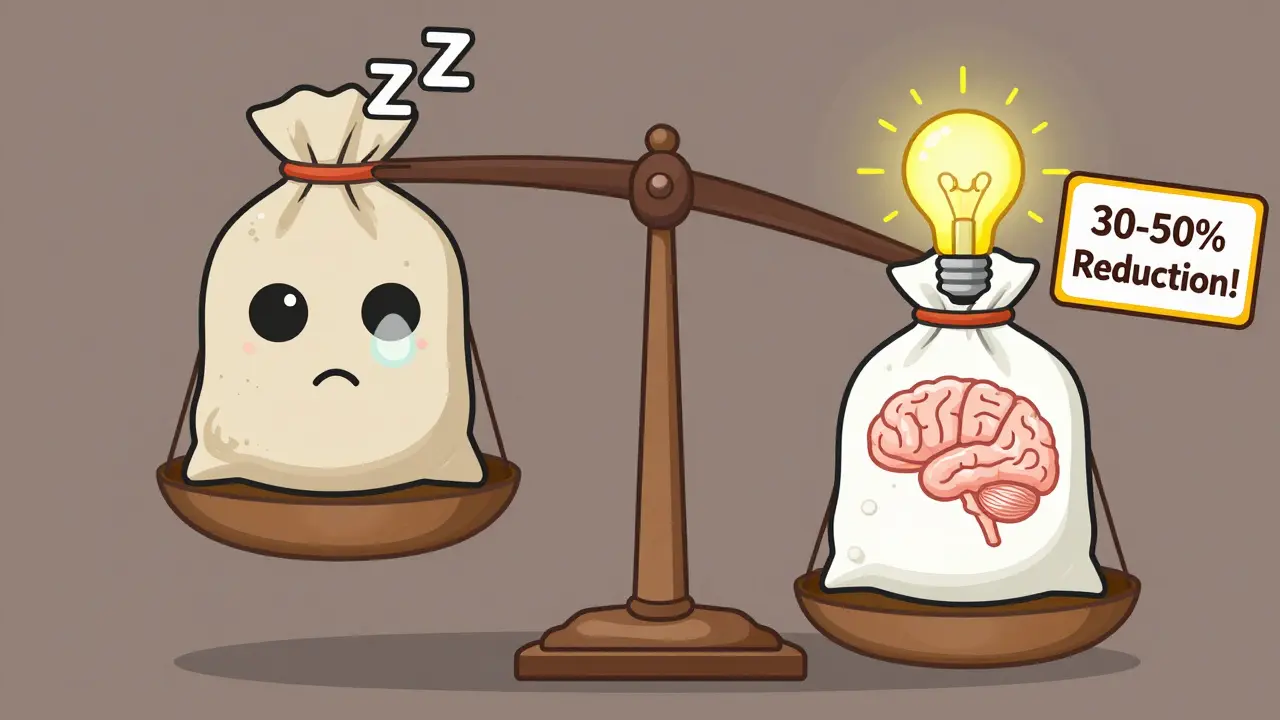
It’s Not Just About the Math
A lot of people think opioid rotation is just a formula: "Take your current dose, plug it into a chart, and you get your new dose." But it’s not that simple. The conversion ratios you see in textbooks are averages - based on groups of people. Your body is unique. Genetics play a role. Some people metabolize opioids faster or slower because of inherited differences in liver enzymes. Other factors - age, weight, kidney function, even how long you’ve been on opioids - all change how your body handles the switch. That’s why rotation isn’t done on a hunch. It’s done with a plan. Clinicians don’t just pick a new drug and give the same dose. They start lower, often 25% to 50% below the calculated equivalent, then slowly adjust based on how you feel. This is called "partial cross-tolerance" - your body hasn’t fully adjusted to the new drug yet, so you need less to start. And the timing matters. Switching too fast can lead to withdrawal or overdose. Most protocols recommend waiting 24 to 72 hours after the last dose before starting the new opioid, depending on how long the old one lasts.What You Should Know Before You Switch
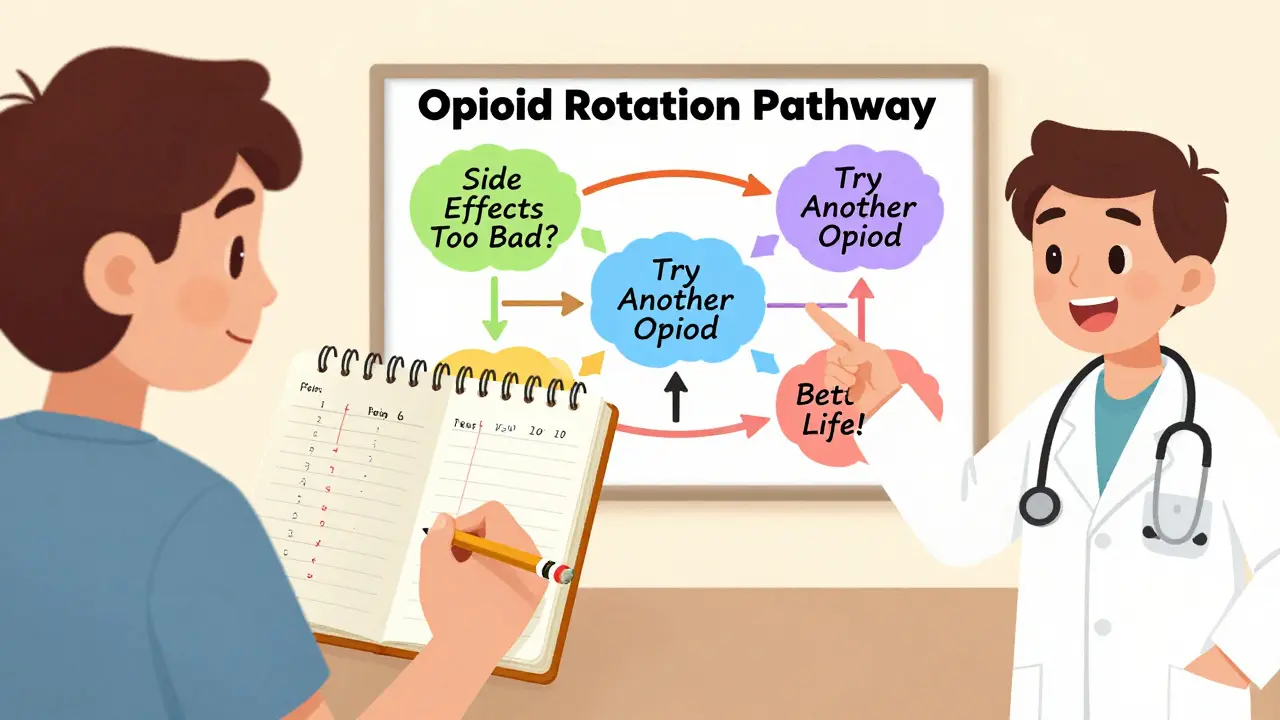
If you’re considering opioid rotation, here’s what to expect:- It’s not instant. You might feel worse before you feel better. The first few days after the switch can include withdrawal-like symptoms or temporary pain flares.
- Communication is key. Tell your provider exactly what side effects you’re having - not just "I feel sick," but "I vomit every night," or "I can’t stay awake past 3 p.m."
- Track your pain and side effects. Keep a simple log: rate your pain on a scale of 1 to 10, note when nausea or dizziness hits, and record sleep quality. This helps your doctor know if the switch worked.
- Don’t rush the process. Adjustments happen over days or weeks, not hours. Patience here saves you from dangerous mistakes.
The Evidence Gap
Despite how common opioid rotation is, there’s still a big hole in the science. Most of what we know comes from small observational studies - not large, controlled trials. We don’t have clear answers on which opioid works best for which side effect, or how long the benefits last. The last major guidelines came out in 2009. Since then, we’ve learned more about methadone, opioid-induced hyperalgesia, and genetic influences. But we still don’t have a gold-standard protocol. That’s why experts stress that rotation should be personalized, not automated. The future may lie in genetic testing. Some clinics are already looking at how your DNA affects opioid metabolism. In the next few years, we may see doctors using genetic profiles to predict which opioid is least likely to cause side effects for you - before you even start.What Happens After the Switch?
The goal isn’t just to change drugs - it’s to improve your life. After rotation, you should notice:- Less nausea or vomiting
- Improved alertness and ability to concentrate
- Reduced dizziness or confusion
- More consistent pain control without needing to increase the dose
- Better sleep and appetite
Final Thoughts
Opioid rotation isn’t a last resort. It’s a smart, evidence-backed tool that helps people stay on effective pain treatment without sacrificing their quality of life. It’s not about failing at opioids - it’s about finding the right one for your body. The key is working with a provider who understands the nuances - who knows that a 10:1 ratio isn’t a rule, that methadone needs extra caution, and that side effects aren’t just "normal" - they’re signals to change course. If you’ve been stuck on a dose that’s too high and a side effect list that’s too long, ask about rotation. It might be the most important switch you make.
15 Comments

Stephen Archbold
Man, I wish I knew about this years ago. I was stuck on morphine for like 3 years, puking every morning and nodding off at my kid’s soccer games. Switched to oxycodone and boom-slept through the night for the first time in ages. No magic formula, just trial and error with a good doc.
Side note: if your doctor just says "it’s normal," find a new one.

Nerina Devi
This is so important. In India, many patients are just told to "take more" until they can’t even walk. Opioid rotation isn’t failure-it’s smart medicine. I’ve seen it turn someone from bedridden to walking to the market again. It’s not about the drug, it’s about the person.

Dinesh Dawn
I’m a nurse in a rural clinic. We don’t have fancy tools, but we do have patience. One guy switched from hydromorphone to fentanyl patch and stopped hallucinating. He cried when he realized he could read his granddaughter’s letters again. That’s the real win.

Vanessa Drummond
Why is this even a debate? If your meds are making you a zombie, change them. Stop glorifying suffering. Pain management isn’t about toughing it out-it’s about living. And if your doctor doesn’t get that, they’re part of the problem.

Nick Hamby
The concept of partial cross-tolerance is profoundly underappreciated in clinical practice. The pharmacokinetic and pharmacodynamic variability among opioids is not merely a nuance-it is a fundamental principle of neuropharmacology. When we assume equivalence based on morphine milligram equivalents, we are engaging in a form of reductionist thinking that ignores the complexity of human neurobiology. The 30-50% dose reduction protocol for methadone is not arbitrary-it is an empirical safeguard against a phenomenon we still do not fully understand. We must move beyond algorithmic prescribing toward individualized, phenomenological care.

kirti juneja
Opioid rotation is like switching from a rusty bike to a sleek electric scooter-same destination, way less sweat. I’ve seen people go from "I can’t hug my dog" to "I’m gardening again." It’s not rocket science, but it takes a doc who actually listens. Stop treating side effects like background noise. They’re the alarm bell telling you: change course.

Haley Gumm
Let’s be real-this whole rotation thing is just doctors covering their butts. If you’re on opioids long-term, you’re already in trouble. This just delays the inevitable. And methadone? Please. That stuff’s a trap. People get hooked on the idea of "lower dose" and end up worse. It’s not a fix-it’s a rebrand.

Gabrielle Conroy
YES!! This is so needed!! 🙌 I’ve been on 3 different opioids in 5 years and each switch felt like a miracle. The nausea vanished, my brain cleared, I started cooking again 😭 I kept a journal like they said-10/10 would recommend. Tell your provider you’re ready to rotate! You deserve to feel human again 💖

Spenser Bickett
So you mean instead of just being a junkie, you can be a junkie on a different brand? Groundbreaking. Next you’ll tell me switching from Coke to Pepsi reduces cavities. Wake up. Opioids are opioids. The math is a myth. The whole "rotation" thing is just placebo with a fancy name.

Christopher Wiedenhaupt
The clinical evidence supporting opioid rotation is primarily derived from small cohort studies with significant selection bias. While anecdotal reports suggest benefit, the absence of randomized controlled trials limits generalizability. Furthermore, the pharmacological variability in CYP450 metabolism introduces unpredictable outcomes. A standardized, evidence-based algorithm remains elusive.

John Smith
I’ve been on fentanyl for 8 years. I’m not a junkie. I’m a patient. You think I want to be on this? I’m not here for the high. I’m here because my spine is a pile of broken glass and the world thinks I should just grin and bear it. You don’t get to judge me because you’ve never had a nerve that screams 24/7.

Shalini Gautam
In India, we don’t have access to 10 different opioids. We have one, and if it doesn’t work, we wait. This article sounds like a luxury for Americans. We need better pain clinics, not better drug swaps. Rotation? We can’t even get morphine in some villages.

Natanya Green
I switched from oxycodone to methadone and I swear I felt like I was reborn. 🌟 First time in 7 years I didn’t need a nap at 2 p.m. My husband said I smiled again. I cried for 45 minutes. This isn’t just medicine-it’s a second chance. Please, if you’re suffering, ask your doctor. You don’t have to live like this. I’m proof. 💕

Steven Pam
I was skeptical until I tried it. My doc cut my dose by 40% before switching, and yeah, I had a rough 3 days-shaky, anxious, pain flared. But then? Like someone turned off a fog machine in my brain. I started hiking again. I didn’t even know I’d stopped enjoying nature. This isn’t about drugs. It’s about getting your life back.

Timothy Haroutunian
Look, I get it. People want to feel better. But let’s not pretend this is some revolutionary breakthrough. Opioid rotation is just another way for the pharmaceutical industry to sell you a new product. Every time you switch, someone makes money. The whole system is built on keeping you dependent, not healing you. And don’t get me started on methadone-it’s just a longer leash. The real solution? Stop prescribing opioids like candy in the first place. But hey, if you wanna keep playing the wheel of pain meds, go ahead. I’ll be over here, watching the whole circus.
Recent Posts
-
How to Get Prescription Assistance Programs from Manufacturers
-
How to Safely Buy Phenytoin Online: A Complete Buyer's Guide
-

Triple-Negative Breast Cancer Treatment: New Strategies and Clinical Trials
-
Anticholinergic Medications: Cognitive Risks and Managing Dry Mouth
-
Diphenhydramine Overdose: Recognizing Antihistamine Toxicity and Emergency Care

Write a comment