Secondary Patents: How Pharmaceutical Brands Extend Market Exclusivity
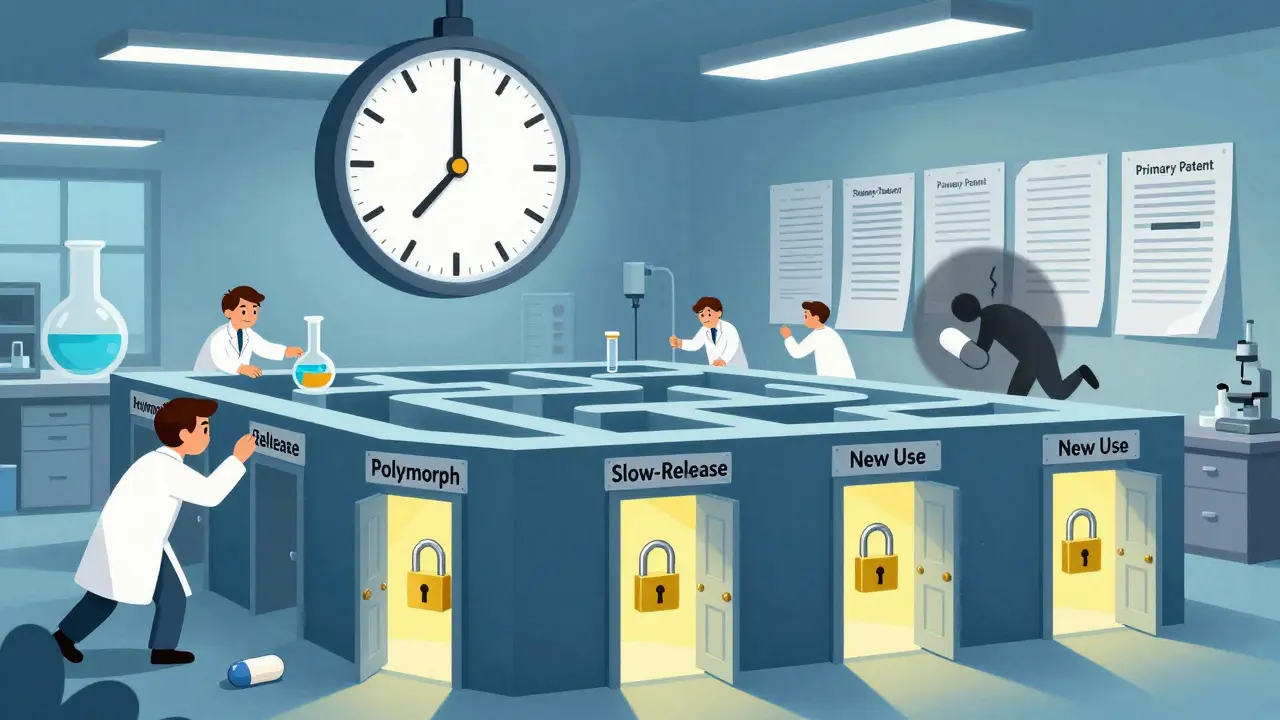
When a drug first hits the market, the company behind it gets a 20-year patent on the active ingredient. That’s the primary patent. But by the time the drug is approved and on shelves, five or six years might already have passed. That leaves just 14 or 15 years to make back the billions spent on development. So what happens when the clock is ticking down? Companies don’t just wait. They file secondary patents.
What Exactly Are Secondary Patents?
Secondary patents aren’t about the drug’s core chemical structure. They protect everything else: how it’s made, how it’s taken, what form it comes in, or even new ways to use it. Think of them as legal side doors. Even if the main door-the primary patent-is locked, these side doors stay open, keeping generics out.There are over a dozen types. Some protect different crystal forms of the same molecule-called polymorphs. Others cover new salt forms, special coatings, or slow-release tablets. Some even patent a drug for a completely new disease. Thalidomide, once banned for causing birth defects, got a new lease on life with a patent for treating leprosy. Later, another patent covered its use in multiple myeloma. Each time, the clock reset.
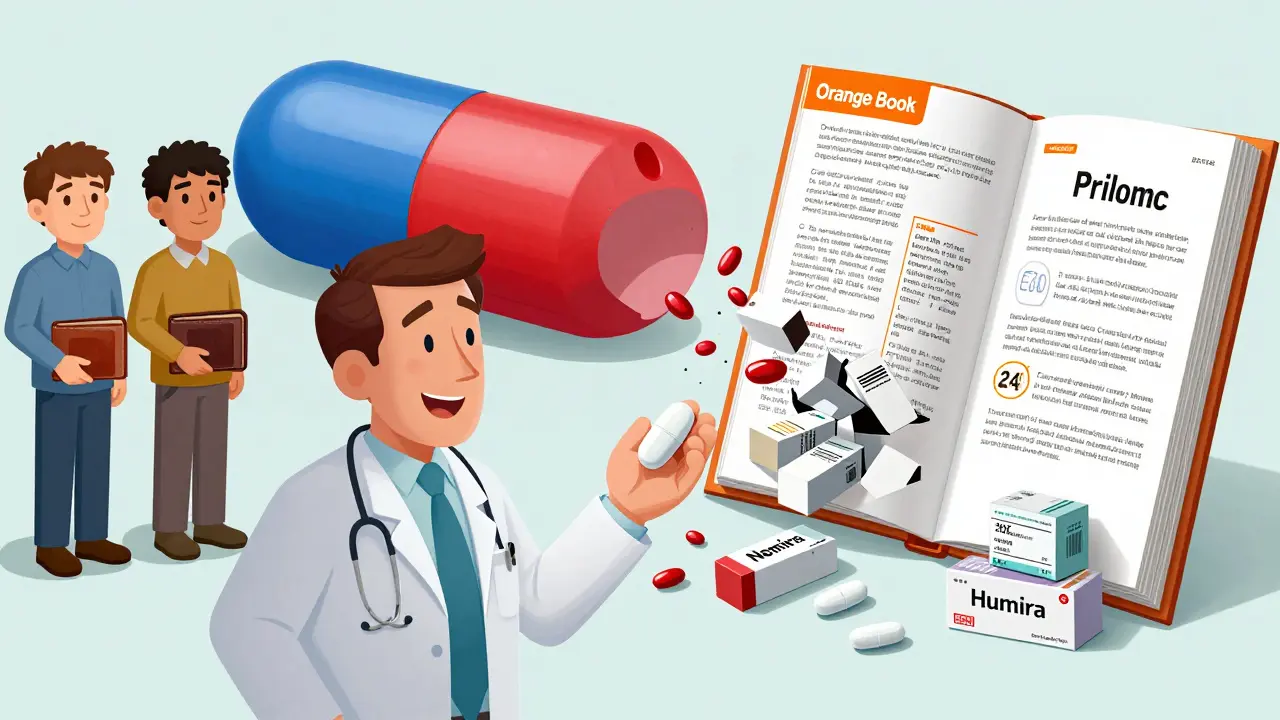
One of the most famous cases is AstraZeneca’s Nexium. The original drug, Prilosec, treated acid reflux. When its patent neared expiration, AstraZeneca launched Nexium-a single-enantiomer version of the same molecule. It wasn’t a breakthrough. Many doctors said it worked the same. But because it was patented as a new compound, Nexium got 8 more years of exclusivity. Sales jumped to $5 billion a year. Prilosec’s generic version never took off as fast because doctors and patients were already switched over.
How Secondary Patents Delay Generics
The U.S. FDA keeps a public list called the Orange Book. It only includes certain types of patents: those covering the drug’s formulation or how it’s used. Companies don’t list every patent. They pick the ones most likely to scare off generic makers. That’s called a patent thicket.AbbVie’s Humira is the textbook example. The primary patent expired in 2016. But by then, AbbVie had filed 264 secondary patents. These covered everything from dosing schedules to manufacturing methods. Generic companies didn’t just face one patent to challenge-they faced dozens. Legal battles dragged on for years. By the time generics finally entered in 2023, Humira had earned over $200 billion in revenue. That’s $20 billion a year for seven extra years after the main patent died.
Studies show drugs with secondary patents see generic entry delayed by an average of 2.3 years. For high-revenue drugs, that delay can mean billions in lost sales for generics. Generic manufacturers say navigating these thickets adds $15 to $20 million in legal costs per drug-and pushes back market entry by over three years.
Who Benefits? Who Pays?
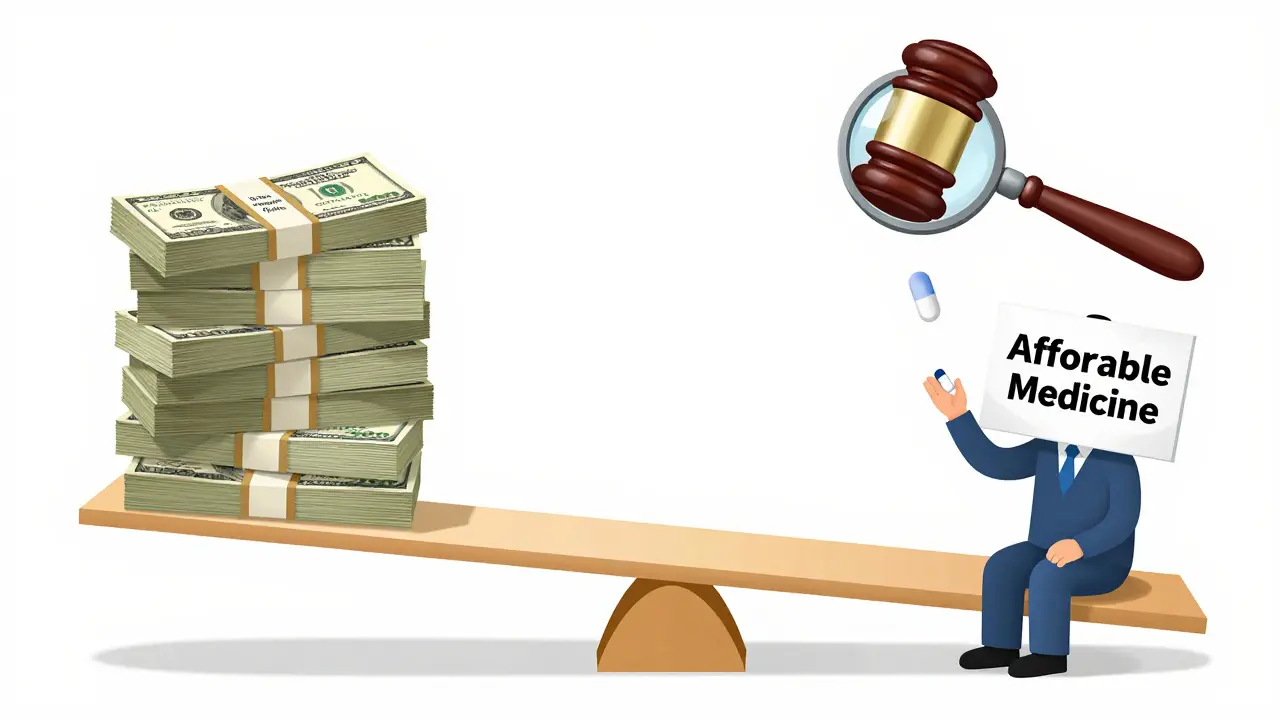
The pharmaceutical industry argues secondary patents drive innovation. PhRMA says they lead to safer dosing, better formulations, and new uses for old drugs. They point to chemotherapy drugs that now cause fewer side effects thanks to improved delivery systems protected by secondary patents.But critics call it evergreening. Harvard’s Dr. Aaron Kesselheim studied hundreds of secondary patents and found only 12% offered any real clinical benefit. The rest? Minor tweaks-changing the pill color, switching from a capsule to a tablet, adjusting the release time by 30 minutes. These changes don’t help patients. But they keep prices high.
Pharmacy benefit managers like Express Scripts say secondary patents raise their annual drug costs by 8.3%. Patients pay more. Insurance plans pay more. Medicare pays more. In 2023, the average price of a brand-name drug with secondary patent protection was 70% higher than its generic equivalent.
And it’s not just the U.S. The UN Development Programme has flagged secondary patents as a major barrier to affordable medicines in low- and middle-income countries. In India, the law says you can’t patent a new form of an old drug unless it shows significantly better effectiveness. That’s why Novartis lost its battle to patent a modified version of Gleevec in 2013. India allowed generics to enter early, slashing the drug’s price by 97%.
The Strategic Game: Timing and Tactics
Companies don’t wait until the last minute. They start planning secondary patents five to seven years before the primary patent expires. The goal? Get the new version on the market 1 to 2 years before generics arrive. That’s called product hopping.Here’s how it works: A drug company launches a new formulation-maybe a once-daily pill instead of twice-daily. They push it hard with doctors. They offer free samples. They tell patients the old version is outdated. By the time the primary patent expires, most patients are already on the new version. Generics can’t just copy the old pill-they have to copy the new one. And if that new one is still under patent? They’re stuck.
Each secondary patent costs $12 to $15 million to file and defend. Big pharma companies hire 15 to 20 patent attorneys per major drug. They monitor generic filings 7 to 10 years in advance. They build portfolios not just to protect, but to intimidate.
Regulatory Crackdowns and Changing Tides
Governments are starting to push back. The 2022 Inflation Reduction Act in the U.S. lets Medicare challenge certain secondary patents. The European Commission called patent thickets “barriers to generic entry” in its 2023 Pharmaceutical Strategy. The WHO says secondary patents are the top legal reason essential medicines stay too expensive in 68 countries.Courts are also tightening the rules. In 2023, a federal appeals court narrowed how broadly antibody patents could be claimed-a decision that could ripple into other areas of secondary patenting. Judges are asking: Is this really inventive? Or just a minor tweak dressed up as innovation?
Some experts predict that by 2027, companies will need to prove their secondary patents deliver real patient benefits-not just profit margins. Otherwise, regulators and courts may start rejecting them outright.
What’s Next for Drug Pricing and Access?
The system isn’t broken-it was designed this way. The Hatch-Waxman Act of 1984 gave brand-name companies extra incentives to innovate by letting them extend exclusivity. But over time, the incentives became a loophole.Today, the top 10 drug companies hold 73% of all secondary patents. Pfizer alone has over 14,000. Meanwhile, 89% of drugs earning over $1 billion a year have at least 10 secondary patents. For drugs under $100 million? Only 22% do.
That’s the real story. Secondary patents aren’t about helping all patients. They’re about protecting the most profitable drugs. The ones that make billions. The ones that keep shareholders happy.
Patients, payers, and policymakers are catching on. The next wave of reform won’t eliminate secondary patents. But it will demand more proof that they’re not just legal tricks. If a new tablet form doesn’t make the drug safer, easier to take, or more effective-it shouldn’t block a cheaper generic.
The future of drug access depends on that balance. Innovation matters. But so does affordability. Right now, the scales are tipped. And the cost? Billions in extra spending-and millions of patients waiting.
Are secondary patents legal?
Yes, secondary patents are legal in most countries, including the U.S. and the EU. But their validity depends on whether they meet patentability standards-novelty, non-obviousness, and utility. In places like India and Brazil, laws specifically limit secondary patents unless they show significantly improved efficacy. Courts are also becoming stricter, especially when the changes are minor.
How long do secondary patents last?
Secondary patents last 20 years from their own filing date, just like primary patents. But because they’re often filed years after the original, they can extend market exclusivity by 4 to 11 years beyond the primary patent’s expiration. Some drugs end up with over 20 years of protection through a chain of secondary patents.
Do all secondary patents delay generics?
No. Only those listed in the FDA’s Orange Book can be used to block generics. Companies often file dozens of secondary patents but only list the ones most likely to be challenged. Others are kept as "reserve" patents-used only if a generic company finds a way around the listed ones. About 92% of listed secondary patents face legal challenges from generics, but only 38% of those challenges succeed in court.
Can a generic drug copy a secondary patented version?
Not until the secondary patent expires or is successfully challenged. Generic companies can’t legally make or sell a drug that matches a patented formulation, method of use, or delivery system. Even if the active ingredient is off-patent, copying the exact tablet coating, release mechanism, or dosing schedule can still infringe. That’s why many generics wait years-or settle with the brand company-to enter the market.
Why don’t doctors always know about product hopping?
Pharmaceutical reps actively promote new formulations just before generics hit the market. They offer free samples, educational materials, and incentives to switch. Many doctors assume the new version is better-especially if it’s marketed as "improved" or "advanced." A 2022 Medscape survey found that 61% of primary care physicians felt pressured to switch patients to newer branded versions, even when generics were available.
Is there a movement to limit secondary patents?
Yes. Patient groups, public health organizations, and some lawmakers are pushing for reforms. Proposals include requiring proof of clinical benefit before granting secondary patents, limiting the number of patents per drug, and banning product hopping. The European Union and WHO are also urging countries to adopt stricter patent standards to improve access to affordable medicines.

9 Comments

Robin Keith
So let me get this straight-we’ve built an entire economic engine around legal sleight-of-hand, where the only real innovation is in the law firm’s billing department? The drug doesn’t change, the patient doesn’t benefit, but the price? Oh, it climbs like a stock ticker on a caffeine bender. We’re not talking about breakthroughs here-we’re talking about repackaging the same molecule with a new coating, a different pill shape, and a marketing team that calls it ‘next-gen’ while the active ingredient is still the same damn compound that was synthesized in 1998. And we wonder why healthcare costs are unsustainable? It’s not broken. It’s designed this way. And the design? It’s predatory.
They call it ‘evergreening’ like it’s some quaint gardening hobby. It’s corporate cannibalism. They take a drug that’s about to go generic, then they surgically graft on a new patent like a parasitic vine, strangling competition with a thousand tiny legal thorns. And the FDA? They’re just the bouncer at the club, checking IDs for the main door while letting a hundred back entrances stay wide open. Meanwhile, people in rural Ohio are choosing between insulin and groceries because a corporation spent $15 million to patent a tablet that dissolves 0.3 seconds faster.
And don’t even get me started on product hopping. It’s not innovation-it’s psychological manipulation. You convince doctors, through free samples and glossy pamphlets, that the old version is ‘outdated,’ even when it’s chemically identical. Then you pull the rug out from under generics. It’s like switching from a Honda Civic to a Honda Civic with a new paint job and charging $10,000 more because ‘it’s improved.’ And the worst part? We let them. We’ve normalized it. We’ve made it acceptable to pay $500 for a drug that should cost $20. And for what? So some CEO can buy a third yacht? This isn’t capitalism. This is feudalism with a patent attorney.

Doug Gray
It’s fascinating how the system is engineered to extract maximum rent from public health infrastructure. The primary patent is just the entry fee-the real profit comes from the secondary IP layering, which functions as a regulatory moat. The Orange Book isn’t a transparency tool-it’s a weaponized catalog. And the fact that 89% of billion-dollar drugs have 10+ secondary patents? That’s not innovation. That’s rent-seeking on an industrial scale. Pharma’s R&D spend? Mostly just litigation prep. The real ‘discovery’ is in the legal department, not the lab.

LOUIS YOUANES
They patent the color of the pill. The shape. The fucking packaging. And then they act like they invented gravity. Meanwhile, kids in India are dying because their government can’t afford to pay for a drug that’s been around since the 90s. This isn’t business. This is theft dressed in a suit.

Laia Freeman
OMG I JUST REALIZED-this is why my insulin is still $300 even though it’s been around FOREVER?! Like… they just keep rebranding it?? I’m so mad. I thought it was just my insurance being evil but NO. It’s a whole SYSTEM. I’m gonna start a petition. Someone help me!!

rajaneesh s rajan
In India, we had to fight Novartis for years just to keep Gleevec affordable. The Supreme Court said: ‘If it doesn’t improve efficacy, it’s not an invention-it’s a trick.’ And you know what? It worked. Generics flooded in. Prices dropped 97%. We didn’t stop innovation-we stopped fraud. The U.S. needs to wake up. You’re not protecting innovation. You’re protecting profit margins while patients starve. A patent isn’t a license to gouge. It’s supposed to be a trade: innovation for limited monopoly. But now? The monopoly is the innovation.

paul walker
I didn’t even know this was a thing until I read this. Just goes to show how little most of us understand about how our meds are priced. It’s wild how much power these companies have. We need more transparency. Like, seriously-why can’t we see all the patents? Why are they hidden? This needs to be public knowledge.

Alex Flores Gomez
It’s hilarious how they call it ‘product hopping’ like it’s some cool skateboard trick. Nah. It’s a corporate shell game. You’re not innovating-you’re gaming the system. And the worst part? You’re not even doing it to improve care. You’re doing it because the CFO said ‘we need 15% growth next quarter.’ The entire pharma model is built on exploiting regulatory loopholes. It’s not capitalism-it’s legalized looting.

Frank Declemij
Secondary patents are legal because the law allows them. But legality doesn’t equal morality. The system incentivizes incrementalism over breakthroughs. The real failure isn’t the companies-it’s the regulatory framework that lets them. Reform isn’t about killing innovation. It’s about demanding real value. If a new tablet form doesn’t improve adherence, safety, or efficacy, it shouldn’t block generics. Simple as that.

ryan Sifontes
They’re not just extending patents. They’re controlling the entire supply chain. The FDA. The doctors. The insurers. Even the patients. This isn’t coincidence. It’s a coordinated, decades-long operation. And the media? They’re paid to look away. You think this is about science? Nah. It’s about control. The same people who own the drugs own the news. They own the politicians. They own the narrative. And you? You’re just the customer. The mark.
Recent Posts
-
How to Get Prescription Assistance Programs from Manufacturers
-
How to Safely Buy Phenytoin Online: A Complete Buyer's Guide
-

Citalopram vs Escitalopram: Managing QT Prolongation and Dose Limits
-
Diphenhydramine Overdose: Recognizing Antihistamine Toxicity and Emergency Care
-
Anticholinergic Medications: Cognitive Risks and Managing Dry Mouth

Write a comment