Cost-Related Nonadherence: Why People Skip Medications and What It Costs
When someone stops taking their blood pressure pill because it costs $200 a month, that’s not noncompliance—it’s cost-related nonadherence, the decision to skip or reduce medication due to financial barriers. It’s a silent crisis affecting millions, and it’s not about forgetting or being careless. It’s about choosing between insulin and groceries, between statins and rent. This isn’t a rare edge case. Studies show nearly 1 in 4 Americans skip doses or don’t fill prescriptions because of cost. And it’s not just the uninsured—many with insurance still face high copays, deductibles, or formulary restrictions that make meds unaffordable.
Medication affordability, the ability to pay for prescribed drugs without financial hardship is the core issue behind nonadherence causes, the real-world reasons people stop taking their drugs. It’s not just the price tag. It’s the surprise of a $150 copay after months of $10. It’s the pharmacist saying, "We don’t carry that generic anymore—it’s backordered." It’s the person with diabetes choosing between metformin and a bus pass to get to work. These aren’t hypotheticals. They’re daily realities tied to drug costs, the out-of-pocket price patients pay for prescriptions, which in the U.S. are often 3 to 10 times higher than in other countries.
When people skip meds, the consequences aren’t abstract. They show up in ER visits, hospitalizations, and early deaths. A patient with atrial fibrillation who stops warfarin because of cost isn’t being reckless—they’re reacting to a system that doesn’t make affordability a priority. The same goes for someone with bipolar disorder skipping lithium after a price hike, or a truck driver avoiding statins because of muscle pain and no coverage for alternatives. These are the exact scenarios covered in the posts below—stories of patients caught between science and survival.
What you’ll find here isn’t theory. It’s real cases: how generic switching can break INR control, why statin intolerance clinics exist, how lithium and NSAIDs can turn deadly when patients can’t afford safer options, and why people turn to unregulated online pharmacies for cheaper alternatives. These aren’t isolated mistakes. They’re symptoms of a broken system. The posts below show how cost-related nonadherence isn’t just a patient problem—it’s a systemic one, woven into supply chains, drug pricing, and policy gaps. You’ll see how people adapt, how some clinics help, and why simple fixes often fail. This is what happens when medicine becomes a luxury. And it’s happening right now, to people you know.
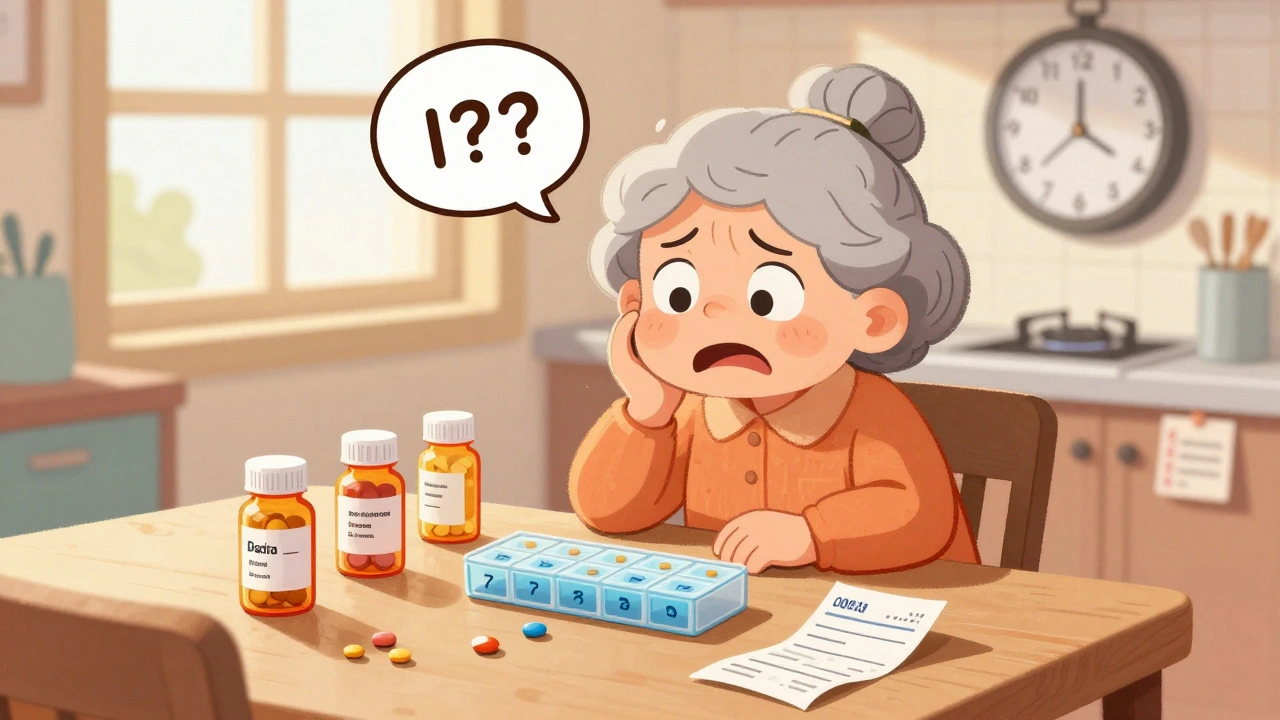
Medication Adherence Challenges for Older Adults: Practical Solutions That Work
Most older adults take multiple medications, but nearly one in three don't take them as prescribed. This article breaks down the real reasons why - from cost to confusion - and shares practical, proven solutions that work.
Read More