Anticholinergic Medications: Cognitive Risks and Managing Dry Mouth

Imagine taking a pill to help you sleep or stop a bladder leak, only to realize months later that you can't remember where you parked your car or why you walked into a room. This isn't just "getting older"-it could be the side effect of a common class of drugs known as anticholinergics is a group of pharmaceutical agents that block acetylcholine, a vital neurotransmitter used by both the brain and the peripheral nervous system. While they are effective for everything from allergies to overactive bladders, they come with a hidden cost: a significant risk of brain shrinkage and a persistent, irritating dry mouth.
The Brain Fog Connection: How Anticholinergics Affect Cognition
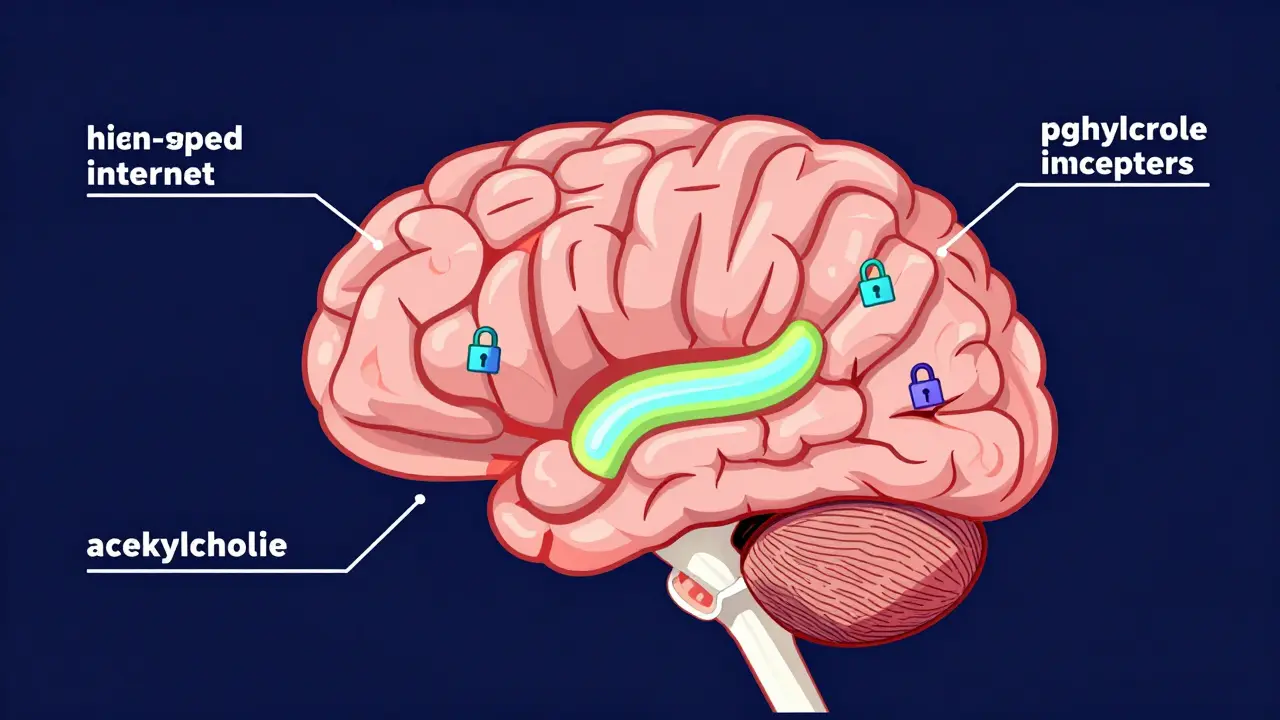
To understand why these drugs mess with your memory, you have to look at Acetylcholine. Think of it as the brain's "high-speed internet" for learning and memory. Anticholinergics block the receptors for this chemical, specifically the M1 receptors in the prefrontal cortex and hippocampus. When these receptors are blocked, the brain's ability to process a memory or make a quick decision slows down.
It's not just a temporary feeling of cloudiness. Research from JAMA Neurology found that people using high-burden anticholinergics experienced an additional 0.5% to 1.2% of annual brain atrophy. In plain English: their brains were physically shrinking faster than those not taking the drugs. Imaging scans showed that glucose metabolism in the hippocampus-the area responsible for episodic memory-dropped by up to 14%. For an older adult, this can look like a sudden slide into mild cognitive impairment or even Alzheimer's disease.
The risk isn't the same for every drug. Doctors use the Anticholinergic Cognitive Burden (ACB) scale to measure the danger. This scale ranges from 0 (safe) to 3 (high risk). If you're taking a drug with an ACB score of 3, you're essentially putting your brain in a high-risk zone for long-term memory loss.
Comparing the Risks: Not All Anticholinergics are Equal
If you're worried about your memory, the specific medication you're on matters immensely. Some drugs cross the blood-brain barrier easily, while others stay mostly in the body's periphery. For example, Oxybutynin is notorious for its cognitive impact, showing a 28% greater decline in cognitive scores compared to alternatives like tolterodine.
On the other hand, some medications are "cognitive-sparing." Drugs like trospium or tiotropium have a much lower ACB score and generally don't show the same link to dementia. If you're choosing a treatment for an overactive bladder, the difference between a cheap generic and a modern alternative can be the difference between staying sharp or feeling confused.
| Medication | ACB Score | Cognitive Risk Level | Common Use |
|---|---|---|---|
| Scopolamine | 3 | Very High | Motion Sickness |
| Oxybutynin | 2-3 | High | Overactive Bladder |
| Amitriptyline | 3 | High | Depression/Neuropathy |
| Diphenhydramine | 3 | High | Allergies/Sleep |
| Trospium | 1 | Low | Overactive Bladder |
| Tiotropium | 1 | Low | COPD/Asthma |
The Battle with Dry Mouth: Why it Happens and How to Fix It
While the brain effects are the most dangerous, dry mouth (xerostomia) is the most annoying. It happens because these drugs block the signals that tell your salivary glands to produce spit. For some, it's a minor nuisance; for others, it's a nightmare where they can't speak comfortably or swallow without water.
If you're struggling with a mouth that feels like a desert, a few things actually work. Sugar-free gum is a great first step, as it can boost saliva production by 30% to 40%. For more severe cases, over-the-counter saliva substitutes like Xerolube can provide a temporary film of moisture. In extreme clinical cases, doctors might prescribe Pilocarpine, which essentially does the opposite of the anticholinergic drug by stimulating salivary flow.
When the Benefit Outweighs the Risk
Now, it's not all bad news. For some people, these drugs are lifesavers. Someone struggling with severe incontinence might find that Oxybutynin reduces their accidents from ten times a day to once or twice. In that scenario, a bit of dry mouth-or even a slight dip in memory-might feel like a fair trade for regaining their dignity and freedom.
The key is a personalized risk-benefit analysis. As Dr. Chris Fox from the University of East Anglia has noted, you can't just stop these drugs abruptly, especially for conditions like Parkinson's disease, as the rebound effect can be severe. The goal isn't to ban these drugs, but to use them smarter.

Safer Alternatives and Modern Shifts
The good news is that medicine is moving away from high-burden drugs. For bladder control, Mirabegron has emerged as a powerful alternative. Because it's a beta-3 agonist rather than an anticholinergic, it doesn't block acetylcholine, meaning you get the bladder control without the brain fog. The only catch? It's significantly more expensive than the older generics.
We're also seeing the rise of "cognitive-sparing" versions of old drugs. New formulations like trospium chloride XR are designed to stay out of the central nervous system, reducing the risk of cognitive decline by roughly 70% compared to older versions. Additionally, AI-driven screening tools are starting to help doctors spot "anticholinergic burden" in a patient's chart before the first pill is even dispensed.
How to Protect Your Brain and Comfort
If you or a loved one are taking these medications, don't panic, but do be proactive. Start by checking your medication list against the ACB scale. If you see multiple drugs with scores of 2 or 3, you are accumulating a "burden" that increases your risk exponentially.
Ask your doctor about the 2023 Beers Criteria, which explicitly lists medications that are potentially inappropriate for people over 65. If you're experiencing sudden confusion or memory lapses, request a cognitive screen like the Montreal Cognitive Assessment (MoCA). Catching these changes early allows you to switch to a lower-ACB alternative before the brain atrophy becomes permanent.
Can I stop taking anticholinergics immediately if I notice memory loss?
No, you should never stop these medications abruptly. Depending on the condition being treated-such as Parkinson's disease or severe depression-stopping suddenly can cause a dangerous rebound effect or a severe return of symptoms. Always work with your doctor to taper the dose or switch to a safer alternative.
Is the dry mouth just a nuisance, or is it dangerous?
It's more than just a nuisance. Saliva protects your teeth from decay and helps you digest food. Long-term dry mouth can lead to increased cavities, oral infections, and difficulty swallowing, which can increase the risk of choking or aspiration in elderly patients.
Do over-the-counter sleep aids like Benadryl count as anticholinergics?
Yes. Diphenhydramine (the active ingredient in Benadryl and many ZzzQuil-style sleep aids) has a high ACB score of 3. Using these frequently, especially in older age, can contribute significantly to cognitive decline and brain atrophy.
How can I tell if my memory loss is from the drug or from aging?
While only a doctor can diagnose you, drug-induced cognitive impairment often appears more suddenly after starting a new medication or increasing a dose. A key tell is "sudden confusion" or a noticeable drop in executive function (like struggling to manage a checkbook) shortly after medication use.
Are there any side effects to the dry mouth remedies?
Sugar-free gums and saliva substitutes are generally very safe. However, if you use prescription options like pilocarpine, be aware they can cause other cholinergic effects, such as increased sweating or urinary frequency, which might counteract the reason you're taking an anticholinergic in the first place.

Recent Posts
-

How to Safely Buy Phenytoin Online: A Complete Buyer's Guide
-

Diphenhydramine Overdose: Recognizing Antihistamine Toxicity and Emergency Care
-

How to Get Prescription Assistance Programs from Manufacturers
-

Citalopram vs Escitalopram: Managing QT Prolongation and Dose Limits
-

Anticholinergic Medications: Cognitive Risks and Managing Dry Mouth
