How to Use Patient Counseling to Catch Dispensing Mistakes
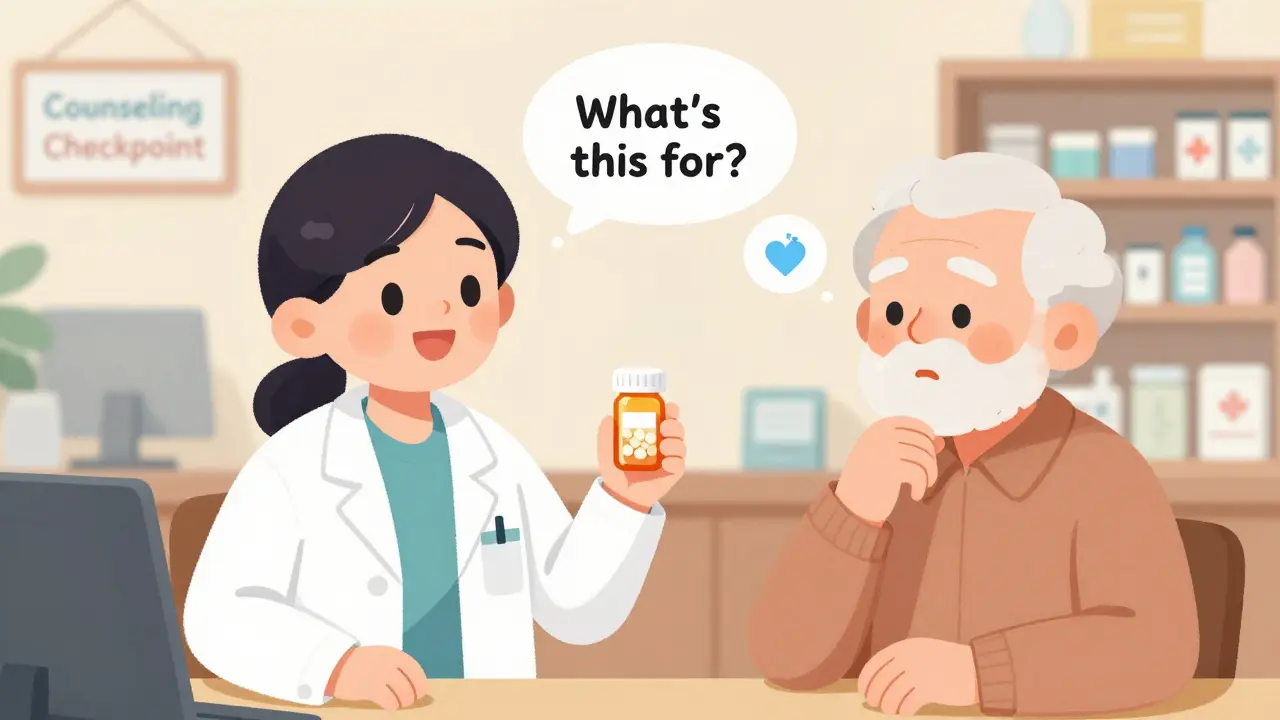
Every year, over 50 million medication errors happen in U.S. pharmacies. Most of these mistakes happen before the pill ever leaves the counter. And yet, the single most effective tool to stop them isn’t a barcode scanner, a robot, or a double-check system. It’s a simple conversation - patient counseling.
Why Patient Counseling Stops More Errors Than Technology
Barcodes catch about 53% of dispensing mistakes. Pharmacist double-checks catch 67%. But when pharmacists talk directly to patients, they catch 83%. That’s not a guess. That’s from data collected by Pharmacy Times in 2010 and confirmed by studies since. Why? Because machines can’t ask, “What’s this for?” or notice when a patient says, “This pill looks different than last time.”Patients aren’t just passive recipients of medication. They’re the last line of defense. When you ask someone to explain how they’ll take their new drug, you’re not just teaching - you’re verifying. A patient who says, “I take this for my cholesterol,” when the prescription is for blood pressure, just saved themselves from a dangerous mix-up. That’s the power of human interaction.
The Four Critical Checks Every Pharmacist Must Do
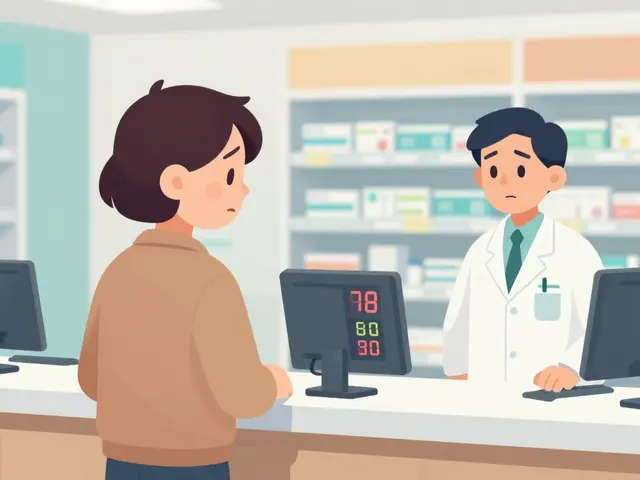
Effective counseling isn’t about giving a long lecture. It’s about asking the right questions in a structured way. Based on guidelines from the American Pharmacists Association (APhA) and the National Association of Boards of Pharmacy (NABP), here are the four must-do steps:- Confirm identity and medication purpose - Don’t just say, “This is lisinopril.” Ask, “What condition are you taking this for?” If they say, “For my allergies,” when it’s for high blood pressure, you’ve caught a mistake before it leaves the counter.
- Verify administration instructions - Ask the patient to show you how they’ll take it. Can they open the bottle? Do they know if it’s morning or night? Can they explain why it’s once daily and not four times? The “teach-back” method - where patients repeat instructions in their own words - catches 68% more errors than just reading labels.
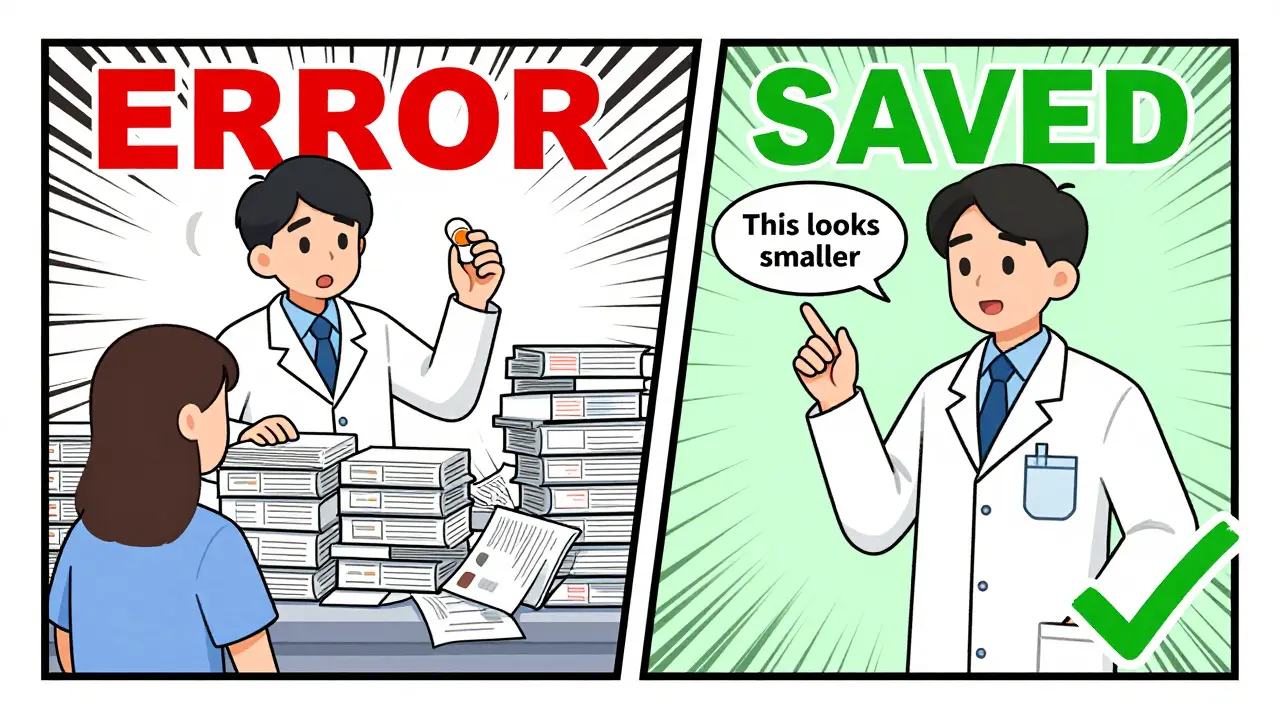
- Check the physical appearance - Show the patient the pill or liquid. Ask, “Does this look like what you’ve taken before?” This catches look-alike errors, especially with high-alert drugs like insulin, warfarin, or opioids. One CVS pilot found that asking this single question caught over 1,200 errors in three months.
- Review interactions and allergies - Ask, “Are you taking anything else?” and “Have you ever had a reaction to this medicine or something like it?” Many errors happen because a new drug interacts with an old one the patient forgot to mention.
Each of these steps takes time. The average recommended session is 2.3 minutes. Anything less, and you’re not doing enough.
Where Counseling Works Best - And Where It Falls Short
Counseling isn’t equally effective for every situation. It’s strongest when:- It’s a new prescription - You catch 91% of errors here because patients don’t have habits or assumptions yet.
- The patient is on five or more medications - Complex regimens are where mistakes pile up. Counseling catches 87% of errors in these cases.
- The patient is over 65 or has low health literacy - These groups are 3.7 times more likely to suffer harm from dosing errors. Counseling gives them a voice.
But counseling fails when:
- It’s a routine refill - Patients assume everything’s the same. Only 33% of errors are caught on refills because they don’t notice changes.
- The pharmacist is rushed - If a pharmacist is filling more than 14 prescriptions per hour, error detection drops from 83% to 41%. Time matters.
- The patient declines - About 19% of patients refuse counseling. That’s a gap. Some pharmacies now offer brief counseling via kiosks or video, but face-to-face still works best.
The Real Cost of Skipping Counseling
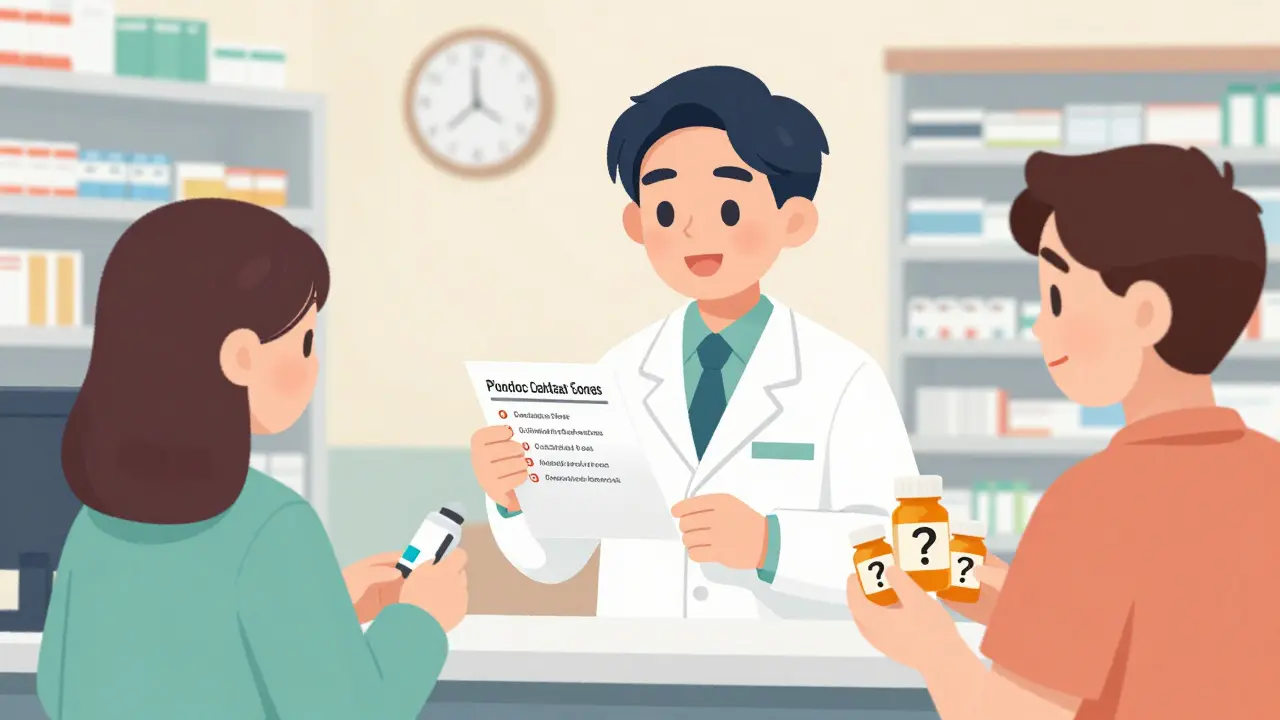
Some pharmacies cut counseling to save time. But here’s what they don’t realize: skipping it costs more in the long run.One independent pharmacy owner told a story: after implementing structured counseling, their malpractice insurance premiums dropped 19%. Why? Fewer errors meant fewer lawsuits. Another pharmacy in Michigan saw error rates fall from 61% to 85% in six months just by sticking to the 4-step protocol.
Compare the numbers:
| Method | Error Detection Rate | Cost per Prescription |
|---|---|---|
| Patient Counseling | 83% | $0.87 |
| Barcode Scanning | 53% | $1.35 |
| Pharmacist Double-Check | 67% | $2.10 |
Counseling isn’t just cheaper - it’s more accurate. And it’s the only method that improves patient understanding. That’s why CMS now ties 8.5% of Medicare Part D reimbursements to documented counseling that includes error verification.
What Happens When Counseling Is Done Right
Walgreens’ “Medication Checkpoint” program - which includes showing the patient the medication and asking them to describe its purpose - cut dispensing errors by 58%. CVS found that asking, “Does this look familiar?” caught over a thousand errors in one year. These aren’t outliers. They’re repeatable results.Patients notice. A Healthgrades review from June 2023 said: “The pharmacist caught that my new blood thinner was the wrong strength when I said it looked smaller than before.” That’s not luck. That’s a trained pharmacist listening.
But there’s friction. On Reddit’s r/pharmacy, pharmacists say they’re pressured to cut counseling to 1.2 minutes - less than half the recommended time. Corporate productivity goals are pushing safety aside. And that’s dangerous.
How to Make Counseling Work in Real Life
You can’t fix a broken system by just trying harder. You need structure:- Train your team - Use the APhA’s 4-step framework. Practice with role-playing. Don’t assume anyone knows how to do it right.
- Use technicians - In 42 states, pharmacy technicians can do preliminary counseling under supervision. They can verify identity and purpose, freeing pharmacists to focus on complex interactions and allergies.
- Document everything - NABP’s 2022 standards require documentation of counseling. Pharmacies that do this cut liability claims by 44%.
- Protect the time - If you’re filling 20 prescriptions an hour, you’re not doing counseling. You’re doing assembly. Add staff. Adjust workflow. Make counseling non-negotiable.
- Use tech to help, not replace - New tools like Surescripts’ “Counseling Checkpoint” API let pharmacists log verification steps directly into their workflow in seconds. It doesn’t replace conversation - it supports it.
The Bottom Line
Patient counseling isn’t a nice-to-have. It’s the last safety net. No machine can replace the human ability to notice confusion, hesitation, or mismatched expectations. When a patient says, “I thought this was for my heart,” and the prescription is for diabetes - that’s not a mistake. That’s a life saved.Every pharmacist has the power to catch errors before they hurt someone. But it only works if you take the time to listen. And if your pharmacy doesn’t let you, then you’re not just cutting corners - you’re risking lives.
Why is patient counseling more effective than barcode scanning at catching dispensing errors?
Barcode scanners only check if the right drug is in the right bottle. They can’t tell if the patient thinks it’s for high blood pressure when it’s actually for diabetes. Patient counseling catches mismatches between what the patient expects, what the prescription says, and what the medication looks like. It’s the only method that verifies understanding, not just physical accuracy.
How long should a counseling session last to effectively catch errors?
Research shows that a minimum of 2.3 minutes per patient is needed to cover all key safety checks. Each additional 30 seconds reduces error rates by 12.7%. Sessions under 90 seconds catch fewer than half the errors compared to full-length counseling.
Can pharmacy technicians help with patient counseling for error detection?
Yes. In 42 states, pharmacy technicians can perform preliminary counseling under pharmacist supervision. They can verify patient identity, confirm medication purpose, and check administration instructions. This frees up pharmacists to focus on complex interactions and high-alert medications, increasing overall safety without adding cost.
Why is counseling less effective for routine refills?
Patients assume refill medications are identical to previous ones. They don’t notice small changes - like a different pill color or shape - because they expect consistency. Only 33% of errors on refills are caught, compared to 91% on new prescriptions. That’s why pharmacists must proactively ask, “Has anything changed since your last refill?”
What are high-alert medications, and why do they need special counseling?
High-alert medications - like insulin, warfarin, opioids, and IV potassium - have a higher risk of causing serious harm if misused. The Institute for Safe Medication Practices reports that 1 in 5 dispensing errors involve these drugs. Counseling for these requires extra focus on appearance, dosage, and purpose. Showing the patient the exact medication and asking them to describe how they’ll use it can catch 29% of look-alike errors.

14 Comments

Jonathan Ruth
Look, I get it. Counseling works. But let's not pretend this isn't just another corporate buzzword dressed up as 'patient safety.' You think pharmacists are actually getting 2.3 minutes? In my county, they're doing 18 scripts an hour. That's 3.3 seconds per patient. You think they're asking about pill appearance? Nah. They're just slapping on a label and yelling 'Next!' This isn't about healthcare. It's about profit margins and KPIs. They don't care if you live or die. They care if you leave in under 90 seconds.

Haley DeWitt
I just wanted to say... thank you!!! :D This was so well-written and so important!! I work in a community pharmacy and we actually do full counseling on every new script, and it's changed everything!! I had a patient last week say, 'Wait, this isn't the same color as last time!' and we caught a mix-up with metoprolol and lisinopril!! I cried!! It's moments like this that remind me why I became a pharmacist!! :))))

Linda Franchock
Oh sweetie, you really think this is about safety? Lol. Let me guess - you've never worked in a CVS or Walgreens where the manager screams at you to 'move the line' every 3 minutes? Counseling? Yeah right. We're told to 'check for allergies' while we're simultaneously scanning 5 scripts, answering the phone, and arguing with insurance about prior auths. The system is broken. And no, 'training' isn't gonna fix it when you're forced to choose between your license and your paycheck. This is capitalism, not healthcare.

Philip Blankenship
You know what's wild? I used to be one of those pharmacists who thought counseling was a waste of time. I'd just hand over the script, say 'take as directed,' and move on. Then one day, an elderly woman came in for her new insulin. She said, 'This looks different.' I looked closer - it was the same brand, but the vial was 100 units/mL instead of 50. She'd been on 50 for 12 years. If I hadn't paused to ask, she'd have injected double the dose. That was the day I realized: machines don't care. People do. Now I make it a rule - even if I'm 15 minutes behind, I ask the three questions. It's not about compliance. It's about not killing someone because I was too busy.

Oliver Calvert
The data here is solid. 83% error detection through counseling is backed by multiple peer-reviewed studies. The real issue isn't the method - it's the lack of reimbursement. CMS pays for counseling but only if it's documented in a specific format. Most pharmacies don't have the staff to log it properly. So they skip it. It's not laziness. It's systemic failure. We need policy change, not more training videos.

Kancharla Pavan
Let me be clear - this entire article is a dangerous illusion. You're glorifying pharmacists as saviors while ignoring the fact that 90% of these errors stem from prescribers writing illegible, ambiguous, or conflicting orders. Why are we putting the burden on the pharmacy? Why aren't EHRs forcing clear dosing instructions? Why aren't we suing doctors who prescribe 200mg of metformin daily? This isn't about counseling. This is about deflecting responsibility onto the lowest-paid workers in healthcare while the real culprits get bonuses. Wake up.

Dennis Santarinala
I just wanted to add that I've seen this work in rural clinics too. We don't have robots. We don't have fancy scanners. But we have time. We have patients who trust us. And when we sit down - even for 90 seconds - and ask, 'What do you think this does?' - the answers are always eye-opening. One guy thought his blood pressure med was for 'heartburn.' Another refused her antibiotic because 'it made her feel weird last time.' We fixed both. No tech could do that. Just listening. It's not rocket science. It's human.

Tony Shuman
So let me get this straight - you're saying we should trust patients to catch errors? That's not safety. That's gambling. What if they're confused? What if they're high? What if they're lying? What if they're just too lazy to read the label? This whole 'counseling' thing is just another liberal fantasy where we pretend people are rational, attentive, and honest. Reality? Most people don't know what 'once daily' means. They take it at 3am. They mix it with alcohol. They skip doses. You can't 'counsel' stupidity. You need systems. Not conversations.

Digital Raju Yadav
America's healthcare system is a joke. We spend 18% of GDP on it. And yet we're still asking pharmacists to be detectives? Why not just let AI read the chart? Why not automate the entire process? Why do we keep clinging to this 1950s model of 'talking to people'? We're not in the 19th century. We have AI. We have blockchain. We have predictive algorithms. Stop romanticizing manual labor. Automate or die.

Carrie Schluckbier
You know who's really behind this? The pharmaceutical companies. They want you to think counseling catches errors. But the real reason? They want patients to believe they're 'in control' so they don't sue when the drug causes liver failure. Counseling is a liability shield. It's not about safety - it's about legal cover. Look at the fine print on those consent forms. They make you 'verify understanding' so they can say 'you were informed.' This isn't care. It's corporate damage control.

Liam Earney
I just... I need to say something. I lost my mom because of a dispensing error. She was on warfarin. They gave her the wrong strength. The pharmacist didn't ask. Didn't check. Didn't care. She bled out in her sleep. I've been to 17 pharmacies since then. Some were amazing. Some were robotic. But the one that saved me? The one where the pharmacist looked me in the eye and said, 'Tell me what this is for.' That moment... it didn't fix my grief. But it made me feel seen. And maybe... just maybe... that's what this is really about.

Sam Pearlman
I'm not saying counseling doesn't work. I'm saying it's not scalable. You can't have 100% counseling in a 10,000-patient-per-day chain. It's impossible. And if you try? You burn out your staff. You lose your best pharmacists. You turn your pharmacy into a ghost town. So yes, counseling catches errors. But so does AI. So does barcode + double-check + automated alerts. Maybe we should stop pretending humans are the solution. Maybe the solution is building systems that don't rely on people being perfect.

Geoff Forbes
This is such a naive take. You're acting like counseling is some revolutionary breakthrough. Newsflash: we've known this since the 1980s. The problem isn't awareness. It's execution. And execution requires resources - time, staff, training, infrastructure. But corporate pharmacy doesn't want to spend money on people. They want to spend it on robots that look cool on investor decks. Counseling is a feel-good story. The real solution? Pay pharmacists $120k+, hire 1:1 techs, and stop treating them like assembly line workers. But that would require moral courage. And we don't have any left.

PRITAM BIJAPUR
There's a deeper truth here. Human connection isn't a tool. It's a fundamental need. We're not just dispensing pills. We're dispensing trust. When a patient says, 'This looks different,' they're not just describing a pill - they're saying, 'I'm scared. I need you to see me.' And when we pause. When we listen. When we validate that fear - that's when healing begins. Technology can detect a mismatch. But only a human can heal a broken sense of safety. This isn't about error rates. It's about dignity. And dignity... can't be automated.


Write a comment