Managing Dry Mouth from Medications: Causes, Risks, and Relief

Medication Dry Mouth Risk Checker
Select the type of medication you are taking to see the associated risk level for dry mouth (Xerostomia) and potential lower-risk alternatives to discuss with your doctor.
Quick Summary: Key Takeaways
- Medication-induced dry mouth, or Xerostomia, affects millions, particularly older adults.
- Over 1,100 different drugs are linked to reduced saliva production.
- Untreated dry mouth can increase dental decay rates by up to 300% within a year.
- Management involves a mix of medication reviews, salivary stimulants, and frequent dental checkups.
- Switching to second-generation alternatives (like certain antihistamines) often reduces the severity.
Why Your Medications Make Your Mouth Dry
To understand why this happens, we have to look at how your body produces spit. Saliva isn't just water; it's a complex fluid that neutralizes acid and washes away food particles. Most medications that cause dry mouth interfere with the Autonomic Nervous System, which is the body's automatic control center. Specifically, many drugs act as Anticholinergics. These chemicals block a messenger called acetylcholine from hitting the M3 muscarinic receptors in your salivary glands. When those receptors are blocked, the signal to "produce saliva" never gets through, and your flow drops significantly.
It isn't just about the type of drug, but how many you're taking. If you're on a single medication, you might notice some dryness. However, if you're dealing with polypharmacy-taking three or more prescriptions-the risk jumps. In fact, people on multiple meds are over twice as likely to suffer from severe dry mouth because the effects of different drugs stack on top of each other, sometimes leading to a total shutdown of salivary function.
The Usual Suspects: Which Drugs Cause the Most Trouble?
Not all medications are created equal when it comes to your mouth. Some are notorious for drying you out, while others in the same family are much gentler. For example, if you're taking something for an overactive bladder, a drug like Oxybutynin is far more likely to cause "cottonmouth" than newer alternatives. Similarly, older antihistamines (the first-generation ones that make you sleepy) are much harsher than the non-drowsy, second-generation versions you find over the counter today.
| Medication Category | High-Risk Example | Lower-Risk Alternative | Typical Impact Rate |
|---|---|---|---|
| Bladder Control | Tolterodine | Solifenacin | Up to 70% |
| Antihistamines | Diphenhydramine | Loratadine | Up to 58% |
| Antidepressants | Tricyclics (Amitriptyline) | SSRIs (Sertraline) | Up to 63% |
| Antipsychotics | Haloperidol | Aripiprazole | Up to 54% |
The Hidden Danger: More Than Just a Thirsty Feeling
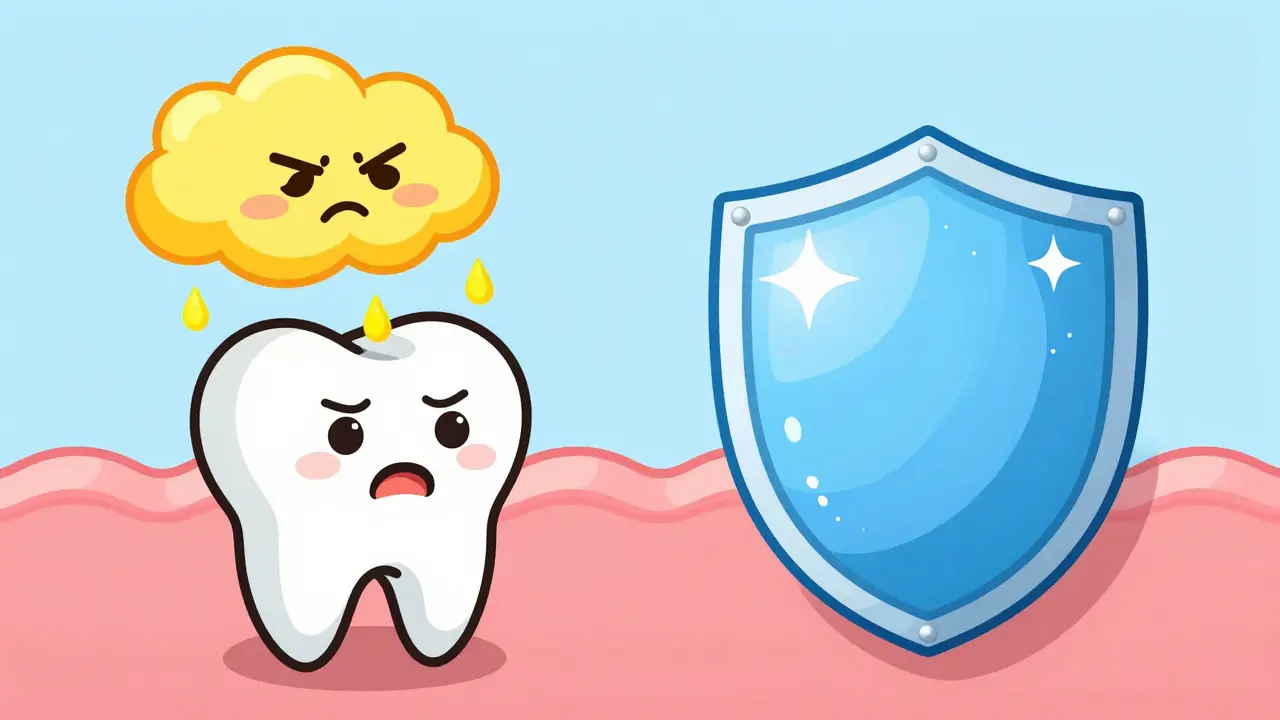
Many doctors and patients treat dry mouth as a mild annoyance, but that's a dangerous mistake. Saliva is essential for maintaining the pH balance of your mouth. Without it, your teeth are exposed to a constant acid bath. This is why patients with medication-induced dry mouth often see a surge in root caries-decay that happens at the gum line and moves deep into the tooth. Some experts warn that untreated xerostomia can accelerate dental decay by 300% in just twelve months.
Beyond the teeth, you might notice other issues. Eating becomes a chore because you can't swallow dry foods without a drink. Your taste buds may change, making food taste bland or metallic. In worse cases, the lack of moisture leads to oral thrush or painful sores. If you find yourself carrying a water bottle everywhere and still feeling parched, your mouth is telling you that its protective barrier is gone.
How to Manage and Fix the Dryness
You don't have to just "deal with it." There is a clear path to getting some relief, but it requires a bit of coordination between your primary doctor and your dentist. The goal isn't necessarily to stop your medication-which you might need for a serious condition-but to mitigate the damage.
First, ask your doctor for a medication review. Sometimes, a simple switch to a different brand or a second-generation version of the same drug can stop the dryness without affecting the treatment. If the drug is essential and cannot be changed, you can look into Salivary Stimulants. Drugs like Pilocarpine can actually signal the glands to produce more saliva, though these are prescription-only and don't work for everyone.
For immediate, over-the-counter relief, oral moisturizers are a lifesaver. Unlike plain water, which evaporates quickly, specialized rinses and gels (like those from Biotene) create a protective film that lasts several hours. The trick is consistency; using these products 5 to 6 times a day is much more effective than using them once in the morning.
Finally, change your dental routine. If you have dry mouth, a checkup every six months isn't enough. You should aim for a visit every three months. This allows your dentist to catch small spots of decay before they become full-blown cavities, which happen much faster when your saliva flow is low.
A Practical Checklist for Daily Relief
Managing this condition is a marathon, not a sprint. Here is a simple routine to keep your mouth hydrated and your teeth safe:
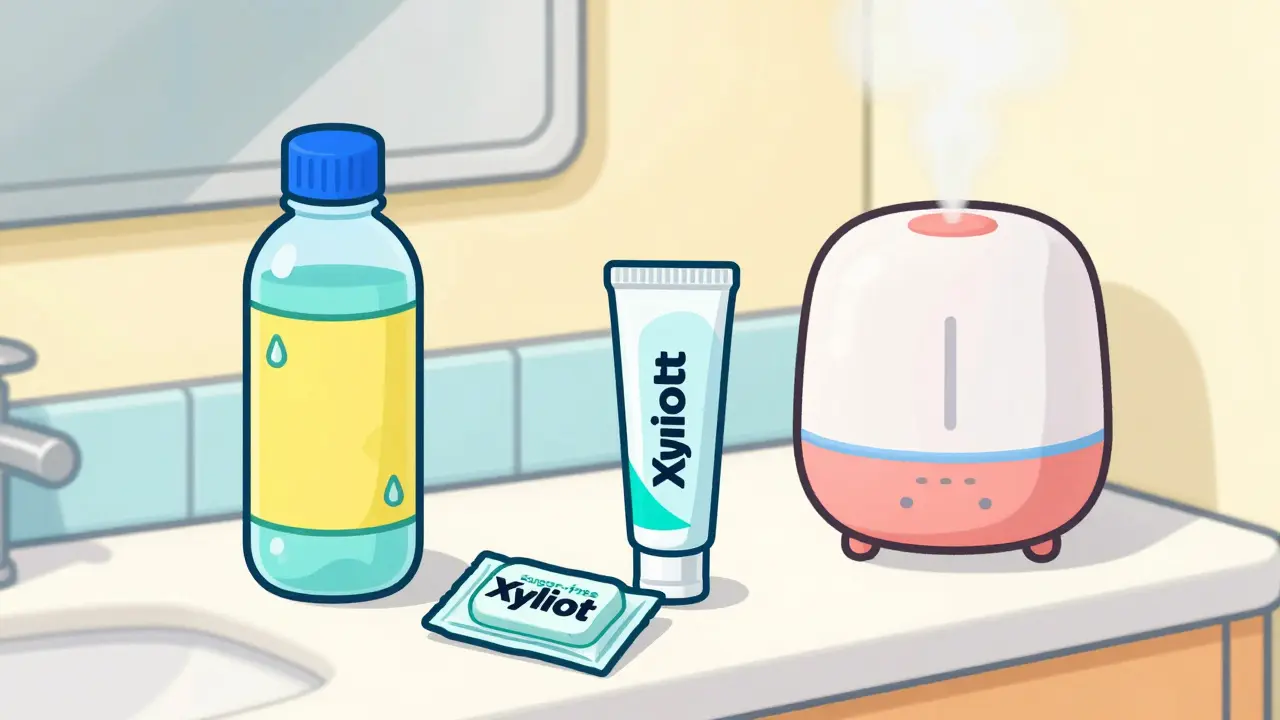
- Sip, don't gulp: Keep a water bottle with you and take small, frequent sips throughout the day.
- Avoid "drying" triggers: Cut back on caffeine, alcohol, and tobacco, as these further dehydrate the oral mucosa.
- Check your toothpaste: Avoid mouthwashes or toothpastes containing alcohol, which can strip away what little moisture you have left.
- Chew Xylitol gum: Look for sugar-free gums containing xylitol; they stimulate saliva and help fight bacteria.
- Humidify your room: Use a humidifier at night to prevent that "waking up with a dry throat" feeling.
Can I just drink more water to fix dry mouth?
Water helps with the feeling of thirst, but it doesn't replace saliva. Saliva contains enzymes and minerals that protect your teeth; water doesn't. While sipping water is good, you'll likely need oral moisturizers or stimulants to truly protect your dental health.
Should I stop taking my medication if it causes dry mouth?
Never stop a prescription medication without talking to your doctor first. Instead, ask them if there is a different medication in the same class with a lower xerogenic potential or if a lower dose is possible.
What are salivary stimulants?
These are prescription drugs, such as Cevimeline or Pilocarpine, that mimic the action of the nervous system to force the salivary glands to produce more fluid. They are typically used for more severe cases of dry mouth.
Why does dry mouth cause so many cavities?
Saliva washes away food and neutralizes the acids produced by bacteria. Without it, acid sits on your enamel much longer, eating through the tooth structure and causing decay to happen up to 300% faster.
Do all antidepressants cause dry mouth?
No, but some are more likely to do so. Tricyclic antidepressants have a high rate of this side effect, while SSRIs generally have a lower impact, although they can still cause dryness in some patients.
Next Steps for Different Situations
If you just started a new med: Keep a daily log of your symptoms. Note when the dryness is worst (e.g., nighttime) and if it affects your ability to eat. Take this log to your next appointment.
If you've had dry mouth for years: Schedule a comprehensive dental exam immediately. Ask your dentist specifically about your "Root Caries Index" and whether you need a high-fluoride prescription toothpaste to protect your enamel.
If you are a caregiver for an older adult: Be the advocate. Many seniors don't report dry mouth because they think it's just "part of aging." Check if they are struggling to swallow or if they have new white patches in their mouth, and bring it up with their physician.

Recent Posts
-
How to Get Prescription Assistance Programs from Manufacturers
-

Managing Dry Mouth from Medications: Causes, Risks, and Relief
-

Triple-Negative Breast Cancer Treatment: New Strategies and Clinical Trials
-
Diphenhydramine Overdose: Recognizing Antihistamine Toxicity and Emergency Care
-
Citalopram vs Escitalopram: Managing QT Prolongation and Dose Limits
