Triple-Negative Breast Cancer Treatment: New Strategies and Clinical Trials
Facing a diagnosis of Triple-Negative Breast Cancer is an aggressive subtype of breast cancer that lacks estrogen receptors, progesterone receptors, and HER2 protein. Because it doesn't have these three common markers, the standard hormone therapies used for other breast cancers simply don't work. This makes it a tougher opponent, usually affecting about 10% to 15% of all breast cancer cases and often growing faster than other types.
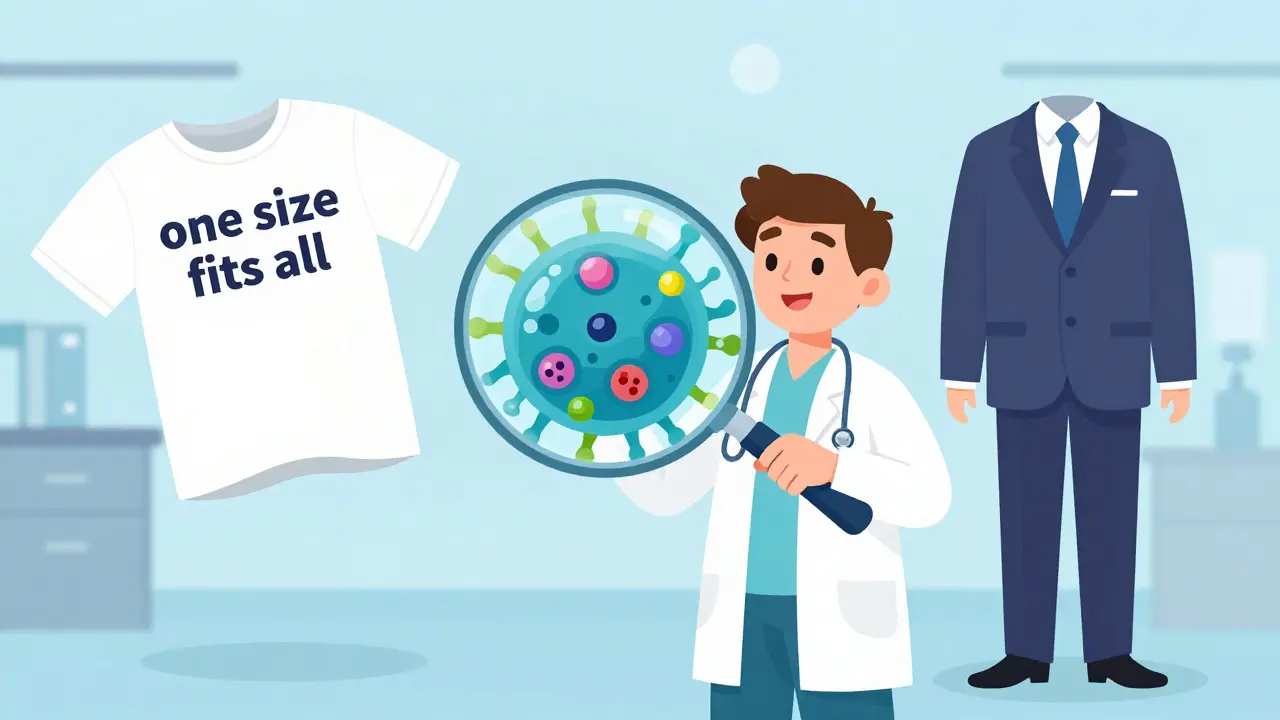
For a long time, the only real tool we had was chemotherapy. But the landscape is shifting. We are moving away from a "one size fits all" approach and toward precision medicine. Whether it's through new immunotherapy combinations or personalized vaccines, the goal is now to hit the cancer harder while sparing the patient from the brutal side effects of traditional chemo. If you're navigating this diagnosis, the focus is no longer just on survival, but on achieving a pathologic complete response with far less toxicity.
The Current Standard: Beyond Traditional Chemo
In a typical early-stage scenario, the go-to move is neoadjuvant chemotherapy. This means shrinking the tumor with drugs before surgery. In the UK, the NHS usually relies on platinum drugs like cisplatin or carboplatin, often paired with anthracyclines such as doxorubicin. While effective, these can be incredibly hard on the body.
However, a breakthrough from UT Southwestern Medical Center is challenging this norm. They've found that by reconfiguring the timing of radiation-starting it at the very beginning and using just two doses of pembrolizumab before the chemo starts-they can get similar results to the standard Triple-Negative Breast Cancer protocols but with much less damage. Specifically, serious toxicity dropped from 82% in the well-known KEYNOTE-522 trial to just 41% in this new approach. It's a reminder that when you give a treatment can be just as important as what you give.
Targeting the Genetic Code: PARP Inhibitors and BRCA
Not all TNBC is the same. Some patients have a mutation in the BRCA1/2 genes, which are responsible for repairing damaged DNA. When these genes are mutated, the cancer has a weakness we can exploit using PARP inhibitors. These drugs, including olaparib and talazoparib, block a specific enzyme the cancer needs to survive.
The OlympiAD trial showed that for patients with these mutations, PARP inhibitors improved progression-free survival by about 7.8 months compared to standard chemotherapy. It's a clear example of why biomarker testing-checking your DNA at the start-is no longer optional; it's the map that tells doctors which drug will actually work for your specific tumor.
The Rise of Antibody-Drug Conjugates (ADCs)
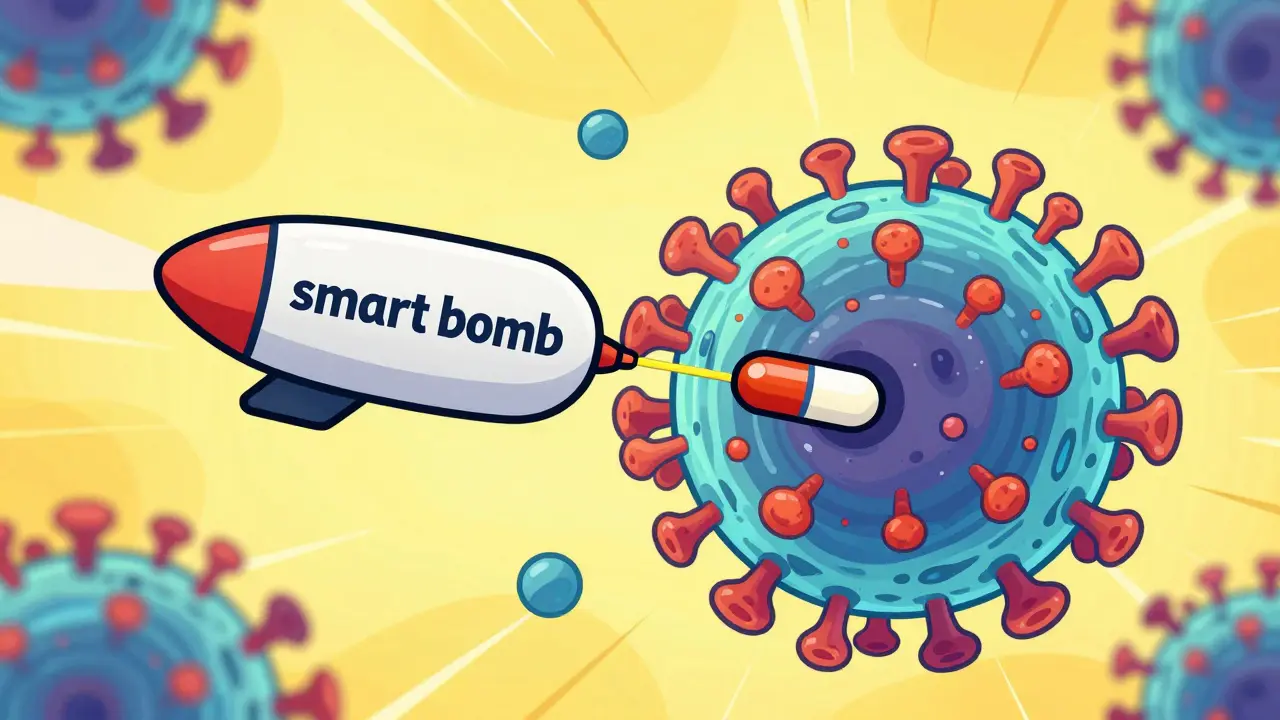
Think of Antibody-Drug Conjugates as "smart bombs." Instead of flooding the whole body with chemo, an ADC uses an antibody to find a specific protein on the cancer cell and then delivers a potent dose of chemotherapy directly inside that cell. sacituzumab govitecan (marketed as Trodelvy®) is a leading example.
In the ASCENT trial, this drug significantly outperformed traditional chemotherapy for patients with relapsed disease. We're talking about a hazard ratio of 0.44 for progression-free survival, meaning it substantially slowed the disease's advance. While it can cause side effects like neutropenia or diarrhea, the ability to target the cancer more precisely makes it a vital tool for those who have already tried standard chemo.
| Treatment Type | Primary Target/Marker | Key Benefit | Common Risk |
|---|---|---|---|
| Immunotherapy (Pembrolizumab) | PD-L1 Expression | Higher response rates in PD-L1+ tumors | Immune-related inflammation |
| PARP Inhibitors (Olaparib) | BRCA1/2 Mutations | Extended progression-free survival | Anemia, fatigue |
| ADCs (Sacituzumab Govitecan) | TROP-2 Protein | Effective in relapsed/metastatic cases | Neutropenia, diarrhea |
| Neoantigen Vaccines | Patient-specific mutations | Prevents recurrence (Experimental) | Initial immune reaction |
Cutting Edge: Personalized Vaccines and Dual-Targeting
The most exciting frontier right now is the development of personalized neoantigen vaccines. Researchers at Houston Methodist Hospital are creating vaccines tailored to a single patient's tumor. They sequence the tumor, identify the unique mutations, and manufacture a vaccine in-house within six weeks. This vaccine essentially "trains" the immune system to hunt down any remaining cancer cells that chemotherapy might have missed.
Parallel to this, scientists are experimenting with "dual-target inhibition." The idea is that cancer is smart; if you block one pathway, it just finds a detour. By blocking two pathways at once-like using a CDK12 inhibitor and a PARP inhibitor together-we can create a "synthetic lethality" that the cancer cannot escape. Preclinical models showed a 68% growth inhibition with this combo, compared to only 32% when using a PARP inhibitor alone.

Navigating the Clinical Trial Landscape
If standard treatments aren't working, clinical trials are often the best way to access the next generation of care. Currently, about 30% of all breast cancer trials are focused specifically on TNBC. For example, the GeparNuevo trial used durvalumab (Imfinzi®), showing a 92.5% three-year survival rate for early-stage patients when combined with chemotherapy.
When looking for a trial, keep an eye on these emerging targets:
- LIV-1 and FRα: New ADCs are targeting these proteins to find more ways into the cancer cell.
- PI3K/AKT pathway: About 10-15% of cases have alterations here, making them prime targets for specific kinase inhibitors.
- HRD (Homologous Recombination Deficiency): This is a broader marker than just BRCA, helping more patients qualify for PARP inhibitors.
Practical Steps for Patients and Caregivers
The complexity of these options means you can't just rely on a single doctor's opinion. A multidisciplinary tumor board-a group of surgeons, oncologists, and pathologists-is the gold standard for deciding the best sequence of treatment. If you're starting this journey, prioritize the following:
- Demand full biomarker testing: Ensure your pathology report includes PD-L1 status and germline BRCA1/2 testing.
- Discuss sequencing: Ask your doctor if the UT Southwestern approach (early radiation + limited immunotherapy) is an option to reduce toxicity.
- Review ADC options: If the cancer has returned, ask about the specific proteins your tumor expresses to see if a drug like sacituzumab govitecan is appropriate.
Why is triple-negative breast cancer harder to treat than other types?
TNBC lacks the three most common receptors-estrogen, progesterone, and HER2. Because most targeted therapies for breast cancer work by blocking these receptors, TNBC doesn't respond to hormone therapy or HER2-targeted drugs, leaving chemotherapy as the primary traditional option.
What is the success rate of the new personalized vaccines?
Personalized neoantigen vaccines are currently in Phase I trials. Early data from Houston Methodist Hospital shows promising immune activation in 78% of evaluable patients, though larger trials are needed to prove they prevent recurrence over the long term.
Does everyone with TNBC have a BRCA mutation?
No. While BRCA mutations are more common in TNBC than in other subtypes, they only appear in about 15-20% of cases. However, testing is recommended for all patients because it opens the door to using PARP inhibitors.
How does immunotherapy differ from chemotherapy?
Chemotherapy attacks all rapidly dividing cells, which is why it causes hair loss and nausea. Immunotherapy, like pembrolizumab, doesn't attack the cancer directly; instead, it removes the "brakes" from your own immune system, allowing your T-cells to recognize and destroy the cancer cells.
What should I look for in a clinical trial?
Look for trials focusing on "dual-target inhibition" or "Antibody-Drug Conjugates (ADCs)" if you've had a relapse. Also, check if the trial requires a specific biomarker (like PD-L1 or TROP-2) that matches your tumor's profile.

Recent Posts
-

How to Safely Buy Phenytoin Online: A Complete Buyer's Guide
-

How to Get Prescription Assistance Programs from Manufacturers
-
Diphenhydramine Overdose: Recognizing Antihistamine Toxicity and Emergency Care
-

Citalopram vs Escitalopram: Managing QT Prolongation and Dose Limits
-
Triple-Negative Breast Cancer Treatment: New Strategies and Clinical Trials
