Medication Safety for Caregivers: How to Protect Loved Ones from Dangerous Errors

Every year, over 1.5 million people in the U.S. are harmed by medication errors - and most of them happen at home, not in hospitals. If you’re caring for an aging parent, a child with chronic illness, or someone with dementia, you’re likely managing multiple pills, liquids, patches, and injections. One wrong dose, one missed timing, one unclear label - and you could be risking serious harm. The good news? Most of these errors are preventable. With the right system, you can cut the risk dramatically.
Start with a Complete Medication List
You can’t manage what you can’t see. The first step in medication safety is creating a full, up-to-date list of everything your loved one takes. This isn’t just a note on your phone. It needs to be detailed, written down, and shared with every provider.Include:
- Brand name and generic name (e.g., Lisinopril, sold as Zestril)
- Exact dosage (500 mg tablet, 10 mL liquid)
- Time of day it’s taken (e.g., 7:00 AM with breakfast, 10:00 PM at bedtime)
- Why it’s prescribed (e.g., "for high blood pressure," "for sleep")
- Any side effects you’ve noticed (dizziness, nausea, confusion)
- When it was started and by which doctor
Take this list to every doctor visit - even if you think nothing’s changed. A 2021 study in Mayo Clinic Proceedings found caregivers who used a complete list reduced medication errors by 52%. Don’t rely on memory. Don’t trust old notes from last year. Update it every time a new prescription is added or an old one is stopped.
Watch Out for Polypharmacy
Taking five or more medications is called polypharmacy. It’s common among older adults - 44% of seniors take five or more daily drugs. But the risk isn’t just about too many pills. It’s about dangerous interactions.According to the Beers Criteria, 30 medications are considered high-risk for people over 65. Common ones include:
- Benzodiazepines (like diazepam or lorazepam) - increase fall risk and confusion
- Proton pump inhibitors (like omeprazole) - long-term use linked to bone loss and infections
- Anticholinergics (like diphenhydramine in Benadryl) - can cause memory problems and delirium
A 2021 New England Journal of Medicine study found nearly half of older adults are taking at least one drug that does more harm than good. That’s not always the doctor’s fault. Sometimes, a medication was prescribed years ago and never reviewed. Ask: "Is this still necessary?" Bring your full list to a pharmacist for a free medication review. Many pharmacies now offer Medication Therapy Management (MTM) at no extra cost under Medicare Part D.
Use the Right Tools - No Guesswork
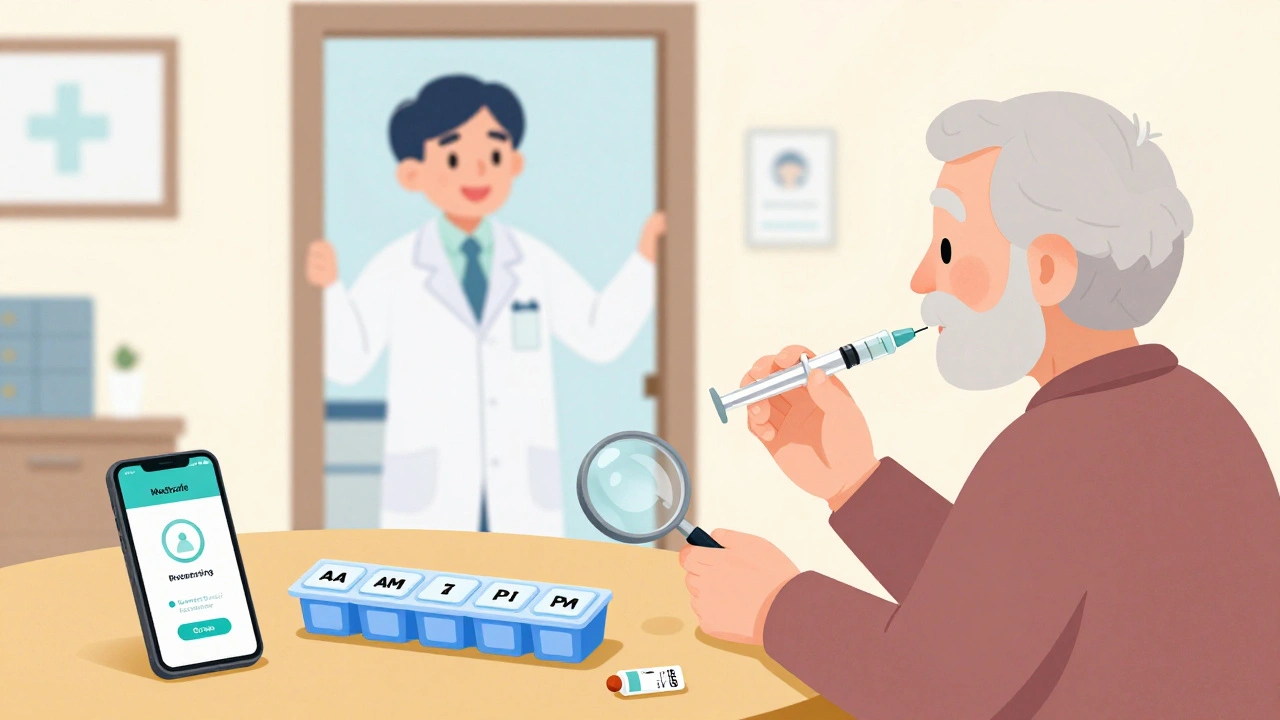
Household spoons are dangerous. So are handwritten labels. Here’s what works:- Oral syringes for liquids: A 2021 JAMA Pediatrics study showed household spoons vary by 20-40% in volume. A calibrated syringe gives you exact doses. Keep one in your caregiver kit.
- Seven-day pill organizers with AM/PM compartments: Especially critical for dementia patients. The Alzheimer’s Association recommends them. Many caregivers on ALZConnected say alarms on these organizers cut missed doses by over 60%.
- Digital trackers: Apps like Medisafe or CareZone send reminders and let you log when a dose was taken. A 2023 Caregiver Action Network survey found users had 32% fewer missed doses than those using paper logs.
- QR code labels: Since May 2023, the CDC has encouraged pharmacies to add QR codes to prescription bottles. Scanning one can pull up dosage instructions, side effects, and refill dates - no more squinting at tiny print.
But if tech isn’t your thing, that’s okay. A simple printed schedule taped to the fridge works too. The goal isn’t to be high-tech - it’s to be accurate.
Store Medications Correctly
Most people don’t realize how much heat, light, and moisture can ruin medicine. The FDA says most pills should be stored at 68-77°F (20-25°C), away from bathrooms and kitchens - places with humidity and temperature swings.Check expiration dates every week. A 2023 FDA report found 90% of caregivers don’t regularly check them. Expired insulin, antibiotics, or EpiPens can be useless - or dangerous. Keep medications in their original containers. Never mix pills into random jars. That’s how mix-ups happen.
Also, keep all meds out of reach of children and pets. Even one extra pill can be fatal. Lock boxes are cheap and effective.
Prevent Errors During Transitions
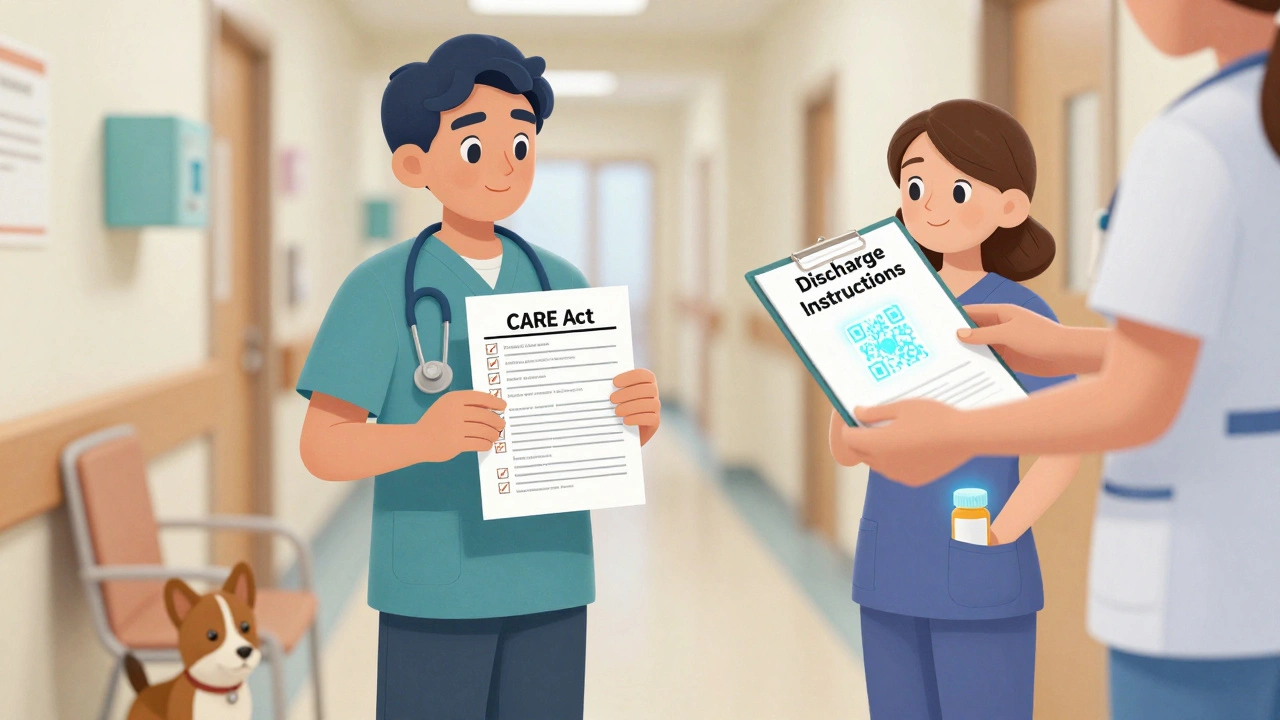
The biggest spike in medication errors happens when someone leaves the hospital and comes home. Dr. Joanne Lynn’s 2022 study found 62% of errors occur during these transitions.Before discharge, ask:
- "What medications were changed?"
- "Which ones should I stop?"
- "What’s the new schedule?"
- "Can I get this in writing?"
The CARE Act, now law in 47 states, requires hospitals to give caregivers a clear medication plan before release. If they don’t, ask for it. You have the right. And if you’re unsure about a new prescription, call the pharmacy before leaving the hospital. Pharmacists are trained to catch errors - and they want to help.
Communicate With the Pharmacist
Your pharmacist is your secret weapon. They see every prescription your loved one fills. They know about drug interactions, dosage risks, and alternatives.Every time you pick up a new prescription, spend 15 minutes talking with them. Ask:
- "Is this the same as before?"
- "Are there any side effects I should watch for?"
- "Could this interact with anything else they’re taking?"
A 2022 American Pharmacists Association study found pharmacists caught potential problems in 35% of these conversations. One caregiver on FamilyCaregiver.org said: "After my pharmacist did a full review, she found three dangerous interactions I didn’t even know about. We stopped two meds right away."
Schedule Regular Medication Reviews
Don’t wait for a crisis. Set a reminder every six months to do a full medication audit. Bring the list to the pharmacist or primary doctor. Ask: "Is everything still needed?"A 2022 study in the Journal of the American Geriatrics Society showed these reviews reduced adverse drug events by 28%. That’s nearly one in three fewer hospital visits. It takes 45 minutes - but it’s one of the most powerful things you can do.
Watch for Look-Alike and Sound-Alike Drugs
Hydroxyzine (for anxiety) vs. hydrocortisone (for skin rashes). Glipizide (for diabetes) vs. glyburide. These names sound almost the same - but they do completely different things.The Institute for Safe Medication Practices says these mix-ups cause 15% of reported medication errors. To avoid them:
- Always read the label out loud before giving a pill.
- Ask the pharmacist to spell the name if you’re unsure.
- Use a magnifying glass or phone flashlight if the print is small.
- Keep similar-looking pills in separate containers.
Know the High-Risk Drugs
The FDA updated its labeling rules in September 2023 to require "high-risk" warnings on 30 common drugs for older adults. These include:- Antipsychotics (used off-label for dementia)
- NSAIDs (like ibuprofen - risky for kidneys and stomach)
- Insulin (dosing errors can be deadly)
- Warfarin (blood thinner - needs frequent monitoring)
If you see "high-risk" on the label, pay extra attention. Double-check the dose. Confirm the reason. Ask if there’s a safer alternative.
What If You Make a Mistake?
No one is perfect. If you give the wrong dose, don’t panic. Don’t hide it. Call the pharmacist or doctor immediately. Most errors are caught before they cause harm if you act fast.Keep a small notebook near the meds. Write down what happened - what was given, what was supposed to be given, and what you did next. This helps providers respond faster and prevents repeat errors.
Final Thought: You’re Not Alone
There are 53 million family caregivers in the U.S. managing medications every day. You’re doing something incredibly hard - and you’re doing it with love. But you don’t have to do it perfectly. You just have to be consistent.Use a pill organizer. Talk to the pharmacist. Review the list every six months. Keep the list updated. These aren’t fancy tricks. They’re simple, proven systems that save lives.
Medication safety isn’t about memorizing every drug. It’s about building habits that protect the person you care for - one dose at a time.
What’s the most common cause of medication errors in home care?
The most common cause is unclear or incomplete medication lists. Caregivers often forget to update the list after a doctor changes a dose or stops a drug. This leads to confusion, double-dosing, or missed medications. A complete, written, and regularly updated list reduces errors by over 50%.
Can I use a kitchen spoon to measure liquid medicine?
No. A kitchen spoon can vary by 20-40% in volume, according to a 2021 JAMA Pediatrics study. Always use the oral syringe that comes with the medicine - or buy one at the pharmacy. They’re cheap, accurate, and safe.
How often should I review my loved one’s medications?
Every six months. That’s the standard recommendation from the Caregiver Action Network and the American Pharmacists Association. During the review, bring the full list to a pharmacist or doctor and ask: "Is every medication still necessary?" This simple step reduces hospitalizations by nearly 30%.
What should I do if my loved one misses a dose?
Don’t double the next dose unless instructed. Call the pharmacist or prescribing doctor. Some medications (like insulin or blood thinners) require immediate advice. For others, it’s safe to skip the missed dose and resume the next scheduled one. Always check - never guess.
Are there free tools to help track medications?
Yes. Apps like Medisafe and CareZone are free and let you log doses, set reminders, and share updates with other caregivers. Many pharmacies also offer free medication synchronization - where all prescriptions are due on the same day each month. This reduces missed doses by nearly 40%.
What’s the CARE Act, and how does it help caregivers?
The CARE Act is a law in 47 U.S. states that requires hospitals to inform caregivers about medications before discharge. They must provide a written plan, explain dosing, and answer questions. This reduces 30-day hospital readmissions by 17.6%. If you’re not given this information, ask for it - you have the right.
Can I ask the pharmacist to review all my loved one’s meds?
Absolutely. Under Medicare Part D, pharmacists are required to offer free Medication Therapy Management (MTM) to patients taking eight or more medications for chronic conditions. Even if they don’t offer it, ask. Most pharmacists will do it anyway - it’s part of their job to keep patients safe.

12 Comments

Arun kumar
man i been using a pillbox with alarms for my mom and it’s been a game changer. no more guessing if she took her blood pressure pill or not. i just check the app and boom - done. also started using qr codes on bottles, crazy how much info you get with a scan. why didn’t anyone tell me this sooner?

Alicia Marks
You’re doing amazing. Seriously. One less error is one more day she gets to see the sunrise.

Shannara Jenkins
I started doing the 6-month med review after my dad almost took two different blood thinners at once. Turns out his cardiologist had switched him but forgot to tell his PCP. We caught it because we had the list printed and taped to the fridge. Don’t underestimate the power of paper. And coffee. Lots of coffee.

Steve Enck
The premise of this article is fundamentally flawed. Medication errors are not primarily caused by caregiver negligence or lack of systems - they are systemic failures of pharmaceutical regulation, fragmented electronic health records, and profit-driven polypharmacy incentives. The burden placed on unpaid caregivers is a symptom of a broken healthcare infrastructure, not a solvable personal responsibility issue. You're being asked to perform the role of a clinical pharmacist, nurse, and compliance officer - without training, pay, or legal protection. This is not empowerment. It's exploitation dressed as advice.

Laura Baur
Let’s be brutally honest: most of these ‘solutions’ are designed for middle-class Americans with stable housing, reliable internet, and adult children who can afford to quit their jobs to manage meds. What about the single mother working two shifts, caring for her diabetic mother with dementia, who can’t afford a pill organizer, doesn’t have a smartphone, and gets her prescriptions from a 24-hour corner store where the pharmacist doesn’t speak English? The ‘QR code’ solution? Laughable. The ‘Medisafe app’? A luxury. The ‘six-month review’? Impossible when you’re waiting three weeks for a doctor’s appointment. This article reads like a TED Talk written by someone who’s never held a pill bottle in their hands at 2 a.m. while their parent is screaming because they think the pills are poison. You’re not helping. You’re performing.

Zed theMartian
Oh wow. Another feel-good guide for the guilt-ridden. Let me guess - next you’ll tell us to meditate before giving insulin? Or maybe we should light a candle and chant the names of the drugs? I’ve seen too many elderly patients on 17 pills because doctors are too lazy to taper. And now we’re supposed to become amateur pharmacists while grieving, exhausted, and broke? This isn’t safety. It’s moral coercion. And the fact that you’re calling this ‘love’? That’s the real tragedy.

ATUL BHARDWAJ
Simple tools work. Pillbox. Alarm. List on fridge. Talk to pharmacist. Done.
No app needed.
Not everyone has phone.
But everyone has eyes.
And hands.
And love.

Jay Everett
Y’all are killing it 💪 Seriously - the QR code thing blew my mind. My grandma’s meds used to look like a cryptic crossword puzzle. Now I scan ‘em, and boom - side effects, refill dates, even a little video from the pharmacist explaining how to take it. And the MTM? Free? YES PLEASE. I took my uncle in last week - pharmacist caught a deadly interaction between his heart med and his OTC sleep aid. He was about to die and didn’t even know it. Pharmacists are unsung heroes. Go hug yours today 🤗

मनोज कुमार
Medication errors are 80% due to prescriber incompetence and 20% due to caregiver confusion. Stop blaming the caregiver. The system is broken. The FDA doesn’t regulate polypharmacy. Doctors don’t get paid to deprescribe. Pharmacies don’t train staff to do reviews. You’re just the scapegoat. This article is a distraction. Fix the system. Not the person holding the pill bottle.

Jack Dao
How can anyone take this seriously? You’re recommending a seven-day pill organizer like it’s the Holy Grail. Did you consider that many elderly patients with dementia can’t distinguish AM from PM? Or that their hands shake so badly they spill pills? Or that some meds need to be crushed, and organizers make that impossible? This is amateur hour. You’re not preventing errors - you’re creating new ones with your simplistic, one-size-fits-all checklist. Real safety requires clinical judgment, not plastic trays.

dave nevogt
I’ve spent the last three years managing my wife’s meds after her stroke. I didn’t know any of this until I lost her. And what I wish I’d known - more than any app or list - was that it’s okay to say no. To say ‘I can’t do this anymore.’ To ask for help. To cry in the bathroom. To let someone else give the pill. You don’t have to be perfect. You don’t have to be a hero. You just have to show up. And sometimes, that’s enough. The system failed her. But I didn’t fail her. I just loved her. And that’s what mattered.

Ella van Rij
Oh sweetie, you’re using a kitchen spoon? 🙃 Maybe next you’ll measure insulin with a shot glass? And you’re surprised your dad’s confused? Honey, if you’re still reading tiny labels with a flashlight in 2024, you’re not a caregiver - you’re a contestant on ‘Survivor: Pharmacy Edition.’ Just buy the damn syringe. It’s $3. At Walmart. With a coupon. I swear, some of you are one step away from trying to cure Alzheimer’s with crystals.
Recent Posts
-
How to Safely Buy Phenytoin Online: A Complete Buyer's Guide
-
Anticholinergic Medications: Cognitive Risks and Managing Dry Mouth
-

Citalopram vs Escitalopram: Managing QT Prolongation and Dose Limits
-
How to Get Prescription Assistance Programs from Manufacturers
-
Diphenhydramine Overdose: Recognizing Antihistamine Toxicity and Emergency Care

Write a comment