Warfarin: What You Need to Know About Blood Thinners, Diet, and Safety
When you take warfarin, a blood thinner used to prevent dangerous clots in people with atrial fibrillation, artificial heart valves, or a history of deep vein thrombosis. Also known as Coumadin, it’s one of the most commonly prescribed anticoagulants—but it’s also one of the most tricky to manage safely. Unlike many other medications, warfarin doesn’t have a wide safety margin. Even small changes in your dose, diet, or other drugs can push your blood’s clotting time too far in one direction or the other. That’s why it’s classified as a narrow therapeutic index (NTI) drug, a category of medications where tiny differences in blood levels can lead to serious harm—either bleeding or clotting. The FDA treats NTI drugs like warfarin differently than regular generics, requiring stricter bioequivalence tests so that switching brands doesn’t suddenly put you at risk.
One of the biggest misunderstandings about warfarin is that you need to avoid vitamin K. That’s not true. In fact, vitamin K, a nutrient found in leafy greens like spinach, kale, and broccoli that helps your body form clots. is your ally—if you eat it consistently. Your INR (the test that measures how long your blood takes to clot) stays stable when your vitamin K intake stays steady. Eat a salad every day? Good. Skip it for a week and eat burgers instead? Your INR could spike or crash. The same goes for alcohol, certain antibiotics, and even over-the-counter painkillers. drug interactions, especially with NSAIDs, antifungals, and some herbal supplements, can dangerously raise or lower warfarin levels. A simple change like starting omeprazole or stopping fish oil can mean the difference between a safe INR and a trip to the ER.
Managing warfarin isn’t about fear—it’s about consistency. Test your INR regularly. Keep a log of your diet, new medications, and how you feel. Tell every doctor you see you’re on warfarin, even if it’s just for a cold. And don’t assume all generic versions are the same—because they aren’t, not when you’re dealing with an NTI drug. The posts below give you real, practical advice: how to eat greens without risking your INR, what other meds to watch out for, and why some people need more careful monitoring than others. You’ll find no fluff here—just clear, tested guidance to help you stay safe while taking this life-saving medication.
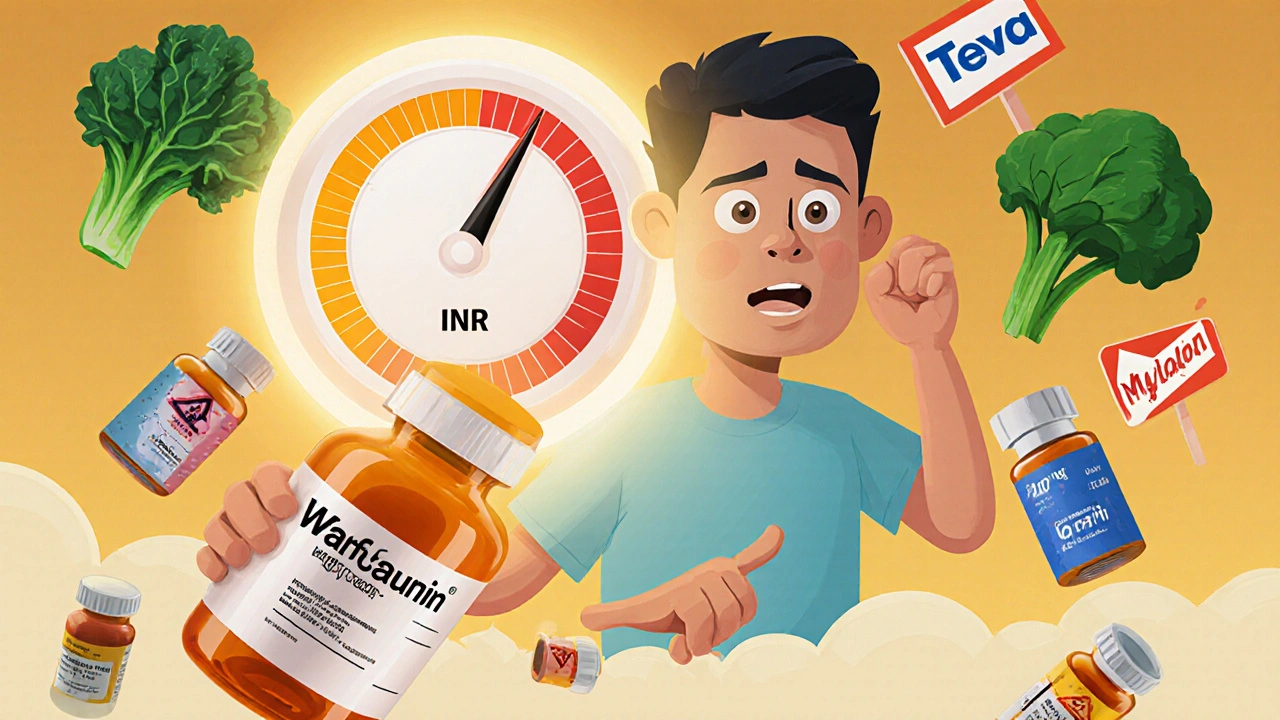
Warfarin and Generic Switching: What You Need to Know About INR Monitoring and Safety
Switching between generic warfarin brands can affect your INR levels. Learn why close monitoring is essential, how diet and medications interact with warfarin, and when to consider switching to newer anticoagulants.
Read MoreRecent Posts
-

Understanding High-Altitude Sedative Risks: Respiratory Safety Guide
-
Packing Medications for Air Travel: Best Practices for Safety
-
Addressing Patient Concerns About Generic Medications: Common Questions Answered
-
Chronic Insomnia: Why Sleep Hygiene Alone Fails and What Actually Works
-

OTC Gas and Bloating Remedies: Simethicone vs Enzyme Products Explained
