Where to Store Your Medications at Home Safely: Expert Guide to Prevent Accidents
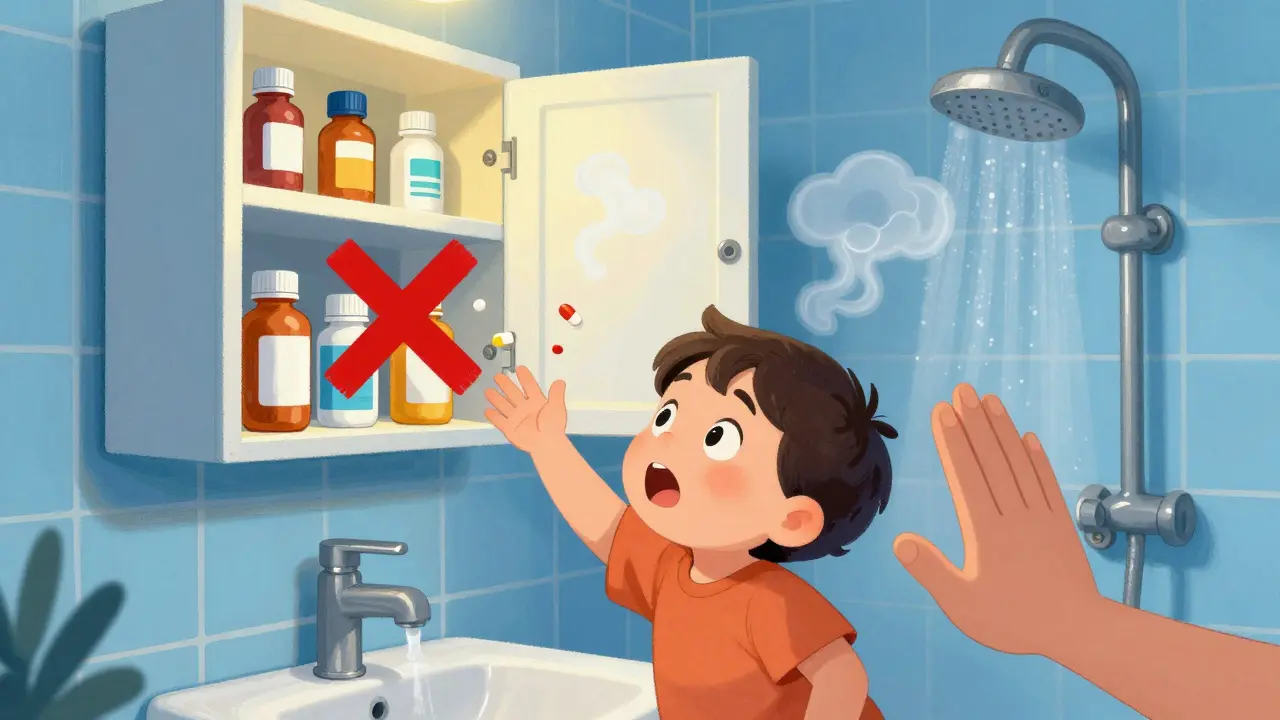
Every year, 60,000 children under age 5 end up in the emergency room because they got into medications at home. Most of these incidents aren’t accidents-they’re preventable. The problem isn’t that parents are careless. It’s that most people don’t know where to store medications safely. You might think the bathroom cabinet is fine. Or that keeping pills on a high shelf is enough. Neither is true. And the consequences can be deadly.
Why Your Bathroom Cabinet Is the Worst Place
The bathroom is the most common place people store medicine. But it’s also the most dangerous. Humidity from showers and baths can reach 80% or higher. That’s bad news for pills, creams, and liquid medications. According to MedlinePlus, 67% of common medications start to break down within 30 days when stored in a humid bathroom. That means your painkillers, antibiotics, or insulin might not work the way they should. And if they do, they could be less effective-or even harmful.Locked Storage Is Non-Negotiable
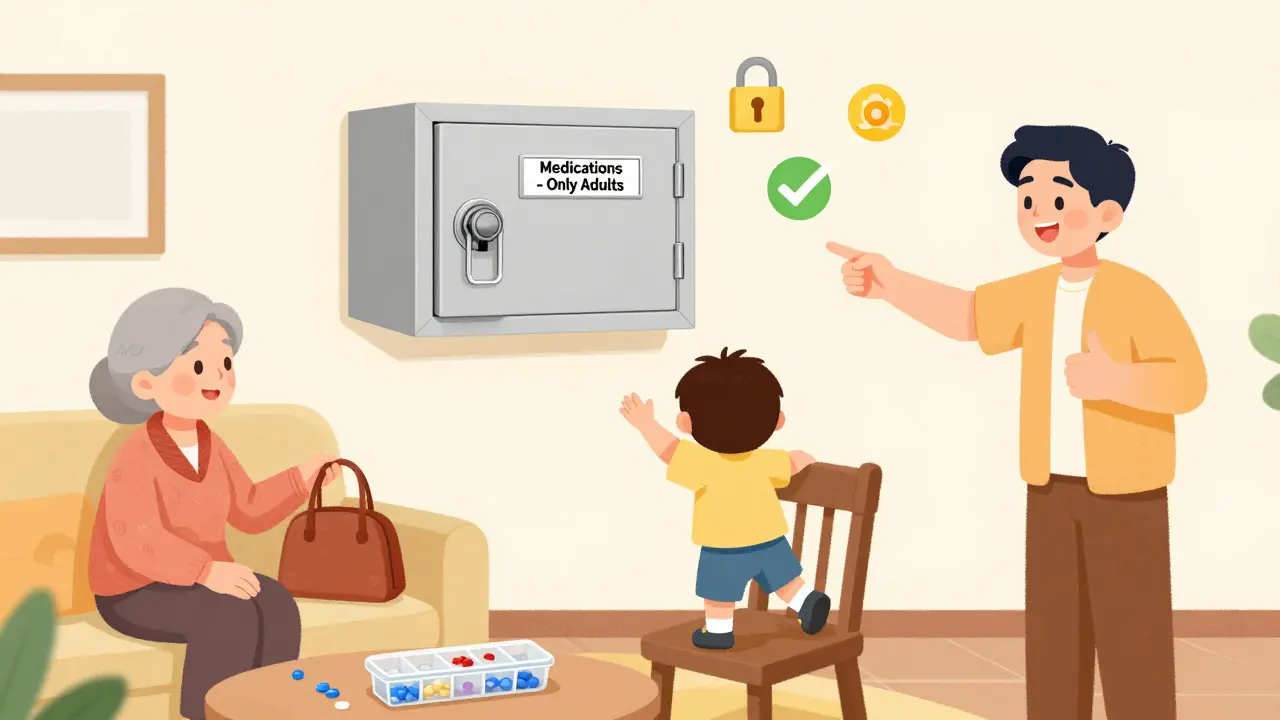
The single most important rule? Lock it up. Not just a closed cabinet. Not just a drawer. A locked container. The EPA, FDA, and Washington State Department of Health all agree: locked storage is the gold standard. Studies show that homes with unlocked medicine cabinets have a 300% higher risk of children accidentally taking pills. You don’t need a fancy safe. A basic medicine safe costs between $20 and $150. Some lock with a key. Others use a combination or even a digital code. Even a locked gun safe or fireproof document box works if it’s not used for anything else. The goal isn’t to make it hard for you to get to your meds-it’s to make it impossible for a curious toddler, a visiting grandchild, or a teen looking for a quick high.Where to Put It: Real-World Solutions
Think about where you already keep things you don’t want others to touch. That’s your best bet.- A locked bedroom cabinet
- A high closet shelf with a childproof latch
- A locked drawer in a dresser (not the nightstand)
- A dedicated medicine safe mounted on the wall
- On the kitchen counter
- In a purse or coat pocket
- In the car
- On a nightstand
Keep Original Packaging-Always
Don’t dump pills into random containers. Keep them in their original bottles. Why? Because those bottles have labels with:- The patient’s name
- The drug name and strength
- Expiration date
- Directions for use
- National Drug Code (NDC) number
Special Cases: Insulin, Opioids, and Elderly Care
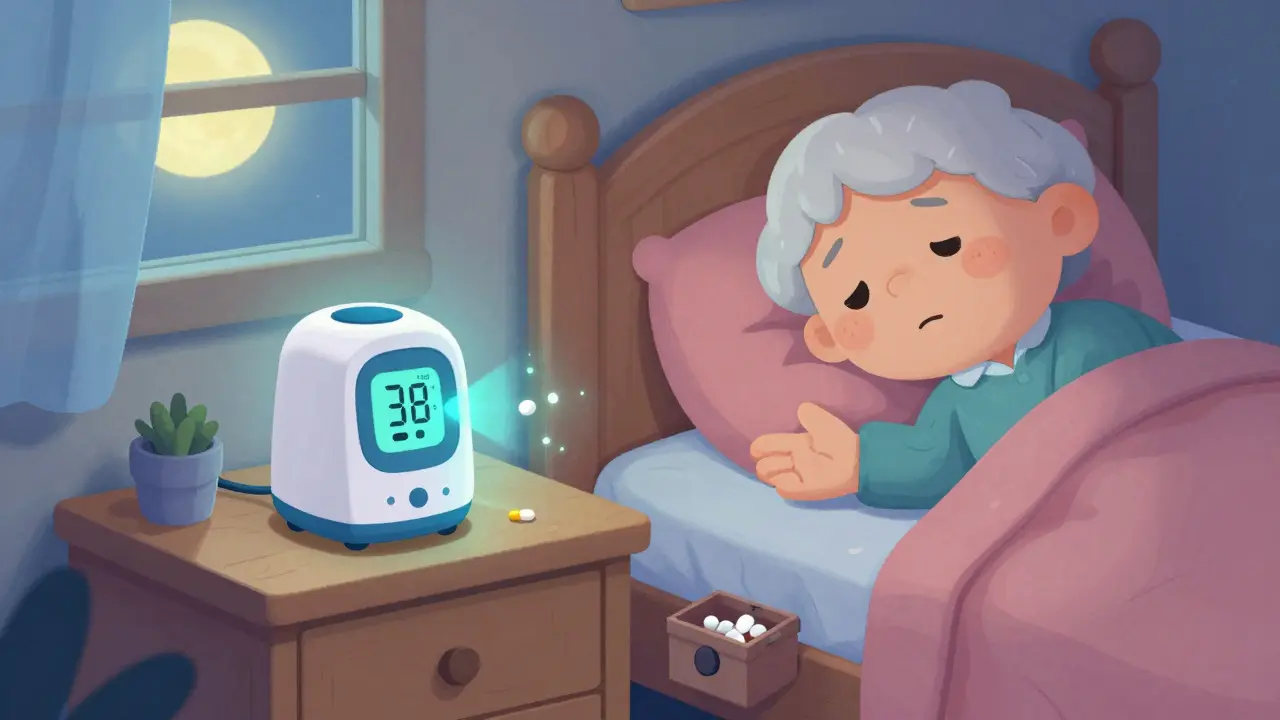
Some medications need extra care. Insulin must be refrigerated between 36°F and 46°F. But it shouldn’t sit next to milk or leftovers. Store it in a locked container inside the fridge. That keeps it safe from kids-and from being mistaken for food. Opioids like oxycodone or hydrocodone are a major risk. The NIH reports that 92% of adolescent opioid misuse starts with pills taken from home medicine cabinets. That’s why the EPA now partners with over 7,200 pharmacies to give out free lockable containers with every opioid prescription. For elderly parents or relatives with dementia, locking everything up can cause more problems than it solves. If someone needs daily meds and can’t remember where they are, you need a different plan. Talk to their doctor. Some families use digital dispensers that only open at the right time with a code or fingerprint. These devices have been shown to block 78% of unauthorized access according to the University of Michigan.What About Grandparents’ Homes?
About 45% of pediatric poisonings happen in grandparents’ houses. Why? Because storage habits change. A grandparent might keep pills in a drawer, on a windowsill, or in a pill organizer left on the table. They think, “I’m not a parent-I don’t need to lock things up.” But kids don’t care who’s home. They’ll climb, open, and swallow. If your kids visit grandparents, ask: “Where do you keep your meds?” If the answer is “in the drawer,” offer to bring a small lockbox. Make it a gift. Say, “I got this for you-it’s handy for keeping your vitamins and pills together.” Most people will say yes.Common Mistakes (And How to Avoid Them)
Here are the top errors people make-and how to fix them:- Mistake: Leaving pills in a purse. Fix: Keep a small locked container in your car or at home. Never carry meds unless you need them that day.
- Mistake: Using a pill organizer for long-term storage. Fix: Only use organizers for daily doses. Refill them from the original bottle each week.
- Mistake: Assuming “high shelf” = safe. Fix: Toddlers climb. Lock it.
- Mistake: Not checking expiration dates. Fix: Do a medicine cleanout every 6 months. Toss expired or unused pills properly.
What About Expired or Unused Medications?
Don’t flush them. Don’t throw them in the trash. The EPA and FDA recommend using a drug take-back program. Many pharmacies, hospitals, and police stations have drop boxes. If there’s no nearby program, mix pills with used coffee grounds or cat litter, seal them in a plastic bag, and toss them in the trash. That makes them unappealing and unusable.It’s Not Just About Kids
Yes, children are the biggest risk group. But teens, visitors, and even adults can accidentally take the wrong pill-or intentionally misuse them. A 2022 University of Michigan study found that 99.3% of American households have prescription or over-the-counter meds. That means almost every home is a potential risk zone. Locking up your meds isn’t about distrust. It’s about responsibility. It’s about knowing that curiosity doesn’t come with a warning label. It’s about protecting the people you love-from themselves, from accidents, from bad choices.Start Today: One Simple Step
You don’t need to overhaul your whole house. Just do this right now:- Find every pill bottle, patch, liquid, or inhaler in your home.
- Put them all in one place.
- Put that pile in a locked container.
- Keep it there.
Medication safety isn’t about perfection. It’s about progress. And the simplest step you take today could stop a tragedy tomorrow.
Can I store medications in the kitchen cabinet?
Yes, if it’s a locked cabinet away from heat sources like the stove or dishwasher. The kitchen is fine as long as it’s dry, cool, and secure. Avoid cabinets above the sink or near the oven-heat and moisture can ruin medicine.
Are child-resistant caps enough?
No. While child-resistant caps are required by law and slow down most kids, half of children can open them by age 5. They’re a backup, not a solution. Always store bottles inside a locked container for real protection.
What if I live in a small apartment with no extra storage?
You don’t need a lot of space. A small lockbox ($20-$40) can fit under a sink, behind a door, or inside a drawer. Even a locked lunchbox or tool box works if it’s not accessible to kids. The goal is to make it hard to reach-not to build a vault.
Can I store medications in the car?
No. Temperatures inside a car can hit 120°F in summer and drop below freezing in winter. That destroys most medications. Plus, a car is easy for teens or strangers to access. If you must carry meds in the car, keep them in a locked glove compartment or center console-but only for short trips.
How often should I check my medication storage?
Every six months. Look for expired pills, broken seals, or damp containers. Clean out old meds and dispose of them safely. Also, make sure your lock still works and that no one has moved your meds to a risky spot.
What if someone in my home has dementia?
Balance is key. Locking everything up might cause confusion or frustration. Talk to their doctor. Consider a smart dispenser that releases pills only at the right time. Or assign a caregiver to manage meds daily. Never leave pills unattended-even if they’re in a locked box, someone with dementia might try to break it open.
Are digital medication dispensers worth it?
For families with dementia, teens, or a history of misuse, yes. These devices use codes, fingerprints, or apps to control access. They’re 78% effective at blocking unauthorized use, according to the University of Michigan. Prices range from $60 to $200. If you’re worried about misuse, it’s a smart investment.
Can I use a gun safe for medications?
Yes, if it’s locked and not used for firearms at the same time. Many rural households already do this. Just make sure the safe is cool and dry. Don’t store pills next to ammunition or cleaning chemicals. A separate compartment inside the safe works best.
What should I do if my child swallows a pill?
Call Poison Control at 1-800-222-1222 immediately. Don’t wait for symptoms. Don’t try to make them vomit. Have the pill bottle ready-doctors need the name, strength, and time of ingestion. Keep the number saved in your phone and posted on the fridge.
Is it safe to store vitamins and supplements with prescription meds?
Yes, as long as they’re all in the same locked container. Vitamins aren’t harmless-some can be toxic in large doses. Keeping everything together makes it easier to manage and reduces the chance of mixing up pills. Just make sure labels are clear and intact.

10 Comments

Aubrey Mallory
Let me just say this: if you’re still keeping meds in the bathroom, you’re not just careless-you’re putting lives at risk. I’m a nurse, and I’ve seen the ER reports. Toddlers don’t ask permission. They don’t read labels. They just grab. Lock it up. No excuses. Period.

Lois Li
I used to think my high shelf was fine until my 3-year-old niece climbed onto the toilet and opened the cabinet like it was a toy box. Now I keep everything in a locked lunchbox under my bed. It’s not glamorous, but it works. And yes, I brought one for my mom’s house too-called it a ‘vintage organizer’ so she wouldn’t feel judged.

Molly Silvernale
Medications aren’t just chemicals-they’re potential time bombs wrapped in foil and plastic, silently waiting for a curious hand, a hungry toddler, a bored teen, or a confused elder to turn them into tragedy. We treat guns with reverence, but pills? We toss them beside the toothpaste like they’re snacks. The truth is, a child doesn’t know the difference between Tylenol and candy-until it’s too late. And then the guilt? It doesn’t come in bottles. It comes in silence. In the hollow echo of a hospital room where a parent whispers, ‘I didn’t think…’

Prakash Sharma
Why are we even having this conversation? In India, we lock our medicines because we’ve seen what happens when people are lazy. Your culture thinks ‘high shelf’ is enough? That’s not safety-that’s wishful thinking. If your kid can climb a chair, they can reach your ‘safe’ cabinet. Lock it. Or don’t. But don’t blame the system when your grandkid ends up in ICU.

Evan Smith
Wait so you’re telling me my locked toolbox in the garage is better than my nightstand? That’s wild. I just thought I was being extra by not leaving my Advil on the counter. Turns out I’m a villain in a children’s safety PSA. Cool. Got it. Ordering a $25 lockbox right now. Also-can I use my dad’s old gun safe? Asking for a friend who definitely doesn’t own a gun.

christy lianto
My grandma had dementia. She’d take her meds at 3 a.m. because she thought it was breakfast time. We tried locking everything-but she’d cry, confused, searching for her pills. Then we got a smart dispenser. It beeps. It opens only at the right time. She still gets her meds. No one else can touch them. It’s not perfect-but it’s peace. And that’s worth every dollar.

Joanna Brancewicz
Child-resistant caps have a failure rate of 50% by age 5. Two-layer protection is non-negotiable. Lockbox + original bottle + expiration check = baseline. Anything less is negligence.

Manish Kumar
You know what’s funny? We spend hours arguing about gun control, but we let our medicine cabinets be open-season for toddlers like they’re vending machines. It’s not about trust-it’s about biology. Kids are explorers. They don’t have moral codes, they have curiosity. And curiosity doesn’t care if the bottle says ‘Do Not Open’ in five languages. It just wants to see what the rainbow pills taste like. So we build walls. Not because we don’t trust our kids-but because we trust their instincts too much. And that’s the real tragedy: we assume innocence means safety. It doesn’t. Safety is engineered. It’s locked. It’s deliberate. It’s inconvenient. And it’s the only thing standing between a normal Tuesday and a lifetime of regret.

swati Thounaojam
my mom keeps her pills in her purse… i just took them all and locked them in a box. she was mad. worth it.

Ken Porter
Why are we paying $200 for a smart box? Just lock the meds in the same safe as your guns. Simple. Efficient. American.
Recent Posts
-

Citalopram vs Escitalopram: Managing QT Prolongation and Dose Limits
-
How to Safely Buy Phenytoin Online: A Complete Buyer's Guide
-
Anticholinergic Medications: Cognitive Risks and Managing Dry Mouth
-
Diphenhydramine Overdose: Recognizing Antihistamine Toxicity and Emergency Care
-
How to Get Prescription Assistance Programs from Manufacturers

Write a comment