Esketamine Nasal Spray: What You Need to Know About Dissociation, Blood Pressure, and Monitoring
Esketamine Blood Pressure Risk Calculator
Blood Pressure Safety Assessment
Enter your baseline blood pressure to determine if you meet treatment criteria based on FDA guidelines.
Enter your blood pressure values to see if you meet safety criteria.
What is esketamine nasal spray, and why does it need such strict monitoring?
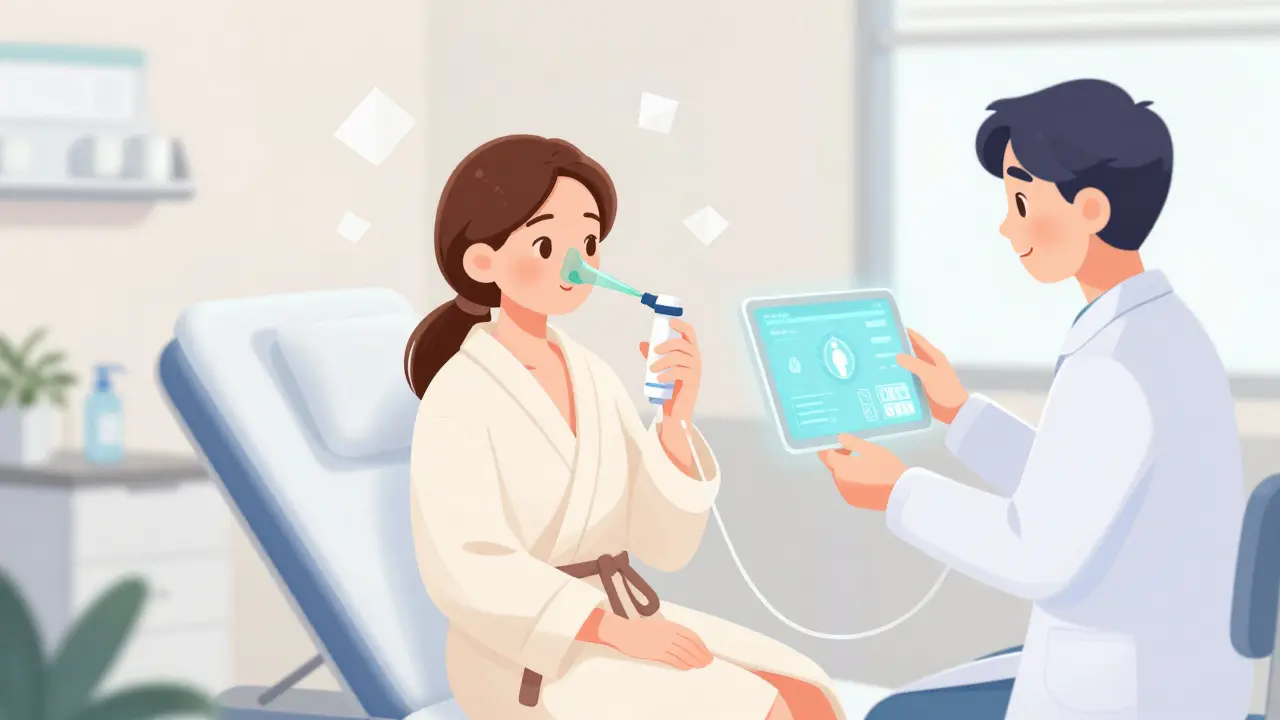
Esketamine nasal spray, sold under the brand name Spravato, is not your typical antidepressant. While most antidepressants work by adjusting serotonin or norepinephrine levels in the brain, esketamine targets a completely different system - the glutamate pathway. It blocks NMDA receptors, which are involved in how brain cells communicate. This unique mechanism allows it to work fast, often bringing relief to people with treatment-resistant depression within hours or days, not weeks. But this speed comes with a price: noticeable and sometimes intense side effects that require close medical supervision.
The U.S. FDA approved it in March 2019, and the EMA followed in July 2019. It’s only used for adults with major depressive disorder who haven’t responded to at least two other antidepressants. It’s always given alongside an oral antidepressant, never alone. And because of its risks, it can only be administered in certified healthcare settings under a strict federal program called REMS - Risk Evaluation and Mitigation Strategy. This isn’t just a suggestion. It’s the law.
Why does dissociation happen - and how common is it?
Dissociation is the most talked-about side effect of esketamine. It’s not hallucinations, though some people report them. Instead, it’s a feeling of being detached - from your body, your surroundings, or even time itself. People describe it as floating, being in a dream, or watching yourself from outside. In clinical trials, about 56% of patients experienced dissociation after a dose, compared to just 14% in the placebo group. At the highest dose (84 mg), that number jumps to over 61%.
These symptoms don’t last long. They usually peak around 40 minutes after administration and fade by the 1.5- to 2-hour mark. But during that time, patients are not safe to drive, operate machinery, or even walk unassisted. That’s why clinics keep patients under observation for at least two hours after each dose. The FDA requires providers to use a tool called the CADSS (Clinician-Administered Dissociative States Scale) to measure severity. A score of 3 or higher means severe dissociation - and that happened in about 6% of patients during the first hour.
Interestingly, many patients report that dissociation gets milder over time. One user on Reddit shared that after two treatments, they felt completely disconnected. By the fourth, they only noticed mild dizziness. This suggests the brain adapts. Still, every single dose carries the same risk, so monitoring doesn’t get relaxed.
What happens to your blood pressure - and why it matters
Alongside dissociation, esketamine causes a sharp, temporary rise in blood pressure. In clinical studies, 33% of patients saw their systolic blood pressure climb above 140 mmHg, and 29% saw diastolic pressure hit above 90 mmHg. That’s a jump of 14 to 23 points in systolic pressure and 7 to 16 in diastolic. These spikes usually start within 5 minutes, peak at 40 minutes, and return to normal within 90 to 120 minutes.
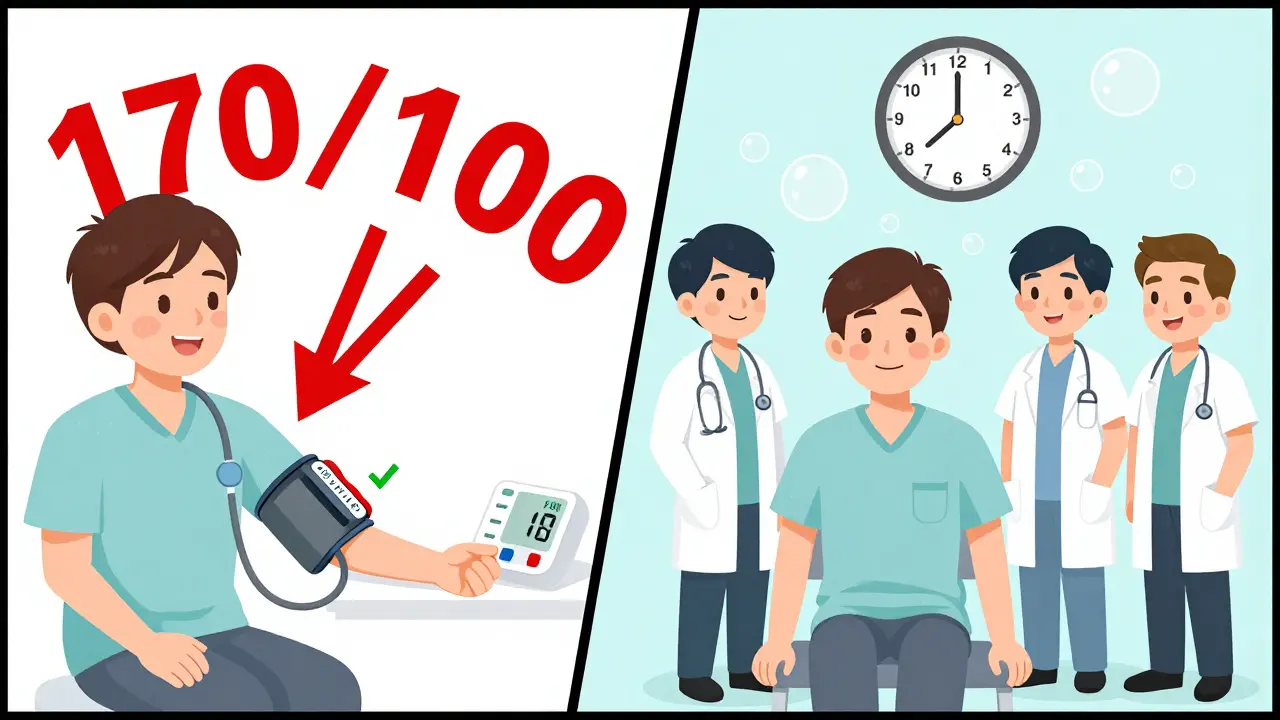
Most people don’t feel anything. No headache, no chest pain. But for someone with uncontrolled high blood pressure, heart disease, or a history of stroke or aneurysm, even a short spike can be dangerous. That’s why clinics check blood pressure before, during, and after treatment. If systolic pressure exceeds 160 mmHg or diastolic goes above 100 mmHg at any point before treatment, the dose is canceled. No exceptions.
A 2022 survey of patients found that 28% noticed their blood pressure rising during treatment. But 87% of those cases resolved without any intervention. Still, one patient on PatientsLikeMe reported their systolic pressure spiked to 170 despite being on blood pressure meds - and had to stop treatment. That’s why screening is so strict. Your doctor doesn’t just ask if you have high blood pressure. They look at your full history, current medications, and recent readings.
How is monitoring done - and what’s required by law?
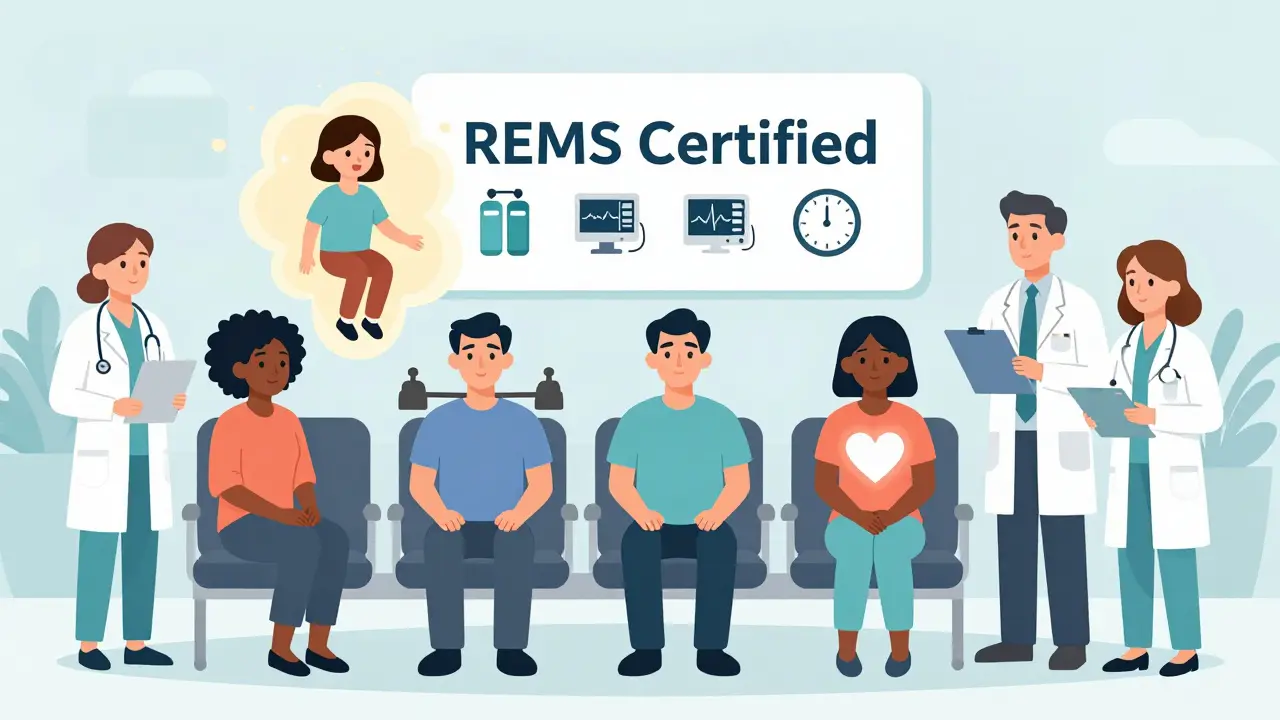
The REMS program isn’t just paperwork. It’s a full operational protocol. Every clinic that gives esketamine must be certified. Staff must complete at least two hours of training, then refresh annually. The room must be equipped with oxygen, emergency meds, and tools to monitor vital signs every 5 to 10 minutes during the first 40 minutes. After that, checks continue every 15 to 30 minutes.
Before the spray is given, patients must sign a Patient-Provider Agreement. They’re told exactly what to expect: dissociation, dizziness, possible nausea, and blood pressure changes. They’re also told they can’t leave until the full two hours are up - unless the FDA’s 2023 update applies. That’s right: as of September 2023, the FDA approved a new option. If a patient shows stable vitals and minimal dissociation (CADSS score below 10) after the first hour, they *might* be allowed to leave early. But this is only for patients who’ve already had several treatments without major side effects. The first few doses? Still two full hours.
Clinics also need emergency equipment on hand - not just because things might go wrong, but because they’re legally required to. A 2022 survey found the average cost to set up a dedicated esketamine room was nearly $19,000. That includes private space, monitoring devices, staff training, and documentation systems. Only about 5% of centers ever let patients leave early - and even then, it’s under strict conditions.
What do real patients say about the experience?
Online forums like Reddit’s r/Spravato and Healthgrades have thousands of posts from people who’ve tried it. The most common theme? “It was scary at first - but worth it.”
One user wrote: “I cried during my first session because I felt like I was disappearing. But by the third, I just sat there, relaxed, and when I came back, I felt… lighter. Like a weight I didn’t know I was carrying was gone.”
Another, who’d been on six antidepressants with no luck, said: “The dissociation was intense, but the clinic staff was calm. They talked me through it. I didn’t panic. That made all the difference.”
On the flip side, some patients with pre-existing hypertension or anxiety disorders found the experience too risky. One patient described feeling like their heart was pounding so hard they thought they were having a heart attack. They stopped after two sessions. These stories underline why screening matters - and why not everyone is a candidate.
What most positive reviews agree on? The staff. 91% of people who rated Spravato positively on Drugs.com said the clinic staff knew exactly what they were doing. That’s not luck. It’s training. It’s protocol. It’s the difference between a scary experience and a safe one.
Is it worth the hassle?
By 2022, over 125,000 people in the U.S. had received esketamine. Sales hit $1 billion. The number of certified clinics jumped from 350 at launch to over 2,800. But access is still uneven. Urban areas have 3.2 clinics per 100,000 people. Rural areas? Just 0.8. Many patients drive hours for treatment. Insurance approvals can take weeks. And the cost? Still high, even with insurance.
But for someone who’s tried everything - therapy, five different antidepressants, electroconvulsive therapy - and still feels trapped in depression, esketamine offers something no other drug can: rapid, life-changing relief. One study showed patients went from severe depression to mild in under a week. That’s not just improvement. That’s survival.
Experts like Dr. John Krystal from Yale say the side effects are a trade-off worth making. “We’re not treating mild sadness here,” he said. “We’re treating people who can’t get out of bed, who can’t hold a job, who have thought about ending their lives. The monitoring isn’t a barrier - it’s the safety net.”
Still, critics point out that the system is too rigid. Too expensive. Too hard to access. And they’re right - for now. But the FDA’s 2023 update to allow shorter monitoring for stable patients is a step toward change. Digital tools are being tested. Remote monitoring via apps is in trials. The goal isn’t to remove safety - but to make it smarter.
What’s next for esketamine?
Research is ongoing. The RECOVER study is tracking 500 patients over a year to see if repeated doses cause long-term changes in blood pressure or dissociation. Early results? No cumulative risk. That’s good news. It means patients can keep using it without worsening side effects.
Other companies are racing to develop alternatives - oral versions, intravenous forms, or drugs that target the same pathway without the dissociation. But so far, none have matched esketamine’s effectiveness in treatment-resistant cases.
The future likely won’t be about eliminating dissociation or blood pressure spikes. Those are tied to the drug’s mechanism. Instead, it’ll be about personalizing the experience: who can go home after one hour, who needs the full two, who can be monitored remotely, who should avoid it entirely. The goal isn’t to make it easier - it’s to make it safer, for more people.

12 Comments

Susan Kwan
So let me get this straight - we’re giving people a dissociative drug that makes them feel like they’re floating out of their body, but we’re okay with it because ‘it works fast’? Like, cool, I guess. Just don’t let me be the one stuck in a room with a stranger who’s having an out-of-body experience while I’m watching their vitals. I’d rather just nap through my depression.

Random Guy
dissociation? more like diss-whoa. first time i did it i thought i was in a lucid dream where my therapist was a talking raccoon. no joke. 40 mins of pure ‘am i alive or is this a netflix show?’ then i blinked and my depression was… gone? like, for real. worth every second of weird. also, the nurse gave me a gummy bear after. 10/10 would trip again.

Tasha Lake
The NMDA receptor antagonism is fascinating from a neuropharmacological standpoint - it bypasses monoaminergic pathways entirely, which explains the rapid onset. The glutamatergic modulation triggers synaptic plasticity via BDNF upregulation and mTOR activation. That’s why it outperforms SSRIs in TRD. But the BP spikes? Yeah, that’s alpha-adrenergic stimulation via sympathetic outflow. Clinically, it’s manageable if you’ve got proper hemodynamic monitoring - which, according to REMS, you better have. Still, I’m surprised more centers aren’t using continuous non-invasive BP monitors instead of intermittent checks.

Brett Pouser
I had a cousin go through this. She was suicidal for 7 years. First session? She cried so hard she couldn’t speak. Second? She laughed and said she felt like she’d been underwater and finally broke the surface. Third? She asked if she could bring her cat next time. The staff didn’t just do their job - they held space for her. That’s rare. People think it’s just a drug. It’s not. It’s a reset button. And the people who run these clinics? They’re angels in scrubs.

Karianne Jackson
I tried it. Felt like I was in a bad sci-fi movie. My body was there but my brain was on vacation. Didn’t like it. Stopped after two. Not worth it.

Chelsea Cook
Let’s be real - this isn’t just medicine. It’s a revolution. People who couldn’t get out of bed are now holding jobs, hugging their kids, texting back. The system? Yeah, it’s clunky. The cost? Wild. But guess what? When your life is on the line, you don’t care if the chair is comfy or if the paperwork takes three weeks. You show up. And you let them watch your BP. Because you’re not just surviving - you’re coming back to life.

Andy Cortez
so uhhh… this is basically ketamine for rich people? like, why do we need a $800 nasal spray when you can get the same stuff on the street for $20? and the ‘rems program’? sounds like a corporate way to lock out poor folks. also - 56% dissociation? that’s not treatment. that’s a party. and now we’re paying insurance to babysit people while they hallucinate? i’m not mad. i’m just confused.

Jacob den Hollander
I’ve worked in mental health for 15 years. I’ve seen people on every drug under the sun. Esketamine? It’s not perfect. But it’s the first thing in decades that’s given hope to people who’d given up. The BP spikes? Real. The dissociation? Intense. But the staff? They’re trained. They’re calm. They don’t panic. They talk you down. And that? That’s the real medicine. I’ve had patients cry after their third session - not from pain, but because they remembered what joy felt like. Don’t underestimate the power of someone holding your hand while you’re dissociating. That’s healing.

Andrew Jackson
This is the epitome of modern American medical absurdity. We have allowed a substance with profound psychoactive properties - essentially a controlled hallucinogen - to be administered under the guise of ‘therapy.’ We have created a bureaucratic apparatus with training protocols, certification fees, and federal oversight - all to regulate a drug that, in any other context, would be classified as a party drug. Where is the moral compass? Where is the reverence for the sanctity of the mind? This is not healing. It is pharmaceutical carnivalism.

Joseph Charles Colin
From a clinical pharmacology perspective, the key is recognizing that dissociation is a pharmacodynamic marker, not a side effect per se - it correlates with NMDA receptor occupancy. The 84 mg dose achieves ~85% occupancy. The fact that tolerance develops over time suggests receptor internalization or downstream adaptation. The BP spike? Mediated by sympathetic activation via the insular cortex and locus coeruleus. Monitoring isn’t overkill - it’s precision medicine. Also, the 2023 FDA update allowing early discharge? Validated by a 2023 JAMA study showing no increased adverse events in stable patients with CADSS <10. This isn’t a loophole - it’s evidence-based optimization.

John Sonnenberg
I’ve been to three sessions. First one? I thought I was dying. Second? I thought I was dreaming. Third? I thought I was finally awake. The staff didn’t say much. Just checked my BP. Asked if I was okay. Held the door open. That’s all. But I came out… different. Like my soul had been dusted off. I didn’t need them to fix me. Just to hold space. And honestly? That’s more than any therapist ever did.

PAUL MCQUEEN
So… we’re paying $1,000 a session to make people feel like they’re on acid, just so they can stop being depressed? Why not just give them a vacation? Or a hug? Or, I don’t know… a better social safety net? This feels like treating a symptom while ignoring the disease. Also, why are we still using nasal sprays? Why not just inject it? Less paperwork. More efficiency. Just saying.

Write a comment