Iodinated Contrast Safety: What You Need to Know Before Imaging
When you get a CT scan, angiogram, or other imaging test, iodinated contrast, a special dye used to make blood vessels and organs stand out on scans. Also known as contrast dye, it helps doctors see problems that would otherwise be invisible. But it’s not harmless—some people face real risks, and knowing them can keep you safe.
One of the biggest concerns is kidney injury from contrast, a temporary drop in kidney function that can happen after the dye is injected. This isn’t common, but if you already have kidney disease, diabetes, or are dehydrated, your risk goes up. Studies show that simple steps—like drinking water before and after the scan—can cut this risk by half. Another issue is allergic reaction to contrast, a response ranging from mild itching to life-threatening breathing trouble. Most reactions are mild and happen within minutes. If you’ve had one before, tell your doctor. They can give you antihistamines or steroids ahead of time to prevent it.
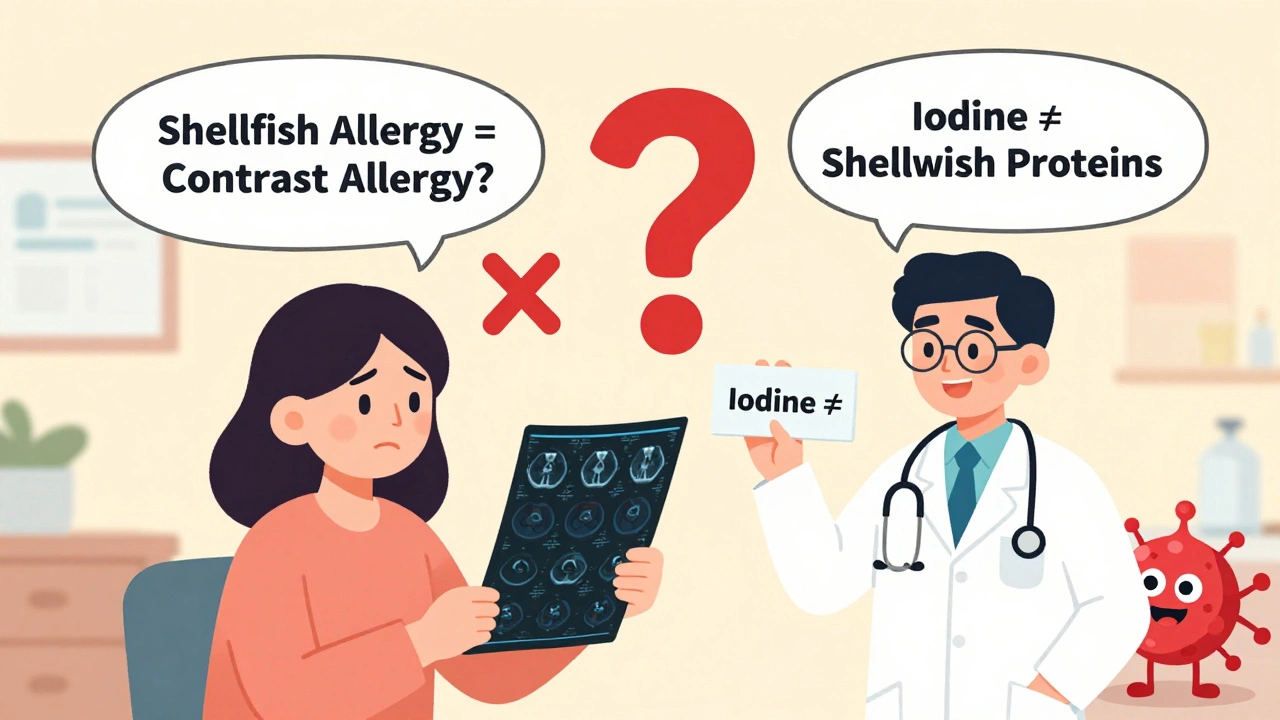
People often worry about iodine allergies, but true iodine allergies don’t exist—shellfish allergies aren’t linked to contrast reactions. The real trigger is the chemical structure of the dye, not iodine itself. If you’re on metformin for diabetes, you may need to pause it temporarily after the scan to avoid a rare but serious condition called lactic acidosis. And if you’re older or have heart failure, your doctor might delay the scan or choose a different type of contrast.
What you’ll find in the articles below are real, practical guides on how to prepare for imaging safely, how to spot warning signs after the procedure, and when to push back if a test feels unnecessary. You’ll see how medication timing, hydration, and past health history all play into whether iodinated contrast is right for you. These aren’t theoretical tips—they’re based on what works for patients in clinics, ERs, and imaging centers every day.
Contrast Dye Reactions: Pre-Medication and Safety Planning for Imaging Patients
Learn how premedication reduces the risk of contrast dye reactions during CT scans and X-rays. Understand who needs it, what medications work, timing rules, safety protocols, and what’s changing in 2025.
Read More